


Hopper Trailer Tarps — Custom Agricultural Trailer Covers
DERFLEX supplies custom hopper trailer tarps for hopper-bottom semi trailers, grain haulers, agricultural fleets, dealers and replacement-tarp programs. The cover can be developed around the actual finished dimensions, roll and fixed pipe pockets, bow-contact zones, material weight, color and manual or electric side-roll geometry.
- Waterproof PVC coated polyester body fabric
- Approx. 18 oz / 22 oz replacement directions
- Custom roll-tube and fixed-side pocket construction
- Measured bow-contact reinforcement
- Made-to-drawing finished size and overlap
- Dealer, fleet and private-label repeat programs
What Is a Hopper Trailer Tarp?
A fitted roll tarp that protects dry-bulk agricultural cargo while remaining fast to open and close.
A hopper trailer tarp is a flexible cover fitted over the open top of a hopper-bottom trailer. It normally works as a side-roll or rollover component with a fixed side, a rolling side, support bows and either manual or electric operation. For grain, seed, feed and other moisture-sensitive dry bulk, solid PVC coated polyester is a practical material direction because the coated fabric is waterproof, flexible and weldable.
- Best specification rule: order from the finished tarp pattern or verified system dimensions, not from nominal trailer length alone.
- Material rule: 18 oz is commonly selected when lower rolling weight and easier handling matter; 22 oz is a heavier direction for higher wear exposure.
- Durability rule: targeted reinforcement at bows, fixed edges and pocket zones can matter as much as increasing the body weight.
- System rule: tarp weight, pocket geometry and overlap must suit the actual crank or electric roll mechanism.
A Hopper-Bottom Cover Is a Moving System Component
A stock rectangle may physically cover the opening, but a reliable hopper trailer replacement tarp must roll straight, clear the trailer hardware, maintain enough overlap, stay supported over bows and tolerate repeated flexing during harvest and highway service. DERFLEX therefore treats the cover as an engineered pattern rather than only a sheet of vinyl.
Cover the Cargo
Solid PVC coated polyester helps shield grain, seed, feed and other dry agricultural bulk cargo from rain, road spray and contamination during transport.
Move with the Roll System
The roll-side pocket, fixed-side construction, cover weight, overlap and straightness influence how smoothly the tarp opens and closes.
Survive Repeated Contact
Support bows, front and rear edges, pockets and stationary attachment zones create repeated wear that should be addressed in the reinforcement layout.
Custom Hopper Trailer Tarp Specification Guide
The table below is a procurement framework, not a universal fixed specification. Final values should be confirmed from the trailer, existing tarp, hardware system, climate and replacement objective.
| Item | DERFLEX Direction | Buyer Note |
|---|---|---|
| Material | Solid PVC coated polyester / vinyl-coated polyester tarp structure | Preferred when rain exclusion is more important than airflow through the cover. |
| Body Weight | Approx. 18 oz or 22 oz direction; custom structure can be discussed | Do not choose weight alone. Review roll-system load, cycle frequency and bow abrasion. |
| Finished Size | Made to drawing, verified old-tarp dimensions or approved pattern | Finished tarp size is not the same as nominal trailer body size. |
| Trailer Width | Common market systems include nominal 96 in and 102 in bodies; other widths by project | Actual front/rear outside width and finished tarp width must still be measured. |
| Roll-Side Pocket | Custom to actual roll tube OD and required pocket flat size | Straight pocket geometry helps the cover track consistently during rolling. |
| Fixed-Side Pocket / Edge | Project-defined pocket, hem, webbing or attachment structure | The stationary side carries repeated tension and should be reinforced accordingly. |
| Bow Reinforcement | Localized heat-welded or laminated wear strips by measured bow centers | Place reinforcement at actual contact locations instead of using generic spacing. |
| Seams | Heat-welded panel seams where suitable for the pattern | Keep seam intersections away from high-flex and high-abrasion zones where practical. |
| Operation | Manual crank or electric side-roll / rollover cover programs | Buyer or system supplier should confirm final compatibility with the installed hardware. |
| Color / Label / Packing | Project-based color, private label, SKU marking and export packing can be discussed | Useful for dealer inventory and multi-size fleet replacement programs. |
Which Hopper Trailer Tarp Weight Should You Choose?
Use the lighter direction when rolling effort and cover manageability are important; use the heavier direction when the duty cycle and abrasion exposure justify the extra body weight. Neither choice automatically guarantees longer service life because the reinforcement pattern, cover fit and hardware interaction can dominate field wear.
- Approx. 18 oz direction: practical for standard agricultural replacement programs, seasonal grain hauling and systems where easier manual rolling is a priority.
- Approx. 22 oz direction: useful for high-cycle fleets or higher-abrasion service when the roll mechanism can accept the increased cover mass.
- Cold weather: discuss coating flexibility and operating temperature instead of assuming heavier fabric is automatically more flexible.
- Frequent bow wear: add measured bow reinforcement before simply increasing overall fabric weight.
What Dimensions Are Needed for a Custom Hopper Bottom Trailer Tarp?
For a replacement cover, the safest input is the approved finished tarp drawing or a usable existing tarp. If those are unavailable, measure the trailer and roll system from fixed reference points. Do not rely only on the model name or nominal trailer length.
Finished Tarp Length
Front finished edge to rear finished edge, including the intended end treatment.
Front Top Width
Outside-to-outside top width at the front of the trailer opening.
Rear Top Width
Outside-to-outside top width at the rear. Do not assume it always matches the front.
Finished Tarp Width
Complete edge-to-edge cover width including pockets and designed overlap.
Roll Tube OD
Outside diameter of the rolling tube plus required insertion / attachment detail.
Fixed Tube / Edge
Fixed tube diameter or exact stationary-side attachment construction.
Bow Center Locations
Measure every bow center from one consistent front or rear datum.
Overlap & Latch Geometry
Show the amount of cover overlap and where the tarp must land when fully closed.
Build the Cover Around the Manual or Electric Roll System
DERFLEX focuses on tarp material and custom cover fabrication. Final hardware compatibility should be confirmed against the installed system, but the tarp pattern can be specified to support common manual and electric side-roll operating concepts.
Operating Type
Manual crank, electric drive, cable return or another trailer-specific roll arrangement.
Tube Geometry
Roll tube OD, fixed-side structure, pocket flat size and attachment method.
Bow & End Clearances
Bow centers, end caps, stops and any components that can rub or catch the cover.
Fabric Weight
Match the tarp mass and flexibility to manual effort or electric drive capacity.
Repeat Pattern
Store one controlled specification per trailer model / width for reliable reorders.
Choose the Hopper Tarp by Cargo and Duty Cycle
| Application | Suggested Direction | Critical Details | Why It Matters |
|---|---|---|---|
| Seasonal Grain Harvest | Approx. 18 oz waterproof solid PVC/vinyl direction | Accurate roll pocket, smooth overlap, bow wear strips | Balances easier rolling with waterproof dry-bulk protection. |
| High-Cycle Grain Fleet | Approx. 22 oz heavy-duty direction | Reinforced bows, ends and stationary-side load path | Targets frequent open/close cycles and higher abrasion exposure. |
| Seed & Feed Transport | Waterproof, cleanable coated fabric | Closed cover, controlled seam layout and easy-clean surface | Helps reduce weather and road contamination during transport. |
| Fertilizer Tender / Dry Fertilizer | Project-specific solid coated fabric | Confirm chemical compatibility, cleaning method and hardware exposure | Material selection should reflect the specific fertilizer chemistry and maintenance practice. |
| Electric Roll System | Dimensionally stable cover with system-compatible weight | Controlled finished width, straight tube pocket and correct overlap | Motor load and tracking behavior depend on the complete cover pattern. |
| Dealer Replacement Line | Controlled 18 oz / 22 oz SKU families | Pattern ID, labels, colors, packaging and trailer-width coding | Reduces repeat-order mistakes across multiple customers and trailer sizes. |
Where Hopper Trailer Tarps Usually Need Extra Attention
A heavy fabric can still fail early if the replacement pattern puts stress in the wrong places. The most effective improvements usually concentrate on recurring friction, tension and flutter zones.
Bow Contact
Record actual bow centers. Reinforcement should land where the tarp repeatedly bends and rubs instead of at assumed spacing.
Roll Tube Pocket
Control pocket dimensions and straightness. A distorted or oversized pocket can create tracking and tension problems.
Fixed Side
The stationary edge can carry repeated pull. Reinforced hems, webbing or a project-defined fixed pocket should support that load path.
Front & Rear Edges
Highway airflow and vibration can create flutter at the ends. Reinforce according to end-cap, keeper and attachment layout.
Seam Placement
Where possible, avoid locating weld intersections directly over bows or other recurring fold and wear peaks.
Closed-Position Overlap
The tarp must finish in the correct position when closed. Too little or too much overlap can affect weather protection and system behavior.
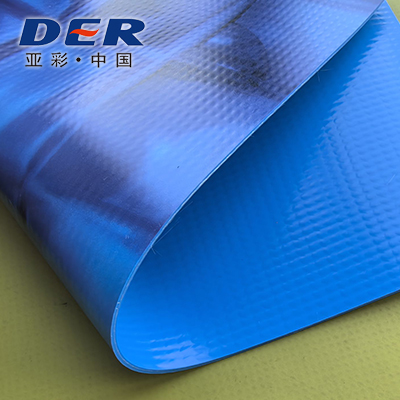
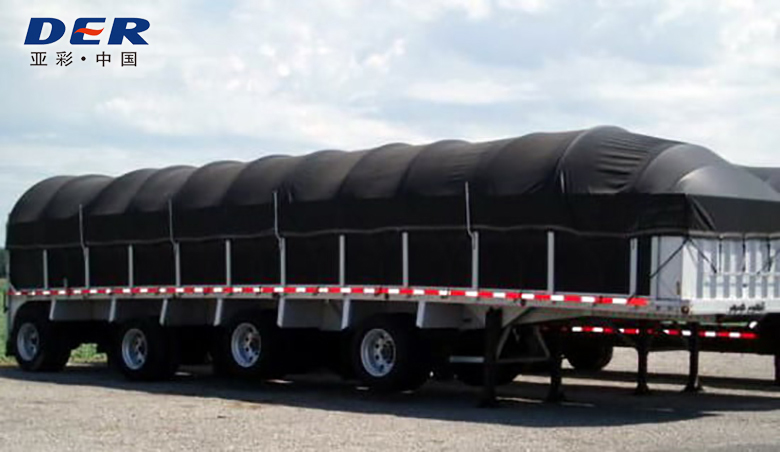
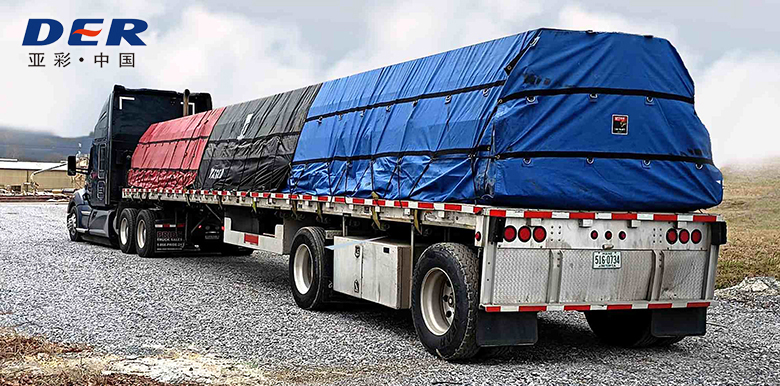
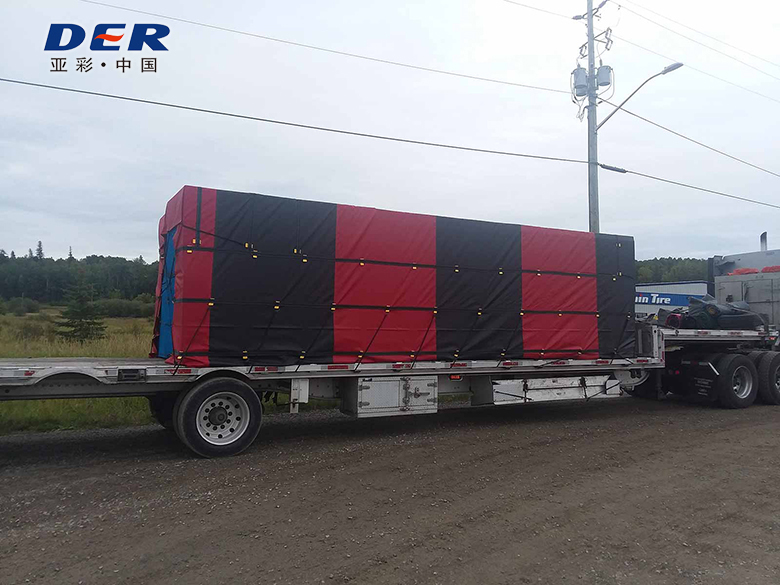
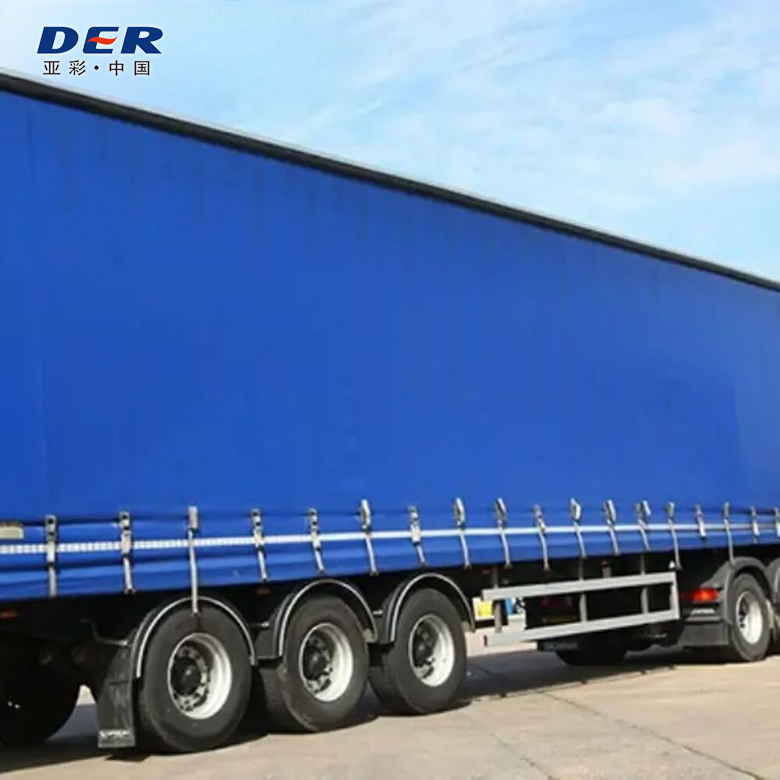
DERFLEX Tarp Material & Transport-Cover Visuals
These are existing DERFLEX website images that show PVC tarp material, heavy-duty transport covers and trailer applications. They provide authentic product/material context while the page remains focused on custom hopper-bottom tarp engineering.
What to Send DERFLEX for a Hopper Trailer Tarp Quote
Trailer & Tarp Dimensions
Trailer type, nominal width, finished tarp length, front/rear top width, finished tarp width and any approved drawing or existing-tarp measurements.
Roll-System Details
Manual or electric system, roll tube OD, fixed-side detail, pocket dimensions, overlap, bow centers, end-cap clearances and photos of the system.
Material & Commercial Needs
18 oz / 22 oz direction, color, climate, cargo, quantity by size, private label, packaging, destination and any required test or compliance documents.
Five Errors That Create Replacement-Tarp Problems
Ordering by Nominal Trailer Length Only
The body length does not define the finished tarp pattern. Pockets, overlap, end details and system geometry change the finished dimensions.
Copying a Damaged Old Tarp Blindly
A stretched, torn or shrunken cover can pass its dimensional error into the replacement. Cross-check it against the opening and hardware.
Choosing 22 oz Only Because It Is Heavier
More body weight can increase rolling effort or motor load. Compare duty cycle, abrasion and system capacity before moving to a heavier grade.
Ignoring Bow Centers
Generic wear strips may miss the actual rub points. Measure every bow from one fixed datum so reinforcement lands correctly.
Assuming “Waterproof Fabric” Means a Waterproof System
The body fabric can be waterproof while rain still enters through poor overlap, edge construction, pockets, damage or incorrect installation.
Create a Controlled Pattern for Each Trailer SKU
Dealers and fleets can reduce reorder errors by storing the approved size, pocket, bow, material and label specification for every recurring model.
Continue from Hopper Covers into Materials, Agriculture & Trailer Tarps
These six verified DERFLEX pages expand the topic without replacing this page's hopper-bottom custom-fit focus.
Hopper Trailer Tarps FAQ
What material is best for a hopper trailer tarp?
For grain, seed, feed and other moisture-sensitive dry-bulk hauling, solid PVC coated polyester or vinyl-coated polyester is a practical direction because it combines a waterproof coated surface with a reinforced textile base. Final weight, coating formula and reinforcement should match the roll system, climate and duty cycle.
Is 18 oz or 22 oz better for a hopper bottom trailer tarp?
18 oz is commonly selected when easier rolling and lower cover weight are priorities. 22 oz is a heavier direction for higher wear or frequent commercial cycles. The better choice depends on system load, bow abrasion, trailer length, climate and how often the tarp is operated.
How do I measure a replacement hopper trailer tarp?
Measure the finished tarp length and width, front and rear top width, roll tube OD, fixed-side structure, pocket dimensions, overlap and every bow center from one fixed reference point. If possible, also provide the existing tarp, system drawing and clear photos.
Can a custom hopper tarp fit both manual and electric roll systems?
A correctly patterned tarp may be suitable for either type, but compatibility depends on the installed hardware, roll tube, fixed side, pocket geometry, cover weight and tension arrangement. Confirm the actual system before production rather than assuming the same tarp fits every mechanism.
Why do hopper trailer tarps wear through over the bows?
The tarp repeatedly bends and rubs against each support bow as it opens, closes and vibrates on the road. Local wear strips placed at measured bow centers can protect these high-contact areas more efficiently than adding unnecessary weight to the whole cover.
Are hopper trailer tarps completely waterproof?
The solid PVC coated body fabric can be waterproof, but finished weather protection also depends on welds, pockets, edges, overlap, end treatment, damage and installation. Evaluate the whole cover system rather than the fabric alone.
Can DERFLEX make private-label hopper trailer replacement tarps?
DERFLEX can discuss repeat B2B programs with controlled finished patterns, colors, labels, packing and model identification. Buyers should provide the approved dimensions, material direction and quantity for each recurring trailer pattern.
What information should a dealer provide for multiple hopper trailer sizes?
Create one specification record for each model or size: finished tarp dimensions, trailer width, pocket details, bow centers, material weight, color, labeling and packing. A controlled pattern library makes repeat dealer and fleet orders easier to manage.
Build the Hopper Trailer Tarp from the Real Pattern
Send the finished tarp length and width, trailer top width, roll-system type, roll and fixed tube dimensions, pocket details, bow centers, preferred 18 oz / 22 oz direction, color, quantity and destination. Photos or an existing tarp sample can help define the replacement pattern more accurately.