News
Company News

Retractable Tent Fabric for Sliding & Concertina Shelters | DERFLEX

Update:2026/10/17 19:58:28 Views:

Moving shelters / material supply

Retractable Tent Fabric for Sliding & Concertina Shelters

Specify the cover around its movement. DERFLEX supplies PVC-coated polyester fabric for shelter manufacturers and cover fabricators evaluating repeated folds, sliding contact, water runoff and compact storage.

Share your frame geometry, folding sequence and contact details. Discuss a candidate construction, welding requirements and samples for trials on your own mechanism before approving a production grade.

Roll material • OEM cover development • Grade-specific qualification

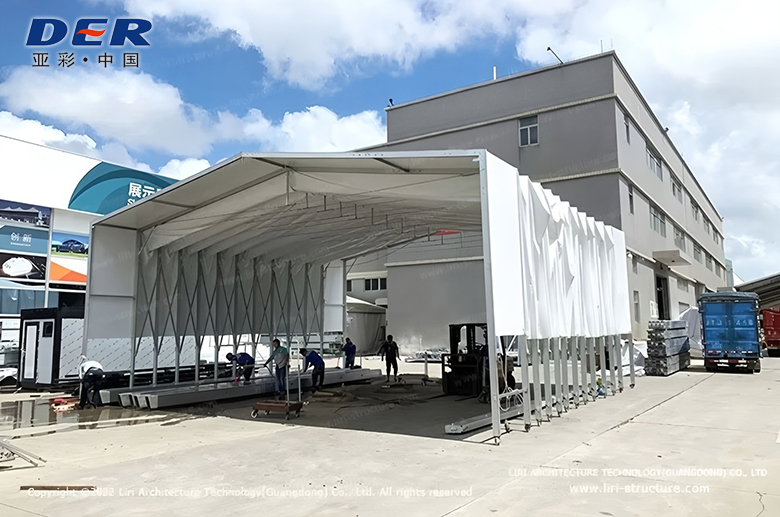
White concertina shelter with repeated fabric bays beside an industrial building
DERFLEX website application reference: a concertina shelter with repeating roof bays and folding side panels. The cover and mechanism must be evaluated together.
01 / FLEXRepeated folding
02 / CONTACTTrack & edge wear
03 / WATERDrainage geometry
04 / STORAGEFolded stack clearance
05 / JOINTSSeam movement

The short answer

What makes fabric suitable for a retractable tent?

Retractable tent fabric is the flexible cover used on a shelter that slides, folds or gathers during operation. A suitable material must retain its weather barrier and joint integrity through the actual movement, contact and storage conditions of the system.

GSM, tear strength and initial waterproofness help define a candidate. Qualification also needs repeated flexing, representative rubbing, wet operation where permitted, and inspection of the fully gathered cover.

Looking for the complete structure? Explore DERFLEX retractable tents →

Design around the duty cycle

Five places where moving covers need closer attention.

Map the cover in its extended, partly open and fully gathered positions. A flat material swatch cannot reveal every failure point.

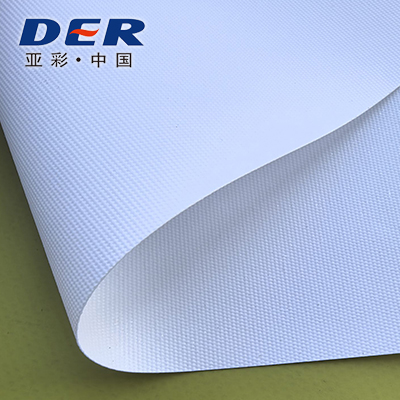
White DERFLEX PVC coated polyester fabric showing the coated surface and folded edge
Cover constructionCoated polyester sample shown on DERFLEX’s retractable tent page. Evaluate the selected grade after flexing.
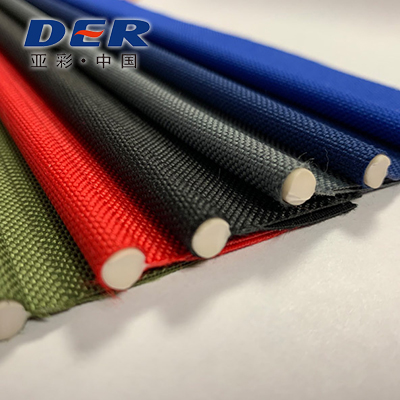
Colored coated fabric keder sleeves around cords for track attachment
Attachment interfaceKeder sleeve examples. Cord size, track fit and weld design need to match your assembly.
01

Fold lines & flex fatigue

Repeated bending concentrates strain at the same creases. Compare coating flexibility, base-fabric construction and surface finish at the intended operating temperature. Include seams and reinforcement in the trial: these can change where the cover bends.

Inspect for whitening, cracking, exposed yarns and leakage after cycling.

02

Tracks, carriers & local rubbing

Identify what actually moves against what. In some designs the carrier runs inside the track while the fabric flexes nearby; in others, a fabric edge or keder sleeve slides directly. Burrs, fasteners, trapped grit and misalignment can damage an otherwise suitable coating.

Use the real contact partner and contact pressure in the trial. Assess localized wear strips where they will not obstruct folding. Coordinate with keder fabric and edge-attachment construction.

03

Drainage through the movement path

Roof shape, support spacing, tension and gutters determine the water path. Inspect the extended cover and any intermediate position in which operation is permitted. Gathered fabric can redirect runoff or trap water between folds.

Use the system designer’s slope and operating rules; fabric waterproofness does not establish drainage capacity.

04

Stack thickness & surface blocking

Material thickness, fold count, hems, welded overlaps and patches all contribute to the gathered envelope. Check clearance to the frame, motor drive and parking cover. Test whether warm, compressed or damp surfaces adhere to each other and resist reopening.

Measure the actual assembled stack. Nominal sheet thickness alone is insufficient.

05

Welds in a moving assembly

Seam position and overlap affect stiffness, bending and water shedding. Where geometry permits, keep thick seam intersections away from tight recurring folds. Confirm hot-air or high-frequency process compatibility with the specific coating and finish.

Evaluate weld strength and water resistance before and after representative movement.

Procurement specification

Specify the material and the operating conditions together.

Use this schedule to request retractable canopy PVC cover material. Each selected grade needs a confirmed technical data sheet and an agreed acceptance plan.

Swipe the table to view all columns →

Specification itemDefine in the inquiryEvidence to request
Substrate & coatingPVC-coated polyester; yarn construction, coating balance, surface finish and intended face orientation.Grade identification and a representative roll sample; confirm which side contacts the hardware.
Weight, thickness & widthTarget GSM and thickness, tolerances, usable roll width, seam allowance and cover area.Confirmed grade data. Check moving mass and full gathered dimensions against the mechanism.
Strength & stabilityWarp/weft tensile and tear requirements; working tension and allowable dimensional change.Results with test methods, direction and conditioning stated. Review fit after sustained tension and cycling.
Flex performanceFold radius, speed, cycles per day, operating temperatures and target qualification cycle count.Agreed flex protocol and inspection criteria; include water-resistance checks after the trial.
Abrasion & attachmentTrack profile, carrier or keder details, contact surface, travel distance and reinforcement layout.Assembly trial using representative hardware; record wear, snagging and any change in operating force.
Water & seamsRoof geometry, drainage routes, permitted opening positions, weld process and seam layout.Water checks on the finished panel and assembled cover, including seams after movement.
Light & weather exposureColor, opacity or translucency, exposure conditions, cleaning regime and storage conditions.Grade-specific weathering and optical data where required; assess aged samples if relevant to approval.
Fire requirementsDestination market, required test/classification, material color and finished assembly scope.Applicable report for the proposed grade. Confirm its scope before stating compliance.

Selection schedule, not a declaration of test results. GSM, thickness, width, flex life, abrasion resistance and fire performance must be confirmed for the proposed grade. A fabric data sheet cannot establish the wind or snow rating of a complete shelter.

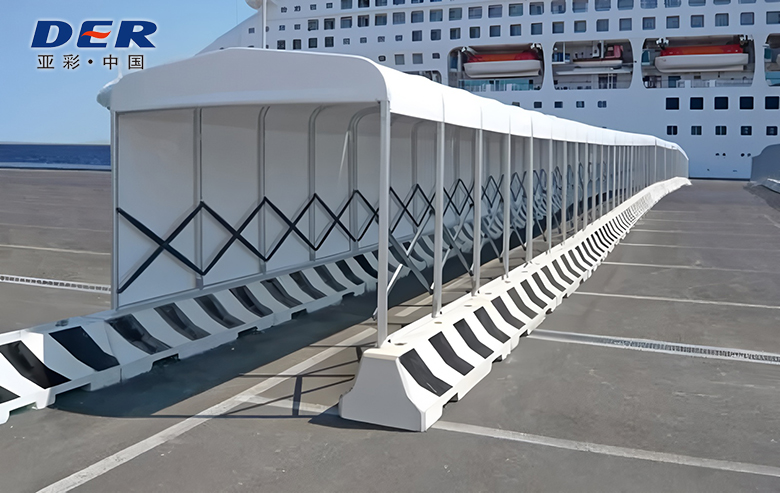
Long covered concertina walkway with repeated sliding support frames at a terminal
DERFLEX website reference image of a covered concertina passage. Photo illustrates the system type; it is not a grade-specific performance record.

Match the operating pattern

One material choice does not fit every shelter.

Industrial sliding & telescopic shelters

Prioritize fold geometry, total moving mass, abrasion zones and rain management. Large cover area makes changes in GSM significant for mechanism loading.

Concertina passages & loading access

Frequent movement and constrained parking space put attention on crease fatigue, lower edges and the gathered envelope. Nearby vehicle contact needs its own reinforcement review; compare dock shelter fabric contact-zone requirements.

Commercial retractable canopies

Balance appearance, light transmission, surface cleaning and reopening after storage. Check fabric weight and waterproof-cover compatibility with the specific frame. See the wider tent and awning tarpaulin material range.

Sample approval route

Validate a moving bay before ordering production rolls.

Agree a test plan with the fabric supplier, cover fabricator and system designer. The sequence below is a proposed qualification workflow; acceptance limits and cycle counts are project-specific.

STEP 01 / BASELINE

Record the starting condition

Identify grade, roll/lot, coating face, thickness, weight, seam settings and ambient conditions. Photograph the panel and record initial fit, dimensions and water resistance.

STEP 02 / ASSEMBLY

Build the real interfaces

Include an actual roof bay, repeated folds, a representative seam intersection, edge attachments and contact hardware. Match tension, support spacing and travel geometry.

STEP 03 / MOTION

Cycle, gather and reopen

Use agreed speed and temperature conditions. Inspect at planned intervals. Add wet or contaminated contact conditions only when relevant and permitted by the system’s operating plan.

STEP 04 / RELEASE

Inspect and define acceptance

Repeat seam and water checks. Examine fold damage, coating wear, stack clearance and reopening behavior. Record deviations and approve a retained sample with the final specification.

Trial focusRecord during the trialDecide before release
Repeated foldFold location/radius, cycles, temperature, whitening, cracks and yarn exposure.Permitted cosmetic change and criteria for coating damage or leakage.
Sliding contactContact partner, condition, pressure, travel, wear and operating-force trend.Allowable wear and when an edge, liner or hardware change is required.
Gathered storageStack dimensions, compression, dwell time, temperature, moisture and reopening behavior.Parking clearance, surface sticking limits and storage instructions.
Water & joint integritySeam construction, water-test conditions, ponding locations and performance after cycling.Panel acceptance, seam approval and drainage corrections.

Avoid these purchasing shortcuts

  • Choosing the heaviest fabric without checking moving mass or folded volume.
  • Using initial waterproofness as evidence of post-fold performance.
  • Testing plain fabric while omitting welds, hems and attachment details.
  • Replacing a fixed-cover material with the same GSM and assuming equivalent movement behavior.

Build a repeatable supply specification

Ask DERFLEX to confirm the proposed construction, color, finish, usable width, roll length and packaging. State your welding equipment and required documentation in the inquiry.

Agree material tolerances, sample approval and change control before repeat orders. MOQ, price, production timing and available reports depend on the confirmed grade and order; request a project quotation.

Buyer questions

Before you choose a retractable cover material.

Practical answers for OEM shelter manufacturers, replacement-cover fabricators and project buyers.

Can ordinary PVC tarpaulin be used as retractable tent fabric?

A general PVC tarpaulin can be evaluated as a candidate, but its suitability needs to be established on the moving assembly. Match fold geometry, temperature, contact wear, gathered storage and seam performance. A static-cover data sheet alone is insufficient.

What GSM should I choose for a sliding shelter cover?

There is no universal GSM for sliding shelter fabric. Balance cover area and mechanism loading against strength, coating durability, fold behavior and stack space. Compare candidate grades using the same assembly trial and confirm the final weight and thickness with DERFLEX.

How many folding cycles will the fabric withstand?

A meaningful cycle figure must state the material grade, temperature, fold radius, speed, tension, test geometry and failure criterion. Agree a qualification protocol for your mechanism and request the applicable evidence. No universal folding-cycle life is declared for this page.

Will waterproof PVC stop the roof from collecting water?

The coating forms the water barrier; roof geometry, tension, supports and drainage routes control water accumulation. Review runoff in each permitted operating position and check seams after cycling. Follow the structure designer’s rain, wind and snow operating limits.

Can the cover use welded seams and keder edges?

These construction routes can be evaluated with a compatible coated grade. Confirm the coating and surface finish, welding process, overlap and keder-to-track fit. Test representative joints through movement and water checks before approving the finished cover.

What should I send for a material quotation and sample request?

Send a drawing or photos, extended dimensions, support spacing, folding sequence, contact details, minimum operating temperature, expected daily movements, color or opacity preference, welding method, quantity and destination. Include the required fire test or other documentation. DERFLEX can then confirm candidate material and commercial terms.

Start with the mechanism

Send the geometry. Define the fabric.

Give DERFLEX the information that governs your moving cover. Ask for candidate roll material, sample availability and grade-specific documentation for your approval process.

Use the editable brief beside this section to prepare your inquiry, then send it through the DERFLEX quote page.

Copy your brief, then paste it into the quote-page message.

DERFLEX · Coated fabric for moving shelter applications

Material selection and assembly validation belong in the same specification.

Consulting Services
+86-021-54361792 / 54361798
Email
sales@derflex.com