Never compare unlike materials by GSM alone
200 GSM PE and 200 GSM PVC are different constructions with different reinforcement and coating systems.
Tarp GSM, ounces per square yard, mil and millimeter describe different properties. The safest way to specify a tarp is to start with the material and application, then use weight and thickness to narrow the construction—not to treat one number as a complete quality grade.
For procurement: identify material → define exposure and handling → set a weight/thickness band → verify tensile, tear, coating adhesion and finishing → approve a physical sample.
A higher GSM or thicker sheet can add material, but it does not automatically guarantee stronger reinforcement, better welds, better UV behavior or a longer useful life.
200 GSM PE and 200 GSM PVC are different constructions with different reinforcement and coating systems.
They both measure area weight. Convert them directly when comparing supplier quotations.
They both measure physical thickness. One mil equals 0.001 inch, or 0.0254 mm.
Mass and thickness depend on resin, coating density, scrim, finish and production method, so there is no universal conversion.
Using the correct unit prevents common sourcing errors, especially when comparing quotations from different countries.
Area weight of the finished tarp material. Useful for purchasing, shipping-weight estimates and broad duty comparison within the same material family.
Another area-weight measurement commonly used for vinyl and canvas tarps in North American markets.
Physical sheet thickness. 10 mil means 0.010 inch, not 10 millimeters.
Metric thickness measurement often used on technical data sheets for PVC coated or laminated material.
This tool converts equivalent units only. It intentionally does not convert GSM to mil because that relationship changes with material construction.
Use this when one supplier quotes metric area weight and another quotes ounces per square yard.
Use this when a US specification is in mil and a technical data sheet is in millimeters.
These bands are sourcing directions rather than universal standards. Final selection should be checked against reinforcement, coating system, weather exposure, handling frequency and required test values.
| Material / Market Language | Typical Direction | Common Buying Situation | What to Verify Before Ordering |
|---|---|---|---|
| Light woven PE tarp | Approx. 80–120 GSM | Short-term dust cover, indoor protection, temporary weather shielding | Weave density, lamination quality, UV treatment, grommet spacing and expected exposure |
| General / heavier PE tarp | Approx. 150–250+ GSM | Outdoor storage, agriculture, construction protection and repeated general covering | Actual finished weight, mil thickness, reinforcement, tear behavior and edge construction |
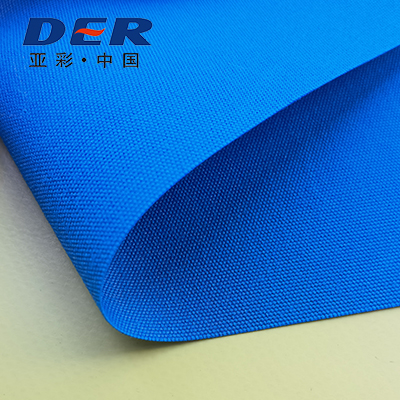
| PVC coated polyester tarp | Approx. 450–650 GSM | General industrial covers, truck and trailer covers, equipment protection, fabricated covers | Base fabric denier, yarn density, tensile/tear values, coating adhesion, weldability and UV formulation |
| Heavy PVC coated polyester | Approx. 650–900 GSM | Repeated transport use, industrial handling, long outdoor cycles, higher abrasion exposure | Duty cycle, seam/weld strength, cold crack, abrasion, finish, edge reinforcement and hardware loads |
| High-mass PVC programs | Approx. 900–1200+ GSM | Demanding industrial covers, special containment, high-wear or application-specific fabrication | Whether extra mass solves the real failure mode; handling weight, flexibility and fabrication method |
| Vinyl tarp quoted in oz/yd² | 18 oz ≈ 610 GSM; 22 oz ≈ 746 GSM | US-market truck, industrial and equipment tarp purchasing | Do not assume oz predicts exact mil; confirm both area weight and physical thickness |
Weight is meaningful only when you know what the weight is made of: reinforcement, coating, lamination and finish all contribute differently.
Woven polyethylene construction is commonly selected for low weight, easy handling and general-purpose coverage.
Polyester scrim carries structural load while PVC coating adds weather protection, surface properties and weldability.
Canvas and specialty textiles may be sold mainly by oz/yd², but water behavior and finishing can differ from coated vinyl.
Finished weight is the sum of the reinforcement, coating/lamination and surface treatment. If one construction puts more mass into coating and another puts more into the polyester reinforcement, their tensile and tear behavior can differ even when the scale reads the same.
A useful first quotation should be narrow enough to test but flexible enough to adjust after a sample review.
| Application | Starting Direction | Why | Ask About |
|---|---|---|---|
| Temporary indoor / dust cover | Light PE range | Low handling weight and easy deployment can matter more than maximum material mass. | Sheet size, tear risk, reuse cycles and grommet needs |
| Agriculture / outdoor stock cover | Medium-to-heavier PE or PVC depending reuse | Wind movement, UV and repeated covering increase stress. | UV package, reinforcement, edge loads, season length |
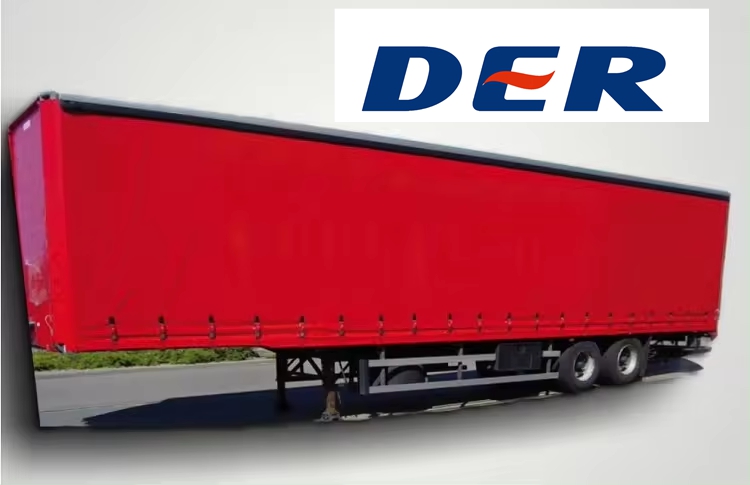
| Truck / trailer tarp | Commonly PVC coated polyester around 500–900 GSM | Repeated movement, rain, strap contact and fabrication favor a reinforced weldable construction. | Tensile/tear, weld strength, abrasion, cold flex, edge reinforcement, finished dimensions |
| Construction equipment cover | Medium/heavy PVC or reinforced PE | Rough surfaces and repeated handling may make puncture and abrasion more important than nominal weight alone. | Surface contact points, wind exposure, handling frequency, repair method |
| Long-term industrial outdoor cover | Higher-duty PVC construction after testing | Long exposure requires a balanced structure rather than simply the heaviest available sheet. | UV duration target, temperature range, abrasion, chemical exposure, attachment load |
| Custom fabricated tarp | Choose after panel and load design | Large finished covers can fail at seams, hems or hardware even when the base material is heavy. | Panel layout, seam type, webbing, D-rings/grommets, tie-down spacing and load direction |
A measurable RFQ reduces ambiguity between suppliers and makes repeat orders easier to control.
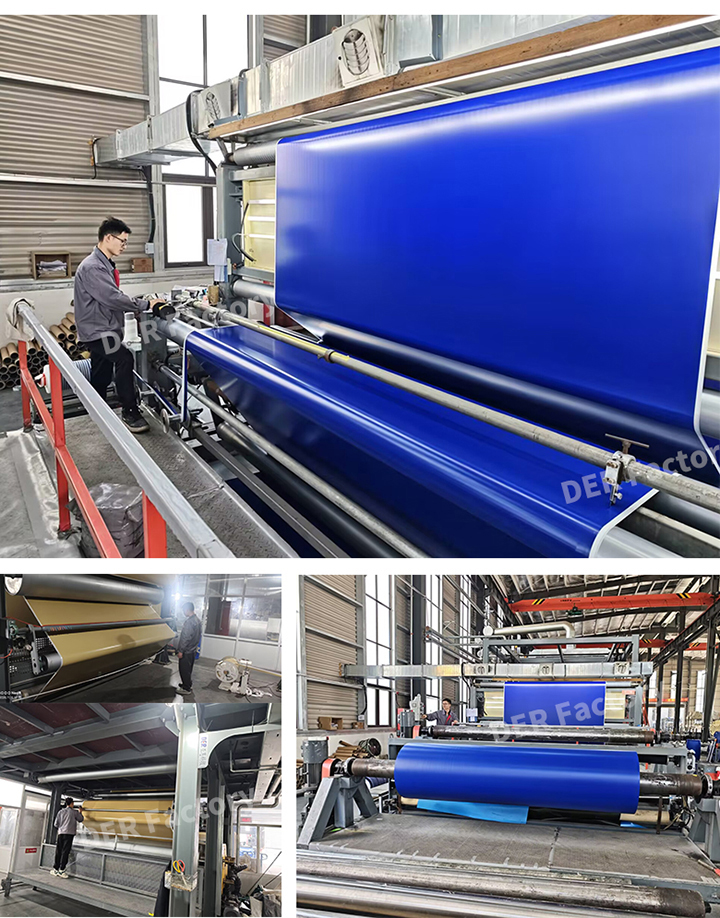
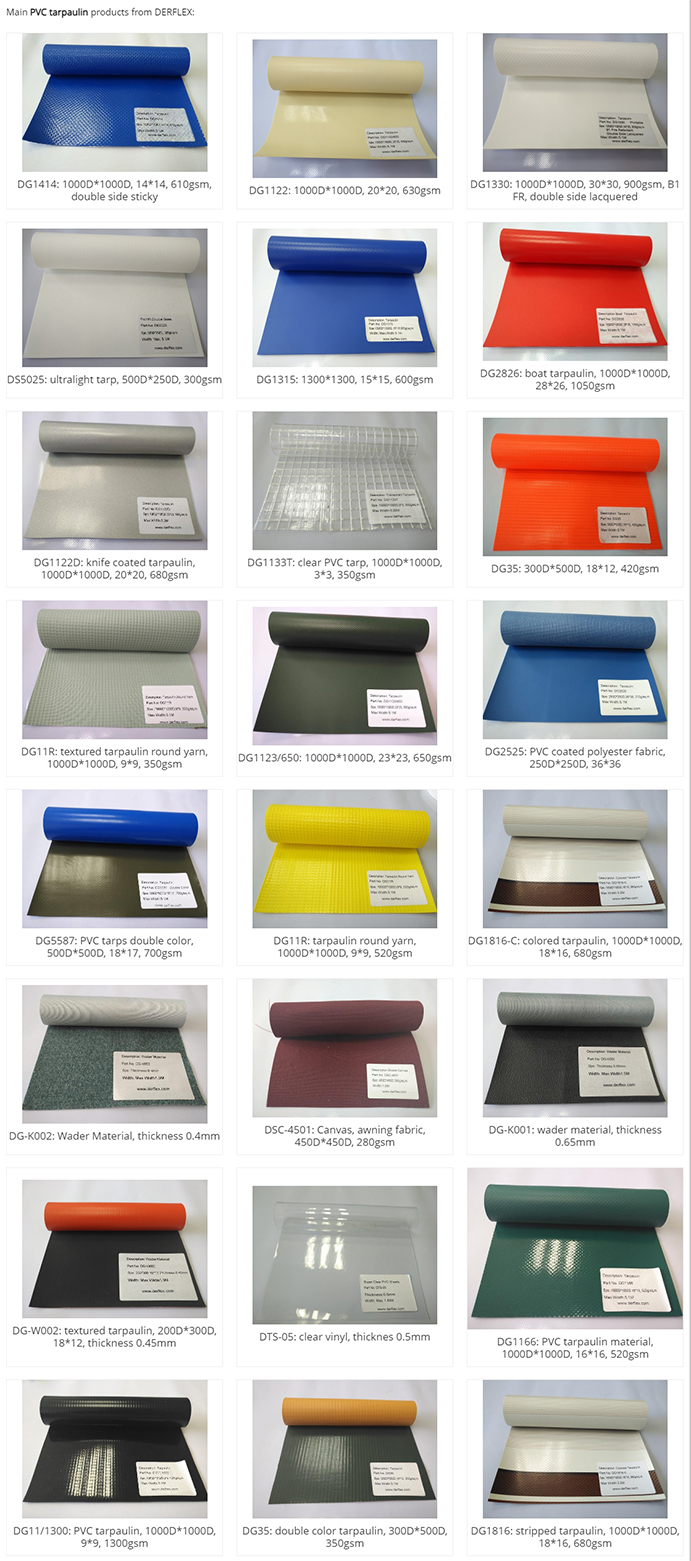
DERFLEX supplies PVC coated and laminated tarpaulin materials as well as fabricated tarp solutions for transport, industrial, construction, agriculture and OEM programs. Published DERFLEX tarp ranges include multiple GSM directions, allowing buyers to start from the application and then match reinforcement, coating and finishing.
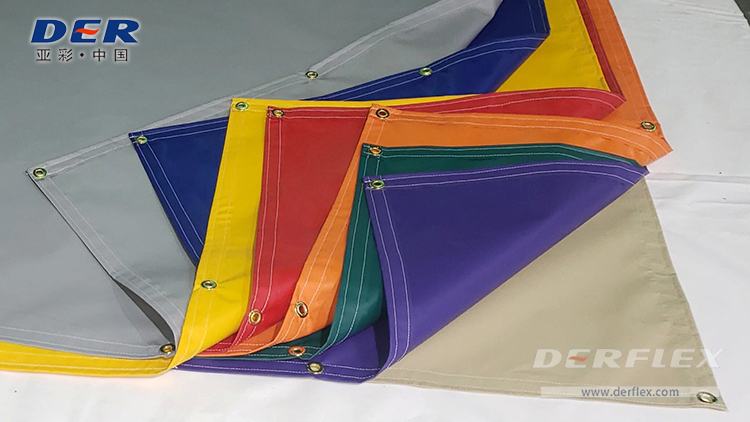
For repeat procurement, DERFLEX can discuss target GSM, thickness, color, roll or finished dimensions, welding/fabrication, hems, webbing, grommets and private-label packing based on the project requirement.
GSM means grams per square meter. It is the mass of one square meter of finished tarp material. GSM is useful for comparing area weight within the same material family, but it does not by itself describe base-fabric strength, coating adhesion, UV formulation or finished tarp reinforcement.
For ounces per square yard, multiply by approximately 33.906 to obtain GSM. For example, 18 oz/yd² is about 610 GSM and 22 oz/yd² is about 746 GSM.
No universal conversion is reliable. GSM measures mass per area, while mil measures physical depth. Different scrims, resin densities, coating ratios and finishes can produce different thicknesses at the same GSM. Request both values when both matter.
No. Higher GSM usually means more material mass, but the best specification depends on the job. Extra weight can increase handling effort and cost without solving a failure caused by weak reinforcement, poor edge design, inadequate UV resistance or unsuitable fabrication.
PVC coated polyester truck tarp programs are commonly sourced in medium-to-heavy weight ranges. A practical starting discussion is often around 500–900 GSM, then adjusted for base fabric, abrasion, weather exposure, fabrication method and expected reuse cycle.
Send the tarp application, current material or sample if available, target GSM/oz, thickness if known, finished or roll size, color, environmental exposure, required tensile/tear values, finishing details, quantity and destination. DERFLEX can then discuss a suitable material and sampling direction.
Send DERFLEX the application, finished size, handling frequency, weather exposure and target market. The team can help narrow the material direction before sampling and quotation.