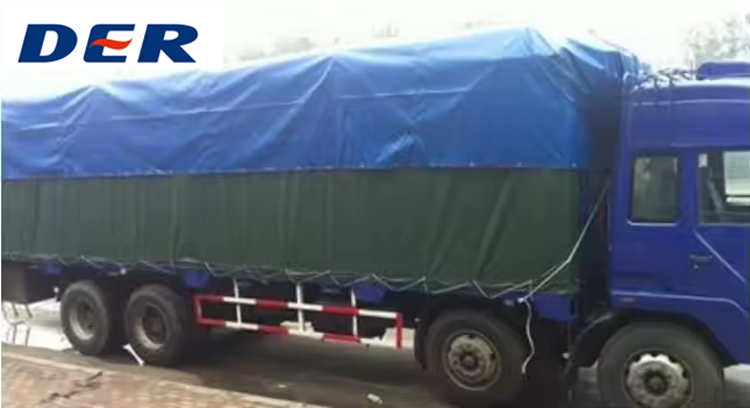
Truck & Trailer Covers
Starting direction: roughly 550–900 GSM depending on duty cycle.
- Prioritize tear, abrasion and seam / edge reinforcement.
- Daily manual folding favors a balanced weight.
- Higher-friction cargo may justify 680–900 GSM.



GSM tells you how much a square meter of finished PVC tarpaulin weighs. It is useful for comparing material classes, finished-cover handling and freight—but it does not tell you tensile strength, tear resistance, thickness or service life by itself.
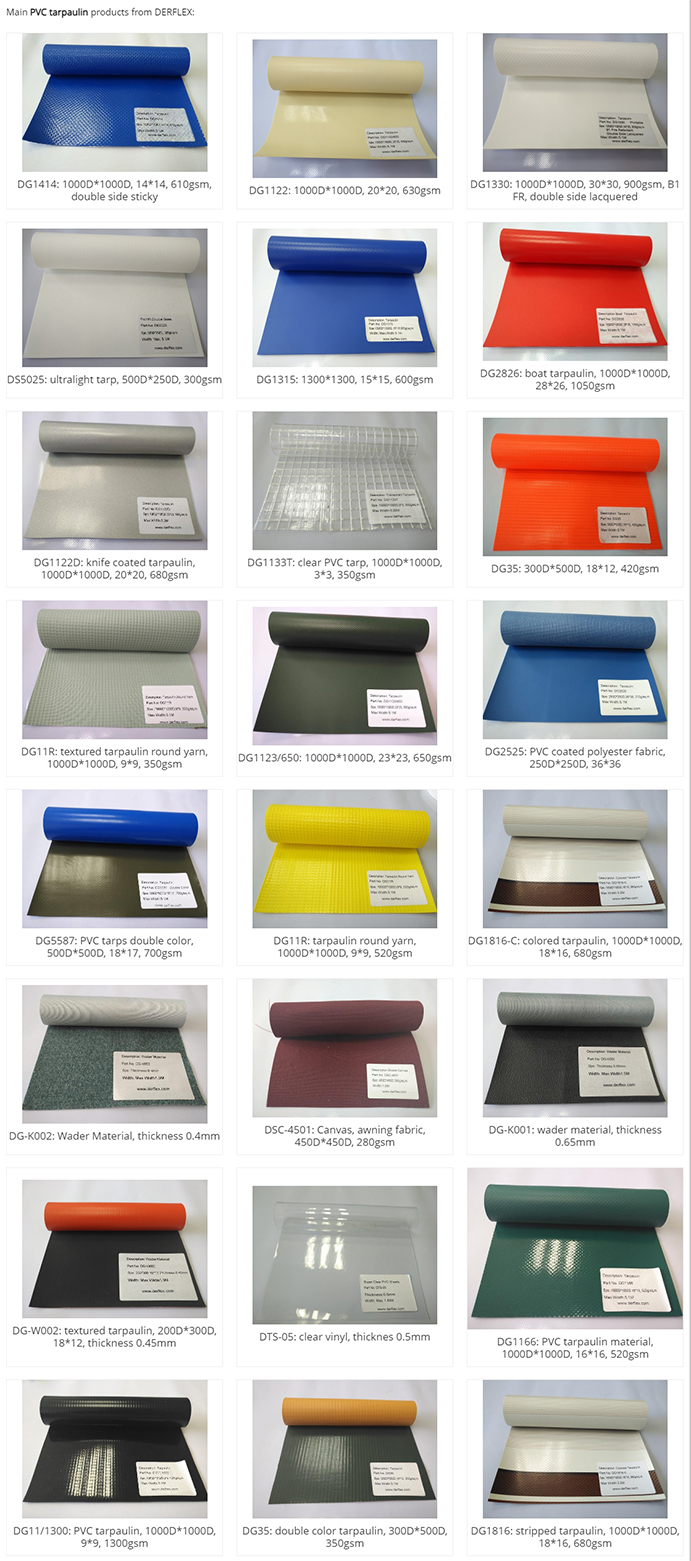
DERFLEX PVC tarpaulin samples: similar-looking materials can use different GSM, yarn, weave, coating and surface structures.
For many reusable PVC coated polyester tarp programs, 450–650 GSM is a practical starting zone; 650–900 GSM is commonly considered when repeated transport, abrasion, tension and longer outdoor cycles increase; 900–1200 GSM is normally reserved for demanding industrial programs where added material mass is justified.
At the lighter end, 300–450 GSM can reduce handling weight and cost for temporary or lower-stress commercial covers. The correct specification still depends on the polyester base fabric, coating share, tensile and tear targets, welding, reinforcement, UV or cold exposure and finished-cover design.
For the complete material family, see the DERFLEX PVC tarpaulin manufacturer page. For acceptance values and test-method thinking, use the tarpaulin technical specification guide.
Use this chart to narrow the starting material class before sampling. The application descriptions are procurement directions, not universal industry grades or guaranteed service-life claims.
| Nominal GSM | Approx. oz/yd2 | Practical Position | Typical Application Direction | Main Buying Advantage | What Must Still Be Verified |
|---|---|---|---|---|---|
| 300 GSM | ≈ 8.8 oz | Light PVC | Temporary commercial covers, lightweight panels, lower-stress fabricated items. | Low material mass, easy handling, lower freight per unit area. | Base scrim strength, coating continuity, UV need, edge loads and whether PVC is required versus a lighter material family. |
| 350 GSM | ≈ 10.3 oz | Light commercial | Short-to-medium duty covers, bags, partitions, lightweight OEM tarp programs. | Balance of PVC waterproof surface and manageable weight. | Tear margin, coating adhesion, expected fold cycles and finished reinforcement. |
| 400–450 GSM | ≈ 11.8–13.3 oz | General purpose | Warehouse covers, machinery rain covers, temporary construction or agricultural protection. | More body while remaining easier to fold than heavier industrial grades. | Outdoor exposure, tensile / tear, coating route, hems and eyelet loads. |
| 500–550 GSM | ≈ 14.7–16.2 oz | Working cover | General equipment covers, commercial truck / trailer directions, construction sheets and storage covers. | Useful step into reusable industrial PVC without excessive finished-cover mass. | Truck speed / flapping risk, abrasion points, denier, seam method and cold flexibility where relevant. |
| 610 GSM | ≈ 18.0 oz | Common heavy-duty vinyl class | Truck tarps, trailer covers, equipment covers, construction and broad industrial protection. | Widely recognized North American 18 oz reference point with manageable handling. | Do not assume one exact mil thickness; compare scrim, tensile, tear, coating and reinforcement. |
| 650 GSM | ≈ 19.2 oz | Industrial workhorse | Truck covers, side protection, tents / shelters, repeated outdoor equipment covers and fabricated panels. | Strong balance of body, weldability, outdoor use and fabrication versatility. | Polyester construction, coating share, surface finish, abrasion risk and actual mechanical minimums. |
| 680–750 GSM | ≈ 20.1–22.1 oz | Higher-wear transport | Frequent transport cycles, rougher cargo contact, long outdoor exposure, premium tarp programs. | Additional material mass and surface wear reserve where abrasion is a real failure mode. | Finished tarp ergonomics, cold folding, weld / seam design, local wear pads and hardware loads. |
| 850–900 GSM | ≈ 25.1–26.5 oz | Heavy industrial | Heavy truck and trailer use, construction, demanding equipment protection and long-cycle covers. | Higher body and wear reserve for repeated pulling, rubbing and outdoor exposure. | Whether the extra mass addresses the actual failure point; lifting, folding, freight and support structure. |
| 1000 GSM | ≈ 29.5 oz | High-mass custom | Industrial containment, heavy equipment, high-abrasion or application-specific fabricated systems. | More material available for demanding construction and wear scenarios. | Support geometry, fabrication equipment, anchor loads, local reinforcement, expected service cycle. |
| 1100–1200 GSM | ≈ 32.4–35.4 oz | Demanding specialty | Severe-duty industrial covers, large supported panels, containment and special OEM programs. | High material mass when surface wear and body are more important than easy manual handling. | Total cover weight, crew handling, folding radius, seam equipment, support / tie-down design and whether a lighter tarp with localized reinforcement would be more efficient. |
Conversion basis used in this chart: 1 oz/yd2 ≈ 33.91 GSM. GSM and oz/yd2 are both area-weight units and can be converted mathematically. GSM cannot be universally converted to mil or mm thickness.
North American buyers often discuss vinyl tarps in ounces per square yard, while international technical sheets often use GSM. These are two units for the same physical quantity: mass per area.
Important: oz/yd2 is not mil. A familiar example is 18 oz ≈ 610 GSM, but an “18 oz PVC tarp” does not define one exact physical thickness. To compare thickness correctly, see How to Choose Tarp GSM, Oz & Thickness.
The same 650 GSM specification can work well in one project and fail early in another. Start with the stress pattern, then use GSM as one part of the construction.
Starting direction: roughly 550–900 GSM depending on duty cycle.
Starting direction: roughly 450–750 GSM.
Starting direction: roughly 450–750 GSM.
Starting direction: roughly 650–1000 GSM.
Starting direction: commonly around 550–900 GSM depending on structure.
Starting direction: 900–1200 GSM when justified.
For transport-specific selection, see PVC tarpaulin for truck covers & transportation. For material construction options, review PVC tarpaulin material.
Product photos are useful for checking color, surface appearance, gloss level, embossing and overall form, but a photo cannot show the complete engineering structure of a PVC tarpaulin. Two blue or gray rolls may look almost identical on a screen while using different polyester yarns, weave density, PVC coating ratios, total GSM, tensile strength, tear resistance and surface treatments.
This is why professional buyers should treat the image as visual identification rather than the final technical specification. The roll samples shown here can represent different constructions developed for truck covers, industrial covers, tents, partitions, agricultural protection or other fabricated PVC applications.
Before a bulk order, the quotation, physical sample, technical data sheet, approved color / finish and final purchase specification should all point to the same product code or approved construction. This avoids a common sourcing problem: approving one sample visually while the purchase order only states a generic description such as “650 GSM blue PVC tarp.”
For repeat orders, also define the acceptable tolerance for the properties that matter to your application. A technically useful purchasing document may include nominal GSM, base-fabric construction, thickness direction, tensile and tear minimums, coating adhesion, width, color, surface finish, fabrication method, packing and any required test evidence.
DERFLEX's PVC tarpaulin TDS reading guide explains how to compare these fields together, while the tarpaulin technical specification guide helps purchasing teams convert an approved sample into a repeatable bulk-order specification.
Large covers become heavy quickly. This calculator estimates raw material mass only; hems, webbing, D-rings, grommets, ropes, straps, patches, extra panels and production tolerances add more.
54.0 m2 × 650 GSM = 35.1 kg (≈ 77.4 lb) before reinforcement and hardware.
Procurement use: compare crew handling, packing volume and freight impact before upgrading the entire tarp to a heavier GSM.
GSM is the sum of the textile reinforcement, PVC layers and surface treatments. Suppliers can distribute that mass differently.
A greater share of the total construction may be concentrated in the polyester reinforcement. That can support tensile and tear behavior, but the final result still depends on denier, weave density, yarn quality and coating bond.
Another material at the same 650 GSM can put more mass into PVC coating and less into the base textile. That may change body, surface behavior and abrasion reserve without proving higher structural strength.
Fair comparison method: compare the same nominal GSM together with base fabric, thickness, tensile, tear, coating adhesion, finish, test method and tolerance. If your purchasing team needs a formal field list, use the DERFLEX specification framework.
More GSM may add some reserve, but the higher-value fix can be wider reinforced hems, webbing, larger patches, different hardware spacing or better load distribution.
Check fit, tension, support spacing, tie-down geometry and edge reinforcement. Extra mass alone does not control aerodynamic movement.
Add wear pads, corner protection or a sacrificial layer at known contact points. Increasing the entire sheet from 650 to 900 GSM can add handling cost without solving one sharp edge.
Review welding process, seam width, coating compatibility and production parameters. Raw fabric GSM does not guarantee finished seam quality.
Review PVC formulation, UV package, surface treatment, color, temperature and actual exposure. Higher GSM does not automatically prove higher weatherability.
Calculate finished weight. A lower GSM with stronger local reinforcement can sometimes produce better operating economics than a uniformly heavier sheet.
For equal area, a 1200 GSM material contains twice the area mass of a 600 GSM material. That difference affects labor, folding, packing, freight, installation and support loads before any hardware is added.
| GSM | Material Mass | Approx. Pounds | Handling Implication |
|---|---|---|---|
| 450 GSM | 24.3 kg | ≈ 53.6 lb | Relatively manageable for a large reusable cover; final hardware still adds weight. |
| 610 GSM | 32.9 kg | ≈ 72.6 lb | Common heavy-duty vinyl area mass; crew handling becomes meaningful at large sizes. |
| 650 GSM | 35.1 kg | ≈ 77.4 lb | Useful industrial balance when the construction matches the actual load. |
| 750 GSM | 40.5 kg | ≈ 89.3 lb | Added mass should be justified by abrasion or duty-cycle needs. |
| 900 GSM | 48.6 kg | ≈ 107.1 lb | Plan folding, deployment and transport rather than treating weight as a laboratory-only number. |
| 1200 GSM | 64.8 kg | ≈ 142.9 lb | Mechanical or multi-person handling may be required depending on finished geometry and use. |
Formula: area (m2) × GSM ÷ 1000 = material-only kg. Finished-product weight is higher after hems, seams, webbing, hardware, patches and extra panels.
A useful inquiry lets the manufacturer select a construction instead of guessing from a generic “heavy duty” label.
For professional B2B sourcing, the goal is not “hit a weight number once.” The goal is to connect the requested application with an approved construction, sample and repeat-order specification.
Application, size, climate, abrasion, handling and failure consequence.
Base fabric, coating route, nominal GSM, thickness direction, finish and functions.
Confirm hand feel, color, surface, welding and the technical data relevant to the job.
Use product code, tolerances, mechanical minimums, processing and packing requirements.
Keep the approved construction, identification and inspection basis consistent across batches.

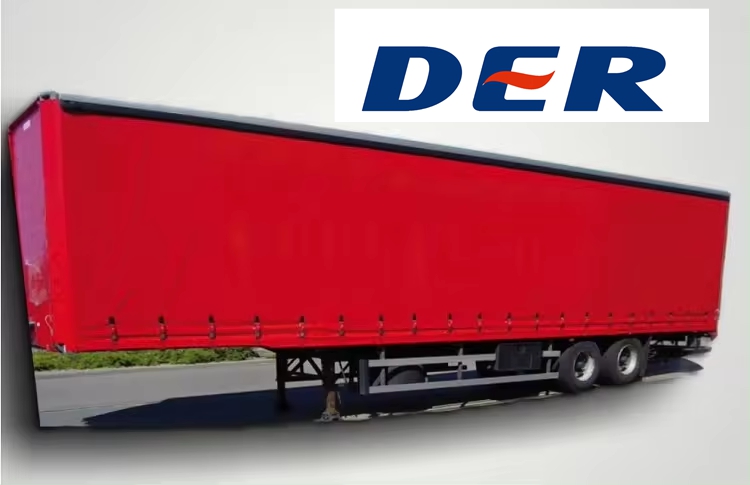
Transport covers are repeatedly folded, tied down, tensioned and exposed to moving air. A heavier material can add wear reserve, but it also adds handling mass to every deployment cycle.
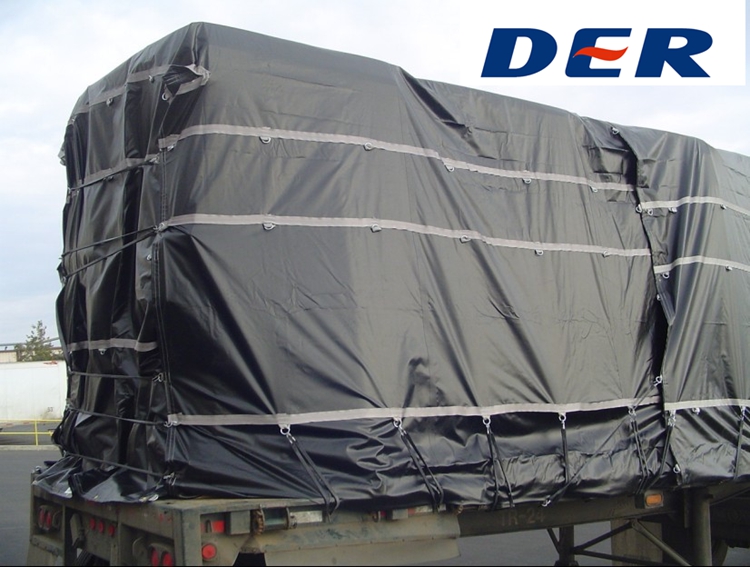
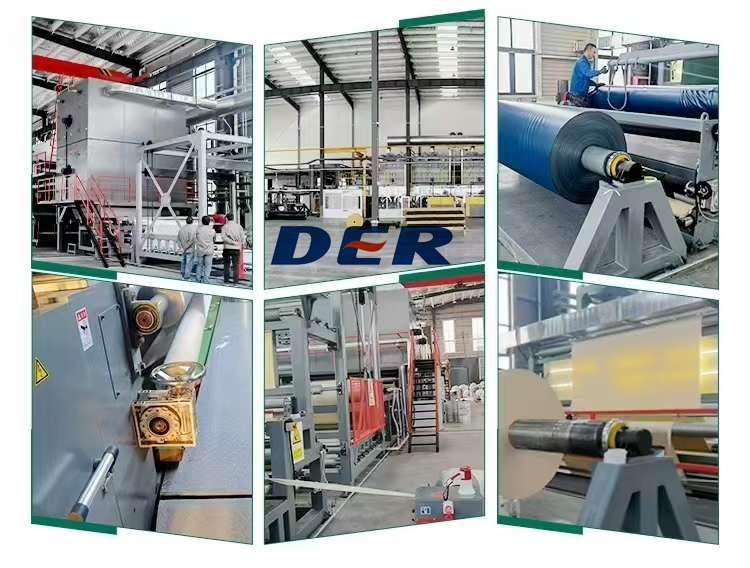
GSM means grams per square meter. It is the finished material mass across one square meter, including the reinforcing textile, PVC layers and applicable surface treatment. It is useful for comparing area weight and finished-cover mass, but it is not a direct measure of tensile strength, tear strength or thickness.
650 GSM is commonly positioned in a heavy-working or industrial PVC tarpaulin range and is frequently discussed for truck covers, equipment covers, shelters and repeated outdoor use. The actual duty capability still depends on the base fabric, coating, mechanical values, seams and reinforcement.
18 oz/yd2 is approximately 610 GSM. This is a direct area-weight conversion. It does not define an exact mil or millimeter thickness.
22 oz/yd2 is approximately 746 GSM, commonly rounded to about 750 GSM for selection discussions. Compare the underlying textile, coating and mechanical specification rather than selecting from the ounce number alone.
Not automatically. A 900 GSM material has more mass per square meter and can provide additional body or wear reserve, but it is also heavier to fold, install and ship. If the real failure is at a grommet, seam or sharp contact point, a 650 GSM construction with better reinforcement may be the more efficient solution.
No universal conversion is valid. GSM measures mass per area while mil measures physical thickness. Polyester share, PVC coating ratio, formulation, embossing and surface finish can create different thicknesses at the same GSM.
Many truck and trailer programs are discussed around 550–900 GSM, with approximately 610–750 GSM providing common heavy-duty reference points and higher weights used when abrasion or duty cycles justify added mass. Final selection should include tear, tensile, coating adhesion, cold flexibility, seam design and edge reinforcement.
Send the application, roll or finished-cover requirement, dimensions, target GSM if known, climate, abrasion and handling conditions, fabrication method, reinforcement, color, surface finish, quantity, destination and any required test or compliance evidence. A reference sample or existing data sheet is useful when matching an established product.
Send DERFLEX the application, size or roll width, expected handling, abrasion / weather conditions, fabrication route and quantity. The goal is to match GSM with the textile, coating and finished-cover design—not simply quote the heaviest material.
Technical ranges on this page are sourcing directions for early selection. Final construction, tolerances, test methods, compliance scope, MOQ, lead time and application suitability must be confirmed for the approved DERFLEX product specification and order.