News
Company News

Ice Rink Liners | Fabric & Custom OEM Panels | DERFLEX

Update:2026/10/18 17:46:56 Views:
Skip to content
Ice rink liners · OEM material sourcing

Ice Rink Liner Fabric and Custom Panels for OEM Projects

Develop your rink liner around the water it must hold and the cold conditions it must survive. Discuss PVC-coated polyester roll goods, cut panels and custom fabrication with DERFLEX for your OEM program. Define the finished dimensions, lowest handling temperature and seam acceptance before selecting a grade. Application suitability is established through the approved material and finished-panel sample.

Roll materialCustom panel discussionDrawing-based specification
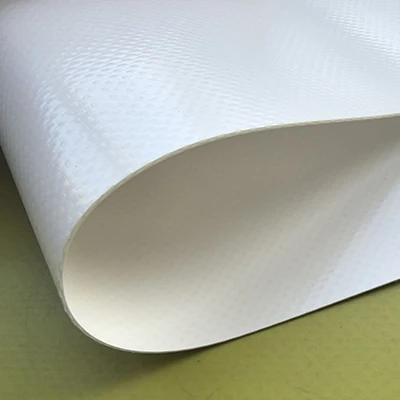
White PVC coated fabric sample with a curved edge and textured surface
DERFLEX white PVC-coated material sample. The photo shows the material surface; final rink grade and panel construction require project approval.
Begin with the containment duty.

Material waterproofness, welded-joint integrity and low-temperature handling are separate acceptance checks.

01 / Define the deliverable

What is an ice rink liner?

An ice rink liner is a continuous water-retaining sheet installed over a prepared base and inside a supported rink perimeter. It contains the water while the ice forms and during thaw periods.

Start with fabric and panel supply.

A liner specification covers the material, panel joins and perimeter interface. Boards, structural supports, refrigeration, ground preparation and installation are separate parts of the rink project. This page addresses the fabric and fabricated-panel scope.

01 / FOR CONVERTERS

Coated fabric rolls

Specify the construction and usable width for your own cutting and joining equipment. Include winding direction, surface identification and traceability needs.

Agree: material grade, roll dimensions, weld trials and receiving checks.

02 / FOR OEM ASSEMBLY

Cut panels & blanks

Define each component with a drawing revision. Separate cut dimensions from the final assembled size, with joining allowances clearly assigned.

Agree: panel geometry, orientation, tolerances and part identification.

03 / FOR PROJECT REVIEW

Fabricated liner panels

Discuss a joined panel against the rink outline, edge detail and water-retention requirement. Approve the seam map, package weight and deployment method together.

Agree: feasible finished size, sealed details, inspection and packing.

02 / Select by duty

Which material belongs in your rink?

Ice rink liners are sold in several polymer constructions. A PVC-coated textile and a polyethylene liner are different products; equal thickness does not establish equal cold flexibility, tear behavior or handling weight. Compare the complete specification for the intended use.

On small screens, scroll the table horizontally to compare every column.

Material routes to evaluate during OEM development
Material routeReason to evaluate itWhat needs evidence
Polyethylene filmA route for projects prioritizing low handling weight and a simple seasonal liner.Actual thickness, puncture behavior, cold handling, panel joints and intended replacement cycle.
Reinforced polyethyleneA reinforcement-based route when tear propagation and handling damage influence selection.Scrim construction, coating continuity, joint integrity and flexibility at the specified temperature.
PVC-coated polyesterA coated-textile route for programs that need a textile reinforcement and a compatible welded-panel process.Rink-specific formulation approval, water retention, coating adhesion, cold bending and finished-panel handling mass.
Weight is a purchasing variable, not a rink rating. GSM measures mass per area; mil measures thickness. A heavier sheet does not automatically pass a colder bend test or produce a watertight welded panel. See the GSM, ounces and mil selection guide.
03 / Translate the rink into a panel

The ice footprint is only the starting dimension.

Measure the inside floor outline, vertical rise at each edge and the path over or around the board. Include the agreed placement allowance. Survey ground slope: a level water surface can produce different water depths across the rink.

Schematic of finished liner size and rink floor footprintA rectangular floor footprint is surrounded on every side by an allowance for vertical rise, board wrap and placement. Dimensions refer to the finished panel. Rink floor footprint Inside length × inside width Rise + board wrap + placement allowance Finished liner length Finished liner width Floor area Perimeter allowance
Schematic, not an installation drawing. Curves, corners, slope and board profiles need their own measured details.
Finished length = floor length + both end allowances
Finished width = floor width + both side allowances

A worked sizing example

Assume a rectangular 20 × 10 m floor and an agreed 0.60 m allowance at each edge: 0.35 m vertical rise plus 0.25 m for board wrap and placement.

Finished panel length
21.20 m
Finished panel width
11.20 m
Finished sheet area
237.44 m²

The 0.60 m allowance is illustrative, not a standard recommendation. Fabrication cut sizes also account for weld overlap, edge treatment and agreed tolerances. Confirm those separately on the approved drawing.

04 / Protect the water barrier

Specify the joins and perimeter as carefully as the fabric.

Panel joins

Require a continuous, qualified joint for the selected coating. Approve seam placement, overlap and inspection criteria. Check intersections and transitions as well as straight seams; a strong joint can still leak.

Edges & attachments

Keep penetrations out of the water-retaining zone. Define the board interface and intended waterline on the drawing. Grommets or stitching are not automatically suitable details for a liner simply because they work on a cover.

Corners & repairs

Show how corners fold or are formed, without forcing the sheet taut across the base. Agree on compatible patch stock and the repair procedure. Repair compatibility needs a material trial, especially after weathering or contamination.

05 / Material reference

Look at the construction behind the panel.

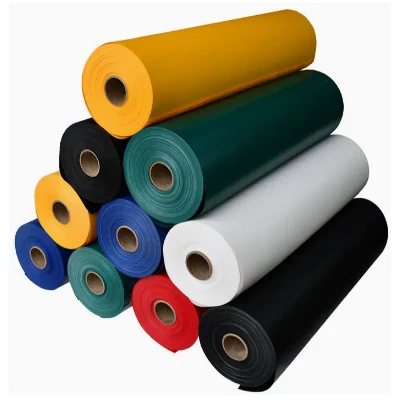
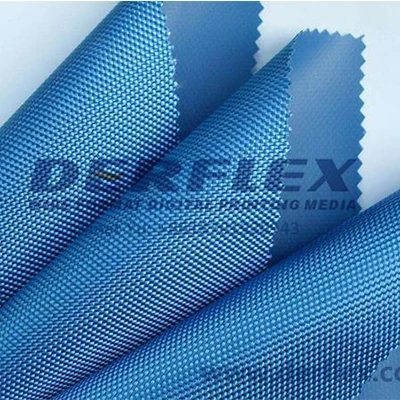
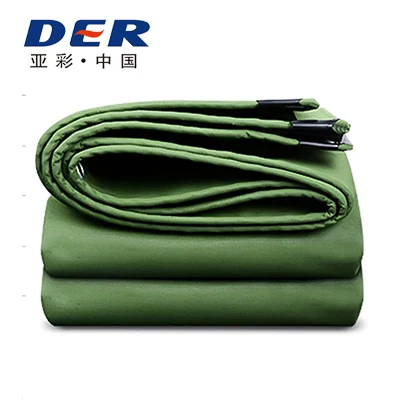
These DERFLEX material photographs illustrate roll format, coated texture and folding. They are material references rather than completed ice rink installations or evidence of an approved rink specification.

06 / Build an acceptance specification

Approve a sample that represents the finished liner.

A flat swatch helps compare the material. An assembled sample reveals what happens at welded overlaps, folded corners and edge details. Agree the test method, conditioning, acceptance limits and reporting scope before production.

Scroll horizontally on small screens.

What an OEM approval record should identify
CheckRecord on the specificationWhy it matters
Water retentionSelected material and finished joints; agreed water head or pressure, duration and leakage acceptance.A weatherproof cover claim does not qualify prolonged water containment.
Cold handlingLowest installation and folding temperature, conditioning and bend/fold procedure.The sheet may be handled differently during setup, freezing, thawing and pack-down.
Mechanical behaviorTear, puncture and coating adhesion requirements relevant to the prepared base and handling route; direction and units where applicable.Thickness alone does not describe damage resistance or layer integrity.
Panel geometryFinished dimensions, tolerances, seam map, corner details, intended waterline and installation orientation.Cut size, nominal rink size and finished liner size are different measurements.
Appearance & packingWater-facing color, material identification, fold map, package mass, labeling and batch reference.The receiving team needs to identify and deploy the correct side and panel.

Define the duty

Send the rink outline, water depths, climate and planned handling conditions.

Trial the material

Review a candidate grade and trial the intended joining process.

Approve the assembly

Include representative joints, corners and edges in the approval sample.

Freeze the revision

Record the agreed material, drawing, checks and packaging for repeat orders.

07 / Before you order

Resolve the site details before placing the order.

Use an outline drawing and installation photos to explain the project. Include locations where the liner touches rough ground, sharp edges, boards or other equipment.

What changes the quotation?

Material construction, usable roll width, panel yield, weld length, corner work, inspection, packing and order volume all influence cost. Confirm the exact supply format before comparing quotations.

Request MOQ, sample terms, production timing and delivery terms against the selected specification and destination.

  • Prepare and support the base. Remove sharp debris and define any protective underlay. The perimeter system must carry its design loads; the liner is a water barrier, not a structural wall.
  • Account for slope and depth. Measure the low and high sides, board profile and overflow or drainage plan with the rink-system provider.
  • Check the water-facing side. White is commonly requested for outdoor rinks. Agree opacity and color rather than assuming a color name guarantees thermal performance.
  • Plan seasonal handling. Do not pull a liner free while trapped in ice. Drain, clean and dry it using the approved procedure before folding and storage.
  • Review each reuse. Check folds, corners, repairs and seams before refilling. Reuse depends on condition and duty; it is not established by a generic service-life claim.
08 / Buyer questions

Ice rink liner questions, answered.

Can I use an ordinary tarp as an ice rink liner?

A general-purpose cover is not automatically a water-retaining liner. Confirm continuous coating, watertight joints, cold flexibility and the finished edge detail. Needle holes, grommets or an unsuitable seam can create leakage paths even when the parent fabric sheds rain.

Is PVC-coated fabric better than a polyethylene rink liner?

Choose by the project specification. Polyethylene products include lightweight films and reinforced constructions; PVC-coated polyester offers another reinforcement and fabrication route. Compare cold handling, leakage acceptance, puncture and tear behavior, package weight and repair process on an equivalent basis.

What thickness or GSM should I specify?

Begin with the intended water depth, prepared base, handling temperature, panel dimensions and reuse plan. Then evaluate a candidate material against the agreed checks. GSM and thickness describe different properties, so they cannot be converted directly without construction and density information.

Can a large liner arrive as one deployment panel?

A panel may be factory-joined from narrower widths and still arrive as one deployable assembly. Confirm fabrication feasibility, seam locations, finished dimensions, packed mass and the crew's handling method. Describe it as factory-welded where appropriate; “one panel” does not mean “no seams.”

What documents and samples should an OEM buyer request?

Request the proposed material specification, current drawing revision, representative seam and corner samples, applicable test records and the agreed inspection plan. Identify which evidence covers only roll material and which covers the finished assembly. Rink-specific claims need evidence for that application.

What should I send DERFLEX for a quotation?

Send the rink outline, edge cross-section, maximum water depth, minimum handling temperature, quantity, destination and whether you need rolls, cut pieces or a fabricated panel. Include an existing sample or target acceptance specification if available. A sketch is a useful starting point.

Start your OEM project

Bring the rink outline.
Define the right liner.

Send DERFLEX your application details and desired supply format. Build the material, dimensions and sample-approval requirements into one clear quotation brief.

Include with your inquiry

  • Inside floor dimensions and perimeter detail
  • Water depth, ground slope and lowest handling temperature
  • Rolls, cut pieces or fabricated panels
  • Quantity, destination and project schedule
  • Sample, testing and packing requirements
Consulting Services
+86-021-54361792 / 54361798
Email
sales@derflex.com