Seam strength
The measured force associated with rupture or failure of a defined seam specimen under a stated method, specimen width, direction and conditioning.



A strong tarp can still fail at the joint. For PVC-coated tarpaulins, seam strength depends on the material, load direction, overlap or stitch construction, process control and reinforcement—not simply on whether the seam is called “welded” or “sewn.”
Use this guide to compare welded and sewn seams, understand how seam strength is tested, read failure modes correctly, and write a purchase specification that can be checked before mass production.
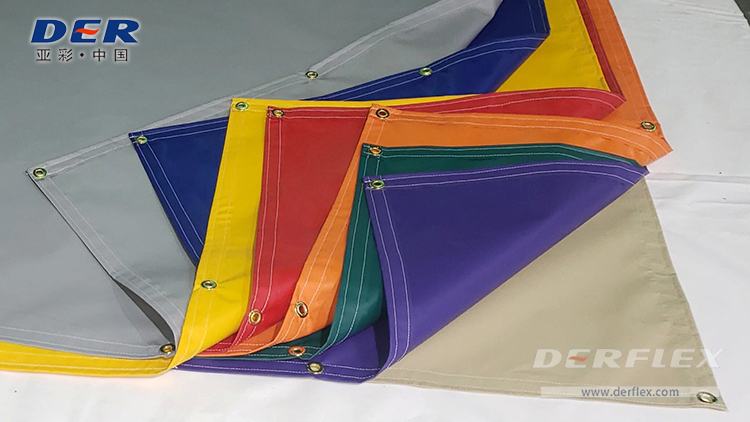
Neither method is automatically stronger. A properly developed weld in compatible PVC-coated fabric can transfer high load without needle perforations and is usually the first choice for water-critical panel joins. A sewn seam can also carry substantial load when thread, stitch pattern, seam allowance, fabric edge distance and reinforcement are engineered for the job.
The more useful procurement question is: where does the joint fail, at what measured force, in which load direction, and does that result meet the finished tarp’s actual duty? If a weld peels at low load, the process window may be wrong. If a sewn line tears through the coated fabric beside the stitches, simply adding stronger thread may not solve the real failure mode.
The joint method changes how load travels through the tarp, but material construction and workmanship still decide the result.
| Decision factor | Welded seam | Sewn seam | Buyer implication |
|---|---|---|---|
| Joining principle | PVC or another compatible thermoplastic surface is activated and consolidated under heat / RF energy and pressure. | Needle and thread mechanically lock layers through a stitch pattern. | Specify the actual process, not just “welded” or “sewn.” |
| Primary strength variables | Material compatibility, coating adhesion, seam width, overlap, temperature / energy, pressure, speed or dwell, cleanliness and cooling. | Seam type, stitch density, thread, needle size, seam allowance, edge distance, tension and reinforcement. | Approval samples must represent the final construction. |
| Water path | No needle-hole line across a correctly formed welded overlap. | Needle penetrations are created; sealing or a protected seam design may be needed for rain-critical use. | Strength testing does not replace a water / leakage check. |
| Typical strong use | Long PVC panel joins, truck covers, tents, industrial sheets, roof / wall panels and sealed products. | Curves, pockets, zippers, webbing, straps, multilayer details, canvas and mixed-material assemblies. | Hybrid construction is often practical. |
| Common failure | Interfacial peel, incomplete fusion, edge lift, coating damage, scrim distortion or fabric tear beside the weld. | Thread rupture, stitch pull-out, perforation tear, seam slippage, fabric rupture beside the stitch line. | Record where failure occurs, not only the peak force. |
| Repairability | Can be repaired with compatible patch material and qualified welding equipment / process. | Often familiar to repair shops; waterproof resealing may still be required. | Field service strategy can influence seam selection. |
| Best procurement wording | Define material, welding route, joint geometry, seam width / overlap, direction, test method, acceptance value and failure mode. | Define seam type, stitch / thread system, allowance, reinforcement, sealing method, test method and acceptance value. | A drawing plus approved sample is stronger than a vague “heavy-duty seam” note. |
A welded seam may be excellent for waterproof panel continuity while a sewn or combined detail may be better around straps, pockets or hardware. The finished tarp does not need one joining method everywhere.
Separating these terms prevents misleading supplier comparisons.
The measured force associated with rupture or failure of a defined seam specimen under a stated method, specimen width, direction and conditioning.
A comparison of seam strength with the parent material’s breaking strength when both results are genuinely comparable. It helps show whether the joint is the weak link.
A barrier property. A joint can be mechanically strong but still contain a leakage path, especially around stitch holes, intersections, corners or incomplete weld areas.
Use this ratio only when specimen width, loading direction, conditioning and test basis are compatible. A percentage calculated from unrelated methods can look precise while being technically meaningless.
Also record the actual failure mode: seam rupture, weld peel, thread break, stitch-line tear or parent-fabric break.ASTM D751-26 is a current coated-fabric test standard that covers tarpaulins and includes sections for seam strength and dead-load seam strength, in addition to breaking, tear, hydrostatic and coating-adhesion tests.
ISO 13935-1:2014 addresses maximum force to seam rupture for sewn seams in textile fabrics, but its scope states that it is not normally applicable to coated fabrics. That distinction matters when a PVC tarpaulin buyer asks for an “ISO seam test” without specifying whether the actual material falls within the method’s intended scope.
Procurement rule: name the exact method, specimen direction, units, conditioning and minimum acceptance criterion in the purchase specification. Do not compare values produced under different methods as if they were interchangeable.
The location of failure helps identify whether the material, seam process or reinforcement should be changed.
The joined surfaces separate along the weld. Review contamination, coating compatibility, energy / heat input, pressure, overlap and surface finish.
The fabric breaks next to an overheated or embrittled zone. More heat is not always more strength.
The coated fabric fails away from the bonded interface. This often indicates the weld is no longer the first limiting point, but the whole design still needs load-path review.
Thread strength, UV / temperature suitability, stitch formation and local abrasion may control the seam before the base fabric is fully used.
Closely spaced holes or insufficient edge distance can form a tear path in the coated textile even when the thread itself is strong.
The seam may survive while webbing, a D-ring patch, hem or grommet zone fails. Finished-cover QC must include these local load-transfer areas.
A lab result is the output of a complete construction. These variables should be frozen when a repeat order is approved.
The parent fabric carries tensile and tear loads; the coating provides the weldable interface and surface protection. A seam specification should not be separated from the material specification.
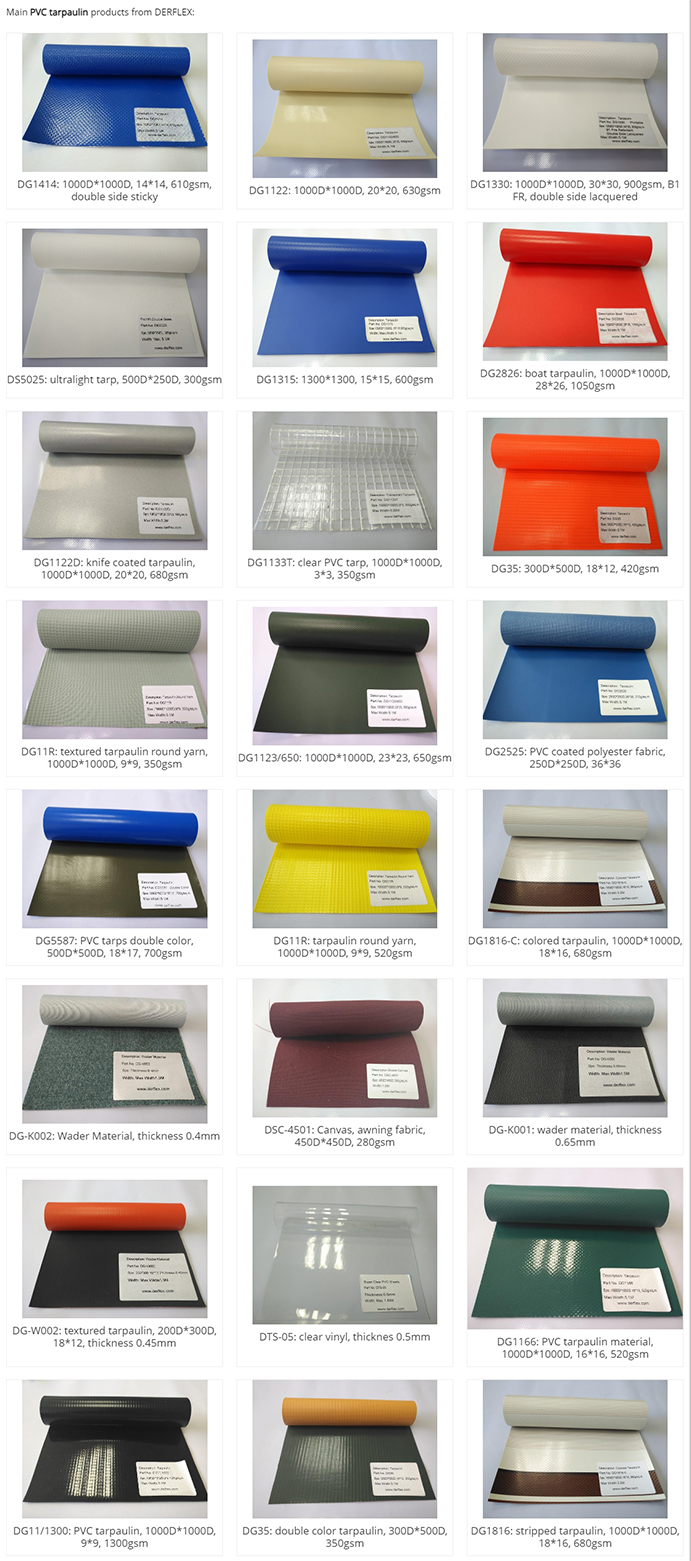
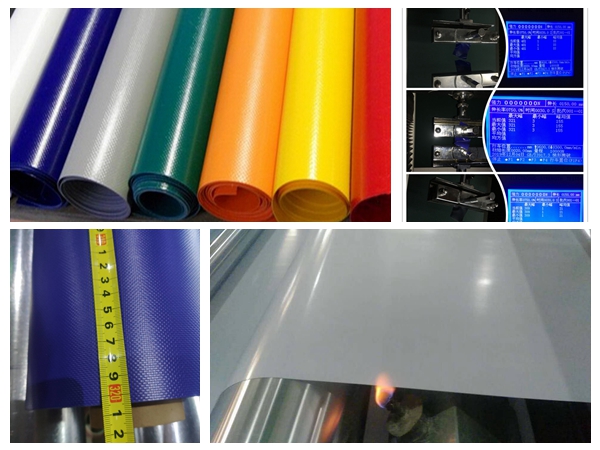
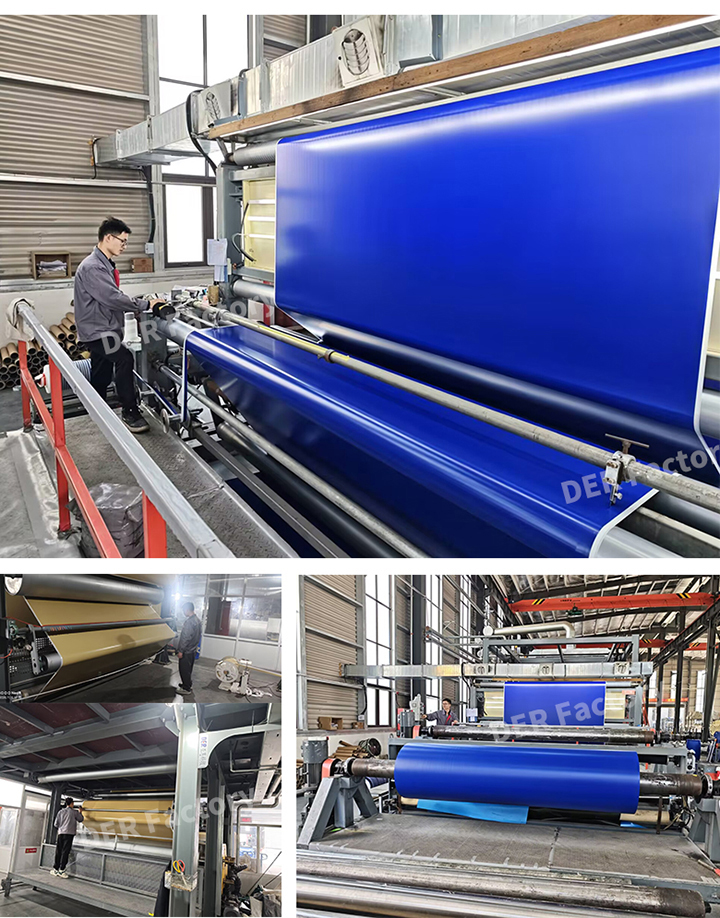
The goal is not to create the strongest laboratory coupon. It is to verify the production construction that will actually be shipped.
Use the production-grade coated fabric, surface finish, color / coating route and reinforcement defined for the order.
Define weld overlap or sewn construction, orientation, layers, webbing and transitions. Include the drawing revision.
Specify specimen direction, method, conditioning and units. Straight-seam performance may not predict corners or cross-seams.
Keep the peak result and the break location. A change in failure mode can reveal a process shift even when the headline number still passes.
Consider an agreed after-aging, flexing, temperature, water-exposure or dead-load check when the field environment could change the seam over time. The exact conditioning should be project-defined rather than added as an arbitrary marketing test.
These are starting directions for specification planning. Final seam design should be confirmed against the actual fabric, dimensions, loading, water demand and installation.
| Application | Practical seam direction | Main reason | QC focus |
|---|---|---|---|
| Truck / trailer tarp | Hybrid Welded panel joins + engineered edge / hardware reinforcement | Rain protection, repeated folding, wind movement and tie-down loads act in different zones. | Panel seam strength, flexing, abrasion zones, hems, webbing, D-rings / grommets. |
| Construction / storage cover | Welded or hybrid | Large waterproof panels benefit from continuous joins; attachment zones need separate reinforcement. | Water shedding, wind load, cross-seams, corners and fixing-point pull. |
| Tent / shelter panel | Welded main panels | Long straight seams and weather continuity are important; doors / zippers may use other details. | Seam direction, roof water paths, intersections, repeated erection and any project-specific compliance. |
| Equipment cover | Hybrid | Curves, pockets, access panels and abrasion patches can favor sewing while exposed panel joins remain weldable. | Fit, corner stress, zipper / strap attachments and local wear. |
| Liquid / air containment | Qualified welded system | Barrier continuity is central; unsealed needle penetrations are generally unsuitable for the primary containment seam. | Leak / pressure test, seam strength, cross-seams, valves, material compatibility and process validation. |
| Canvas / non-weldable textile tarp | Sewn | The material may not provide a thermoplastic weldable interface. | Seam type, thread, stitch density, edge allowance and water treatment if needed. |
A result in N/25 mm under one coated-fabric method should not be ranked against a different specimen width or textile seam method without a valid conversion and equivalent setup.
A narrow, contaminated, under-fused or overheated weld can fail early. The label describes a process family, not a guaranteed performance level.
Stitch count alone does not define thread, needle, seam allowance, edge distance or reinforcement. Too much perforation can create its own tear path.
Cross-seams, corners, hems and hardware zones can have more layers and very different stress concentration than a straight laboratory coupon.
UV, temperature, water, repeated folding and abrasion can alter thread, coating or bonded interfaces. Qualification should reflect the project’s real risk.
A very stiff or overbuilt local joint can push failure into nearby fabric. The target is controlled load transfer and predictable finished-cover durability.
DERFLEX supplies PVC-coated tarpaulin materials and supports roll goods, cut panels and finished tarp discussions for industrial, transport, construction and OEM programs. Available fabrication directions include hot-air / compatible HF-RF welding, sewing, reinforced hems, webbing, grommets, D-rings and custom finished details subject to the approved project specification.
For a new seam program, send the intended material, finished size, seam drawing, load direction, welding / sewing equipment, water requirement and target acceptance method. A production-representative sample can then be reviewed before repeat manufacturing.
Not automatically. In compatible PVC-coated fabric, a properly developed weld can provide strong load transfer and a continuous water-resistant joint without needle holes. A sewn seam can also be mechanically strong when the seam type, thread, stitch density, edge allowance and reinforcement are correct. Compare measured seam performance and failure mode for the actual production construction.
There is no universal number for every tarp because specimen width, material, test method, load direction and end use vary. A better specification names the test method and minimum project acceptance value, then compares the seam with the parent fabric using compatible test conditions.
ASTM D751-26 is a current coated-fabric standard whose scope includes tarpaulins and includes seam strength and dead-load seam strength sections. The buyer and supplier should confirm the exact method, specimen direction, units and acceptance criteria. ISO 13935-1 is a sewn-seam textile method but is not normally applicable to coated fabrics, so it should not be selected automatically for PVC tarpaulin.
No. Mechanical seam strength and waterproofing are different properties. A sewn seam can carry load but leak through needle holes; a weld can carry load yet have a local channel, edge lift or imperfect cross-seam. Use a separate water, spray, hydrostatic, air or liquid-leak test appropriate to the application.
Common causes include incompatible surface chemistry, low coating adhesion, contamination, insufficient or excessive heat / RF energy, poor pressure, incorrect speed or dwell, narrow overlap, surface lacquer effects, misalignment and distortion before the joint cools. A representative process trial is more useful than copying settings from a different fabric.
Yes. Hybrid construction is common because different zones do different jobs. Welded panel joins can support waterproof continuity while sewn or mechanically reinforced details may suit webbing, straps, pockets, zippers or complex shapes. Each transition should be reviewed as part of the load path.
Send the application, material or target GSM / thickness, finished size, seam drawing, joining method, water requirement, load direction, reinforcement and hardware layout, quantity, intended test method and any required aging or compliance conditions.
Send DERFLEX the tarp application, material, dimensions, seam layout, welding / sewing process, reinforcement, water requirement and acceptance criteria. The project can be reviewed around the real failure risk rather than a generic “heavy-duty seam” claim.