
A method is a measurement rule.
A test-method reference alone does not tell the laboratory what result your order must achieve.



PVC coated fabric testing should answer three separate questions: how much pulling force the textile withstands, how a cut propagates, and how firmly the PVC coating remains bonded to the base fabric. Tensile, tear and coating adhesion results are useful only when the test method, specimen direction, conditioning and acceptance limit are stated together.
For importers, fabricators, OEM brands and procurement teams, this guide turns those measurements into a comparable material specification for truck covers, tents, industrial curtains and containment products. It also explains what a report can establish—and what still needs a weld or finished-product trial. DERFLEX supplies PVC coated textiles with custom weight, width, color and finish options. Share your application and required test basis to discuss a suitable construction, samples and order-specific verification.
Reference review: · Fabric, coating and fabricated joints
Start with tensile strength, tear resistance and coating adhesion, then add checks for the actual service environment and fabrication process. ISO 1421, ISO 4674-1 and ISO 2411 address these three properties; ASTM D751 offers multiple coated-fabric procedures. Specify the exact method, directions, specimen state and purchase limits before requesting comparable results.
For PVC coated textile sourcing, a weight or thickness description should accompany the performance requirements. It cannot replace them.
A test-method reference alone does not tell the laboratory what result your order must achieve.
Strip, grab, tongue, trapezoid and pendulum results describe different measurements.
Seams, fittings, reinforcement and processing can introduce their own failure points.
Select the method before selecting a numerical limit. Keep the method designation attached to every value in the quotation, technical data sheet and purchase order.
| Property | Relevant reference | What it evaluates | What the buyer must define |
|---|---|---|---|
| Tensile strengthPulling resistance | ISO 1421:2016 ASTM D751-26, selected breaking-strength procedure | Force at rupture; ISO 1421’s strip route also addresses elongation at break. | Strip or grab, specimen width, direction, conditioning, reporting unit and minimum values. |
| Tear resistanceGrowth of an existing cut | ISO 4674-1:2016 ASTM D751-26, selected tear procedure | Resistance to tearing under the specified geometry and loading method. | Exact procedure, specimen orientation, direction convention, unit and acceptance basis. |
| Coating adhesionPVC-to-textile bond | ISO 2411:2024 ASTM D751-26, coating-to-fabric adhesion procedure | Bond performance between the coating layer and fabric substrate. | Tested face, direction, preparation, width, conditioning, failure description and limit. |
| Supporting propertiesSelected for the application | ASTM D751-26 includes dimensions/mass, hydrostatic resistance, low-temperature and seam procedures. | Construction, barrier, handling or joint performance under a named procedure. | Choose only the relevant tests. Confirm their scope and suitability for the ordered material or assembly. |
Use the edition required by your contract. A legacy customer specification may name another edition; agree the test basis explicitly. This guide explains procurement decisions, rather than reproducing laboratory procedures or specimen templates. For a broader inspection framework, see the tarpaulin standards and QC guide.
A tensile tester loads a gripped specimen until rupture. ISO 1421 distinguishes a strip method from a grab method. The strip route measures strength and elongation at break; its grab route measures strength. Ask for longitudinal and transverse results separately.
A breaking-force result is not a permissible installed load for a complete cover or structure.
A prepared cut or notch creates a controlled starting point. The chosen tear method evaluates propagation under its own specimen geometry and loading conditions. Results from tongue, trapezoid or pendulum methods should not be treated as interchangeable.
For directional fabrics, state the laboratory’s orientation convention rather than assuming “warp tear” always describes the same cut.
The test evaluates separation between the PVC layer and textile reinforcement using prepared specimens. Review both force and the observed failure: peeling, coating rupture and fabric failure carry different meanings. Specify the face and specimen condition.
Coating adhesion is distinct from weld strength and surface ink or topcoat adhesion.
Diagrams illustrate the three concepts only; they do not define a standard’s specimen shape, dimensions or fixture setup.
Yes, when they describe the same test basis and identifiable material. A higher number on a different test basis does not establish a stronger purchase option.
| Check | Evidence to request | Why it changes the decision |
|---|---|---|
| Material identity | Grade/revision, color, finish, construction and lot or sample ID. | An unnamed sample cannot be confidently matched to the ordered fabric. |
| Method & geometry | Standard edition, procedure, specimen dimensions and test settings. | A grab result and a strip result remain different tests after converting units. |
| Direction & coating face | Separate directions; specimen-orientation convention; face/reverse where applicable. | A single best-direction result can conceal the direction needed for your cutting layout. |
| Specimen condition | Conditioning, wet/dry state and any ageing or exposure sequence. | Initial and post-exposure values answer different qualification questions. |
| Results & failures | Valid specimen count, individual readings, required statistic and abnormal-failure notes. | An average, an individual minimum and a declared specification minimum are different quantities. |
| Acceptance decision | Signed purchase limits, sampling rule and authorized release status. | A laboratory measurement does not itself define the order’s pass/fail criteria. |
For a 50 mm strip, a report may express a result as N/50 mm. That describes force for the stated specimen width; it is not tensile stress in MPa. A grab-test result expressed in N does not become a strip result through arithmetic.
For adhesion, retain the specimen width or the standard’s force-per-width expression. Compare values only after the procedure, geometry and reporting convention have been aligned.
If the reports do not align, ask both suppliers to test matched samples to one agreed basis. Do not invent a conversion factor between test methods. Keep both original reports with the revised specification.
When the coating or substrate fails before a stable peel develops, the result does not provide an unlimited or automatically superior coating-bond value. Ask what failed, at what force, and how the laboratory reported it.
PVC coated polyester is a composite: the textile reinforcement, coating and any surface finish have different roles. A coating-to-fabric adhesion result evaluates a different interface from surface-finish adhesion or the joint between two welded sheets.
Ask the report to identify the tested face and layer boundary. If your supplier changes the finish or coating construction, review whether the original evidence still applies to the ordered material.
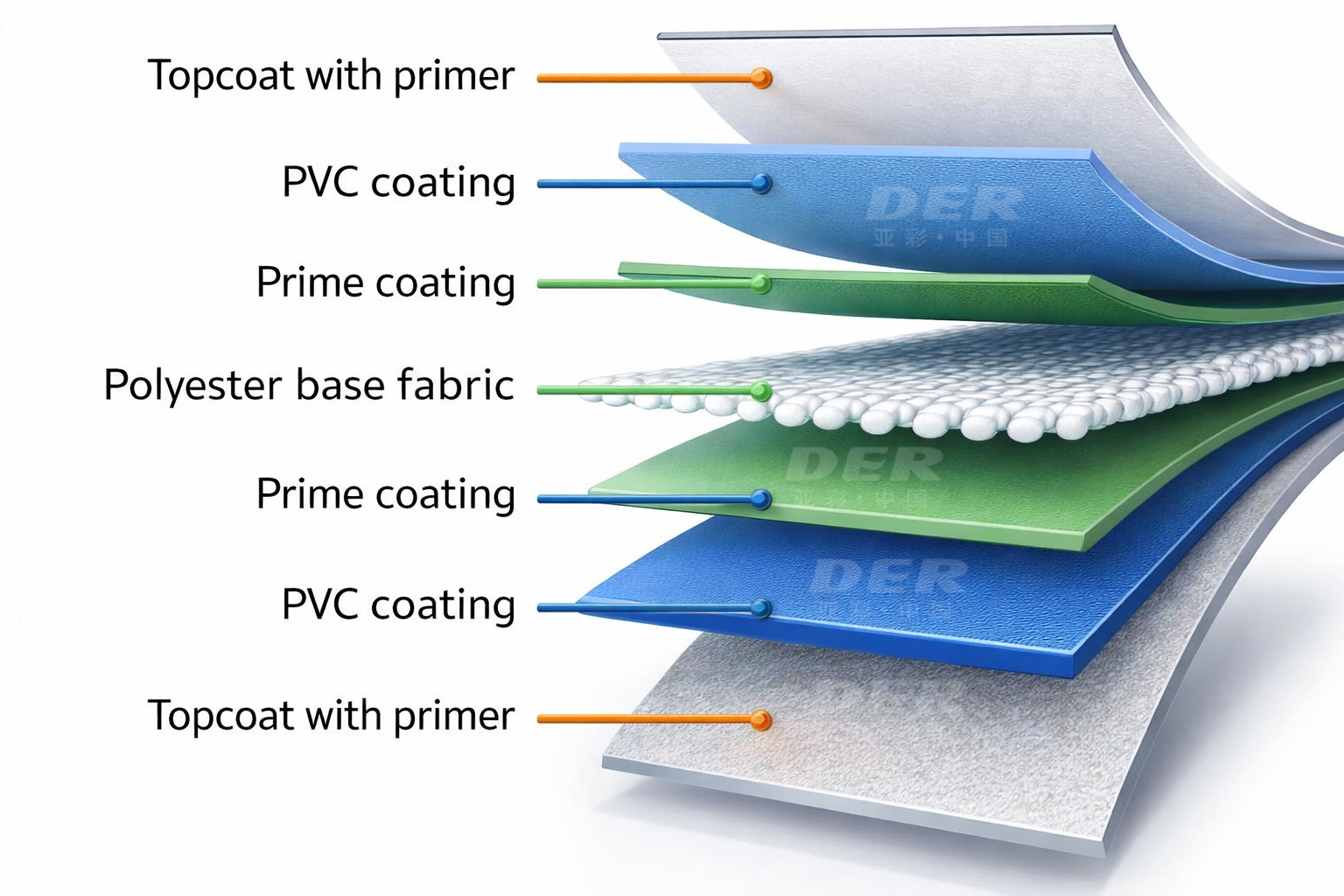
The separation provides information about the interface under that procedure. Record whether it is clean separation or leaves coating patches, and retain the laboratory’s classification and force calculation.
The coating becomes the limiting component in that specimen. Record rupture and any valid reportable result. Do not label the outcome “infinite adhesion” or substitute an unsupported numerical bond strength.
Record the substrate or mixed failure and confirm whether the prescribed measurement was obtainable. Use the agreed test method and laboratory interpretation to decide what the report supports.
For repeated folding or wet service, consider adhesion checks after an agreed exposure or flex sequence. Define exposure conditions, duration, the measured endpoint and whether acceptance requires an absolute residual value, a retention percentage, or both.
An accelerated ageing duration should not be translated directly into years outdoors without a validated correlation for that construction and environment.
For PVC tarpaulin roll conversion, test a joint made with the ordered grade, finish and intended welding process. Record overlap, equipment settings and specimen orientation. Inspect where the joint failed and add a leak or pressure check when that function matters.
Strong flat-fabric results cannot approve an untested seam, valve connection or reinforced attachment.
The same PVC coated polyester construction can face different demands in a truck cover, a roll-up curtain and a containment assembly. Use the risk map below to decide what to add to the core tests.
| Application | Risk to investigate | Additional evidence to discuss | Information to provide |
|---|---|---|---|
| Truck covers & outdoor tarps | Cut growth, abrasion, concentrated attachment loads and weather exposure. | Reinforced attachment trial, seam assessment, abrasion and appropriate ageing checks. | Contact surfaces, tie-down layout, climate and cover geometry. |
| Roll-up doors & industrial curtains | Repeated flexing, roll contact, cold handling and coating separation. | Agreed flex sequence, cold test and adhesion after selected pre-treatment. | Rolling/folding action, handling frequency and operating conditions. |
| Tents & tensioned membranes | Directional tension, joint failure and exposure. | Joint tests, project-specific structural material data and applicable flame evidence. | Design specification, fabric orientation, connection details and required standards. |
| Inflatables & containment products | Assembly leakage, joint separation and fitting interfaces. | Barrier checks plus representative weld, pressure/leak or assembly validation. | Contents, operating conditions, connection design and intended service. |
| Chemical-contact covers & liners | Swelling, softening, bond loss or strength reduction after contact. | Exposure to the identified chemical followed by the agreed appearance, barrier and retained-performance checks. | Chemical name, concentration, temperature, contact duration and cleaning process. |
These are planning recommendations, not a claim that every DERFLEX grade has completed every listed test. Confirm available evidence, test scope and acceptance requirements during quotation.
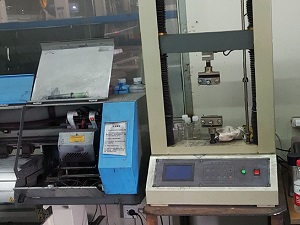
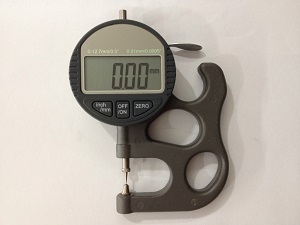
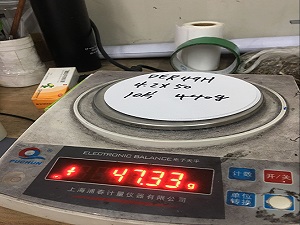
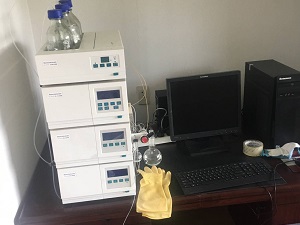
Original photographs from DERFLEX’s quality control and inspection overview. Equipment images illustrate the workflow and do not constitute a test certificate.
A useful buying plan gives each test a role: select the construction, approve the process, verify the production lot or investigate a change.
Identify the substrate, coating, weight, width, color and finish. Give each candidate a sample ID and keep a labelled reference.
Agree core tests and application checks. Evaluate representative seams or assemblies before approving the construction.
Sign the specification revision, limits, sampling, retest rule and reporting requirements. Define which changes require requalification.
Match labels, inspected material and reports. Record acceptance, hold or rejection against the agreed purchase criteria.
Define the production lot and how rolls and sampling locations are selected. A laboratory method’s specimen count is different from a commercial lot-sampling plan. Do not adopt a fixed percentage of rolls without considering lot size, variability and the importance of the property.
State whether the acceptance rule applies to a mean, every valid reading or another agreed statistic. Document abnormal failures and retesting instead of discarding inconvenient results.
A technical data sheet can describe a grade. A batch inspection record can describe an identified production lot. A third-party report describes the submitted sample and stated scope. Ask how those records connect.
The pre-shipment roll inspection guide covers the companion checks for dimensions, surface, labels and packaging.
Ask the supplier to disclose changes to the approved construction, coating formulation or finish. Agree the review and retest scope before the changed material is supplied. Sample approval should reference a written revision as well as a physical swatch.
Provide the intended use and test requirements together. Leave unknown requirements open for technical review instead of filling the specification with guessed values.
0 of 8 inquiry items confirmed
Ticks track inquiry preparation only. They do not certify product quality, submit information or determine acceptance.
DERFLEX’s coated fabric range includes custom weight, width, color and surface options. The published quality workflow covers mechanical evaluation, dimensional checks, production inspection and batch identification. Confirm the test evidence available for your exact grade and the verification scope required by your order.
Increasing GSM alone does not set tear resistance or adhesion. Review base-fabric construction, coating build, flexibility and joint performance together. The tensile versus tear strength guide expands the distinction between broad pulling resistance and local damage propagation.
Tensile strength measures resistance to pulling force on a gripped specimen. Tear strength evaluates propagation of an existing cut under a specified method. A fabric can have a strong tensile result without having the tear performance required at damaged edges or local stress points.
Relevant references include ISO 1421:2016 for tensile testing, ISO 4674-1:2016 for constant-rate tear methods and ISO 2411:2024 for coating adhesion. ASTM D751-26 contains multiple coated-fabric procedures. State the contract edition and selected procedure; these references are not automatic equivalents.
No direct ranking should be made from those numbers alone. Specimen and gripping arrangements differ. Converting pounds-force to newtons does not resolve that difference. Request results using the same method, direction, geometry and specimen condition before comparing materials.
The coating has become the limiting component in that specimen. Ask the laboratory to report the failure mode and any valid result supported by the chosen method. The observation does not establish an unlimited adhesion, value or automatically satisfy a purchase limit.
No single value qualifies every PVC coated fabric application. Limits depend on construction, test procedure, service demands and the applicable product or project specification. Agree units, directions, specimen conditions and whether acceptance applies to an average or individual values before production.
No. Flat-fabric results do not validate seams, valves, fittings or reinforced attachments. Test representative joints and assemblies made with the intended material and process, and add a leak, pressure or practical performance check when required by the product specification.
Send the application, construction, quantity, destination and required test basis. Include your current specification or sample report so DERFLEX can review the material options and evidence needed before order approval.
Discuss the construction and test scope together.
sales@derflex.comInclude the required report type and market-specific documents in your inquiry.