



PVC Tarpaulin Surface Finish Selection
Choose a PVC tarpaulin surface finish by separating appearance from chemistry. Matte and glossy describe how the surface reflects light; acrylic lacquer and polyvinylidene fluoride (PVDF) identify topcoat systems. For fabricators, importers and OEM buyers, the useful choice is a finish that meets the actual cleaning, printing, welding and UV exposure requirements. DERFLEX supplies PVC tarpaulin roll materials with project-based surface options. Start with the exposed face and the back, qualify the final treated sample on your process, then agree on the production specification.
Roll-material selection • Face and back specification • Sample-based approval
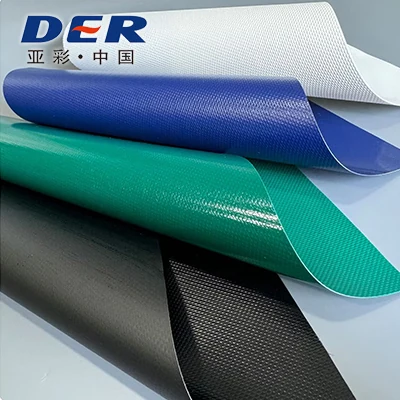
Appearance first. Surface chemistry alongside it.
A finish description should tell a converter what the fabric looks like and what is on its surface. “Matte or PVDF” leaves that decision incomplete: a matte fabric can also carry a PVDF-based topcoat. Specify texture separately, because a smooth matte face and an embossed matte face can behave differently in use.
Glossy, semi-matte or matte
Use sheen to control glare and the intended look. Gloss can emphasize reflections and surface marks; matte reduces specular glare. Compare under consistent lighting and viewing angles. Neither label defines UV performance, waterproofing or print adhesion.
Unlacquered, acrylic or PVDF-based
A topcoat changes the outer surface of the PVC-coated textile. Its formulation can influence dirt release and processing. Identify the precise treatment on each face rather than assuming every acrylic or PVDF system has identical properties.
On smaller screens, swipe the schematic horizontally to read every layer.
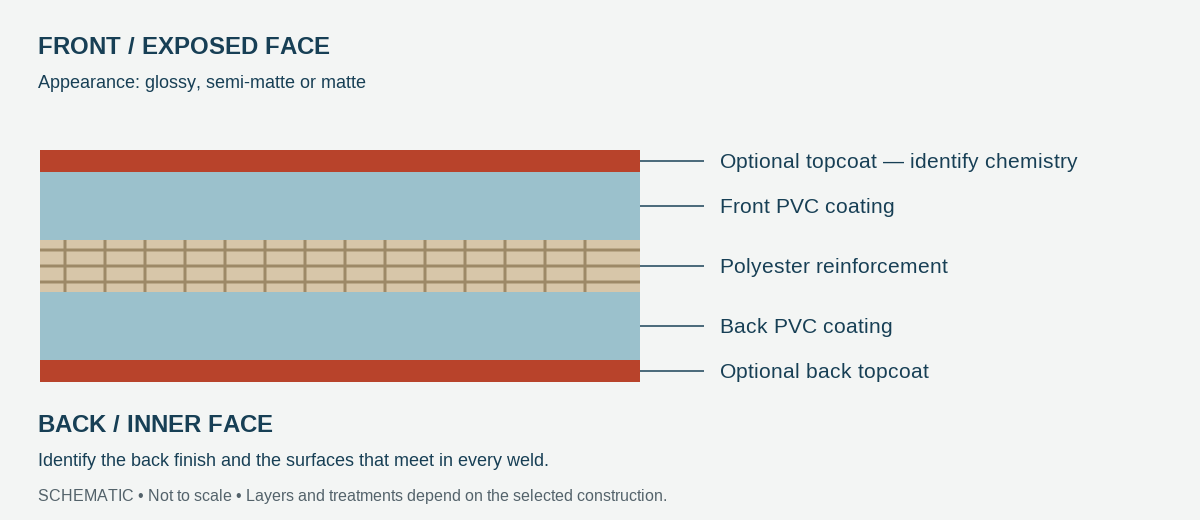
Start with the appropriate PVC tarpaulin construction, then add the finish requirements. A surface upgrade cannot replace the base-fabric strength, coating adhesion or seam design needed for the finished cover.
Matte, glossy, acrylic lacquer and PVDF: what changes?
Use this matrix to shortlist the surface route. Gloss level can be specified within a compatible route; the table is a selection guide, not a universal performance ranking or a stock-grade list.
On smaller screens, swipe the table horizontally to compare all three routes.
| Decision | PVC surface without an added lacquer | Acrylic lacquer system | PVDF-based topcoat system |
|---|---|---|---|
| Appearance | Glossy, semi-matte or matte options depend on the construction and finishing route. | Can be formulated for different sheen levels. Approve texture and gloss on the final sample. | Appearance varies by system. The PVDF label alone does not define a glossy or matte look. |
| Cleaning | Compare the actual smoothness, texture and cleaning response. No added lacquer does not mean maintenance-free. | A candidate when easier cleaning is a priority. Verify residual staining and any change in sheen. | A candidate for low-soiling outdoor surfaces. Confirm cleaner compatibility and field maintenance access. |
| Printing | Use a print-qualified PVC grade; untreated appearance is not proof of ink compatibility. | Print-receptive versions exist. Confirm the exact ink, curing and finishing sequence. | Print compatibility is grade-specific. Do not assume a dirt-repellent face will accept your ink. |
| Welding | Qualify the complete fabric and actual joint on the intended equipment. | Check weldability of the final lacquered fabric, including which faces meet. | Directly weldable and process-restricted systems both exist. Confirm the approved joining route. |
| UV / weathering | Assess the full PVC formulation, pigmentation and reinforcement after the specified exposure. | Request evidence for the finished construction and color; the chemistry name is not a UV rating. | Consider for outdoor appearance retention, subject to grade-specific evidence and exposure conditions. |
| Purchase approval | Lock construction, color, sheen, handling and conversion acceptance. | Also lock treatment side, topcoat identity and print / weld sample results. | Also lock seam preparation, cleaning compatibility and weathering acceptance. |
The practical choice: choose the surface that meets the cleaning and exposure brief while working with your printing and welding process. A higher-cost topcoat can add value only when its benefits and conversion requirements fit the application.
Compare sheen and texture under the same conditions.
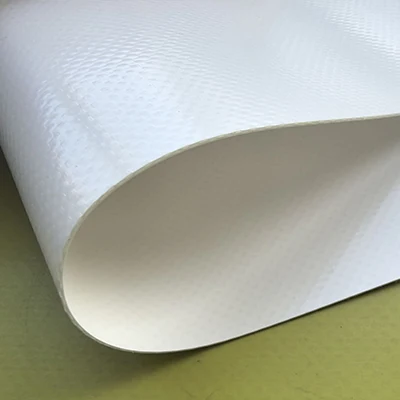
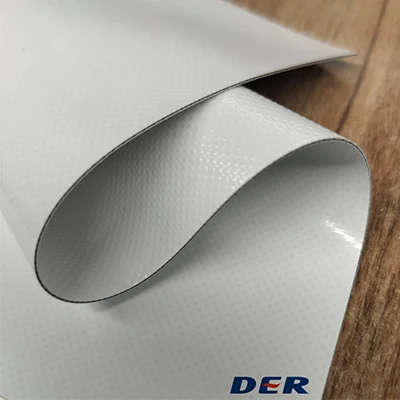
For repeat orders, retain a reference swatch and agree on the comparison setup. If a numerical gloss value is required, define the measurement geometry, backing, specimen flatness, instrument and sampling locations. Measurements taken under different conditions should not be treated as interchangeable.
Cleaning, printing and welding need their own checks.
Cleaning: test the soil you actually face.
Road grime, site dust and organic deposits create different maintenance tasks. Compare a control swatch with a cleaned swatch using an agreed contaminant, dwell period, cleaner dilution, cloth and rinse method. Record visible residue, tack, discoloration and changes in gloss.
Begin with the material supplier’s approved cleaning instructions. Evaluate a proposed cleaner on an inconspicuous sample before routine use; aggressive abrasion or an incompatible solvent can change the surface. Easy-clean is a maintenance benefit, not a promise that dirt will never accumulate.
Printing: qualify the complete ink system.
Record solvent, eco-solvent, UV-curable, latex or screen ink by its actual product and process. Approve the final treated face with the intended printer settings, cure or drying conditions and any protective coating. A print-friendly acrylic grade is a specific formulation, not a property of all acrylic lacquer.
UV-curable printing describes the ink-curing process; it is separate from a fabric’s UV-weathering performance. Inspect the proof after the agreed conditioning period and after representative folding, rubbing and cleaning. If graphics run close to a seam, include that detail in the conversion trial. See printed tarpaulin options when graphics form part of the purchase.
Welding: identify the actual contacting surfaces.
A lap seam may place the front face of one panel against the back of the next; hems and patches can create other combinations. Mark these interfaces on a simple drawing. An approved face-to-back coupon does not automatically qualify a face-to-face detail or a change from hot air to HF welding.
Some PVDF systems are directly weldable; other surface systems require an approved preparation or joining method. Ask for the exact route before production. Do not prescribe routine sanding or solvent stripping: either can affect the coating and must be supported by a validated procedure.
Use production-representative material and record equipment, speed, temperature or power, pressure, overlap, conditioning and observed failure location. Set acceptance for the actual joint. The PVC tarp weld seam strength guide explains how to document the result.
Specify UV performance beyond the topcoat name.
A PVDF tarp surface can be considered for exterior appearance and cleaning requirements, but it does not establish a universal outdoor lifetime. PVC formulation, pigments, reinforcement, water exposure, tension, folding and maintenance also matter. A matte finish is not a UV rating, and a glossy finish is not a waterproof test result.
Define the exposure brief.
Record the destination, installation orientation, seasonal or permanent use, shade, contamination and cleaning access. State which changes matter: color shift, gloss loss, cracking, coating adhesion or retained mechanical performance.
Compare like-for-like evidence.
Request the test method, exposure cycle, duration, specimen color and construction, and before / after results. Accelerated exposure hours cannot be directly converted into guaranteed field years. Use the UV resistance and weathering guide to prepare the evidence request.
A shortlist built around the finished application.
Swipe horizontally on smaller screens. All candidates still require grade-specific confirmation.
| Application | Starting direction | What should decide the order? |
|---|---|---|
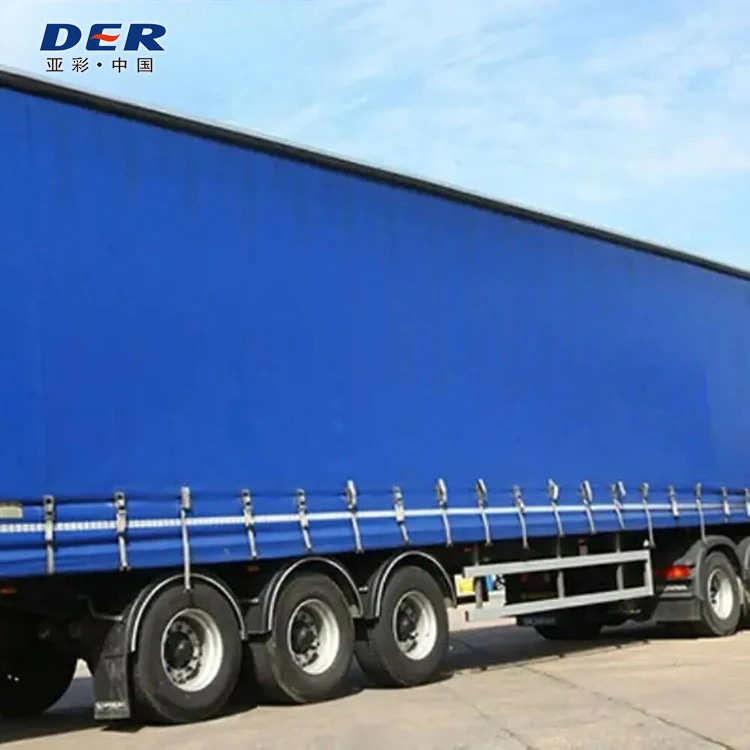
| Branded truck curtain | Print-qualified glossy or matte PVC; a compatible acrylic topcoat where appropriate. | Ink adhesion, road-soil cleaning, folding and the actual printed seam detail. |
| Tent or outdoor shelter cover | Desired sheen plus an acrylic or PVDF-based system suited to the maintenance and exposure brief. | Exposed-side appearance, approved weld route, cleaning access and weathering evidence for that construction. |
| Industrial machine cover | Matte or semi-matte when glare matters; topcoat selected for the actual contaminants. | Cleaning compatibility, contact abrasion, repeated folding and reinforcement details. |
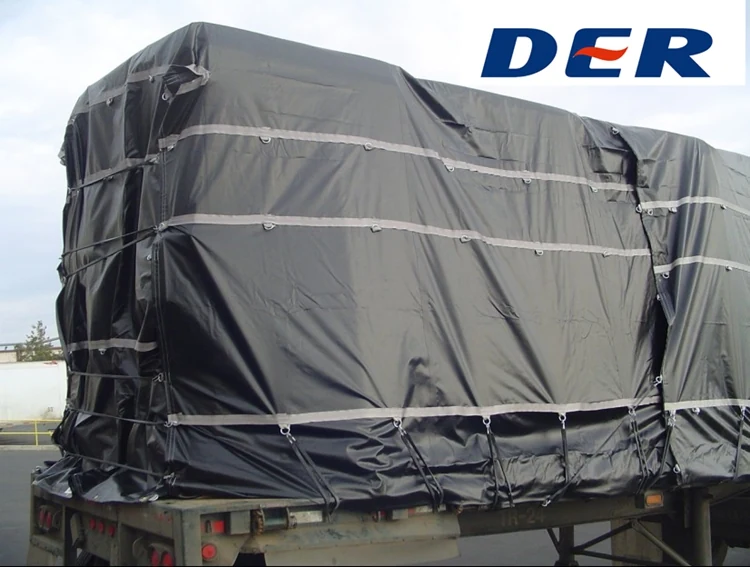
| Unprinted transport tarp | PVC or compatible lacquered surface matched to handling and maintenance. | Seam and edge strength, abrasion locations, soil release and replacement economics. |
Four records to keep before a bulk order.
Make the approval specific enough for both the fabric supplier and converter to reproduce. These are suggested purchase checks, not claimed DERFLEX test results or universal pass limits.
Identify both sides.
Record construction, color, face and back sheen, texture, treatment chemistry and reference-sample ID. Define visual acceptance and any agreed measurement method.
Keep the actual print and weld detail.
Retain the printed proof and seam coupon with process settings, contacting faces and failure observations. Requalify when the surface system or conversion route changes.
Record how the surface was cleaned.
Keep control and cleaned swatches. Document contamination, cleaner, dilution, contact time, wiping and any visible surface change against agreed acceptance.
Connect approval to incoming rolls.
Link the approved sample revision to the purchase order and roll labels. Agree on sampling, appearance tolerances, surface blocking checks and available supporting documents.
Use the tarpaulin quality inspection guide to connect the surface approval with the wider material acceptance plan.
Build your surface finish brief.
Select the main requirements to prepare a starting RFQ. The result organizes your request; it does not certify a grade or select a production formula.
Start with a process-compatible PVC or acrylic surface.
Compare cleaning response and sheen on the final sample. Confirm face-to-back weld compatibility before approval.
Copy the brief and paste it into your enquiry.
Make “surface finish” a complete purchase description.
A useful order names the construction, each surface and the approval record. For example:
“PVC-coated polyester roll material; exposed face smooth matte with a process-compatible acrylic lacquer; back surface suited to the approved face-to-back hot-air lap seam; custom blue matched to retained swatch. Printing process, cleaning comparison and weld acceptance to follow the agreed sample record.”
Illustrative specification wording only. This is not a DERFLEX SKU or an offer for a prequalified construction.
Include with the RFQ
- Application, exposure location and photographs or a drawing.
- Face and back appearance, color reference and any texture requirement.
- Printing equipment / ink and seam construction, if applicable.
- Target GSM, width, roll length, quantity and destination.
- Cleaning conditions, required evidence and approval schedule.
Agree before production
DERFLEX can discuss PVC-coated tarpaulin material options against the brief. Confirm the selected construction, finish on each side, sample reference and available documentation in the quotation. Topcoat route, treated area, color, print qualification, width utilization and order size can affect cost.
This page concerns roll-material selection. Any cutting, printing or finished-cover fabrication should be separately defined in the quoted supply scope.
Surface finish selection FAQ.
Can PVC tarpaulin be both matte and acrylic lacquered?
Yes. Matte describes the appearance; acrylic lacquer identifies an additional surface treatment. Specify them separately for each side. Use a retained physical sample to agree on sheen and texture, then validate cleaning, printing and welding on that same construction.
Is PVDF always better than acrylic lacquer?
No. A PVDF-based topcoat can be useful where outdoor appearance and dirt resistance matter, but the exact grade and processing route decide suitability. A qualified acrylic system may better suit a printed or frequently fabricated cover. Compare the complete specification, maintenance access and conversion requirements.
Can PVDF-coated tarpaulin be welded directly?
Some PVDF topcoat systems are designed for direct welding; others require a supplier-approved seam preparation or joining route. Identify the exact grade and face-to-back arrangement, then approve seam coupons using your production equipment. Do not assume every PVDF fabric behaves the same way.
Which finish is best for UV or latex printing?
Choose a surface qualified for the particular ink, printer and curing process. Matte, glossy, acrylic and PVDF labels alone do not establish print compatibility. Approve a print proof on the final treated fabric and check adhesion, folding, rubbing and the intended cleaning routine.
Does a shiny surface mean better waterproofing or longer UV life?
No. Sheen describes reflected light. Waterproofing depends on the coating and the fabricated cover, including its seams; outdoor durability depends on the full material system and exposure. Compare relevant test conditions and retained performance rather than judging either property by shine.
What should I send DERFLEX for a surface finish quotation?
Send the application, face and back appearance, cleaning conditions, print system, welding method, exposure location and approximate quantity. Add the required GSM, width, roll length, color reference and documents if known. Application photographs or an existing swatch can help begin the specification discussion.
Choose the finish with the finished cover in mind.
Send the application, cleaning conditions and conversion route. Ask DERFLEX to discuss suitable surface options, sample requirements and the documents available for the proposed construction.
Related technical guides.
Technical context. Manufacturer documentation shows that topcoat chemistry, appearance and conversion properties must be considered together. Examples include Serge Ferrari’s matte PVDF-treated membrane, Sioen’s grade-specific directly weldable PVDF systems and YAOCHEN’s differentiated acrylic / PVDF topcoat grades. These are material-context references; their specifications are not DERFLEX product claims.
Published by DERFLEX · Updated