



Transport
Truck body builders · Curtain fabricators · OEM roll buyers
Curtainsider Fabric Specification for Truck Builders
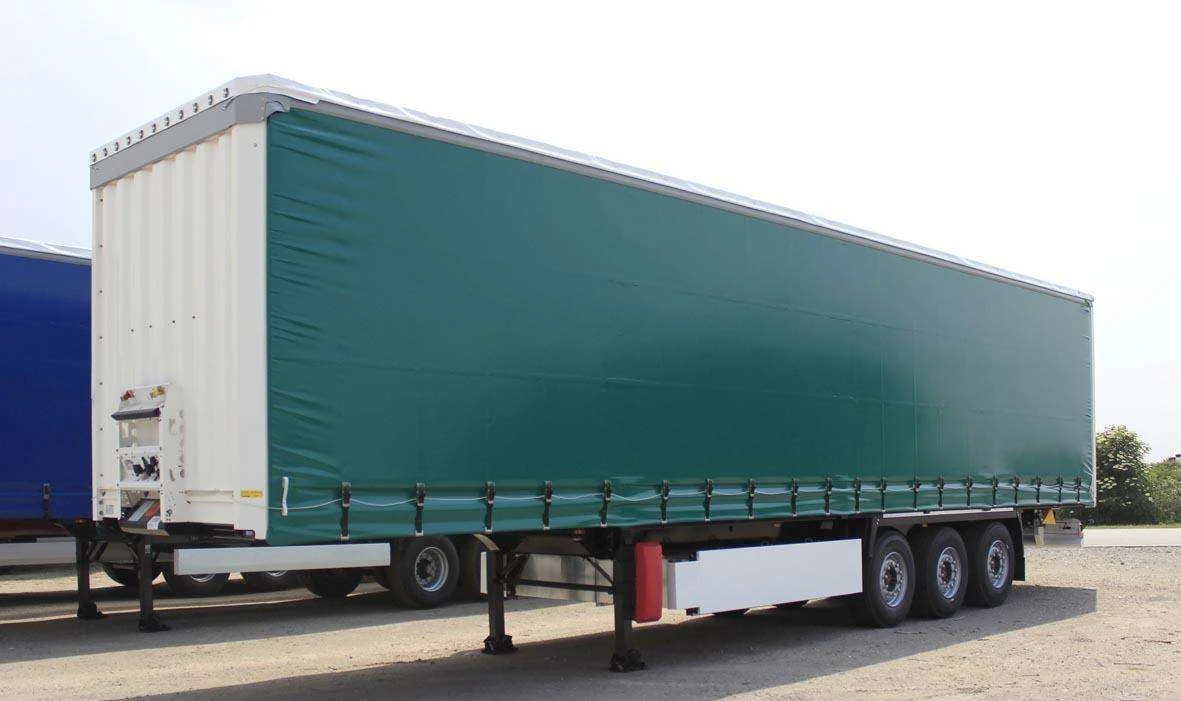
Specify truck curtain PVC roll material for OEM curtain production. Compare tension and extension, GSM, printing, weld performance, repeated folding, usable width and batch consistency. DERFLEX helps builders and fabricators discuss material selection, sample approval and the requirements for repeat orders.
Material approval
Specify the roll and the process together.
The useful purchasing document is a controlled material-and-conversion brief. A GSM value alone leaves important decisions open: how the curtain stretches, which face is printed and how the reinforcement is joined.
DERFLEX’s published side curtain selection includes nominal 650–900 g/m² options and a 1.02–3.20 m width range. These are selection ranges, not a promise that every color, finish and construction is available in every combination. Confirm the chosen grade, nominal values and delivery format on the quotation and current technical data sheet. The truck side curtain tarpaulin range gives the product overview; this guide concentrates on the specification you approve before production.
On smaller screens, scroll the table horizontally to read all acceptance fields.
| Specification field | Define in the purchase document | Acceptance evidence |
|---|---|---|
| Material identity | Grade code, revision, PVC coated polyester construction and face identification. | Approved sample and the matching TDS revision; no unapproved grade substitution. |
| Mass & thickness | Nominal g/m², agreed tolerance and separate thickness requirement where relevant. | Agreed sampling positions and measurement method; GSM does not directly determine thickness. |
| Tensile & elongation | Warp/weft direction, test method and required breaking values; add extension under specified load where design requires it. | Results with units and conditions. Installation preload belongs in the curtain-system design. |
| Tear resistance | Direction, specimen geometry, method and agreed minimum. | Comparable reports; avoid ranking results from different tear methods. |
| Coating adhesion | Face, conditioning, peel method, result and failure description. | Material adhesion result plus separate seam evaluation for the intended weld. |
| Printing & finish | Print face, lacquer, gloss, ink system, curing and any protective finish. | Approved print proof; adhesion, folding and cleaning checks after the specified cure. |
| Weld interface | Joining method, mating faces, overlap, reinforcement and process reference. | Welded sample with agreed test direction, conditioning and failure acceptance. |
| Repeated flexing | Method, direction, temperature, cycles and damage criteria. | Conditioned flex specimens; required retained properties identified separately. |
| Width & roll format | Usable coated width, roll length, core, winding face and permitted joins. | Roll measurements and identification against the approved cutting layout. |
| Color & appearance | Physical master, face, texture, gloss and agreed visual/instrumental comparison. | Batch sample compared under controlled conditions; record roll-to-roll variation. |
| Traceability | Order, batch and roll identification; sampling plan and handling of deviations. | Inspection record and retained samples connected to the shipment. |
Tension & construction
Read strength with direction and extension.
A curtain needs controlled behavior under the load defined by its system designer. Breaking strength describes a specimen at failure; it does not set the safe tension applied to a complete curtain.
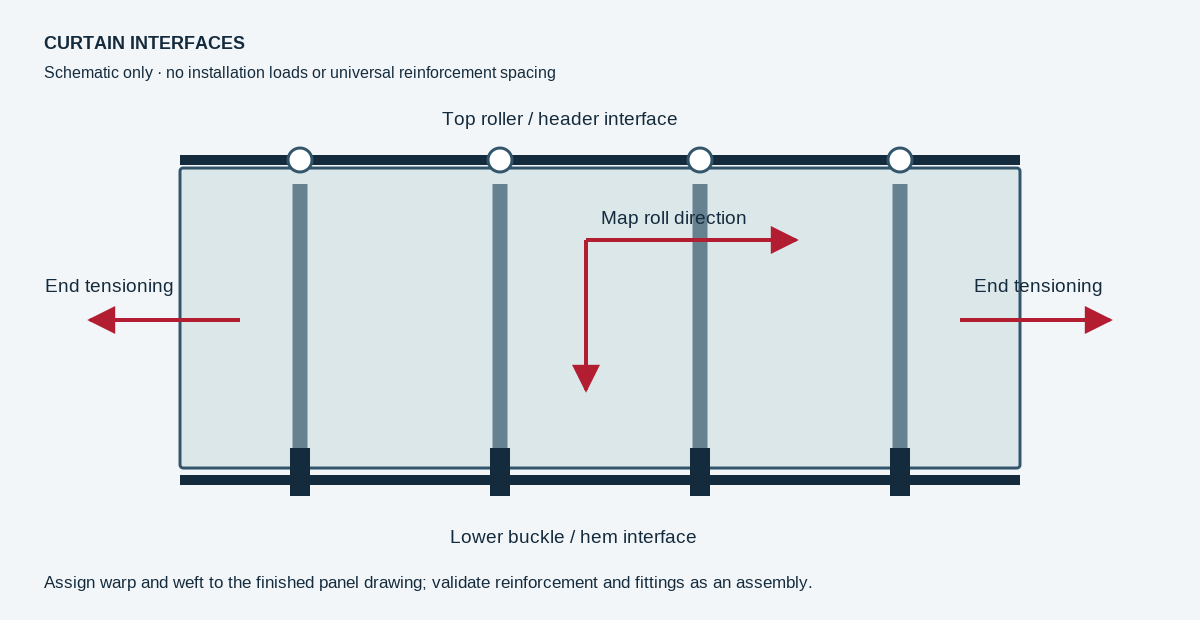
Map the roll onto the finished panel
Mark the machine direction and fabric warp/weft on the cutting drawing. If the panel is rotated to improve roll utilization, reassess the specified directions, print layout and reinforcement arrangement. Do not assume the two fabric directions behave identically.
For tension-sensitive programs, discuss extension at an agreed load, recovery after unloading and time-dependent extension under the relevant conditions. A high breaking result can coexist with an extension pattern that creates sagging, registration problems or repeated retensioning.
ISO 1421:2016 distinguishes strip and grab tensile testing; its strip method also measures elongation at break. That result is distinct from extension at a specified working load. Record the method and specimen width alongside the value.
Review the complete load path
Check the header, rollers, end pockets, buckle zones, straps and welded reinforcements together. Local stiffness changes and discontinuities deserve attention at seam ends, patch corners and hardware transitions. A stronger base fabric cannot correct a weak connection.
The designer must set installation preload and operational limits for the assembly. Fabric test results alone do not demonstrate cargo restraint or compliance of the complete vehicle body. Where a certified body system is required, use its approved curtain construction and documentation.
For broader material context, compare the construction of PVC coated polyester tarpaulin before choosing the specific curtain grade.
Choose GSM for the whole construction
GSM is mass per unit area, including the textile and coating. Two equally heavy fabrics can differ in yarn, weave, coating distribution, adhesion and finish. Increasing weight therefore requires a clear purpose: coating reserve, handling preference or a construction already validated in the vehicle program.
| Buyer priority | Compare alongside GSM | Practical approval step |
|---|---|---|
| Frequent daily opening | Fold stiffness, slide behavior, flex damage and added reinforcement mass. | Operate a representative curtain through the intended opening pattern. |
| Large or highly tensioned panels | Directional extension, connection design, seam location and dimensional behavior. | Review the complete panel against the system designer’s requirements. |
| Long-term fleet appearance | Print system, lacquer, cleaning practice, color stability and contact wear. | Approve a printed material sample and agreed exposure checks. |
Illustrative mass calculation: an unconverted 3.0 × 13.6 m rectangle covers 40.8 m². At nominal 650 and 900 g/m² it contains approximately 26.5 and 36.7 kg of fabric respectively. This arithmetic excludes hems, overlaps, straps, fittings, packaging and cutting allowance; it is not a finished-curtain weight claim.
Fleet graphics
Approve the finish through the actual print line.
“Printable” needs a process definition. Specify the face, ink chemistry, printer or screen process, curing conditions and any post-print protection.
Color is more than a screen reference
Use a physical master to agree the base fabric shade, surface texture and gloss. A RAL reference can communicate a target, but its appearance on a coated, textured surface still needs approval. Compare new material with the retained master under an agreed light source; a phone photograph is a useful communication aid rather than an acceptance instrument.
Test after curing and folding
Print a representative combination of solid color, fine text and dense coverage. After the specified cure, examine adhesion, blocking during storage, rubbing, folding and the proposed cleaning process. If printed material is welded, include the relevant printed or masked seam area in the conversion trial.
Approve the finish on each side independently. Do not assume an acrylic- or PVDF-described surface will behave the same with every ink, welding method or repair process.
Conversion approval
A seam has its own specification.
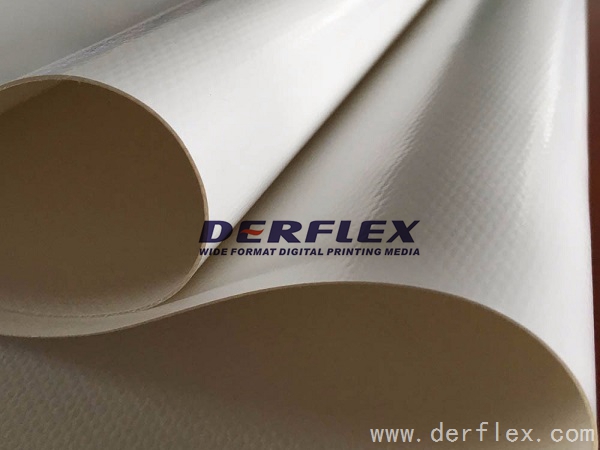
HF/RF and hot-air joining can be relevant to PVC coated fabrics. Select and qualify the process for the exact material, finish, thickness combination and reinforcement stack.
Keep material adhesion and weld strength separate
ISO 2411:2024 concerns coating adhesion. It does not, by itself, certify a fabricated overlap seam. A seam can fail by peeling at the interface, separating the coating from its base, tearing beside the weld or rupturing the textile.
Specify seam overlap, mating surfaces, joining direction, reinforcement detail and how the seam crosses the panel load path. Avoid creating a universal seam width or machine setting without an identified fabric and procedure.
Qualify the production setup
Trial the actual equipment and record the settings relevant to that method. Inspect the start, middle and end of the weld, as well as seam intersections and reinforced transitions. Agree specimen orientation, conditioning, test speed, acceptance level and acceptable failure behavior before bulk conversion.
When a material, finish, ink or reinforcement changes, decide whether the process needs requalification. The sewing versus welding guide explains the joining choices; the approved curtain drawing determines their placement.
Daily operation & roll planning
Specify folding resistance and usable width.
Repeated movement and the cutting layout influence whether a roll works on your production line. They deserve approval criteria as clear as the headline mass.
Flexing: define damage, not just a cycle count
ISO 7854:1995 includes different coated-fabric flex methods. Identify the chosen method, direction and conditions before comparing results. A cycle count without the method or failure criterion is incomplete.
For the vehicle program, define whether cracking, coating lift, pinholes or other damage causes rejection, and whether retained adhesion, tensile performance or water resistance must also be checked. Match the temperature and conditioning to the intended test objective. A flex result does not establish a guaranteed number of years on the road.
Inspect likely contact points separately: poles, rails, buckle areas and rubbing cargo edges create a different exposure from repeated folding. See abrasion-resistant truck side curtain fabric for that selection task.
Width: purchase what the cutting plan can use
Define usable coated width after agreed edge exclusions. Check whether the proposed width accommodates the panel dimension, hem allowance, seam overlap and reinforcement layout in the approved fabric orientation. Nominal roll width is not automatically the net finished curtain height.
Document roll length, winding face, core, roll diameter or handling limit, and whether internal joins are permitted. If joins are accepted, agree their identification and permitted locations. Calculate material utilization from the actual cutting layout rather than the largest available width.
Replacement and mixed-fleet orders also need correct application identification: a curtainsider side panel has different interfaces from a general truck cover tarpaulin.
Repeat order control
Make the approved sample repeatable.
Batch consistency needs a reference, an agreed sampling plan and a documented response to deviations. “Same GSM” is an incomplete repeat-order instruction.
Material master
Freeze the approved combination
Retain the fabric code and revision, faces, finish, shade master and representative print and weld samples. Record the curtain program they support. Keep changes to formulation, coating, finish or roll format subject to the agreed approval route.
Incoming inspection
Connect measurements to roll identity
Agree which rolls and positions will be sampled. Record mass, usable width, appearance and other contracted checks with batch and roll IDs. Set tolerances explicitly, including the treatment of single results and averages.
Conversion check
Run a first-off weld and print check
Before committing a new delivery to full production, compare its behavior with the approved process. A retained unprinted swatch alone will not show how the shipment performs after printing, curing or welding.
Deviation record
Agree the disposition before use
Identify affected rolls and preserve evidence when a result is outside the agreed limit. Separate an approved concession from a permanent specification change. Keep the shipment record linked to any replacement or corrective action.
Before you order
Bring a clear brief to the material discussion.
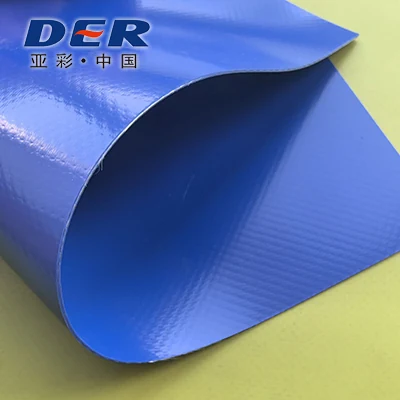
DERFLEX can discuss roll material selection around your curtain project. Use the following sequence to make the quotation and sampling request specific.
- Identify the vehicle program. Send the destination, operating conditions, curtain dimensions and drawing. Include any system approval requirements and the current fabric sample if available.
- Define material and conversion. Share the target grade or performance requirements, roll orientation, usable width, printing method and welding equipment. Identify straps and fittings on the assembly drawing.
- Agree the evidence. Request the current TDS for the proposed grade and the available relevant reports. Check the sample identity and report scope; a listed test method is not proof that the proposed material has passed it.
- Confirm the commercial scope. State quantity, color split, roll packaging, delivery destination and required date. Ask for quotation-specific MOQ, sampling terms and lead time rather than assuming a standard policy.
Use the truck side curtain material overview to describe the application, and the PVC tarpaulin material hub to compare broader coated-fabric options.
Build your roll enquiry brief
This tool prepares text in your browser. Copy or download it, then attach it to your enquiry through DERFLEX’s quotation page.
Buyer questions
Curtainsider fabric specification FAQ
What should a curtainsider fabric specification include?
Include the identified PVC coated polyester grade, nominal GSM and tolerance, warp and weft properties, usable roll width, finish on each face, color reference, print system, weld procedure, flex test conditions and batch acceptance rules. Keep the trailer drawing and reinforcement schedule linked to the material revision.
Is 900gsm truck curtain fabric always better than 650gsm?
No. Higher GSM adds material mass but does not by itself establish tensile performance, tear resistance, coating adhesion or useful flex life. Compare fabrics under the same test conditions and validate the chosen grade on the intended curtain assembly.
Can tensile strength determine the curtain installation tension?
No. A breaking-strength result from a laboratory specimen is not an installation preload. The truck body or curtain-system designer must define allowable tension for the complete fabric, reinforcement, weld, buckle, roller and end-fixing assembly.
Can any lacquered PVC roll be printed and HF welded?
Compatibility depends on the exact finish, ink, curing process and weld interface. Test the intended print face and both mating weld faces. Approve printed and welded samples from the production material rather than relying on a generic printable or weldable description.
How should repeated folding resistance be specified?
Name the test method, specimen direction, temperature, cycle count and acceptance criteria. ISO 7854 covers several coated-fabric flex methods; their cycle counts are not interchangeable. Inspect the coating and, where required, check retained properties after the agreed exposure.
What information does DERFLEX need for a truck curtain PVC roll enquiry?
Send the vehicle use and destination, panel drawing or dimensions, target grade or current sample, quantity, usable width, color and graphics process, welding equipment and required documents. A drawing or sample is a useful starting point when the full specification is still being developed.
Start with your curtain program
Turn the drawing into a roll specification.
Send the panel dimensions, operating conditions, target material, print and weld process, and order quantity. Ask DERFLEX for a grade recommendation, current technical data and a sample for your approval process.