News
Company News

Heavy Duty Tarp Surface Finish: Glossy vs Matte vs Lacquered PVC | DERFLEX

Update:2026/9/30 20:54:49 Views:
PVC Tarpaulin Surface Selection Guide

Heavy Duty Tarp Surface Finish: Glossy vs Matte vs Lacquered PVC

Surface finish changes more than appearance. It can affect glare, dirt pick-up, cleaning, print presentation, handling feel and the way a PVC tarp behaves during downstream fabrication. For B2B buyers, the right choice is not “which finish looks better?” but “which surface matches the application, fabrication process and end-market expectation?”

Direct answer: Glossy and matte describe the visual sheen of the PVC surface. Lacquered describes an added protective topcoat and is therefore not the opposite of glossy or matte. A lacquered PVC tarp can itself be glossy, semi-gloss or matte. Choose gloss level for appearance and glare; choose lacquer chemistry when cleanability, anti-soiling, surface protection or outdoor durability is part of the specification.
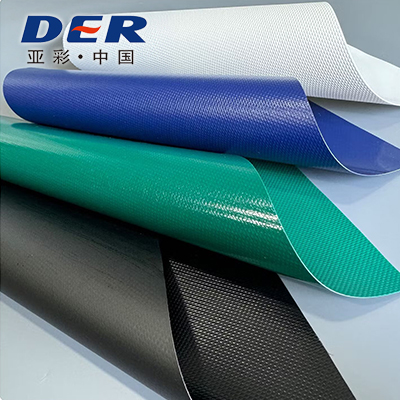
DERFLEX PVC coated tarp material showing multiple heavy duty tarp surface colors and finishes
DERFLEX PVC coated tarp material. Final sheen, lacquer system, color, weight and fabrication requirements should be approved together.
Fast Buyer Summary

Three Finish Terms That Are Often Mixed Up

The most important sourcing distinction is simple: gloss and matte are visual finish directions; lacquer is an additional surface-treatment layer.

Glossy PVC

Higher sheen, brighter appearance

A smooth, reflective surface is often selected for truck covers, general heavy duty tarps and branded products where vivid color and easier wipe-down are valued. Strong reflections can make wrinkles, scratches or surface variation more visible.

Matte PVC

Lower glare, more subdued look

Matte or semi-matte surfaces reduce specular reflection and can give industrial covers, tents and OEM products a quieter visual finish. The exact cleaning behavior depends on whether the surface is smooth-matte or textured/embossed.

Lacquered PVC

Functional topcoat over the PVC

Acrylic or other specialty lacquer systems are added as a thin topcoat to modify the surface. Depending on the chemistry, the goal may include easier cleaning, lower dirt pick-up, improved weathering, scratch resistance or a controlled print/weld surface.

Critical procurement point: do not write “glossy / matte / lacquered” as three mutually exclusive choices on a purchase order. A more precise specification is “matte PVC with acrylic lacquer on the exposed side” or “glossy PVC, no lacquer, printable surface.”
Comparison Table

Glossy vs Matte vs Lacquered PVC Tarp Surface

Use this table as a sourcing framework. Final behavior depends on PVC formula, embossing, lacquer chemistry, coating route and approved production sample.

Buyer Criterion Glossy PVC Matte PVC Lacquered PVC
What the term means Higher surface sheen / reflection. Lower surface sheen / reduced glare. An additional topcoat; it can be made with different gloss levels.
Visual character Bright color, stronger highlights, more reflective under direct light. Controlled reflection, softer appearance, less visual glare. Depends on the selected lacquer and underlying finish; can be glossy, satin or matte.
Cleaning & dirt pick-up Often easy to wipe when the surface is smooth. Depends heavily on surface texture; deeper embossing can hold more dust. Often chosen specifically to improve anti-soiling or cleaning performance, subject to lacquer chemistry.
Scratch / scuff visibility Fine marks can be easier to see because reflections are stronger. Light scuffs may be less visually obvious on a lower-sheen surface. Topcoat can add surface protection, but actual abrasion resistance must be validated by sample or test.
Brand presentation Useful when strong color saturation and a polished visual are desired. Useful for premium, technical or low-glare visual positioning. Useful where appearance must stay cleaner over repeated outdoor handling.
Printing Can support vivid presentation, but print compatibility depends on ink system and surface treatment. Can reduce light reflection from printed graphics; ink adhesion still requires confirmation. Never assume all lacquers are print-friendly. Confirm ink type, surface energy and adhesion on the production finish.
Welding Commonly compatible with PVC tarp fabrication when formula and welding process are matched. Commonly weldable when the PVC construction is designed for it. Some lacquer systems are engineered to remain weldable; others can require process adjustment. Approve a weld coupon before bulk production.
Typical purchasing reason Appearance, easy wipe-down, familiar heavy duty tarp look. Glare control, softer appearance, lower-reflection branding. Surface protection, cleaning, anti-soiling, weathering or other topcoat-driven performance.

Surface finish should be specified together with weight, base fabric, coating structure, outdoor exposure, fabrication method and end-use. For the parent material system, review DERFLEX PVC coated tarp options.

Material Engineering

Where the Surface Finish Sits in a Heavy Duty PVC Tarp

A heavy duty PVC tarp is a layered technical textile. The woven polyester scrim carries tensile and tear loads, while the PVC coating provides waterproofing, flexibility, color and a fabricatable outer layer. The visible surface is then controlled by coating formulation, calendering or embossing, and—when specified—an additional lacquer topcoat.

This is why two 650 gsm PVC tarps can look and behave differently even if the base weight is the same. Surface feel, friction, gloss, cleaning behavior and downstream processing can change without changing the nominal GSM.

Buyers sourcing complete material programs can compare this guide with DERFLEX PVC coated fabric manufacturing options to align the finish with roll width, coating route, color, welding and OEM requirements.

Finish-by-Finish Buying Guide

When Each Surface Makes Sense

Choose from the service environment backward. Appearance matters, but repeated cleaning, abrasion, printing and welding usually matter more in professional tarp programs.

Glossy PVC

Best when a bright, smooth and familiar vinyl-tarp appearance fits the market.

Strengths

  • High visual sheen and strong color presentation.
  • Smooth surfaces are generally straightforward to wipe clean.
  • Common for transport tarps, outdoor covers and distributor stock programs.

Watch for

  • Direct light can emphasize wrinkles and surface marks.
  • Gloss alone does not guarantee anti-soiling or UV performance.
  • Confirm print and weld compatibility on the actual production formula.

Matte PVC

Best when glare control and a lower-reflection appearance are part of the product brief.

Strengths

  • Reduced glare in bright work areas or under event lighting.
  • More understated industrial or premium appearance.
  • Can make light scuffing less visually prominent.

Watch for

  • “Matte” does not tell you whether the surface is smooth or heavily embossed.
  • Texture can alter cleaning, friction and roll handling.
  • Approve the actual gloss level against a physical sample, not a verbal description only.

Lacquered PVC

Best when the project requires a deliberate topcoat function in addition to the chosen sheen.

Strengths

  • Can improve cleanability and resistance to dirt pick-up.
  • Can add a controlled protective surface for outdoor use.
  • Can be specified one side or both sides depending on the finished product.

Watch for

  • Lacquer chemistry matters more than the word “lacquered.”
  • Check whether the exposed and welding sides use the same treatment.
  • Printing and welding should be validated after the final topcoat is selected.
Real Application Context

Surface Finish Has to Work After the Tarp Leaves the Roll

Truck, trailer and cargo-cover programs expose PVC tarps to road dirt, folding, straps, webbing, edge tension, cleaning and repeated handling.

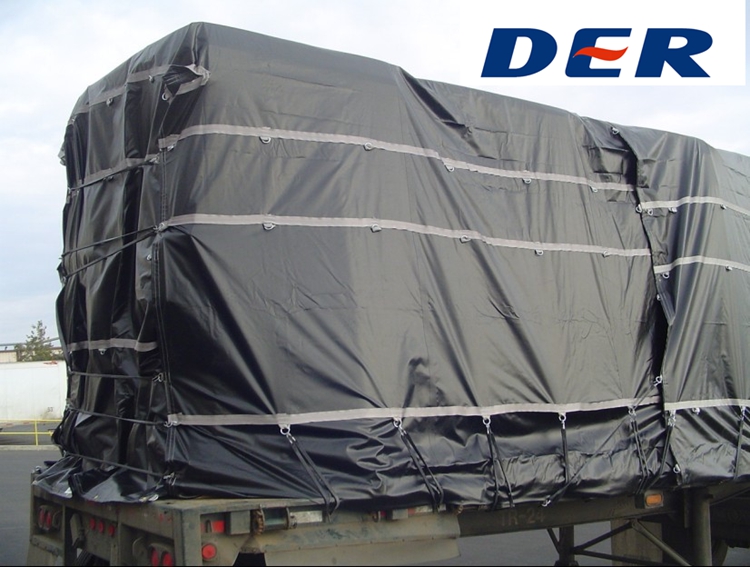
Heavy duty black PVC truck tarp with reinforced webbing and tie down points
Heavy duty truck cover: cleaning, scuff visibility and reinforced fabrication matter as much as initial gloss.
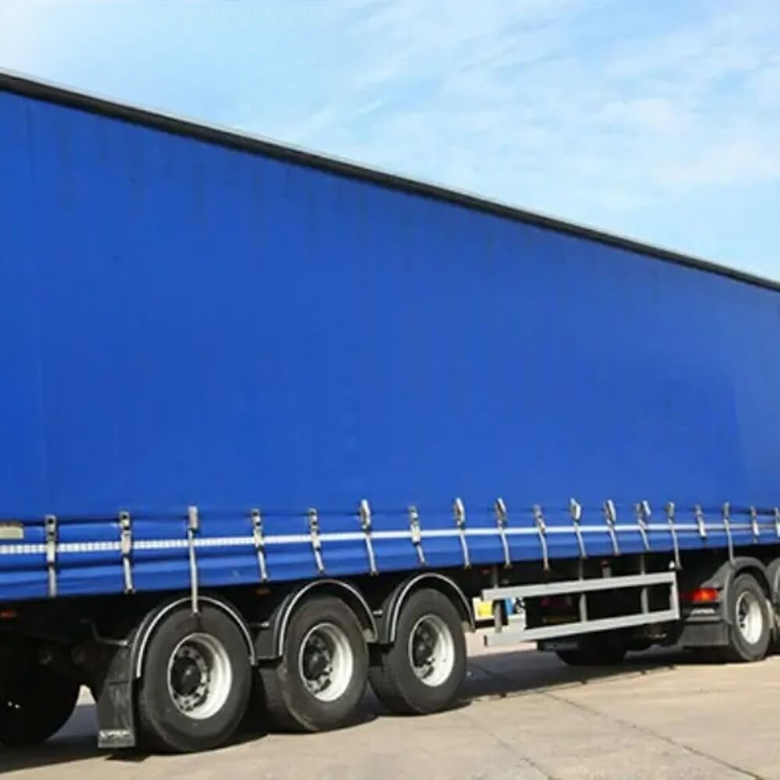
Blue PVC trailer curtain tarp in transport application
Trailer curtain application: surface appearance, branding and road-weather exposure should be considered together.

For transport-specific material and finishing requirements, see DERFLEX truck and trailer tarp solutions.

Selection Matrix

Choose the Finish by Application, Not by Sample Book Alone

These recommendations are practical starting points rather than fixed engineering rules. The final finish should be confirmed against an approved sample and fabrication trial.

Application Practical Finish Direction Why Extra Check Before Order
Flatbed / general truck tarp Glossy or smooth lacquered surface Frequent exposure to road dirt makes cleanability important. Weld coupon, abrasion zones, webbing and tie-down design.
Trailer side curtain / fleet branding Glossy, semi-matte or printable lacquer system Appearance and graphics are highly visible across a large surface. Ink system, print adhesion, folding and cleaning routine.
Industrial equipment cover Matte, semi-matte or lacquered Lower glare may be preferred indoors; topcoat can help with repeated cleaning. Oil/chemical contact, abrasion points and indoor safety requirements.
Construction / temporary enclosure Matte or standard glossy, project dependent Visual requirements are usually secondary to strength, FR direction and fabrication. Do not overspecify finish while underspecifying tear, seam or reinforcement performance.
Agricultural storage cover Smooth glossy or lacquered Outdoor dirt, moisture and repeated seasonal handling make cleaning and weathering relevant. UV exposure, anti-mildew direction, fold storage and ground contact.
OEM printed tarp / promotional cover Print-qualified glossy or matte finish Surface treatment must match the exact ink and desired visual contrast. Print adhesion, color proof, overlaminate/topcoat compatibility and welding after print.

If the tarp will carry graphics, compare the finish requirements with DERFLEX printed tarpaulin options before bulk approval.

Fabrication Notes

Welding and Printing Can Change the “Best” Finish

Welding: approve the finished surface, not only the base PVC

Heavy duty tarps are commonly converted by hot-air, hot-wedge or high-frequency welding. A lacquer can change surface chemistry, so the buyer should not approve weld settings on an unlacquered sample and assume the same settings will work after the final topcoat.

Ask for a production-representative weld coupon. Check seam appearance, peel behavior, heat marking and whether the lacquer is intended to remain weldable. Some surface systems are designed for reliable welding, but the correct settings still depend on thickness, formula and equipment.

Printing: define the ink system before specifying the topcoat

Solvent, eco-solvent, UV, latex and screen-print systems interact differently with PVC surfaces and topcoats. A visually attractive lacquer is not automatically the best print receptor. For branded truck tarps or OEM covers, approve print adhesion and color reproduction on the same finish that will be used for production.

Procurement Control

A Better Surface Finish Specification for RFQs and Purchase Orders

Replace vague wording with a short, testable finish brief that a factory, converter and quality team can all interpret the same way.

Include in the RFQ

  • Final application and exposure side.
  • Target PVC tarp weight / thickness direction.
  • Glossy, semi-gloss, smooth matte or textured matte preference.
  • Whether lacquer is required and on one side or two sides.
  • Priority: cleaning, anti-soiling, scratch visibility, printing or outdoor aging.
  • Welding method: HF, hot-air, hot-wedge or sewing-dominant fabrication.
  • Printing method and ink family, if applicable.
  • Color, roll width, quantity, packaging and destination market.

Approve Before Bulk

  • Physical golden sample with the final surface treatment.
  • Color and sheen consistency expectations.
  • Surface defects that count as major vs minor.
  • Weldability or printability acceptance method.
  • Roll face / back identification where the two sides differ.
  • Cleaning method allowed for the finished tarp.
  • Batch identification and repeat-order reference.
  • Any project-specific test or compliance requirement.
Example of a clearer purchase description: “Heavy duty PVC coated polyester tarp material, smooth matte exposed side, acrylic lacquer on exposed side, weldable back side, custom blue, intended for hot-air welded truck covers. Final color, sheen and weld coupon subject to sample approval.”

For private-label and repeat-order programs, DERFLEX also supports OEM PVC tarpaulin development.

Common Sourcing Errors

Five Mistakes That Create Finish Complaints Later

1. Treating lacquer as a gloss level

A buyer orders “lacquered” but never defines whether the final visual should be high-gloss, satin or matte.

2. Approving color without approving sheen

The same color can appear different under a glossy versus matte surface because reflected light changes how the eye reads the color.

3. Testing welding before the final topcoat

A production lacquer can change surface behavior. Fabrication approval should use the final finish construction.

4. Choosing matte by appearance only

“Matte” can mean smooth low-gloss or a more textured finish. The two can differ in cleaning, friction and dirt retention.

5. Using surface finish to solve a structural problem

Lacquer cannot compensate for weak base fabric, poor coating adhesion, insufficient reinforcement or an incorrect seam design.

6. Skipping repeat-order reference samples

For OEM programs, keep an approved sample or measurable finish target so later batches can be compared against the same reference.

DERFLEX Supply Logic

Build the Finish Around the Finished Tarp

DERFLEX supplies PVC coated tarpaulin materials with multiple surface directions, including glossy, matte, semi-matte, lacquered, printable and other project-based treatments. Surface selection can be coordinated with GSM, base fabric, color, roll width, weather requirements and downstream processing.

For heavy duty tarp programs, the practical goal is repeatability: the approved visual finish should arrive with consistent coating quality and remain compatible with the converter’s welding, printing and fabrication process.

Buyers comparing duty levels can also review DERFLEX heavy duty tarps and heavy duty tarpaulin fabric pages for broader material selection.

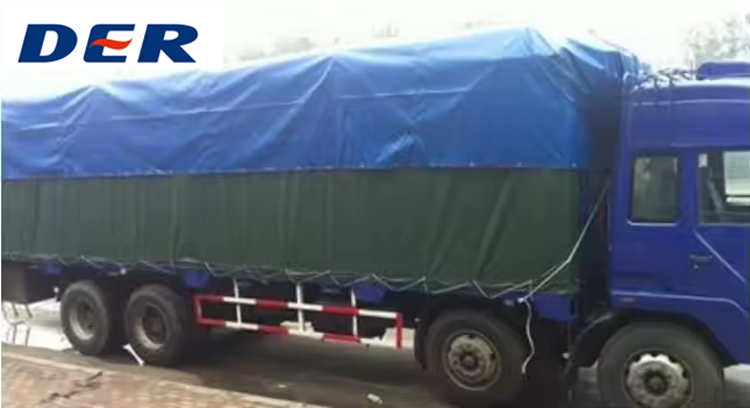
DERFLEX heavy duty PVC truck cover in road transport use
Real-world use places the surface under rain, road dirt, repeated folding and tie-down stress.
Frequently Asked Questions

Heavy Duty Tarp Surface Finish FAQ

Short answers to the questions buyers most often need to resolve before sampling or placing a bulk PVC tarpaulin order.

Is lacquered PVC tarp the same as glossy PVC tarp?
No. Glossy describes sheen. Lacquered describes an added topcoat. A lacquered tarp can be glossy, semi-gloss or matte depending on the underlying finish and lacquer system.
Which is easier to clean: glossy or matte PVC tarpaulin?
A smooth glossy surface is often easier to wipe than a textured matte surface, but this is not an absolute rule. A lacquered matte surface can be designed for very good cleanability. Ask for the actual surface construction rather than choosing by the word “matte” alone.
What is the main purpose of acrylic lacquer on PVC coated fabric?
Acrylic lacquer is commonly used as a thin protective topcoat to modify surface behavior, including cleanability, dirt pick-up, scratch resistance and weathering. The exact benefit depends on the lacquer formulation and coating system.
Does lacquer affect PVC tarp welding?
It can. Some lacquer systems are designed to remain compatible with hot-air or high-frequency welding, while other surface treatments can require adjusted settings. Approve a weld coupon using the final production finish before bulk conversion.
Is matte PVC better for printed truck tarps?
Matte can reduce glare on printed graphics, but print quality depends on ink chemistry, surface energy and the topcoat. Glossy and matte surfaces can both be printable when the material is designed and tested for the selected print process.
Should a heavy duty tarp be lacquered on one side or both sides?
That depends on the finished product. A one-side lacquer can protect the exposed face while preserving a different reverse-side surface for welding or handling. Two-side lacquer may be selected when both faces need similar cleaning or protection. Define which side performs which function before ordering.
What information should I send DERFLEX for a surface-finish quotation?
Send the application, target weight or thickness, base fabric direction if known, color, glossy or matte preference, lacquer requirement, one-side or two-side treatment, welding method, printing method, roll width, quantity, packaging and destination market.

Specify the Surface Before You Approve the Tarp

Send DERFLEX the final application, GSM or thickness direction, color, gloss level, lacquer requirement, , welding or printing method, roll width, quantity and destination market. A production-representative sample can then be used to confirm appearance and processing before bulk supply.

Technical note: all performance statements on this page are selection guidance. Final surface, welding, printing, durability and compliance requirements should be confirmed against the DERFLEX technical data sheet, approved sample and project-specific test method.

Consulting Services
+86-021-54361792 / 54361798
Email
sales@derflex.com