



Procurement guide / Material to finished cover
Tarp Roll Goods
vs Finished Covers
Choose rolls for in-house conversion, semi-finished panels for selected remaining operations, or fabricated covers made to an approved drawing. DERFLEX supports material and custom tarpaulin enquiries. Compare FOB scope, MOQ and cost per accepted cover using the same specification and delivery point. Define exactly what is included before comparing prices.
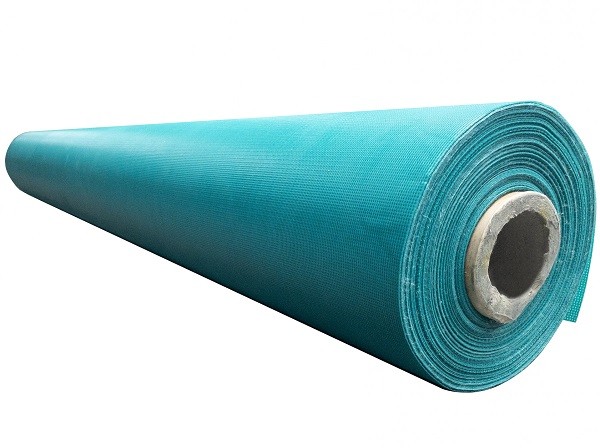
Supply format
Choose the point where your production starts.
Tarp roll goods are continuous fabric supplied for conversion. A semi-finished panel has specified operations completed but still needs further work. A finished cover is made to an agreed drawing with the seams, edge details and attachments included in the purchase scope. These are three different deliverables, even if they begin with the same PVC-coated material.
DERFLEX’s tarp fabric by the roll serves buyers who cut and convert material. Its custom tarpaulin supply supports drawing-based cover discussions. The best route depends on who can manage conversion, inspection, stock and design changes reliably.
On smaller screens, scroll the table horizontally.
| Decision | Roll goods | Semi-finished panels | Finished covers |
|---|---|---|---|
| What is delivered | Continuous material to the agreed roll specification | Defined blanks or joined panels; scope itemized | Drawing-based fabricated covers with listed finishing |
| Typical buyer task | Cut, join, reinforce, fit hardware and inspect locally | Complete agreed remaining operations | Verify dimensions and details; fit or distribute the cover |
| Best suited to | Converters with equipment and changing size requirements | Workshops retaining selected finishing or fitting steps | Buyers seeking a repeatable approved cover design |
| Useful quote unit | US$/m², US$/linear m or US$/roll with dimensions stated | US$/panel or US$/m² with cut/finished basis stated | US$/piece or US$/set with contents and dimensions stated |
| Main procurement risk | Comparing purchased area with usable output | Ambiguous division of manufacturing responsibility | Unclear finished dimensions, hardware or revision |
Make every quotation answer the same question: what does the buyer receive, and what work remains before the cover can be used? A lower price at an earlier production stage does not establish a lower cost per usable cover.
Fabrication scope
Put the remaining work in writing.
Roll goods: control the conversion
Specify construction, usable width, roll length, color, surface and required performance. The buyer controls nesting, cutting and joining. Allow for equipment capability, material handling, offcuts and inspection time. A roll does not include hems, eyelets or a cover’s finished dimensions.
Semi-finished: name the completed operations
Define whether the item is only cut, joined to width, partly hemmed or otherwise prepared. Mark the seam positions and unfinished edges. State who supplies reinforcement, hardware and labels, who performs final tests and who controls the final drawing revision.
Finished covers: approve the deliverable
Specify finished size and fit allowance, seam orientation, edge reinforcement, eyelets or other hardware, printing and packaging. Confirm whether accessories are fitted, loose or excluded. A cover quotation does not automatically include its frame, installation or handling equipment.
Mixed programs: keep one material reference
A program may combine roll supply for local alterations with approved covers for regular demand. Align the material reference and color approval while keeping separate order lines, acceptance criteria and traceability for each deliverable.
Use the PVC tarpaulin material hub to establish the base construction, then freeze the conversion scope. The sewn and welded seam comparison helps identify what should be validated after the roll has been converted.
FOB comparison
Compare the same specification at the same delivery point.
A FOB comparison needs a named port of shipment and a clear goods specification. It also needs separate treatment of fabrication scope: trade terms allocate delivery obligations, costs and risk, while the purchase specification defines which material or finished product is being sold.
On smaller screens, scroll the table horizontally.
| Quotation item | Roll goods | Semi-finished panels | Finished covers |
|---|---|---|---|
| Material line | Construction, GSM, width, length, color and finish | Same material details plus each panel’s material allocation | Approved material reference tied to the cover drawing |
| Conversion line | No cover fabrication unless separately listed | Itemized cutting, joining and any partial finishing | All agreed seams, hems, reinforcements and finishing |
| Hardware and printing | List separately if required | Identify supplied, fitted and remaining items | List type, quantity, location and printing scope |
| Packing | Core, roll protection, labels and any pallet requirement | Panel fold, protection, identification and pack count | Individual or bulk packs, labels, accessories and pack count |
| Commercial basis | Unit, quantity, currency and minimum by specification | Unit, panel quantities and minimum by pattern | Unit, design quantities and minimum by cover program |
| Delivery line | Named shipment port, agreed Incoterms rule and edition | Use the same delivery point for comparison | Use the same delivery point for comparison |
FOB boundary: under Incoterms® 2020, FOB concerns delivery on board the nominated vessel at the named shipment port. The seller handles export clearance; the buyer generally arranges main carriage and import formalities. Ocean freight, import duty and destination handling should therefore be assessed separately from the FOB goods comparison, subject to the agreed contract.
Container delivery: if goods are handed to the carrier at a terminal before vessel loading, discuss FCA at a named place. Confirm the rule that matches the actual handover with your logistics provider.
For the underlying material-cost variables, see the PVC tarpaulin price and quotation guide. Request an itemized quotation for the proposed material and conversion scope.
Trade-term reference: ICC’s Incoterms® 2020 sea and inland-waterway rules. The agreed contract and applicable rule govern each shipment.
MOQ planning
Ask what the minimum applies to.
MOQ can refer to total material area, a production run, a color, a width, a panel pattern or a finished design. A single number without that basis cannot tell a buyer whether a mixed order will qualify. Keep the production minimum separate from an economical shipment quantity.
On smaller screens, scroll the table horizontally.
| Supply form | MOQ basis to request | What may change the minimum | Useful way to structure the enquiry |
|---|---|---|---|
| Fabric rolls | m², linear meters or complete rolls per material specification | Construction, custom color, width, finish and production setup | State one material specification and quantity per color/width |
| Semi-finished panels | Pieces or total area per panel pattern and material | Nesting efficiency, seam layout, size mix and remaining work | Send a dimensioned panel list and one exact operation schedule |
| Finished covers | Pieces or sets per approved drawing or production program | Hardware, printing, fabrication time, pack format and design mix | Provide quantities by drawing revision, size and color |
| Repeat call-offs | Production minimum versus shipment release quantity | Stock ownership, release timing, storage and repeat-batch requirements | Ask whether staged deliveries can be quoted and how they are managed |
MOQ depends on the proposed material and production program. Request the actual minimum, sample scope, setup charges and any trial-order alternative for your specification. Refer to the tarp samples, MOQ and inspection guide when planning the approval sequence.
Cost normalization
Measure cost per accepted cover.
A practical comparison starts with a common output: the same number of acceptable covers made to the same specification. Roll width, cutting orientation, seams and edge allowances determine how much purchased material reaches that output. Use an approved cutting plan before assuming a yield.
(purchased material + conversion + hardware + inspection + packing + relevant handling and rework) ÷ accepted covers
(quoted covers + excluded completion work + receiving inspection + relevant handling and rework) ÷ accepted covers
Apply the same delivery point to both routes and add freight or destination costs consistently when comparing landed cost. Avoid counting an included item twice. Keep equipment investment and inventory carrying cost visible if they materially affect the decision.
Worked example: finished area and material yield
Suppose a buyer needs 100 rectangular flat panels with finished dimensions of 4 m × 6 m. Their combined finished area is 2,400 m². If an approved cutting and seam plan achieves 90% yield, the material requirement is approximately 2,667 m² before any extra sample or contingency allowance. The 90% yield is an illustration, not measured production data or a DERFLEX guarantee.
Compare a finished quote for those 100 panels against the roll route’s required purchased area and all remaining work. State whether a panel price uses finished area or cutting area. For shaped covers, flat projected area does not describe the full fabric requirement.
The roll width, length and weight guide supports handling and material planning. Do not replace the cutting plan with a gross-area calculation when seams and usable width drive yield.
From material to cover
One fabric. Different manufacturing responsibilities.
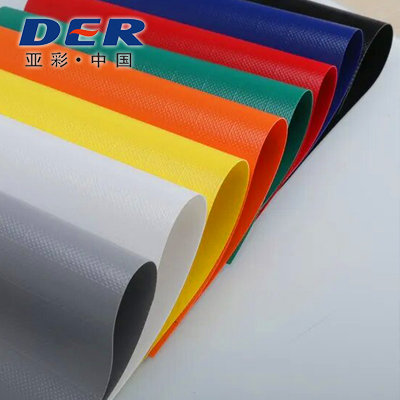
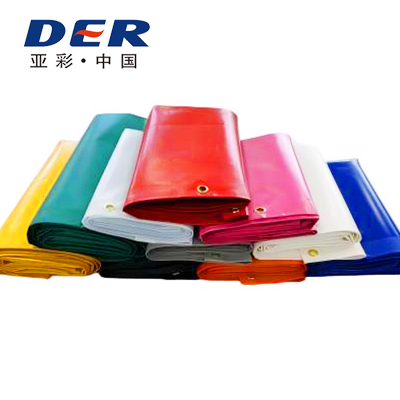
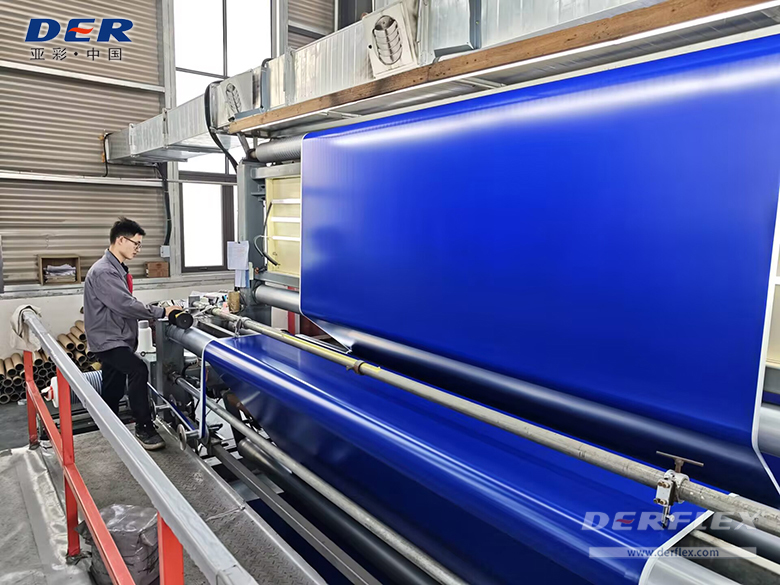
DERFLEX website photographs show roll material, fabric samples and finished tarpaulins. These illustrate the supply stages; the approved order defines the actual construction, finish and included operations.
Before you order
Agree acceptance at each handover.
Roll acceptance
Record usable width, length, agreed mass and dimensional tolerances, surface defects, roll build and material identification. Trial the proposed fabric on the intended equipment and assess relevant joining performance before a repeat program is fixed.
Panel acceptance
Check finished or intermediate dimensions against the stated measurement basis. Identify every seam and unfinished edge. Use panel IDs and packing labels that allow the receiving workshop to connect each piece to its remaining operation.
Cover acceptance
Check the approved revision, fit, seam orientation, reinforcement and hardware layout. Specify any required seam or leakage assessment and inspection sampling. Waterproof material alone does not establish a waterproof assembled cover.
Order and change control
Freeze the material reference, drawing revision, quantity by size, packaging and documentation. Record approved changes before production. Agree the sample route and production schedule with DERFLEX rather than assuming a standard lead time.
For the first enquiry, provide the application, supply format, specification or sample reference, dimensions and drawing, quantity split, required documents, destination and target timing. Ask the quotation to list included and excluded operations, MOQ basis and delivery term in the same response.
Buyer questions
Roll goods and finished covers FAQ.
Are tarp fabric rolls cheaper than fabricated tarps?
Roll goods omit downstream fabrication from the purchase scope, so their unit price cannot be compared directly with a finished cover price. Add conversion yield, local labor, seams, reinforcement, hardware, inspection, packing and any rework before comparing cost per accepted cover.
What is included in a semi-finished tarp panel?
There is no universal semi-finished specification. It may mean a cut blank, a joined wide panel or a panel with selected edge work. List every completed operation and every remaining operation on the quotation and approved drawing.
Does DERFLEX have one MOQ for rolls and finished covers?
MOQ must be confirmed for the proposed material and production program. Roll orders depend on the construction, width, color and run size; fabricated orders also depend on panel sizes, seams, hardware and packaging. Ask for the MOQ unit and the minimum by specification or design.
How should a FOB tarp quotation be written?
Identify the goods, quantity basis, currency, included fabrication and packing, named port of shipment and Incoterms 2020 rule. Separate one-time costs and optional work. FOB is a sea or inland-waterway rule; where delivery occurs at a container terminal before loading, discuss FCA at the named place.
Can roll goods and finished covers use the same material?
They can be developed around the same approved material reference, subject to the production agreement. Keep construction, color and performance requirements aligned, then validate the different cutting, joining and finishing operations. A shared fabric does not make the finished products identical.
Should cover dimensions be given as cut size or finished size?
Specify the required finished dimensions and measurement condition, then identify any fit allowance on the drawing. Cutting dimensions must account for seams and edge work. For a shaped cover, define the relevant internal or external dimensions and the intended fit.
Build a comparable quotation
Ask for the right stage of supply.
Send DERFLEX one material brief and your drawing or size list. Identify the roll, semi-finished and finished options you want evaluated, then ask for a common quantity basis, itemized fabrication scope, MOQ and named delivery point.