Tarp Material Comparison Guide
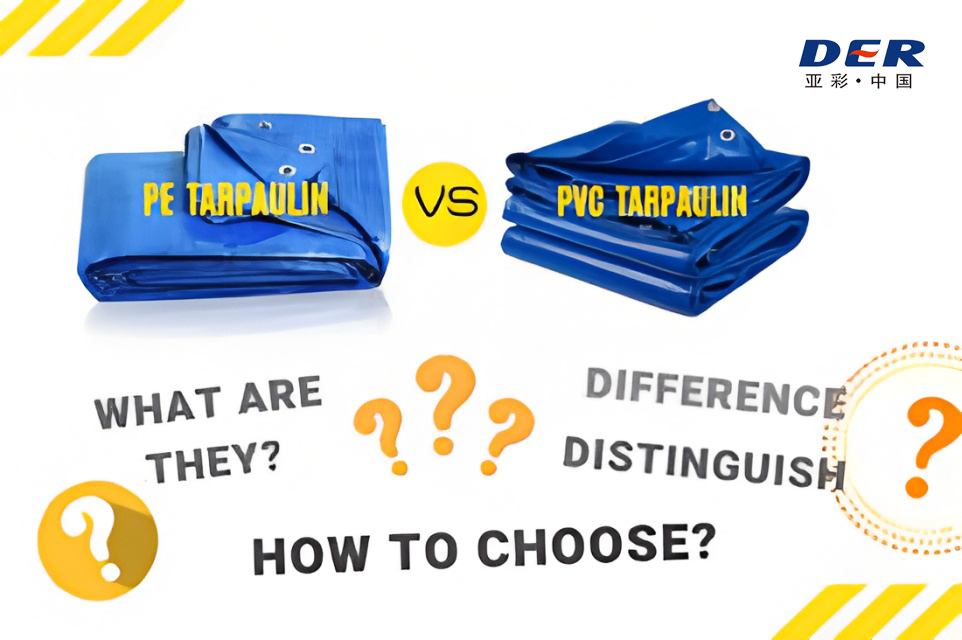
PVC vs PE Tarp: How to Choose the Right Cover Material for Your Project
PVC tarp and PE tarp can both protect goods from rain, dust and outdoor exposure, but they are built for different working conditions. This guide helps distributors, tarp fabricators, truck body builders, contractors and OEM buyers compare material structure, durability, handling, fabrication and total cost before placing an order.
Quick answer: PE tarp is usually suitable for temporary, light-duty and budget-sensitive covering. PVC coated polyester tarp is usually selected for longer service, truck covers, industrial protection, outdoor storage, welding fabrication and repeat OEM supply.
Choose by Use Duration, Stress Level and Fabrication Method
A tarp material should not be chosen only by price or color. The better choice depends on how long the cover will be used, how often it is handled, whether it will be welded or sewn, and how much failure would cost your business.
You need a heavy-duty cover for repeated outdoor use
PVC tarp is commonly made with high-strength polyester fabric coated or laminated with PVC. It is the practical option when the tarp must handle wind movement, tie-down tension, abrasion, welding, custom finishing and long-term outdoor service.
- Truck covers, trailer tarps, flatbed cargo covers and side curtains
- Construction covers, industrial equipment covers and outdoor storage
- Projects needing hot-air welding, high-frequency welding or reinforced hems
- OEM programs needing stable GSM, color, width, logo and packaging
You need an economical and lightweight temporary cover
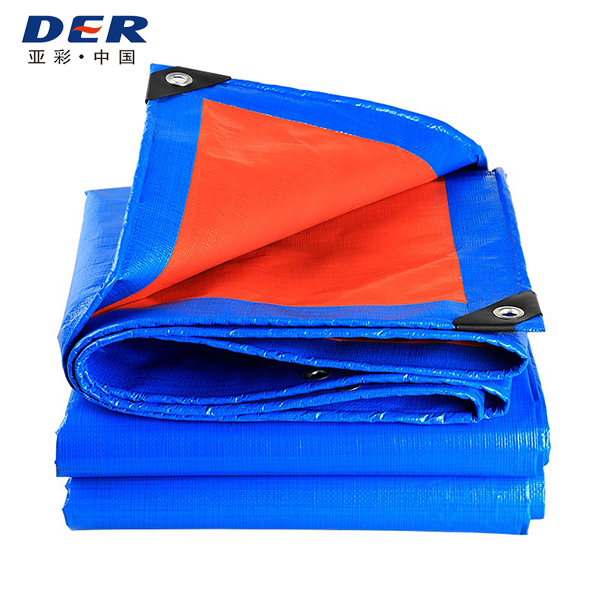
PE tarp is commonly woven polyethylene laminated with a PE surface. It is easy to carry and cost-friendly, making it useful for short-term covering, garden use, household protection and low-stress temporary jobs.
- Temporary rain protection and low-cost general covering
- Short-term storage where replacement is acceptable
- Light-duty camping, garden, event or household applications
- Projects where lower first cost matters more than longer service life
PVC Coated Polyester Tarp for Industrial Protection
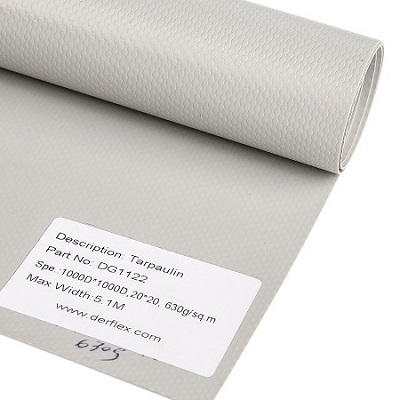
A PVC tarp is usually a reinforced technical textile. The polyester base fabric provides tensile strength, tear support and dimensional stability, while the PVC coating or laminated layer gives waterproof protection, surface durability, abrasion resistance, flexibility and weldability.
For B2B buyers, the value of PVC tarp is not only that it covers goods. It can be converted into finished tarps with welded seams, hems, eyelets, webbing, D-rings, reinforced corners, logo printing and private-label packaging.
DERFLEX supplies PVC tarpaulin, PVC tarpaulin material and custom tarp solutions for buyers who need application-matched roll goods or fabricated covers.
PE Poly Tarp for Lightweight and Temporary Coverage
A PE tarp is usually made from woven polyethylene strips with a polyethylene laminated surface. It is light, flexible and widely used for general waterproof covering when the project is temporary or the budget is limited.
PE tarps can work well for short-term rain protection, small covers, household storage, camping covers and simple outdoor use. However, when a tarp is repeatedly pulled, folded, dragged, exposed to wind flap or used around sharp edges, PE material may reach its practical limit sooner.
That is why professional buyers often compare first cost against replacement frequency, labor, cargo value and customer complaints instead of looking only at the price per piece.
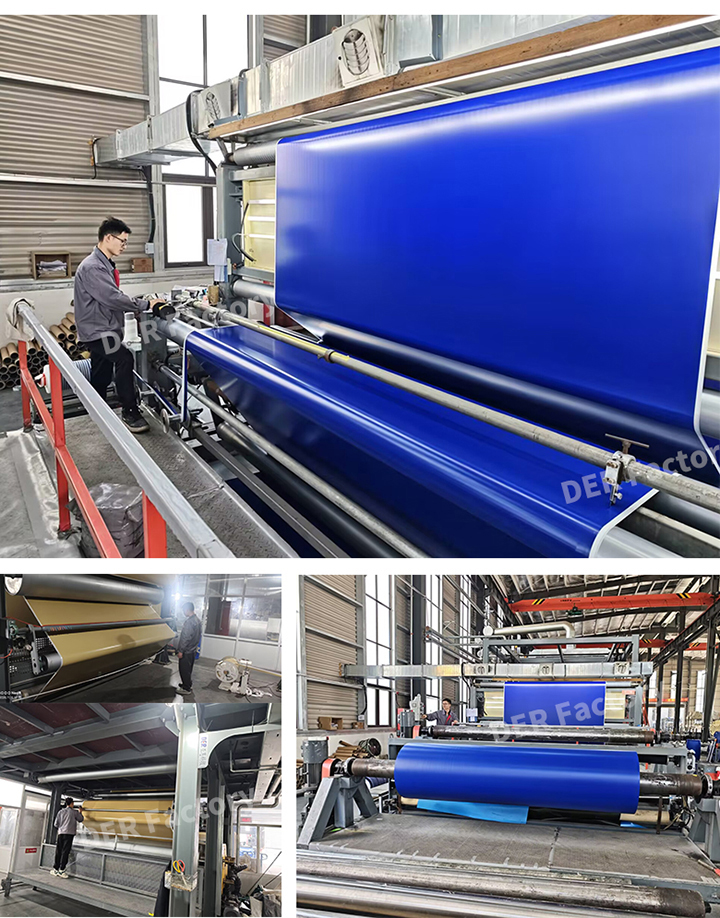
Product Image Display: PVC Coated Fabric Production & Tarp Material Rolls
DERFLEX focuses on PVC coated polyester tarp material for truck covers, industrial tarps, outdoor storage covers, construction protection, agriculture covers and OEM roll supply. The image area can be kept as a product display section for buyer confidence and Google image relevance.
PVC Tarp vs PE Tarp: Practical Buyer Table
The following table is written for procurement, distribution and fabrication decisions rather than casual retail shopping.
| Selection Factor | PVC Tarp | PE Tarp | Practical Recommendation |
|---|---|---|---|
| Material structure | Polyester base fabric with PVC coating or laminated PVC layer. | Woven polyethylene fabric with PE laminated surface. | PVC when strength and fabrication stability matter. |
| Durability | Better suited for repeated use, stronger tension and demanding outdoor handling. | Useful for temporary and light-duty tasks, but easier to tear under hard use. | PVC for industrial and transport applications. |
| Water protection | PVC coating creates a strong waterproof barrier; welded seams can improve finished tarp water protection. | Generally waterproof when new, but eyelet areas, seams and wear points may weaken faster. | PVC for long-term outdoor covers. |
| UV and weather exposure | Can be formulated with UV resistance, cold resistance, mildew resistance and other project options. | UV-treated PE options are available, but long exposure can reduce service life sooner. | PVC for prolonged exposure; PE for short duration. |
| Abrasion and wind flap | More suitable for cargo contact, edge friction, road use and repeated tie-down movement. | Lighter material can be practical, but may fray or puncture more easily under friction. | PVC for truck, trailer and equipment protection. |
| Welding and fabrication | Suitable for hot-air welding, high-frequency welding, hemming, webbing and reinforced custom tarps. | Usually used for simple finished covers; heavy-duty welding customization is more limited. | PVC for OEM tarp manufacturing. |
| Weight and handling | Heavier, more stable and better for higher-stress applications. | Lighter, easier to fold, carry and install. | PE when lightweight handling is the main requirement. |
| Cost logic | Higher initial material cost, often better value when replacement risk is high. | Lower upfront cost, suitable when service life requirements are modest. | Compare total cost, not only first purchase price. |
| Typical buyers | Importers, distributors, fabricators, fleet suppliers, construction suppliers and OEM brands. | Retailers, temporary cover users, garden suppliers and budget-focused general cover buyers. | Match the material to the buyer group and after-sales expectations. |
Where PVC Creates More Value and Where PE Still Makes Sense
For searchers asking “PVC vs PE tarp”, the real question is usually about application risk. A tarp for household storage and a tarp for cargo transport should not use the same buying logic.
Truck & Trailer Covers
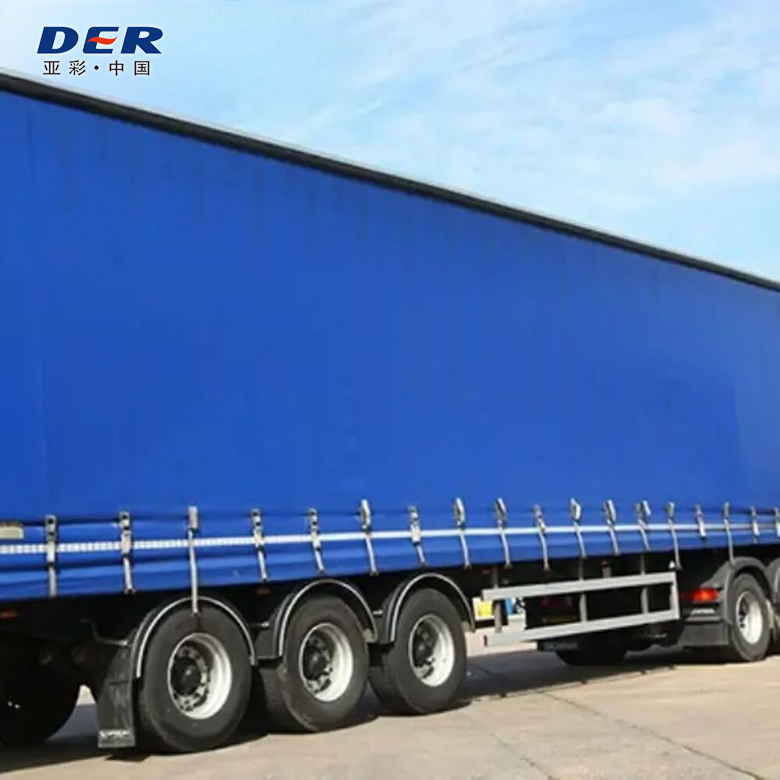
Choose PVC coated polyester for truck tarpaulin, trailer tarps, side curtains, dump truck covers and flatbed cargo protection where tie-down stress, wind movement and outdoor exposure are repeated.
Construction & Jobsite Covers
PVC tarp is suitable for scaffolding covers, building material covers, temporary roof covers, debris control and site protection. PE can be used for lighter temporary rain covers where replacement is acceptable.
Agriculture & Outdoor Storage
For hay, grain, machinery and farm material storage, PVC offers stronger service potential under sunlight, rain and handling. PE can still serve short seasonal cover needs.
Tents, Shelters & Canopies
PVC tarp is often selected when appearance, welding, surface finish, flame-retardant direction and longer outdoor performance are required. PE is practical for simple temporary shelters.
Wholesale & Distributor Programs
For distributors selling to professional users, heavy duty vinyl tarps can support repeat purchasing through stable specifications and product differentiation.
Low-Cost Temporary Protection
PE tarp remains useful for short-term cover, light handling, small household jobs and cost-sensitive temporary protection where longer service life is not the main requirement.
PVC Coated Polyester Tarp Material for B2B Buyers
DERFLEX helps buyers move from a simple “PVC or PE” question to a practical specification: base fabric, coating method, weight, width, finish, color, UV requirement, welding method, reinforcement design and packing format.
- Roll goods, cut panels, semi-finished pieces and finished tarp discussion
- Custom GSM, width, color, surface finish and performance direction
- Options such as UV resistance, cold resistance, anti-mildew and flame-retardant direction
- Support for importers, fabricators, distributors and OEM private-label programs
| Product Direction | PVC coated polyester tarp material, PVC tarpaulin roll, finished heavy duty tarp |
|---|---|
| Common Weight | 350gsm–1100gsm; other structures can be discussed by application |
| Base Fabric | 500D, 840D, 1000D, 1100D, 1300D polyester or custom yarn structure |
| Width Direction | 1.02m–3.20m common discussion; wider options may be discussed by structure |
| Surface Finish | Glossy, matte, semi-matte, embossed, lacquered, printable or custom finish |
| Functional Options | UV resistance, cold resistance, anti-mildew, anti-static, flame-retardant direction, blackout |
| Fabrication | Hot-air welding, high-frequency welding where applicable, sewing, eyelets, hems, webbing |
| Supply Format | Roll material, panels, finished tarps, OEM labeling and export-ready packing |
How to Order the Right PVC Tarp Instead of Buying by Price Only
Use this checklist before requesting samples or bulk quotation. It helps reduce specification mismatch and supports stable repeat orders.
Define the job
Confirm truck cover, construction cover, agriculture cover, shelter, equipment cover, outdoor storage or OEM product line.
Set the stress level
List wind, pulling force, folding frequency, abrasion, sunlight exposure, rain, snow, temperature and edge stress.
Confirm fabrication
Decide whether the material will be cut, welded, sewn, eyeleted, reinforced, printed, packed or converted locally.
Request samples
Compare weight, hand feel, coating adhesion, weldability, tear direction, surface finish and packing before mass order.
Continue Comparing Tarp Materials and Applications
These internal resources help buyers move from material comparison to product selection, specification confirmation and quotation.
Frequently Asked Questions About PVC vs PE Tarp
Short answers for buyers comparing PVC tarp, PE tarp, vinyl tarp and poly tarp materials.
Is PVC tarp better than PE tarp?
PVC tarp is usually better for heavy-duty, long-term, outdoor and industrial applications because it offers stronger durability, abrasion resistance, weldability and custom fabrication potential. PE tarp can be a practical choice for temporary, lightweight and budget-sensitive coverage.
What is the main difference between PVC tarp and PE tarp?
The main difference is structure and use logic. PVC tarp is commonly polyester fabric coated or laminated with PVC for stronger mechanical performance. PE tarp is commonly woven polyethylene laminated with PE film for lightweight and economical protection.
Which tarp is better for truck covers?
For truck covers, trailer tarps, flatbed tarps and cargo protection, PVC coated polyester tarp is usually the more suitable option because it can handle tie-down stress, wind movement, abrasion, welding and reinforced fabrication better than light-duty PE tarp.
Is PE tarp waterproof?
PE tarp is generally waterproof when new and can protect against rain for many temporary uses. For longer service or finished tarps with seams, eyelets and frequent handling, buyers should consider material wear points and replacement frequency.
Why does PVC tarp cost more than PE tarp?
PVC tarp usually uses a stronger reinforced structure, heavier coating, more fabrication compatibility and optional performance treatments. The initial cost can be higher, but it may reduce replacement frequency in demanding applications.
Can DERFLEX customize PVC tarp material?
Yes. DERFLEX can discuss custom GSM, width, color, surface finish, UV resistance, flame-retardant direction, anti-mildew treatment, roll length, packaging, labels and finished tarp fabrication according to application and order requirements.
Need Help Choosing Between PVC and PE Tarp?
Send DERFLEX your application, target weight, width, color, required finish, expected service environment and order quantity. Our team will help you match a practical PVC tarp material direction for industrial use, wholesale supply or OEM tarp production.