Tarp Buying Guide: Materials, Sizes & Uses
Choose a tarp by the job it must survive—not by color, thickness, or price alone. This guide explains how material structure, finished dimensions, GSM, reinforcement, fastening points and use conditions work together so buyers can build a more practical specification.
Start with the Protection Problem
“Heavy duty” is not a complete specification. A tarp can be thick and still fail if the wrong material, seam, edge construction or tie-down layout is used. First define the exposure, handling cycle and failure risk; then choose the material and construction.
PVC, Poly, Canvas, Mesh or Clear PVC?
Each material family solves a different combination of waterproofing, breathability, handling weight, abrasion, UV exposure and fabrication requirements. For a focused material comparison, see DERFLEX's vinyl vs poly tarps guide.
| Material | What It Does Well | Trade-Offs to Check | Typical Uses | Buying Questions |
|---|---|---|---|---|
| PVC / Vinyl Coated Polyester | Waterproof coated surface, reinforced textile base, weldable fabrication, good suitability for custom edges and hardware. | Heavier than lightweight PE; coating, base cloth and reinforcement should be matched to use. | Truck covers, industrial equipment, construction, storage, tents, reusable outdoor tarps. | GSM? Base yarn? Tear strength? UV package? Welding method? Edge reinforcement? |
| PE / Poly Tarp | Lightweight, easy to handle, economical for temporary or general-purpose coverage. | Long-term abrasion, wind flap and repeated tie-down may require a higher-duty structure or another material. | Short-term storage, household work, emergency cover, garden, temporary construction protection. | Mil? Mesh count? UV treatment? Reinforced corners? Finished size? |
| Canvas | Breathable, flexible and useful where ventilation helps control condensation. | Often water-resistant rather than a fully sealed waterproof barrier; treatment and maintenance matter. | Tools, machinery, firewood, equipment storage, indoor/outdoor breathable covers. | Fabric weight? Treatment? Water resistance? Breathability? Mildew control? |
| Mesh | Airflow, shade, lower wind pressure and debris containment. | Not intended as a complete rain barrier; shade rate and mesh structure affect performance. | Dump truck covers, waste hauling, privacy screens, shade, agriculture, site containment. | Shade rate? Airflow? Tensile/tear strength? Edge webbing? Grommet spacing? |
| Clear PVC | Weather separation with visibility and light transmission. | Scratch resistance, cold flexibility, thickness and seam design need application-specific review. | Industrial curtains, windows in covers, temporary partitions, weather screens. | Thickness? Clarity? Cold-crack requirement? Reinforcement? Welding method? |
Measure the Coverage Path, Not Only the Footprint
The most common sizing mistake is measuring only the top surface. A tarp must travel over edges, side drops, cargo profiles, corners and fastening zones. For more detailed measurement examples, use the DERFLEX tarp size guide.
Flat Surface or Ground Cover
Measure the length and width of the area, then add the overhang needed for edge protection, runoff or anchoring. The amount of overhang depends on how the tarp will be secured.
Box-Shaped Equipment or Pallet
Include the top dimensions plus the required side drops. For fitted covers, measure protrusions, control panels, handles, pipes and other features that may change the cover path.
Truck or Trailer Load
Measure the actual load profile rather than the deck alone. Lumber, steel, coils and machinery can create very different tarp paths and tension zones even on the same trailer.
Include drop length, nose coverage, rear coverage, tie-down direction and sharp-edge protection.
Cut Size vs Finished Size
Retail tarps may be sold by cut size or nominal size. Hems, seams and reinforcement can reduce the final dimensions. For custom manufacturing, state the finished coverage dimensions you need and confirm the production tolerance in writing.
This is especially important for repeated OEM orders where consistent fit matters across batches.
Mil, mm, GSM and oz Do Not Mean the Same Thing
Buyers often compare one headline number, but tarp performance comes from the entire construction. Use the DERFLEX tarp thickness guide when you need a deeper comparison of mil, mm, GSM, coating and base fabric.
| Duty Direction | What Buyers Usually Need | Material Direction | What to Verify Beyond Thickness |
|---|---|---|---|
| Light / Temporary | Short duration, low abrasion, occasional handling. | Lightweight PE/poly or application-specific lightweight fabric. | Finished size, grommet reinforcement, weather window, UV exposure. |
| General Outdoor | Seasonal protection, pallets, equipment, moderate rain and sun. | Stronger PE or medium-weight coated fabric depending on handling cycle. | Tear resistance, UV treatment, corner design, anchoring. |
| Heavy Duty | Repeated handling, stronger wind load, construction, logistics or machinery protection. | PVC coated polyester is commonly used where weldability and reinforced fabrication are valuable. | Base fabric, coating adhesion, tensile/tear data, weld quality, webbing, hardware. |
| Project / Industrial | Large dimensions, repeated use, abrasive contact, special hardware or compliance requirements. | Project-specific coated textile, mesh or engineered cover structure. | Drawing approval, reinforcement map, test standard, lot consistency, packaging and traceability requirements. |
The Sheet Is Only One Part of the Tarp
Real-world tarp failures frequently start at edges, seams, grommets, sharp contact points or high-tension zones. The construction plan should be selected alongside the material—not after it.
Base Fabric
Yarn denier, weave density and textile strength influence dimensional stability, tensile behavior and tear propagation.
Coating / Lamination
PVC coating or lamination contributes waterproofing, surface durability, flexibility and weldability; the correct structure depends on use.
Seams
Hot-air welding, high-frequency welding or sewing should be selected according to material, panel size, waterproofing need and production method.
Hems & Webbing
Edge reinforcement helps distribute tie-down loads. Heavy-use covers may need webbing, rope edges or multilayer reinforcement.
Grommets & D-Rings
Spacing should follow the expected load and attachment method. More hardware is not automatically better if reinforcement is inadequate.
Surface & Treatments
UV stabilization, flame-retardant direction, cold flexibility, anti-mildew, anti-static or lacquered surfaces can be discussed when relevant.
Buy Against the Likely Failure Mode
This approach helps commercial buyers avoid overspecifying one property while missing the part most likely to fail in service.
Grommet Tear-Out
Review hem layers, reinforcement, hardware size, spacing, pull direction and whether webbing or D-rings distribute load more effectively.
Surface Abrasion
Map contact points on cargo or equipment and add local wear reinforcement where rubbing is repeated.
Wind Flap
Use suitable tension, attachment frequency and geometry. For some loads, a mesh structure may reduce wind pressure.
Seam Leakage
Specify a seam method compatible with the material and review seam placement, overlap and fabrication quality.
UV Aging
Use a material and surface treatment appropriate for the outdoor exposure period and climate rather than relying on color alone.
Poor Fit
Confirm finished dimensions, drops, overhang, hardware positions and tolerance before production—especially for repeated custom orders.
Match Tarp Construction to the Industry
The same material can behave very differently when used on a moving vehicle, over stored equipment, on a construction site or as a seasonal agricultural cover. The use case should determine the specification.
Truck & Logistics
Repeated folding, road spray, wind movement and tie-down tension make transport tarps a mechanical-duty application.
- PVC coated polyester or mesh depending on cargo
- Reinforced hems, webbing, D-rings or grommets
- Repairability and driver handling weight
See DERFLEX truck tarps.
Construction & Jobsite
Rain, dust, abrasive surfaces, temporary enclosures and repeated relocation can create different performance priorities.
- Waterproofing and abrasion resistance
- Anchoring and edge reinforcement
- Project-specific flame-retardant requirements when applicable
Agriculture & Hay
UV exposure, moisture control, seasonal reuse and large-area coverage are common procurement factors.
- UV-stabilized coated tarp or PE direction
- Airflow and condensation considerations
- Large-panel seam and anchoring design
Industrial Equipment
Custom covers may need shaped dimensions, inspection openings, reinforced corners or specific contact-surface treatment.
- Drawings and fitted dimensions
- Local reinforcement at sharp points
- Access panels, zippers, straps or labels
Outdoor Storage
Long-term storage needs more than rain resistance. Consider UV exposure, drainage, condensation, anchoring and maintenance access.
- Waterproof coated structures where needed
- Ventilation strategy
- Slope to reduce pooling water
Wholesale & Private Label
Distributor programs need repeatable specification, packaging, color control and a clear product-tier strategy.
- Standardized GSM / material structure
- Label, carton and logo requirements
- Repeat-order tolerance and sample approval
Review DERFLEX wholesale tarps.
When a Standard Tarp Is Enough—and When Custom Makes Sense
A stock-size tarp can be the practical choice for temporary, low-risk coverage. Custom manufacturing becomes more relevant when fit, reinforcement, hardware or repeatability affects operating cost.
Standard / Retail Tarp
- Short-term or occasional coverage
- Simple rectangular shape
- Low consequence if the tarp is oversized
- No special hardware or reinforced wear zones
- Small quantity and quick replacement are acceptable
Custom / Manufacturer-Developed Tarp
- Exact finished dimensions or fitted geometry
- Repeated handling, truck use or high-tension fixing
- Custom grommet, D-ring, webbing or strap layout
- Special wear pads, openings or seam placement
- OEM color, logo, label, packaging or repeat supply
DERFLEX supports PVC-coated tarp materials, roll goods, panels and finished tarp programs. Buyers who need specification-based manufacturing can start from the DERFLEX tarp manufacturer hub.
A Practical 8-Step Tarp Buying Process
This workflow is designed for distributors, fabricators, contractors, fleet operators, equipment suppliers and OEM programs that need more control than a one-off retail purchase.
Identify what is being covered, where it is used and what the tarp must prevent.
Map exposure
Record rain, UV, wind, abrasion, chemicals, cold, heat and handling frequency.
Choose material
Select PVC/vinyl, PE/poly, canvas, mesh or clear material according to the job.
Set duty level
Specify thickness, GSM or oz together with base fabric and strength requirements.
Confirm finished size
Measure coverage path, drops and overhang; state final dimensions and tolerance.
Design attachments
Plan grommets, D-rings, webbing, rope edges, straps and reinforced corners.
Approve sample
For repeat orders, compare material, color, surface, dimensions, welds and packing.
Lock the reorder spec
Record the approved structure so later batches are evaluated against the same basis.
PVC Tarpaulin Materials for Industrial Tarp Programs
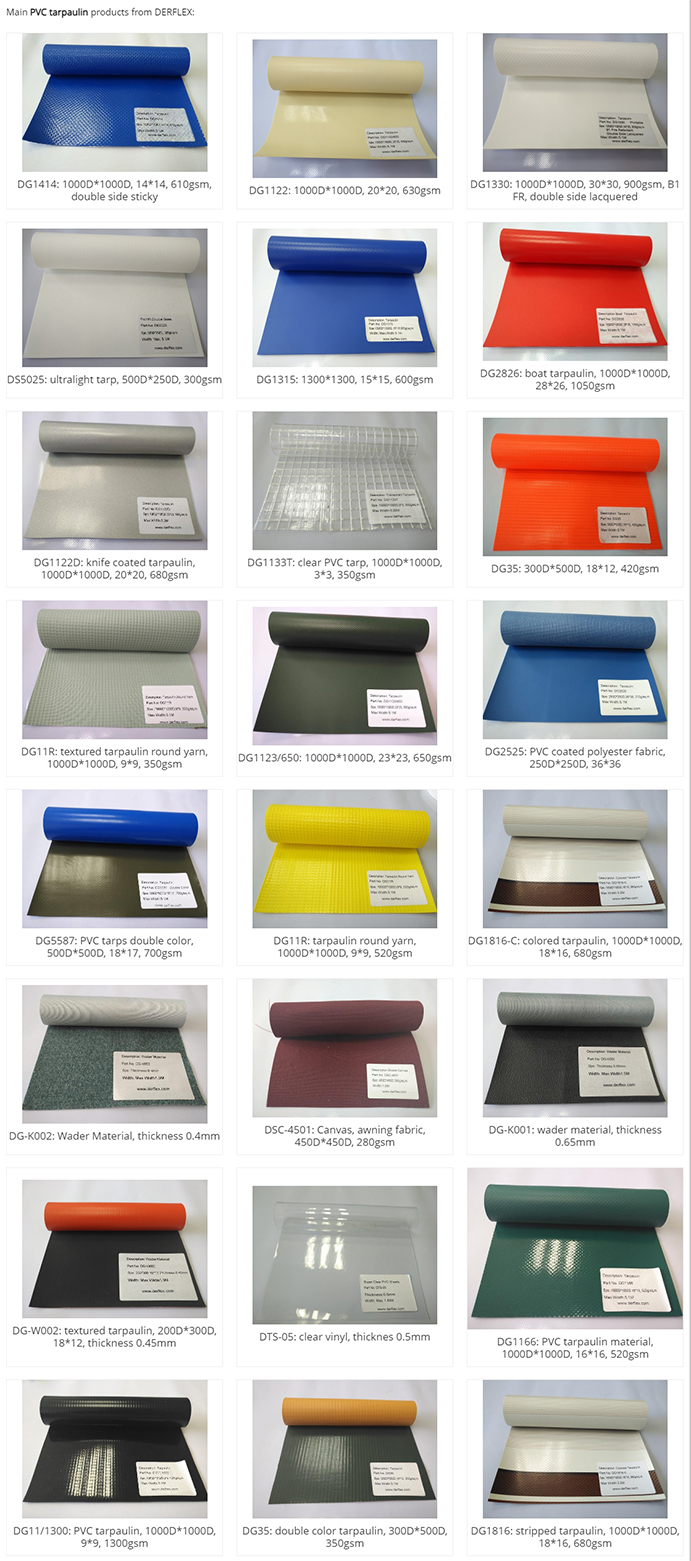
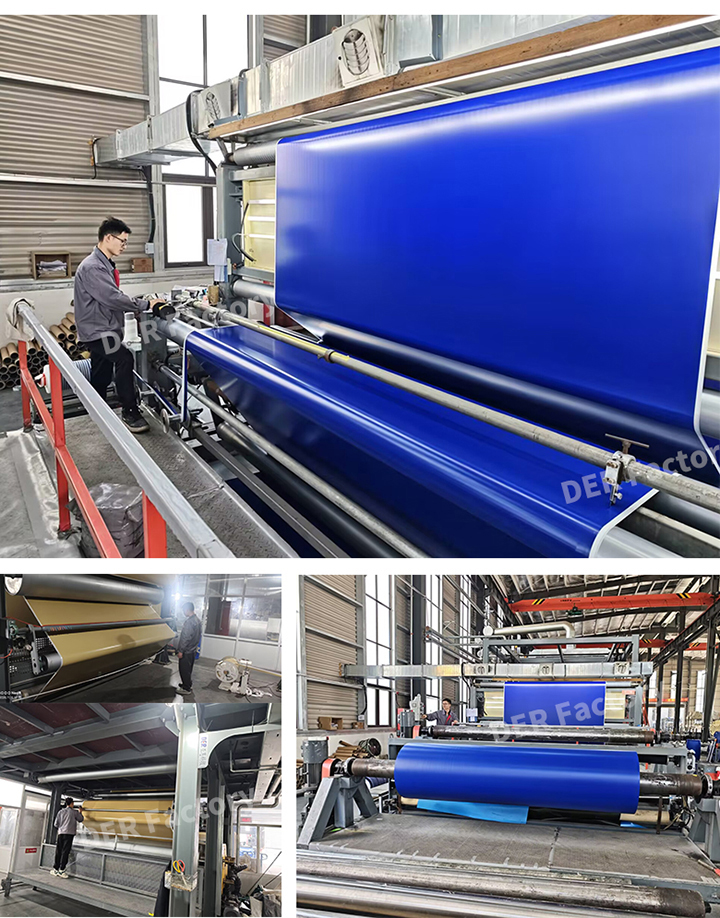
DERFLEX's current tarp platform covers PVC-coated polyester materials, roll goods and finished custom tarp directions. Typical selection should be based on application, required weight, reinforcement and service environment rather than one generic specification.
PVC Coated Tarpaulin Material Range
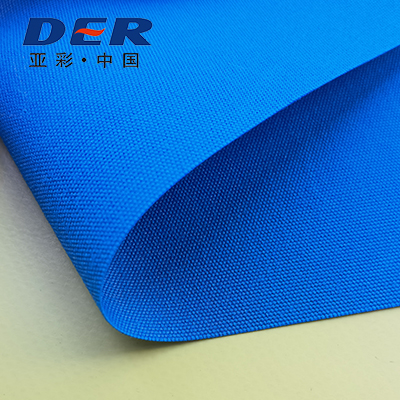
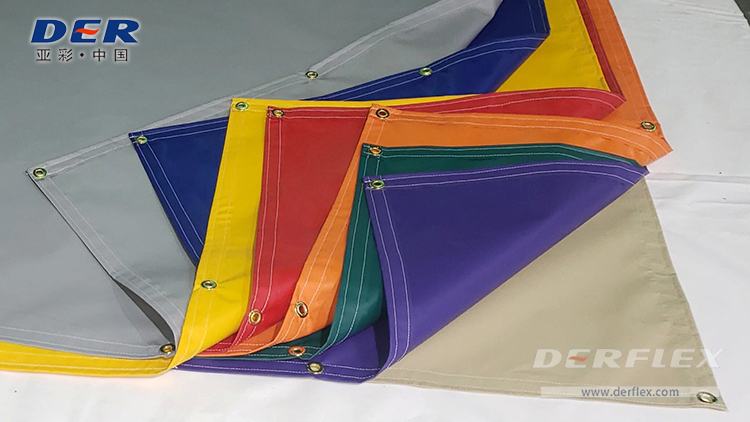
Different base fabrics, surface finishes, colors and coated structures can be evaluated for truck covers, equipment covers, construction protection, agricultural storage and other fabricated tarp products.
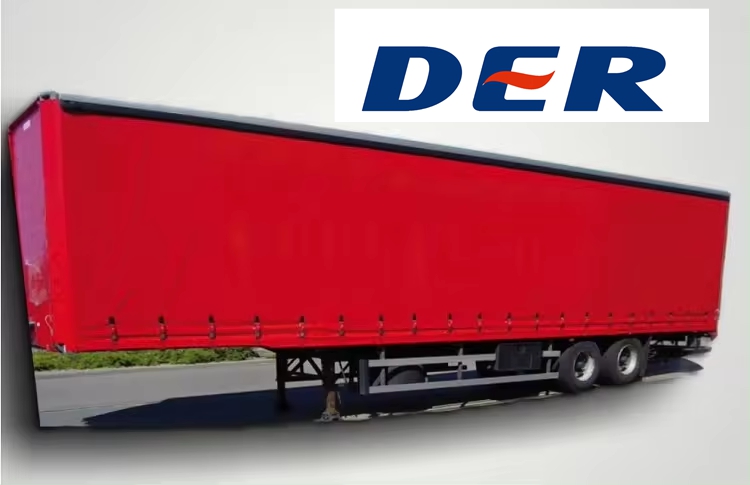
Transport Application Example
Truck and trailer tarp programs usually require additional attention to wind movement, repeated handling, abrasion and tie-down reinforcement.
What to Send Before Requesting a Tarp Quote
A more complete sourcing brief helps the supplier compare material and fabrication options on the same basis. It also reduces the risk of price comparisons between unlike specifications.
For material, finished tarp and OEM sourcing support, submit the requirement through Request A Quote.
Tarp Buying Guide FAQs
Short answers to common buying questions from industrial, commercial and wholesale tarp buyers.
What is the most important thing to consider when buying a tarp?
Start with the application and likely failure mode. A tarp for temporary garden use, a truck cover and a fitted machinery cover need different materials, reinforcement, dimensions and attachment systems. Choosing by price or thickness alone can miss the actual requirement.
Is PVC tarp better than poly tarp?
Neither material is universally better. PVC/vinyl-coated polyester is commonly used for heavy-duty, reusable and fabricated industrial tarps, while PE/poly is often practical for lightweight, temporary and price-sensitive coverage. The right choice depends on exposure, handling and budget.
How do I choose the right tarp size?
Measure the full coverage path, not only the top footprint. Include height, side drops, front and rear coverage, overhang and fastening space. Confirm whether the supplier is quoting cut size, nominal size or final finished size.
Does a thicker tarp always last longer?
No. Thickness matters, but serviceability also depends on base fabric, coating quality, tear strength, UV exposure, abrasion, seams, edge reinforcement and how the tarp is installed. A heavier tarp with weak edges can still fail early.
What type of tarp is commonly used for trucks and trailers?
PVC-coated polyester is widely used for waterproof heavy-duty truck tarps because it can be welded and reinforced for repeated handling. Mesh is also used for loose loads where airflow and debris containment are more important than a fully waterproof barrier.
What information does DERFLEX need for a custom tarp quotation?
Provide the application, finished dimensions or drawing, material direction, target GSM or thickness, exposure conditions, edge and hardware layout, color, quantity, branding or packing requirements, destination and any applicable test or compliance requirement.
Turn the Buying Guide into a Tarp Specification
Send DERFLEX your application, finished dimensions, exposure conditions, target material, reinforcement details and quantity. The team can review a practical material and fabrication direction for quotation.
Technical note: material ranges, duty descriptions and selection examples on this page are general purchasing guidance. Final suitability should be confirmed against the actual application, approved sample, production specification, fabrication method and applicable test or compliance requirements. Performance can vary with installation, exposure and use conditions.