Wind & Flutter Exposure
Train movement and open-route airflow can create cyclic movement in poorly tensioned areas. Cover fit, attachment spacing and local reinforcement should be evaluated together.



 Industrial Cargo Protection Materials
DERFLEX supplies PVC coated polyester railcar tarp solutions for rail freight operators, industrial shippers, cover fabricators, distributors and OEM programs that need a practical balance of weather protection, tear resistance, weldability and custom fabrication.
Available as roll material, fabricated panels or finished custom railcar covers. Final construction, securement details and performance direction should be matched to railcar geometry, cargo, route conditions and the operating requirements of the applicable railway or shipper.
Designed Around Rail Operations
Rail freight creates a different operating environment from static storage or ordinary road transport. A railcar cover may face extended outdoor exposure, sustained airflow, vibration, repeated tension, shifting contact points, dust, precipitation and handling at terminals or industrial yards. The tarp therefore needs to be selected as a system: fabric, seam method, reinforcement, tie-down layout and finished geometry must work together.
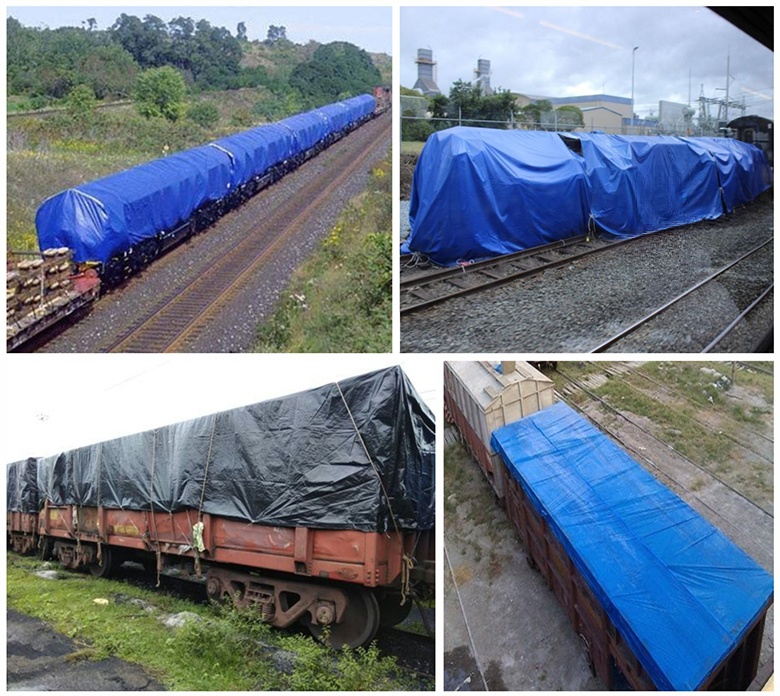
For lumber, engineered wood products, machinery, industrial materials and selected open-top freight, a custom railcar tarp can help reduce direct exposure to weather and contamination during transit. For bulk cargo, the cover concept may also be designed around containment or dust-control objectives, subject to the cargo and rail operator's requirements.
The highest-wear zones are rarely the center field of the fabric. Edge contact, corners, folds, tie-down points, hardware interfaces and places where the cover can flutter or rub often determine real-world durability. DERFLEX can configure these zones independently rather than relying on fabric weight alone.
Performance Priorities
A useful specification begins with the railcar and cargo, then works backward to the textile construction and finishing details. This approach reduces over-specification in low-stress areas and under-specification at the actual failure points.
Train movement and open-route airflow can create cyclic movement in poorly tensioned areas. Cover fit, attachment spacing and local reinforcement should be evaluated together.
A waterproof railcar tarp depends on coated fabric plus practical seam and edge construction. Large-format welding can help reduce water entry paths when the finished design allows it.
Rails, cargo corners, frames, buckles and repeated folding create localized wear. Extra patches, webbing or double-layer reinforcement can be placed only where needed.
Long routes and outdoor staging expose covers to sunlight and temperature changes. UV-stabilized coating directions can be selected according to expected climate and service profile.
Heavier is not automatically better. Fabric weight must be balanced against cover dimensions, manual handling, folding, installation process and replacement frequency.
Rail fleets and distributors benefit from documented size, fabric, hardware and reinforcement standards so replacement covers remain compatible across future orders.
Material Engineering
DERFLEX typically develops rail cover projects around a high-tenacity polyester scrim with PVC coating. The textile provides mechanical strength while the coating supports waterproofing, surface protection and heat-weld fabrication.
Specification Framework
The table below is a sourcing framework rather than a one-size-fits-all product promise. Final values should be confirmed against the exact material datasheet, cargo, railcar, climate and fabrication method.
| Item | Typical DERFLEX Direction | Why It Matters for Rail Use |
|---|---|---|
| Material | PVC coated high-tenacity polyester fabric | Balances waterproofing, strength, flexibility, cleanability and weld fabrication. |
| Fabric Weight | Approx. 650–900 gsm for many heavy-duty rail cover projects; custom constructions by application | Higher weight can add durability but also increases handling mass. Select by cover size and duty cycle. |
| Base Fabric | 1000D × 1000D, commonly 18 × 18 or project-specific scrim | The scrim influences tensile, tear resistance and dimensional stability under repeated tension. |
| Working Temperature | Cold-flex and heat-resistance directions available; confirm tested grade for the target route | Rail routes can cross large temperature ranges, so coating flexibility should match climate. |
| Surface Finish | Glossy, matte, lacquered or application-specific treatment | Finish affects dirt pickup, cleanability, appearance and outdoor aging behavior. |
| Seams | Hot-air welded, HF welded or mixed fabrication depending on cover geometry | Seam design affects water protection and large-panel integrity. |
| Perimeter | Webbing-reinforced hem, rope hem, double-layer edge or custom reinforcement | Perimeter areas carry tie-down loads and often see the highest abrasion. |
| Hardware | Grommets, D-rings, buckles, straps or custom attachment interfaces | Spacing and load path should be designed around the railcar and securement method. |
| Performance Options | UV resistance, flame-retardant direction, anti-mildew, anti-static or other project requirements | Special properties should be specified together with target test standards when required. |
| Supply Format | Roll goods, cut panels, semi-finished assemblies or finished custom railcar tarps | Lets converters, rail fleets, wholesalers and OEM programs buy at the most practical production stage. |
Indicative sourcing information only. Exact construction, tolerance and tested performance are subject to the confirmed product specification and production agreement.
Securement Engineering
A strong fabric cannot compensate for a weak attachment layout. For a heavy duty railcar tarp, the securement system should distribute force through reinforced zones rather than concentrating stress at isolated eyelets or corners.
Webbing, rope hems or double layers can spread repeated tension along long cover edges.
Grommet, D-ring or strap spacing should reflect geometry, exposure and the chosen fastening method.
Corners and direction changes can receive higher loads; patches and local reinforcement can be added.
Known rub points can receive sacrificial or multi-layer reinforcement to reduce damage to the main panel.
Custom Fabrication
DERFLEX can work from finished dimensions, railcar drawings, sample covers or a functional brief. The goal is to define not only overall length and width, but also the places where the tarp must fold, tension, wrap, clear hardware or tolerate repeated contact.
Full-coverage tarps can help shield lumber, panels, siding and composite products from rain, grime and rail-route contamination. Printing can be considered when brand visibility matters.
Custom cover geometry can be developed for selected open-top railcars where weather exposure, contamination or material containment is part of the operating requirement.
Heavy waterproof railcar tarp constructions can help protect industrial cargo from precipitation, dust and direct outdoor exposure during transfer and rail shipment.
Depending on cargo and operating rules, cover designs can focus on reducing direct weather contact or helping contain loose surface material. Mesh or alternative structures may be more suitable where full waterproofing is not the priority.
Buyer Decision Guide
Accurate quotations come from accurate load information. A useful RFQ should describe how the cover will be used, not only its dimensions.
Identify car type, cover footprint, obstacles, attachment points and how the tarp will be installed or removed. This determines geometry and reinforcement before material weight is selected.
Full weather barrier, dust reduction, temporary storage protection and visual branding can require different material and finishing choices.
Mark corners, rails, hooks, sharp cargo profiles and frequent folds. Reinforcement can then be placed where it adds value instead of increasing the entire cover weight.
Specify grommets, D-rings, webbing, straps, rope hems or custom hardware connections together with their approximate spacing and load direction.
For a new custom railcar tarp, drawing review, material confirmation, sample fabrication or first-article inspection can help identify fit and finishing issues before a larger repeat program.
Quality Planning
Quality control should follow the finished cover design rather than checking fabric alone. DERFLEX can align inspection items with the agreed specification and order requirements.
B2B Supply Models
Different buyers need different levels of fabrication. DERFLEX can support sourcing at several stages so the supply model fits the buyer's own production and service network.
PVC coated polyester roll goods for tarp converters and fabricators that handle their own cutting, welding and hardware installation.
Made-to-drawing finished covers with selected seam, edge, reinforcement, grommet, D-ring, webbing, color and printing details.
Repea, t B2B supply for distributors, fleet maintenance programs and private-label channels that need controlled specifications, packing and replacement consistency.
Why DERFLEX
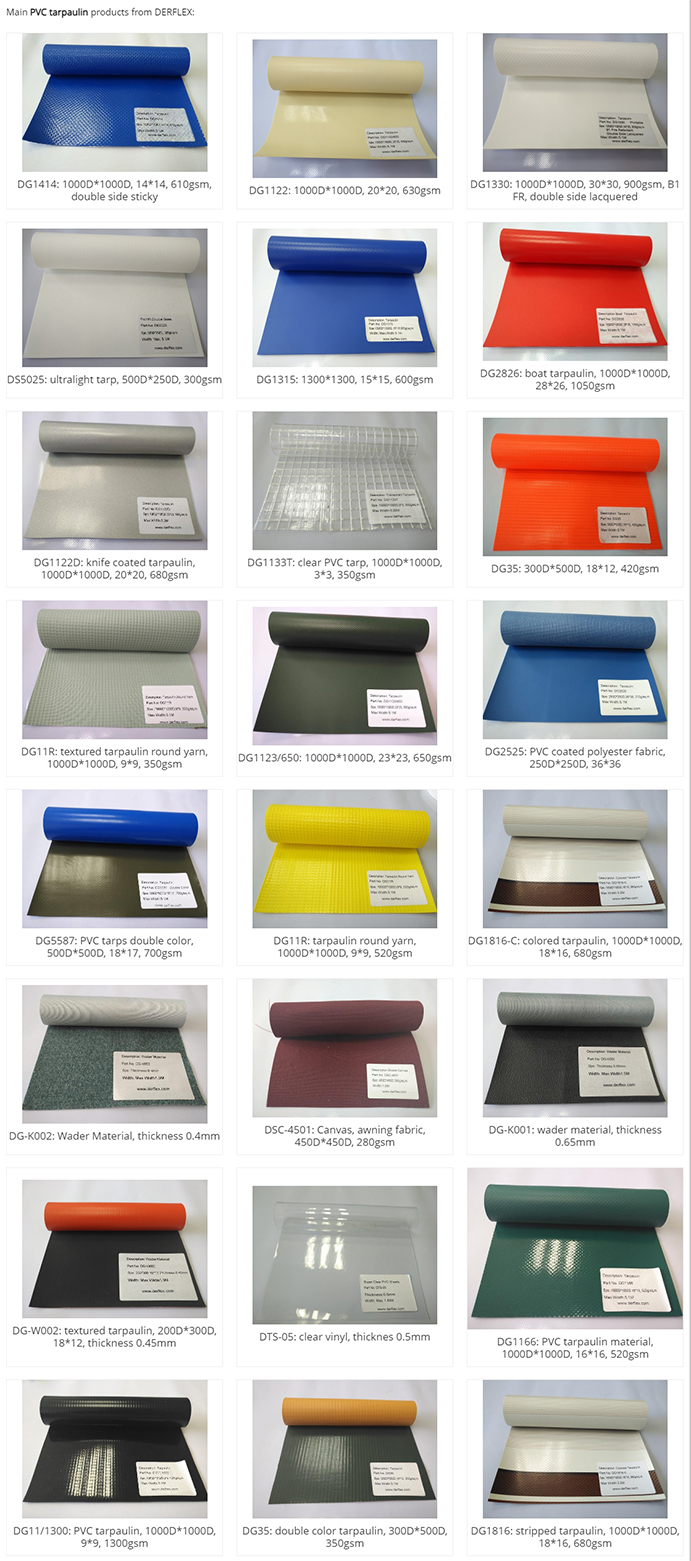
DERFLEX focuses on industrial fabrics and PVC tarpaulin solutions, allowing railcar cover projects to start with material selection and continue through panel layout, welding, reinforcement and OEM finishing. This is useful for buyers who want to manage the fabric and finished-cover specification as one program.
For a railcar tarp manufacturer evaluation, buyers should compare more than a catalog photo. Ask how the supplier controls coating consistency, fabric structure, roll width, seam process, reinforcement placement, hardware layout, color repeatability, documentation and future replacement orders.
DERFLEX can discuss these items at quotation stage and provide material or finished-cover directions according to the project. Samples, drawings and test requirements should be confirmed before production when the application is new or performance-sensitive.
Related DERFLEX Solutions
These related pages connect railcar covers with transportation tarps, PVC material choices, waterproof protection and heavy-duty logistics applications.
FAQ
Practical answers for rail freight companies, industrial shippers, tarp distributors, converters and OEM buyers.
A railcar tarp is a flexible protective cover used on selected railcars or rail cargo to reduce direct exposure to rain, snow, dust, grime, sunlight and other transport conditions. The exact cover design depends on railcar type, cargo, route conditions and the operator's securement requirements.
PVC coated high-tenacity polyester is a practical choice for many heavy-duty rail cover applications because it combines weather resistance, tear and tensile strength, flexibility, cleanability and heat-weld fabrication. The best fabric weight and structure should be selected from the actual cover size and operating environment.
Yes. DERFLEX can discuss custom railcar tarp projects from drawings, finished dimensions, sample covers or a functional requirement. Custom options can include panel shape, fabric weight, edge construction, reinforcement zones, grommets, D-rings, webbing, straps, color, printing and packaging.
PVC coated fabric is used for waterproof cover construction. Overall weather protection also depends on seam design, edge configuration, fastening and how the tarp is installed. Welded seams are commonly considered where water protection is a priority.
DERFLEX can support B2B supply in several formats, including PVC coated roll material, cut or semi-finished panels and finished custom railcar tarps. This allows railcar tarp wholesale buyers, converters, distributors and fleet programs to choose the appropriate production stage.
Send the railcar type, drawings or dimensions, cargo, finished tarp size, fastening method, quantity, route or climate, preferred fabric weight, color, reinforcement details, printing requirements, target tests or documentation and destination market. Photos of the existing railcar or cover can also help the specification discussion.
DERFLEX can review your railcar tarp requirements and discuss a practical material, reinforcement, fabrication and supply direction for custom, replacement or B2B wholesale projects.