01
Define the substance scope
Confirm the required REACH restriction items, Candidate List expectations and any buyer-specific restricted substance list.



DERFLEX supplies PVC coated and laminated tarpaulin developed around agreed chemical restrictions, mechanical performance, fabrication methods and destination-market documentation.
“REACH compliant” should be connected to a defined product formula, current substance requirements, a stated test scope and the exact material supplied. DERFLEX therefore confirms compliance requirements during specification review rather than treating REACH as a generic marketing label.
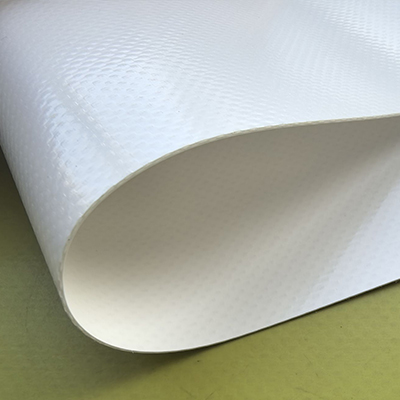
REACH is the European Union framework for the registration, evaluation, authorisation and restriction of chemicals. For a PVC tarpaulin buyer, the practical concern is whether substances used in the polyester fabric, PVC coating, plasticizer system, stabilizers, pigments, adhesives, lacquers and functional additives satisfy the requirements applicable to the supplied article and its intended market.
The Candidate List and restriction requirements can change. A report issued for one formula, color or production period should not automatically be assumed to cover every later order. Procurement teams should match the report to the product code, tested sample, substance list, laboratory method and order specification.
DERFLEX treats a REACH compliant tarpaulin program as a defined material project. The requested substance scope, end use, destination market and documentation package are reviewed before sample approval and bulk production planning.
Confirm the required REACH restriction items, Candidate List expectations and any buyer-specific restricted substance list.
Match plasticizer, stabilizer, pigment, lacquer and additive selections to the agreed compliance direction.
Ensure the report identifies a representative material, color and construction rather than an unrelated generic sample.
Product code, approved sample, production record and requested documents should stay connected through the order process.
A PVC REACH compliant tarpaulin must balance chemical requirements with strength, adhesion, flexibility, welding behavior and outdoor performance.
The woven scrim provides tensile strength, tear resistance and dimensional stability. Yarn denier and density are selected according to handling load, wind exposure, cover size and fabrication method.
PVC resin, plasticizers, stabilizers, pigments and functional additives are formulated around the agreed performance and chemical restriction requirements. Coated and laminated routes are available.
Optional acrylic lacquer, matte or gloss finish, embossing, UV package, anti-mildew treatment and other functions can be discussed. Each additional treatment should remain inside the confirmed compliance scope.
Compliance is one part of the specification. A successful tarp must also survive fabrication, installation and the intended working environment.
Continuous PVC coverage supports rain and moisture protection. Finished-tarp waterproofing also depends on seam welding, reinforcement and installation.
Base fabric construction can be adjusted for transport covers, tents, equipment protection, industrial curtains and repeated handling.
Formulations can be matched to hot-air, hot-wedge or high-frequency welding. Sample trials are recommended before volume conversion.
UV stabilisation, lacquer and cold-resistant directions can be discussed according to climate, exposure period and expected service conditions.
Standard colors, matched shades, matte, gloss and embossed surfaces are available subject to minimum quantity and compliance review.
Approved codes, retained specifications and production records support more consistent repeat purchasing for wholesale and OEM programs.
The table is a procurement guide. Final values, test methods and documentation are confirmed through quotation, sample approval and the agreed production specification.
| Parameter | Standard / Custom Direction | Buyer Selection Note |
|---|---|---|
| Material | High-tenacity polyester with double-side PVC coating or PVC lamination | Coated structures are often selected for higher adhesion and demanding use; laminated grades can suit cost-sensitive or lighter applications. |
| Base Fabric | 500D, 840D, 1000D, 1100D, 1300D and project-specific constructions | Higher denier alone does not define performance; yarn density, weave and coating weight also matter. |
| Weight | Common direction: 350–1200 gsm | Select around cover size, expected life, folding, installation weight, abrasion and wind load. |
| Width | Typical 1.02–3.20 m; wider production may be discussed for suitable structures | Wider rolls can reduce welding seams but may affect handling, minimum quantity and production route. |
| Surface | Matte, semi-matte, gloss, embossed, acrylic lacquered and selected functional finishes | Confirm cleaning, printing, friction, welding and appearance requirements before selecting the finish. |
| Color | Blue, green, white, grey, black, red, yellow, orange and custom matched shades | Pigment changes can affect compliance scope, heat absorption and batch matching; custom colors require approval. |
| Temperature Direction | Typical outdoor grades around -30°C to +70°C; special formulas by discussion | Final suitability depends on flexing, duration, wind, UV, load and the actual test method. |
| Optional Functions | UV resistant, anti-mildew, flame-retardant, cold-resistant, anti-wicking, anti-static and others | Each option should be specified and tested separately; one compliance report may not cover every functional formula. |
| Processing | Roll supply, cutting, hot-air/HF welding, sewing, hems, webbing, rope edge, eyelets and reinforcement | Provide drawings, dimensions, fixing loads, hardware spacing and packaging needs for finished tarp quotations. |
| Compliance Documents | Declaration, product data, inspection record and third-party testing can be discussed by order | State the required substance list, report date, laboratory expectation, destination and customer document format before production. |
Specification ranges are not a guarantee of suitability for every use. Buyers should approve representative samples and verify the final document package for the intended application and destination market.
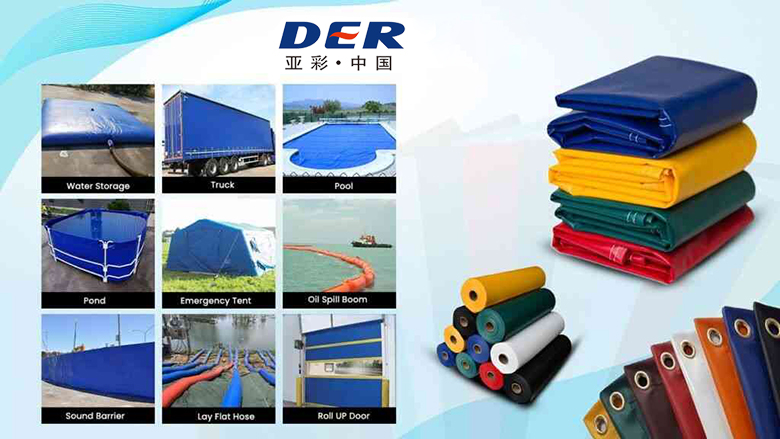
Importers, fabricators and OEM brands often lose time when a chemically compliant formula does not weld correctly, a wide roll is difficult to handle, or a surface finish changes the appearance of the finished cover. DERFLEX reviews compliance and fabrication as one specification rather than two separate decisions.
Plasticizer, stabilizer, pigment and additive selection around agreed restricted-substance requirements.
Custom denier, density, total weight and coating route according to strength and handling targets.
Matte, gloss, embossing, lacquer, standard colors and approved custom color matching.
Cut panels, welded seams, reinforced edges, eyelets, webbing, rope hems, pockets and selected accessories.
Roll labels, carton marks, pallet plans, private-label packaging and container-loading coordination.
Product specification, declaration, inspection record and agreed third-party test support by order.
Final requirements differ by end use. REACH compliance should be combined with the mechanical, fire, hygiene and contact standards relevant to the finished product.
Weldable coated fabric for side curtains, truck tarps, trailer covers and logistics protection where brand RSLs or EU supply-chain documentation are requested.
Custom covers for production equipment, warehouse goods and outdoor machinery with selected abrasion, UV, color and compliance requirements.
Tarpaulin for material protection, temporary barriers and weather enclosures. Flame-retardant requirements must be specified separately where applicable.
PVC coated textile for commercial shelters and outdoor structures with custom color, surface, welding and optional fire-performance directions.
Reusable covers for equipment, feed, fertilizer, hay and agricultural storage. Food-contact or drinking-water applications need separate assessment.
Consistent roll goods or finished covers for distributors and brands requiring approved specifications, custom packaging and repeat-order control.
A clear enquiry reduces mismatched reports, unnecessary retesting and formula changes after sample approval.
State whether the material is for truck covers, tents, public spaces, consumer goods, industrial barriers or another application.
Provide the applicable REACH scope plus any customer RSL, brand standard or additional phthalate and heavy-metal limits.
Ask how the test sample, item code, color, formula and production material will be linked.
Confirm the expected report date, accredited laboratory, test method and whether buyer approval is needed before production.
Include GSM, width, tensile, tear, adhesion, temperature, UV, welding and surface requirements instead of requesting compliance alone.
Ask the supplier to communicate relevant formula, pigment, additive or raw-material changes that may affect the approved scope.
Application, market, substance scope and performance targets.
Base fabric, coating route, formula, finish and width direction.
Visual, welding, handling and technical confirmation.
Agreed product code, inspection points and batch records.
Confirmed compliance package, packing and export coordination.
DERFLEX combines PVC coated textile production experience with application-ba, sed specification support for global B2B buyers.
Selection across polyester constructions, coating and lamination routes, surface finishes and functional formula directions.
Order-specific review of required substance scope, document expectations and testing arrangements instead of unsupported blanket claims.
Sample evaluation for welding, folding, color, thickness, adhesion and finished-product fabrication before bulk supply.
Custom roll dimensions, colors, labels, packaging, finished processing and repeat-order coordination for distributors and brands.
These six related pages help buyers compare structures, supply formats, applications and heavy-duty options before requesting a quotation.
Practical answers for importers, wholesalers, converters and OEM buyers.
It is a tarpaulin supplied against the chemical requirements applicable under the EU REACH framework and the agreed test scope. The claim should be tied to a defined material formula, product code, tested sample and current documentation rather than used as a universal description for every PVC tarp.
Document availability depends on the material, formula, color, requested substance scope, order quantity and customer requirements. DERFLEX can discuss declarations and third-party testing for an agreed order, but buyers should confirm the exact report scope before production.
No. REACH is a broad EU chemicals regulation, while RoHS restricts specific hazardous substances in electrical and electronic equipment. A buyer should request only the regulations and standards relevant to the finished product and destination market.
Flame-retardant formulations can be discussed, but fire performance and chemical compliance are separate requirements. The required fire standard, test method, material weight, color and REACH scope should be stated together so the formula can be reviewed as one project.
Yes. Custom directions can include weight, base fabric, coating type, width, color, surface finish, roll length, processing, labels and packaging. Feasibility, minimum quantity, testing and delivery time depend on the selected specification.
Send the end use, destination market, required substance or restricted-material list, GSM, width, color, finish, tensile and tear targets, UV or flame requirements, fabrication method, document expectations, quantity and delivery destination.
Share your application, destination, required substance scope, material specification, processing method and order quantity. DERFLEX will review a practical PVC tarpaulin direction and the document options available for the project.
Compliance information on this page is general purchasing guidance and is not legal advice. Regulations, Candidate List entries and customer restricted-substance requirements may change. Final product suitability and documentation must be confirmed for the exact order, finished application and destination market.