Define the Cover
Truck tarp, fitted machinery cover, tent panel, curtain, liner or industrial enclosure — each creates different load and exposure conditions.




PVC coated fabric · tarpaulin rolls · converter-oriented supply
PVC tarpaulin roll material for converters that cut, weld, sew, reinforce, print and assemble truck covers, industrial tarps, tents, curtains and made-to-measure protective products.
The exact phrase “RefTarpaulin Converter” has limited standalone search visibility. This page therefore keeps the requested phrase while addressing the broader commercial intent behind tarpaulin converter, tarp converter, PVC tarp roll and weldable tarpaulin fabric sourcing.
A tarpaulin converter takes roll material and turns it into a usable finished product. The workflow may include CAD or manual nesting, cutting, hot-air welding, high-frequency welding, sewing, edge reinforcement, webbing, grommets, D-rings, pockets, printing and final packing. Because each operation adds time and value, the raw fabric must be selected for the complete converting route rather than by price or GSM alone.
For a tarp converter, a material that looks acceptable on a small swatch may still create problems on the shop floor if it curls during cutting, varies in width, changes surface behavior from batch to batch, welds in a narrow process window, scratches too easily, or arrives with a roll length that does not match the production plan. A commercially useful specification therefore considers both end-use performance and conversion efficiency.
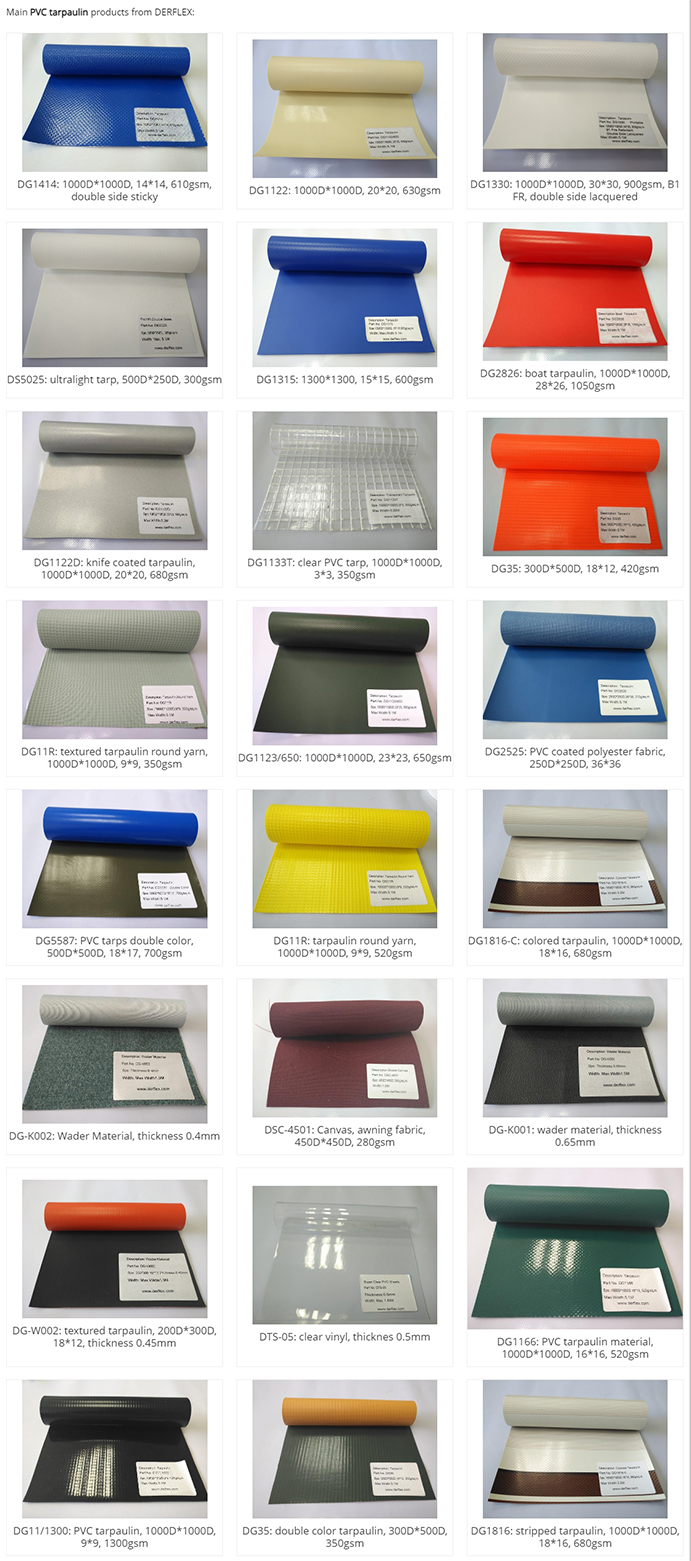
DERFLEX supplies PVC coated polyester fabrics and PVC tarpaulin rolls for professional conversion. Available discussions can include base yarn and density, coating route, weight, width, color, finish, UV-resistant formulation, flame-retardant direction, cold flexibility, printability, roll length, core, labels and export packing. Final values should be confirmed against the application and approved data sheet.
A converter-oriented sourcing conversation starts with the finished cover, then works backward through fabrication method, material structure and repeat-order controls. This reduces the risk of discovering process incompatibility after bulk material has already reached the workshop.
Truck tarp, fitted machinery cover, tent panel, curtain, liner or industrial enclosure — each creates different load and exposure conditions.
Confirm cutting format, seam type, welding equipment, sewing, hems, reinforcement, hardware and any printing requirement.
Match scrim, GSM, coating, width, surface and optional performance treatments to the fabrication route and service conditions.
Check color, handling, cutting, seam behavior and finished appearance on production-representative equipment before bulk confirmation.
Document agreed specification, packing, label, roll length and approval references to improve repeat-order consistency.
The values below are sourcing directions, not a universal data sheet. The final structure should be confirmed against intended service conditions, welding method, finished design, target market and approved sample.
Use the table to prepare an RFQ that a material supplier can evaluate efficiently.
| Item | DERFLEX discussion range / options | Why converters care |
|---|---|---|
| Material structure | High-tenacity polyester base with PVC coated or selected laminated structures | Controls mechanical strength, surface behavior and fabrication route. |
| Weight | Approx. 350–1200 gsm depending on structure and application | Affects handling, finished weight, strength direction and commercial positioning. |
| Width | Approx. 1.02–5.10 m for selected constructions | Wider roll options may reduce panel count and seam labor on large covers. |
| Surface | Glossy, matte, semi-matte, lacquered, printable and selected protective finishes | Influences appearance, cleaning, print behavior, drag, abrasion and welding preparation. |
| Functional options | UV-resistant, flame-retardant, anti-mildew, cold-resistant, abrasion-resistant or other agreed directions | Must match climate, regulations, storage conditions and end-market expectations. |
| Fabrication | Hot-air, selected HF / thermal welding, sewing, cutting, eyelets, webbing and reinforcement | The material should be sampled against actual equipment and seam design. |
| Program control | Custom color, roll length, core, label, packing and private-label details | Important for inventory planning, local converting and repeat commercial supply. |
Converter efficiency depends on more than nominal fabric weight. Scrim construction, PVC formulation, coating adhesion, surface treatment, roll tension, temperature history and finished surface can all influence cutting and joining. A sample produced on the intended machine is therefore more informative than comparing catalog values alone.
Material should provide a workable heat and speed window for the planned overlap, seam geometry and production equipment. Parameter qualification remains the converter’s responsibility.
Selected PVC structures can suit HF joining, but electrode shape, dwell time, pressure and material formulation should be evaluated with a representative sample.
Roll width, edge quality, dimensional stability and lay-flat behavior can affect nesting efficiency, panel alignment and offcut generation.
Where sewing is used, converters should consider needle size, stitch pattern, seam sealing, webbing placement and stress transfer into the base fabric.
Grommets, D-rings, ropes and buckles concentrate load. Finished design should distribute tension through hems, webbing or patches instead of relying on the coated sheet alone.
Logo printing or fleet graphics may require surface preparation, ink compatibility and abrasion expectations to be confirmed before bulk production.
The goal is not to push one “universal” tarpaulin grade. A converter may need several controlled material families to cover transportation, industrial, shelter and agricultural programs without over-specifying every job.
Repeated tension, road spray, cargo abrasion, tie-down stress and outdoor weathering make tear resistance, coating stability, welding quality and reinforcement design important.
Custom machines and stored equipment often need fitted geometry, access panels, reinforced corners and material chosen around abrasion, outdoor exposure and handling frequency.
Appearance, seam layout, color consistency, dimensional control and optional flame-retardant requirements may carry as much weight as waterproofing.
Large-area covers can benefit from width planning, UV-oriented formulations, robust edge detailing and a balance between finished weight and handling.
Warehouse partitions, flexible curtains and work-zone dividers may prioritize weldability, cleanability, dimensional stability and attachment design.
Distributors and OEM brands may need repeat color, size series, labels, roll or folded packing, carton marks and production references that can be reproduced across future orders.
A stable converting program depends on repeatable material characteristics. Inspection items should be tied to the approved specification and the risk profile of the finished product rather than treated as a generic checklist.
Nominal GSM and usable width can affect cost calculations, cut plans, panel count and repeat-order yield.
Surface uniformity, shade reference, gloss or matte level and obvious coating defects should be reviewed against approved samples.
Mechanical properties should be specified according to application and test method, especially where the cover is tensioned or repeatedly handled.
Adhesion matters during welding, folding, flexing and outdoor use; the required test and acceptance value should be agreed when critical.
A representative seam test can help validate process compatibility before a converter commits production capacity to a new roll grade.
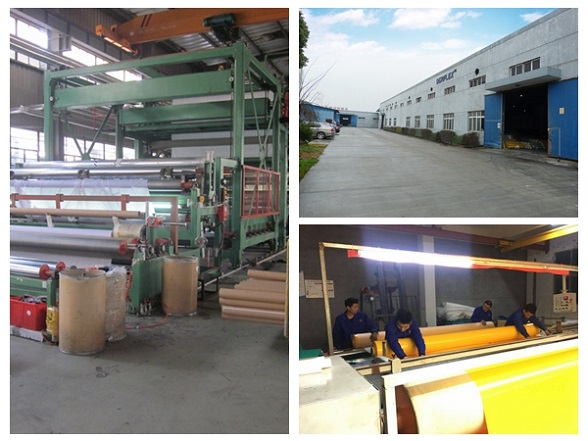
Core, roll length, outer wrapping, labels, batch references and container loading can be standardized for warehouse and production control.
Online tarp stores often make it easy to compare standard weights and finished sizes. A professional converter needs an additional layer of supplier evaluation: can the material be qualified for the shop process and then reproduced with controlled specifications when the program scales?
These six pages connect converter sourcing with roll supply, coated fabric structure, welding, finished custom tarps and transport applications.
Short answers to common roll-sourcing and fabrication questions.
A tarpaulin converter is a fabricator that turns roll materials such as PVC coated polyester or other technical textiles into finished tarps, covers, curtains, tent panels or related products through cutting, welding, sewing, reinforcement and hardware installation.
PVC coated polyester is widely used for heavy-duty waterproof covers because it combines a reinforced textile base with a weldable PVC surface. The correct yarn, density, coating weight and finish should be selected according to the finished product and fabrication method.
Yes. DERFLEX supplies PVC tarpaulin roll material and can discuss custom weight, width, color, finish, roll length, performance treatments and packing for converters, distributors and OEM programs.
Some PVC structures may work with more than one welding method, but suitability should not be assumed from the material name alone. The buyer should provide equipment and seam requirements so a representative sample can be qualified under intended production conditions.
There is no single converter GSM. Lighter structures may suit temporary or easier-handling products, while many transport and industrial programs use stronger PVC coated polyester structures. The choice should reflect finished weight, strength, service conditions, handling and price target.
Roll width affects cutting yield, panel count, seam length and labor. On large covers, a wider compatible material can sometimes reduce the number of joins, although the best width depends on cutting equipment, handling limits and the finished pattern.
Custom color, finish, roll length, labels, packing and private-label details can be discussed according to specification and order requirements. Final feasibility should be confirmed during quotation and sample approval.
Share your application, target roll width, material reference, welding or sewing process, color, quantity and any critical performance requirement. DERFLEX can review suitable PVC tarpaulin material directions and prepare a quotation for sampling or bulk supply.