News
Company News

Tarp Cost Breakdown: Fabric, Welding & Packaging | DERFLEX

Update:2026/8/3 21:09:08 Views:
Custom Tarp Cost Engineering

Tarp Cost Breakdown: Fabric, Coating, Welding, Hardware and Packaging

A custom tarp quote is not simply “size × price per square meter.” The final cost is built from the coated fabric specification, usable material yield, seam construction, edge reinforcement, hardware layout, labor, testing, packing method and order efficiency.

This guide explains what professional buyers are actually paying for, where unnecessary cost enters a project, and how to request a comparable quotation without weakening the tarp’s working performance.

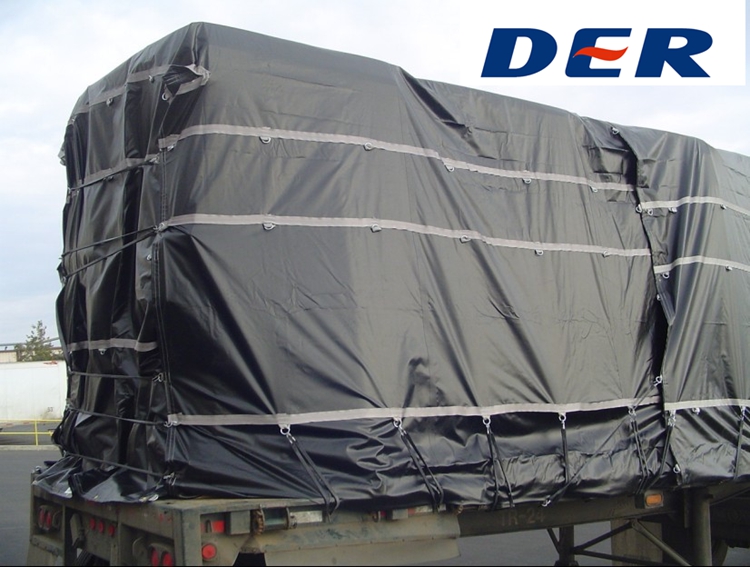
DERFLEX heavy duty custom truck tarpaulin with reinforced webbing and hardware

Finished tarp cost follows the design

A large rectangular cover with wide roll utilization may be material-led. A truck tarp with dense webbing, multiple seams, D-rings and shaped corners can become fabrication-led.

Fabric StructureYarn, weave, GSM and yield
Coating SystemPVC, additives and top finish
FabricationCutting, welding and sewing
HardwareGrommets, webbing and fittings
PackagingFolding, labels, cartons and pallets
The Practical Answer

What determines the cost of a tarp?

For most PVC tarps, the coated textile is the largest raw-material block. Yet the cheapest coated fabric does not automatically create the lowest finished-tarp cost. Narrow roll widths can increase seams and waste. Weak edge design can create claims and replacements. Over-specified grommet spacing can add hardware and labor without improving the installation.

A useful quotation therefore separates the specification into cost-generating decisions. The aim is not to remove every cost, but to spend on the parts that control service life, waterproofing, handling and resale value.

A More Accurate Cost Formula

Finished tarp cost = material consumption + conversion work + components + packing + quality requirements + order complexity

  • Net finished area
  • Seam overlap and cutting loss
  • Coating and performance options
  • Welding or sewing time
  • Reinforcement and hardware
  • Printing and private label
  • Inspection and testing
  • Export or retail packaging
Component-by-Component Analysis

Where the money goes in a custom tarp

The relative weight of each component changes with material grade, finished shape, installation method, quantity and packing standard. The following six blocks are the most useful way to compare quotations.

01

Base Fabric and Textile Construction

The polyester base fabric carries tensile strength, tear resistance and dimensional stability. Cost changes with yarn denier, weave density, yarn quality, usable roll width and target strength.

  • 500D, 840D, 1000D, 1300D or heavier yarn directions
  • Open or dense weave structures
  • Virgin material and consistency requirements
  • Width utilization across the finished panel layout
  • Additional consumption for hems, overlaps and reinforcement
Often a major cost block
02

PVC Coating and Surface Treatment

In a PVC-coated tarp, the coating is not only a colored skin. Its formula and application affect waterproofing, flexibility, weldability, weathering and cleanability.

  • Total GSM and coating-to-fabric balance
  • Knife coating or laminated construction
  • UV stabilizers, anti-mildew and cold-flex additives
  • Flame-retardant formulations where required
  • Gloss, matte, lacquered or specialized top finish
Performance options shift cost
03

Cutting, Welding and Sewing

Fabrication cost follows the number of operations, total seam length, panel handling, shape complexity and required process control—not only the finished square meters.

  • Hot-air welding for long compatible PVC seams
  • High-frequency welding for selected shapes and assemblies
  • Sewing for webbing, attachments or non-weldable details
  • Wide overlaps, sealed corners and stress-zone patches
  • Irregular templates, cut-outs, sleeves, pockets or windows
Can dominate complex designs
04

Reinforcement and Hardware

Hardware is a functional system. A quote should state type, material, spacing, quantity and reinforcement method instead of simply saying “with grommets.”

  • Brass, galvanized, stainless or plastic eyelets
  • Grommet spacing at 12, 18, 24, 36 inches or custom pitch
  • D-rings, buckles, hooks, straps and tensioning fittings
  • Polyester or polypropylene webbing
  • Rope-in-hem, reinforced corners and pull-zone patches
Quantity and placement matter
05

Printing, Labels and OEM Presentation

Branding cost depends on print method, artwork coverage, colors, registration requirements, label type and the number of different SKUs in the order.

  • Screen print, digital print or simple identification marks
  • One-position logo versus large-area graphics
  • Woven labels, care labels, barcodes and carton marks
  • Private-label color matching and artwork approval
  • Setup cost spread across the production quantity
Setup cost favors larger runs
06

Packaging, Handling and Export Preparation

Packaging can be basic protection for an industrial project or a market-ready system for distributors. The difference affects labor, material use, warehouse handling and freight volume.

  • Folded bale, PE bag, woven bag or individual carton
  • Instruction sheets, inserts, labels and barcode placement
  • Pallets, crates, edge protection and moisture control
  • Folded dimensions and carton cube
  • Mixed-size assortment and container loading plan
Retail packing can be significant
Quotation Comparison

Why two tarps of the same stated size can have different prices

Comparable dimensions do not mean comparable construction. Use this table to identify what may be included, omitted or measured differently.

Cost Variable Lower-Cost Direction Higher-Cost Direction What the Buyer Should Confirm
Material Lower GSM, lighter yarn, basic surface Higher strength, heavier coating, specialty finish GSM tolerance, yarn, weave, coating type and performance target
Size Basis Cut size or broad dimensional tolerance Controlled finished size after hems and welding Whether the quote uses cut size or final usable size
Panel Layout Efficient rectangles matched to roll width Irregular shapes, many panels, windows or cut-outs Drawing, seam map, orientation and expected material loss
Seams Few straight welds with standard overlap Long seam length, sealed corners, mixed welding and sewing Joining method, overlap, seam position and waterproof expectation
Edges Simple folded or welded hem Webbing, rope edge, double reinforcement and stress patches Hem width, reinforcement material and high-load zones
Hardware Standard grommets at wider spacing Dense grommets, D-rings, straps, buckles and custom fittings Material, spacing, quantity, corrosion requirement and fixing method
Packaging Bulk fold or simple outer protection Individual cartons, inserts, barcodes, pallets and mixed SKUs Unit pack, master carton, pallet rule and target warehouse process
Quantity Repeatable size, color and specification in larger lots Small batches, many colors or frequent changeovers Quantity per size, per color and total order—not only total area
Hidden Cost Drivers

The details that often change a quote after the first discussion

These items are easy to overlook in an early inquiry, but they can materially change consumption, labor, freight and repeat-order consistency.

Manufacturing details

  • Finished size versus cut size: hems, folds and weld overlap consume fabric.
  • Roll-width utilization: poor nesting can increase waste and seam count.
  • Color changeovers: several low-volume colors reduce production efficiency.
  • Part count: separate flaps, sleeves and patches add cutting and handling operations.
  • Sample replication: tight color, gloss and dimensional consistency may require additional controls.

Commercial and logistics details

  • Small quantity per SKU: setup work is spread across fewer units.
  • Testing: requested standards, third-party reports or lot testing should be defined early.
  • Carton cube: a compact fold can reduce storage and freight volume but may require more labor.
  • Destination handling: pallets, crates or reinforced cartons may be needed for the shipping route.
  • Documentation: labels, manuals and market-specific information add preparation work.
Three Purchasing Scenarios

Which cost block matters most depends on the tarp

These examples are specification logic, not fixed price quotations. They show why a single universal “tarp price per square meter” can be misleading.

Scenario 1

Large Rectangular Industrial Cover

Main cost pressure: coated fabric, roll-width yield, seam length and handling.

A simple rectangular cover can be economical when panel widths match available rolls. The buyer should focus on GSM, UV exposure, seam direction, edge load and packing size.

Scenario 2

Heavy Duty Truck or Flatbed Tarp

Main cost pressure: reinforcement, hardware, abrasion zones and fabrication labor.

Webbing rows, D-rings, corner patches, multiple drops and repeated tie-down points can add more cost than a basic area calculation suggests. Durability at stress points deserves priority.

Scenario 3

Private-Label Retail Tarp Program

Main cost pressure: SKU count, printing, individual packaging and labeling.

A standard tarp may become packaging-led when each unit requires a printed carton, insert, barcode and size-specific artwork. Consolidating specifications can improve unit economics.

Cost Optimization

How to reduce tarp cost without creating a weak product

The safest savings come from design efficiency and standardization—not from blindly reducing GSM, coating or reinforcement.

Optimization Method Why It Can Lower Cost What Must Not Be Compromised
Match panel layout to roll width Reduces scrap, panel count and welding time Required finished dimensions and load direction
Standardize colors and common sizes Improves batch efficiency and simplifies packing Market fit and application coverage
Place hardware by actual anchor loads Avoids unnecessary dense hardware installation Wind stability, pull strength and fixing access
Reinforce stress zones instead of the entire tarp Uses heavier materials only where loads concentrate Corner, edge, pull and abrasion performance
Separate mandatory and optional treatments Prevents paying for FR, PVDF or special additives where not required Target market standards and real environmental exposure
Approve packaging before sampling Avoids redesign, refolding and carton changes after production Product protection and warehouse handling
Use a repeatable golden sample Reduces ambiguity, rework and disputes on repeat orders Documented specification and controlled changes
Product and Production View

From PVC coated fabric to a finished custom tarp

DERFLEX supports both coated roll materials and finished tarp projects, allowing material decisions and fabrication details to be reviewed together.

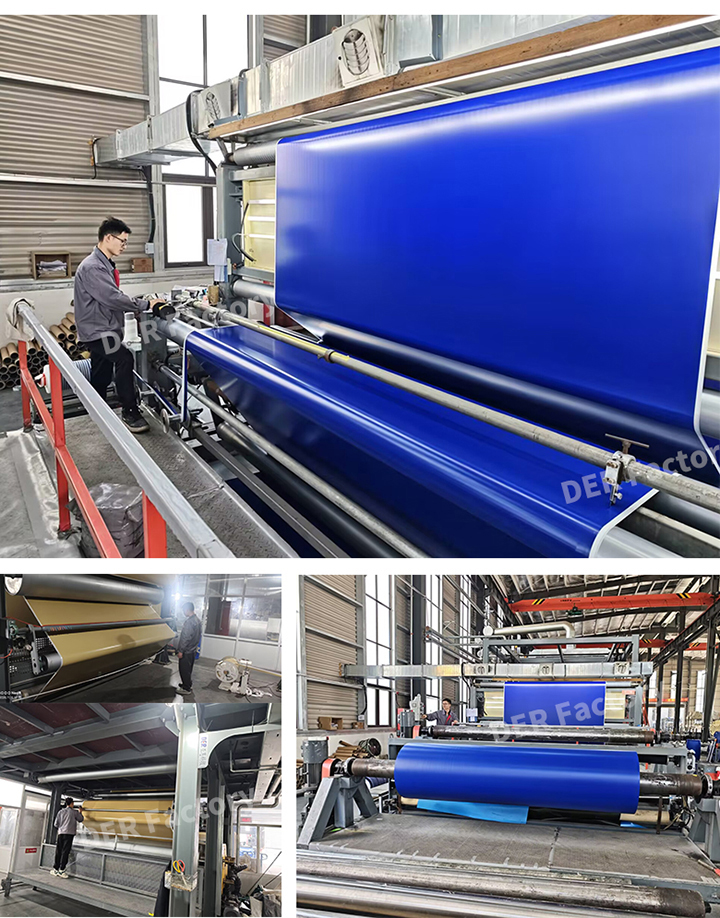
DERFLEX PVC coated fabric production line for tarpaulin materials

Material-side cost control

Base textile, coating balance, surface finish, usable width and batch consistency affect both the raw material price and downstream fabrication efficiency.

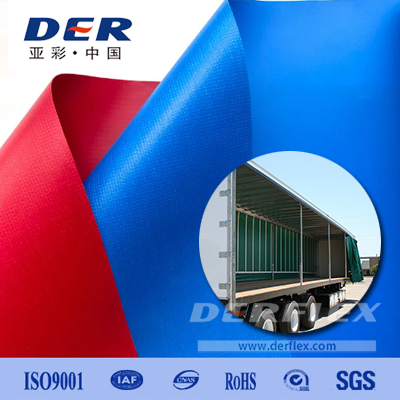
DERFLEX PVC coated tarp material and truck tarp application

Finished-product cost control

Panel design, welding, reinforced hems, grommets, D-rings, webbing, printing and packing are confirmed against the final application rather than added as generic options.

DERFLEX Quotation Workflow

Build the quote around the specification

A structured inquiry helps prevent missing items, allows supplier quotations to be compared more fairly and reduces specification changes after sampling.

01

Application Review

Use environment, load, climate, handling frequency and service-life expectation.

02

Material Match

GSM, yarn, coating, finish, color and performance options.

03

Fabrication Map

Finished size, panels, seams, hems, reinforcement and hardware positions.

04

Packaging Plan

Fold, unit pack, carton, label, pallet and container-loading requirements.

05

Sample and Control

Sample approval, inspection points, tolerances and repeat-order references.

Fast Quote Checklist

What to send for an accurate custom tarp quotation

A photo or existing sample is helpful, but a complete quote becomes faster when these details are supplied in one inquiry.

  • Application and working environment
  • Finished size, shape and dimensional tolerance
  • Quantity per size and per color
  • Preferred GSM, thickness or service-life level
  • Waterproof, UV, FR, cold-flex or other performance needs
  • Welding, sewing, seam and hem requirements
  • Grommet type, spacing and hardware layout
  • Webbing, rope, straps, sleeves, pockets or patches
  • Logo, artwork, labels and barcode requirements
  • Unit packing, carton, pallet and destination country
FAQ

Frequently asked questions about tarp cost

Clear answers for importers, distributors, tarp fabricators, fleet buyers, contractors and OEM product teams.

What is usually the largest part of a custom tarp’s cost?

For a conventional PVC tarp, the coated fabric is often the largest raw-material block. However, welding, webbing, D-rings, dense grommet placement, irregular shapes or retail packaging can make fabrication and finishing a much larger share of the final quote.

Does a higher GSM always mean a better tarp?

No. Higher GSM may increase coating thickness or overall mass, but performance also depends on base-fabric yarn, weave, coating adhesion, tear strength, seam design and reinforcement. The specification should match the application rather than use weight alone as the quality measure.

Why does welding increase tarp cost?

Welding requires seam overlap, machine time, controlled temperature and pressure, panel handling and inspection. Long straight welds are generally easier to process than many short seams, curved shapes, sealed corners or mixed welded-and-sewn assemblies.

How much do grommets and D-rings affect tarp price?

The impact depends on material, spacing and quantity. A large tarp with grommets every 12 inches needs far more hardware and installation labor than one with 24- or 36-inch spacing. D-rings, straps, webbing and reinforcement patches also add component and fabrication cost.

Is individual carton packaging always necessary?

No. Industrial project tarps may only need protected folded packing or a bulk outer cover. Individual cartons, printed inserts, barcodes and pallets are useful for resale, warehouse control or long export routes, but should be selected according to the actual distribution process.

How can buyers compare quotations from different tarp suppliers?

Use the same finished size, material specification, GSM tolerance, seam method, hem design, hardware layout, printing, p, ackaging, order quantity and destination. A low quote may exclude reinforcement, testing, individual packing or finished-size controls included by another supplier.

What information does DERFLEX need to quote a custom tarp?

Send the application, finished dimensions, quantity by size and color, target material level, seam and edge design, hardware spacing, performance requirements, artwork, packing method and destination country. Drawings, samples or installation photos can improve specification matching.

Get a tarp quote you can actually compare

Send DERFLEX your size, application, material target, reinforcement, hardware, quantity and packaging details. The team can review the cost structure and propose a practical specification for your project or product line.

No fixed online price is shown on this page

Custom tarp pricing depends on confirmed specifications, quantity, packing and delivery requirements. Final availability, testing support, tolerance and production details should be verified during quotation and sample approval.

© DERFLEX. Product specifications and processing options are subject to project confirmation. Images are used to illustrate DERFLEX material and tarp applications.
Consulting Services
+86-021-54361792 / 54361798
Email
sales@derflex.com