News
Industry News

Tarp Supplier Audit Checklist: Production, Testing & Traceability | DERFLEX

Update:2026/8/3 21:12:02 Views:
DERFLEX logo Procurement & Factory Verification Guide

Tarp Supplier Audit Checklist: Production, Testing and Traceability

A sample proves what a supplier made once. A supplier audit examines whether the factory can reproduce the agreed tarp specification, document the result and respond when something goes wrong.

Use this checklist to assess a PVC tarpaulin manufacturer before approving a bulk order, adding a second source, launching a private-label program or renewing a strategic supply agreement.

Request A Quote

What should a tarp supplier audit verify?

A useful audit verifies four connected capabilities: the factory controls the production stages it claims to control; inspection and test equipment is suitable and calibrated; records connect raw materials, process settings, test results and finished rolls; and nonconforming material is contained before it can reach the customer. Certificates support this review, but shop-floor evidence and traceable records should drive the approval decision.

10Audit pillars
30 minTrace challenge target
100 ptsWeighted score
3 gatesPass / hold / reject
Audit philosophy

Audit the evidence chain, not the showroom.

A clean meeting room, a recent certificate and a polished factory tour can create confidence, but they do not demonstrate repeatable production. Industrial tarp quality depends on a chain of linked controls: purchase specifications, incoming material release, formula or coating setup, in-process measurements, laboratory verification, conversion records, finished inspection, packing identification and final release.

The auditor’s task is to test whether these links work together. Select a live or recently completed order, then follow it backward to raw materials and forward to shipment. Compare what employees do with the controlled procedure. Check whether the same product description appears consistently on the sales order, production traveler, inspection record, roll label and packing list.

Define the audit scope before the visit

A roll-goods supplier, a tarp fabricator and a vertically integrated factory should not receive the same audit. State whether the scope covers base fabric, PVC formulation, coating or lamination, cutting, welding, sewing, eyeleting, printing, packaging, subcontracted processes and laboratory testing. Unclear scope is a common reason buyers approve a supplier without knowing which processes are actually under direct control.

Core evaluation framework

The 10-Pillar Tarp Supplier Audit Checklist

Each pillar should be scored against objective evidence. A “yes” without a record, sample, label, instrument or live demonstration is not complete evidence.

01

Legal Entity, Site and Audit Scope

Confirm the company name, production address, business scope, ownership of critical equipment and any relationship between the contracting entity, manufacturing entity and export entity.

  • Business license and site address match the audited location
  • Process map identifies in-house and outsourced operations
  • Subcontractors are approved, controlled and disclosed
02

Quality Management and Document Control

Review how specifications, drawings, test methods and work instructions are approved, distributed and revised. Operators should have the current version where the work is performed.

  • Controlled procedures with revision status and approval
  • Customer requirements translated into measurable criteria
  • Training records for inspectors and process operators
03

Incoming Material Qualification

Examine controls for polyester base cloth, PVC resin or film, plasticizers, stabilizers, pigments, eyelets, webbing, thread, packaging and other critical inputs.

  • Approved-supplier list and material specifications
  • Lot identification, receiving inspection and release status
  • Segregated quarantine area for rejected or pending material
04

Production Capacity and Equipment Fit

Verify that the equipment shown can produce the quoted structure, width, coating route and finished details. Capacity claims should be supported by schedules, utilization records and maintenance history.

  • Equipment list linked to the quoted product family
  • Preventive maintenance and breakdown records
  • Capacity plan separating theoretical and available output
05

Coating, Lamination and Process Control

Observe how recipes, line speed, temperature, pressure, web tension, coating thickness, surface treatment and winding conditions are set and recorded.

  • Production traveler or electronic batch record
  • Defined start-up approval and in-process sampling frequency
  • Reaction plan when a parameter moves outside its limit
06

Testing Laboratory and Calibration

Check whether the factory can verify the properties that matter to the intended use. Review instrument range, method, sample conditioning, operator competence and calibration status.

  • Calibration certificates traceable to recognized standards
  • Reference samples, test method control and result review
  • External laboratory plan for tests not performed in-house
07

Finished Tarp Fabrication Control

For cut and finished tarps, verify dimensional control, panel orientation, seam settings, reinforcement placement, hardware installation, printing and finished-size inspection.

  • Approved drawing, golden sample or first-piece record
  • Welding parameter window and seam verification
  • Grommet spacing, hem width and corner reinforcement checks
08

Identification and Batch Traceability

The factory should connect a finished roll or packed tarp to raw material lots, line and date, operator or shift, in-process results, final inspection and shipment information.

  • Unique batch or roll identification preserved through conversion
  • Forward and backward trace completed within an agreed time
  • Retention period matches warranty and market risk
09

Nonconformance, CAPA and Change Control

Review how defects are contained, investigated and prevented from recurring. The system should also control changes to raw material suppliers, formulation, equipment, process route and outsourced operations.

  • Nonconformance reports with disposition authorization
  • Root-cause analysis and corrective-action effectiveness check
  • Customer approval process for significant changes
10

Packaging, Release and Business Continuity

Final controls should protect the product and preserve identity through warehouse handling and international transport. Review contingency plans for utility, equipment, labor and key-material disruption.

  • Final release signed by authorized quality personnel
  • Labels show item, size, quantity, batch and handling information
  • Backup plans for critical equipment and approved raw materials
On-site sequence

How to Run the Audit Day

Do not spend the entire visit in a conference room. A balanced agenda follows the order from requirement to shipment and reserves time for evidence sampling.

Opening & Scope

Confirm products, processes, locations, subcontractors, standards and customer-specific requirements.

Order Review

Select one live order and one completed order. Compare sales, production, QC and packing documents.

Factory Walk

Follow material flow from receiving to production, inspection, quarantine, conversion and final storage.

Tests & Trace

Witness at least one relevant test and conduct a backward-and-forward batch trace challenge.

Findings & Actions

Classify critical, major and minor findings; assign owners, evidence required and closure dates.

Testing capability

Tarp Test Matrix: What to Witness and What to Request

The test plan should reflect the application. A truck tarp, tent roof, containment liner and temporary construction cover do not need identical acceptance criteria.

Property Audit Evidence Typical Relevance Questions for the Supplier
Finished weight / GSMConditioned sample, calibrated scale, cutting template and recorded result.Cost control, coating quantity, roll consistency and handling.How many samples per roll or batch? What tolerance is contractually controlled?
Thickness and widthCalibrated thickness gauge, width measurement and full-roll monitoring method.Fabrication fit, seam planning, stiffness and material yield.How are edge-to-center variation and width loss handled?
Tensile strengthUniversal tensile tester, current calibration, method, specimen orientation and raw data.Tie-down tension, structural loading and general mechanical integrity.Are warp and weft results recorded separately? How is out-of-trend data reviewed?
Tear resistanceDefined ISO, ASTM, DIN or customer method, conditioned specimen and result review.Resistance to cut propagation around sharp cargo, corners and fixing points.Which tear method is used? Does the specification clearly identify it?
Coating adhesion / peelPeel test setup, sample preparation, test direction and failure-mode observation.Delamination risk during folding, welding, abrasion and weather exposure.Is failure cohesive, adhesive or at the fabric interface?
Hydrostatic / water resistanceWater-pressure test, pinhole inspection or application-specific leak test.Rain protection, liners, covers, pools and liquid-containment uses.Does the test apply to roll material only or also to finished seams?
Weld or seam strengthApproved welding window, seam coupon, peel or shear test and visual criteria.Finished tarp integrity under tension, rain and repeated handling.How are temperature, speed, pressure and overlap controlled?
Cold flexibility / cold crackConditioning temperature, bend or impact method and pass/fail record.Winter transport, cold storage and outdoor use in low-temperature markets.Is the claimed temperature a test condition, recommended use range or marketing statement?
UV and weatheringAccelerated exposure report, retained property data and external-lab accreditation when applicable.Long-term outdoor color, coating stability and strength retention.Which exposure cycle and acceptance criterion support the claim?
Flame-retardant performanceProduct-specific report, sample identity, test standard, classification and validity.Tents, public spaces, construction enclosures and regulated projects.Does the tested construction match the ordered weight, color and formulation?
Color and appearanceApproved standard, light booth or instrument, shade limits and surface-defect criteria.Private label, fleet branding, tent aesthetics and repeat orders.How are roll-to-roll and batch-to-batch shade differences managed?
Restricted substancesCurrent declaration or third-party report linked to the supplied product and market.REACH, RoHS, phthalate, heavy-metal or customer-specific compliance.How are raw-material changes reviewed for compliance impact?
Important: A test report is only useful when the sample identity can be linked to the product being purchased. Check product code, construction, weight, color, formulation, test date, laboratory details and the standard edition rather than accepting a generic report with a similar product name.
Traceability challenge

Can the Factory Reconstruct the Product History?

Traceability should work both backward to the inputs and forward to the customers or shipments that received the affected lot.

The 30-Minute Batch Trace Test

Choose a finished roll or packed tarp at random. Ask the quality team to produce the evidence chain without advance preparation.

  1. Identify item code, batch, roll or work-order number.
  2. Retrieve base fabric and PVC or film lot information.
  3. Show line, date, shift, process settings and in-process checks.
  4. Retrieve final test results, release signature and retained sample.
  5. Show which packing list, container or customer shipment received the batch.
  6. Reverse the exercise from one raw-material lot to all affected finished products.
Input 01Base Fabric Lot
Input 02PVC / Film / Additive Lot
ProcessLine, Date, Shift & Settings
VerificationIn-Process & Final Tests
OutputRoll / Tarp / Carton ID
ShipmentPacking List & Customer
Supplier approval

Use Weighted Scoring, Then Apply Non-Negotiable Gates

A high total score should not compensate for a critical failure such as falsified records, missing traceability or an unwillingness to permit inspection.

Example 100-Point Scorecard

Production ownership25
Testing & calibration20
Incoming materials15
Traceability15
Finished fabrication15
CAPA & shipment release10

Approve: 80–100

No critical finding. Major findings have acceptable containment and documented closure plans. Start with controlled sampling and defined first-order inspection.

Conditional / Hold: 65–79

Capability may be usable, but evidence or execution has material gaps. Require corrective action, proof of closure and possibly a pilot order or re-audit.

Reject: Below 65 or Critical Gate Failure

Reject or pause approval for falsified documents, hidden subcontracting, failed traceability, uncontrolled nonconforming product or refusal of reasonable inspection.

Warning signs

Red Flags That Deserve Immediate Follow-Up

One red flag may have an innocent explanation. Several together often indicate a system that cannot support repeat industrial procurement.

!

Prepared Samples Only

The supplier will not allow random selection from warehouse or production and presents only polished samples.

!

Generic Test Reports

Reports do not match the ordered construction, weight, color, product code or current formulation.

!

Expired Calibration

Critical instruments have missing labels, overdue calibration or no verification after repair.

!

Hidden Outsourcing

The quoted process is subcontracted, but the factory cannot identify or control the external provider.

!

No Quarantine Discipline

Rejected, pending and released materials share the same area or can be returned to production without authorization.

!

Traceability Break

A finished roll cannot be linked to raw materials, test results, production date or shipment.

!

Verbal Specifications

Operators rely on memory, messaging apps or handwritten notes instead of controlled work instructions.

!

Uncontrolled Changes

Raw material, supplier, formula or process changes can occur without technical review or customer notice.

!

Inspection Resistance

The supplier refuses reasonable factory audits, pre-shipment inspection or witness testing without a clear security reason.

Printable Tarp Supplier Audit Checklist

Mark each item as verified, not verified or not applicable in your audit report. Attach evidence references and photographs separately.

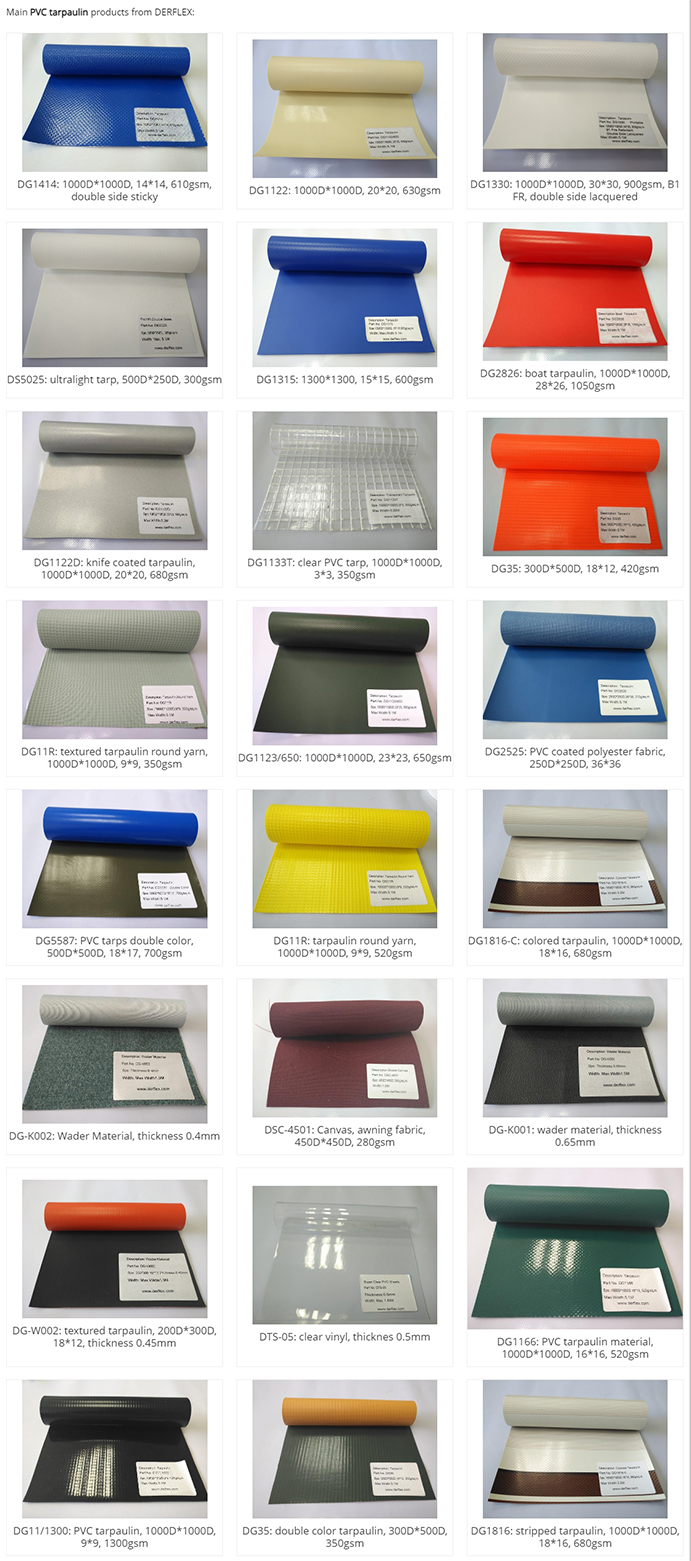
Product image display

Production Evidence Should Match the Tarp You Are Buying

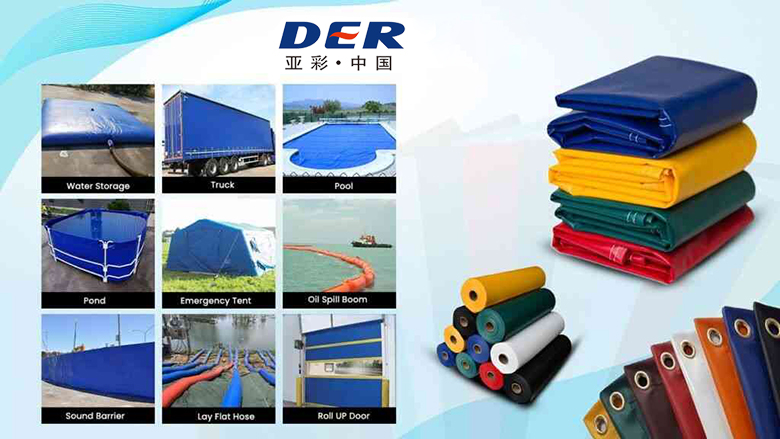
Use real product, process and factory images to confirm that the audited site handles the material family and manufacturing route in your specification.

DERFLEX manufacturing support

Build the Audit Around Your Purchase Specification

DERFLEX can coordinate material selection, sample review, production checkpoints, inspection requirements and export documentation for B2B tarp programs.

DERFLEX

Factory-Based PVC Tarpaulin Supply

DERFLEX’s published company information describes an integrated production area, technical team and international market experience. Buyers should confirm the exact production route, inspection plan, test reports and acceptance criteria for each order during commercial and technical review.

60,000㎡Integrated production area stated in company profile
450+Production and operational workforce stated
25+Senior engineers stated
120+Countries and regions served stated

Specification Review Before Quotation

Align application, base fabric, GSM, width, coating route, surface, performance treatments, fabrication details and packaging before the price is finalized.

Sample and Golden-Sample Control

Confirm color, hand feel, weldability, dimensions, reinforcement, hardware, labels and packing with a controlled approval reference.

Order-Specific Inspection Planning

Define incoming, in-process and final checkpoints according to risk rather than relying on a generic statement that “quality is checked.”

Traceability and Documentation Discussion

Discuss roll labels, batch records, test reports, shipment marks, retained samples and document retention before repeat production begins.

Third-Party Inspection Coordination

Where required, buyers can specify witness testing, pre-shipment inspection or external laboratory verification in the purchase agreement.

Who should use this page

Audit Priorities by Buyer Type

The checklist is relevant to new supplier approval, annual re-evaluation, second-source qualification and corrective-action follow-up.

01 / IMPORTERS

Importers & Distributors

Prioritize repeat shade, SKU labeling, packaging, container loading, documentation and consistency across replenishment orders.

02 / CONVERTERS

Tarp Fabricators

Prioritize roll width, surface consistency, weldability, coating adhesion, winding, defect mapping and local conversion yield.

03 / PROJECTS

Contractors & Project Buyers

Prioritize project specifications, dimensions, seam integrity, compliance documents, inspection hold points and delivery schedule.

04 / BRANDS

OEM & Private Labels

Prioritize change control, golden samples, artwork, packaging, barcodes, complaint handling and long-term traceability.

05 / TRANSPORT

Truck & Logistics Programs

Prioritize tear, tensile, abrasion, UV, cold flexibility, weld strength, grommet reinforcement and road-use consistency.

06 / CONSTRUCTION

Construction Supply

Prioritize weathering, flame-retardant requirements where applicable, reinforced fixing points and batch-linked reports.

07 / AGRICULTURE

Agricultural Procurement

Prioritize UV exposure, anti-mildew direction, seasonal storage, chemical contact risks and practical repairability.

08 / INDUSTRIAL

Industrial Cover Buyers

Prioritize fit, edge design, abrasion, chemical environment, handling frequency, service conditions and replacement risk.

Frequently asked questions

Tarp Supplier Audit FAQ

Clear answers for procurement managers, quality teams, importers, OEM brands and industrial tarp buyers.

What is the difference between a factory audit and a pre-shipment inspection?

A factory audit evaluates the supplier’s systems and capability: ownership, process control, equipment, testing, traceability, nonconformance handling and capacity. A pre-shipment inspection checks a specific production lot against the purchase specification before release. Strong sourcing programs may use both because they answer different questions.

Which records should I sample during a tarpaulin factory audit?

Sample at least one live work order, one completed shipment, one rejected material lot, one nonconformance, one customer complaint or corrective action, calibration records for critical equipment, training records for relevant operators and a complete traceability record from finished roll to raw materials.

How do I verify that a tarp test report belongs to my product?

Match the report to the product code, material construction, weight, color, formulation or treatment, sample date, laboratory, test method and acceptance requirement. Ask the supplier to show how the tested sample was taken from the production batch. A report for a similar tarp is not automatically evidence for the ordered tarp.

Can a remote tarp supplier audit be effective?

A remote audit can screen documents, view a live production route, witness selected tests and conduct a traceability challenge. It is less effective for assessing facility conditions, hidden subcontracting, material segregation and day-to-day discipline. For higher-risk or strategic orders, combine remote review with an on-site audit or qualified third-party assessment.

What is a critical finding in a tarp factory audit?

Examples include falsified records, use of an unapproved or undisclosed production site, failed traceability, uncontrolled release of nonconforming product, missing control of a safety or regulatory requirement, or refusal to provide agreed inspection access. Define critical findings in the audit plan before the visit.

How often should a tarp supplier be re-audited?

Set frequency by risk, order value, product criticality, complaint history, process complexity and change activity. Re-audit sooner after significant ownership, site, equipment, material, formula or subcontractor changes; repeated quality issues; a serious corrective action; or a long interruption in supply.

Send DERFLEX Your Audit and Tarp Specification Requirements

Include the application, material construction, GSM or thickness, width or finished size, test standards, acceptance limits, traceability expectations, packaging, order quantity and destination. The team can review a practical sample, production and inspection path for your project.

Request A Quote
This page provides a procurement framework rather than a certification decision. Adapt audit criteria to the product, market, contract, risk level and applicable legal or technical requirements. © DERFLEX.
Consulting Services
+86-021-54361792 / 54361798
Email
sales@derflex.com