
Weldable Barrier Construction
Selected TPU surfaces can be processed by HF/RF welding, hot-air welding or heat sealing. This supports sealed seams for inflatable chambers, bags, bladders and liquid-containment products.



DERFLEX supplies TPU tarpaulin fabric in roll, sheet and custom-construction formats for manufacturers that need a flexible barrier material with dependable welding, abrasion resistance and low-temperature handling.
Choose polyester or nylon reinforcement, polyether or polyester TPU chemistry, one-side or two-side coating, custom color, surface texture, width and packing. The material structure is selected around the finished product—not simply around GSM or price.
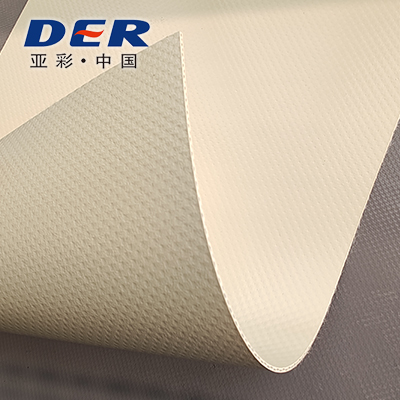
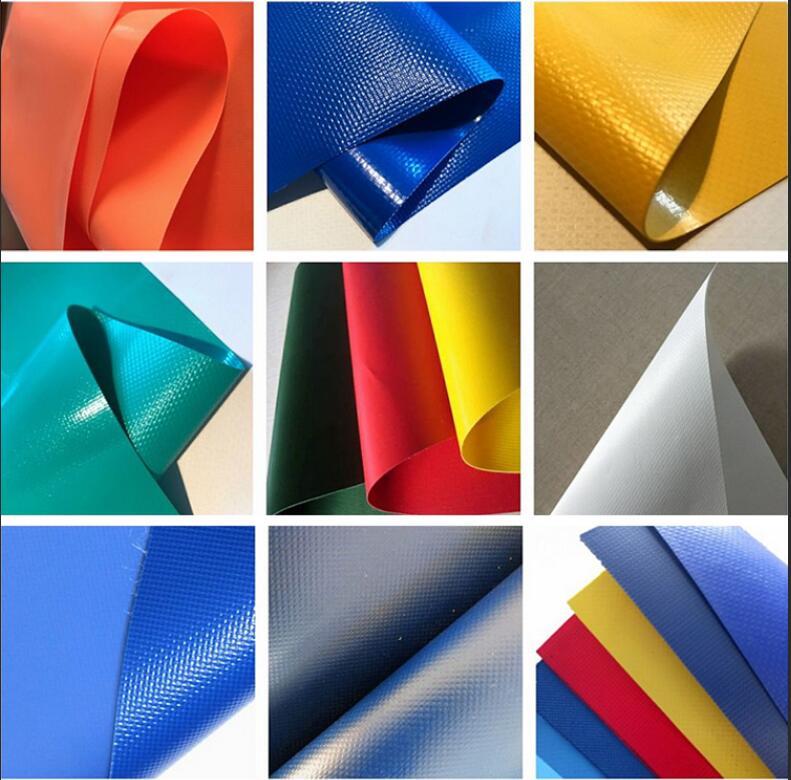
Color, surface and textile reinforcement can be developed around the product design and conversion method.
TPU tarpaulin is a reinforced composite textile made by coating or laminating thermoplastic polyurethane onto a woven polyester or nylon base. The textile core contributes tensile strength, tear resistance and dimensional control. The TPU layer provides the continuous barrier, flexible hand, abrasion resistance and thermoplastic surface needed for heat-sealed or welded construction.
In sourcing language, “TPU tarpaulin,” “TPU coated fabric,” “TPU sheet” and “TPU roll material” may describe related products, but they are not automatically interchangeable. A lightweight single-side material for a waterproof cover is different from a double-side reinforced material intended to hold air, water or oil. A successful specification therefore starts with the intended product, contents, pressure, seam method, folding cycle and exposure conditions.
TPU is selected when flexible handling, sealed fabrication and premium finished-product performance need to work together.
Selected TPU surfaces can be processed by HF/RF welding, hot-air welding or heat sealing. This supports sealed seams for inflatable chambers, bags, bladders and liquid-containment products.
Appropriate TPU grades can retain a softer hand and useful flexibility during repeated folding, packing and deployment. The actual cold-flex range depends on TPU chemistry and construction.
The TPU layer and reinforced textile can be configured for products exposed to rubbing, dragging, packing movement or contact with rough surfaces.
Polyether-based TPU is commonly considered for humidity, water contact and hydrolysis-sensitive applications. Long-duration exposure should still be validated under real conditions.
Polyester-based TPU can be considered where abrasion, oil contact and mechanical strength are priorities. Compatibility depends on the specific liquid, temperature and contact time.
TPU provides a PVC-free material route for brands and technical products. Environmental and recycling statements should be assessed for the complete composite, additives and local recovery system.
These products depend on seam integrity, repeated flexing and application-specific material compatibility.
Inflatable boats, packrafts, air mattresses, lifting bags, rescue equipment and pressure chambers requiring controlled airtight construction.
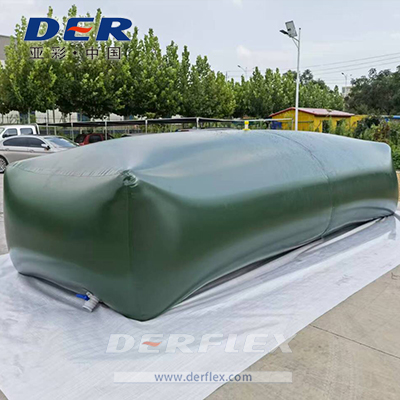
Water bags, oil bladders, fuel-compatible projects, container liners and temporary storage systems after liquid compatibility testing.
Roll-top dry bags, backpacks, soft coolers, river bags and equipment covers that benefit from weldable seams and flexible handling.
Pressure-relief mattresses, cushions, patient-transfer products and hygienic covers where material, cleaning and compliance requirements are clearly defined.
Life-saving components, flotation chambers and emergency products that require controlled air retention and documented qualification.
Equipment covers, spill-control products, protective sleeves, bellows and fabricated technical components exposed to abrasion and repeated movement.
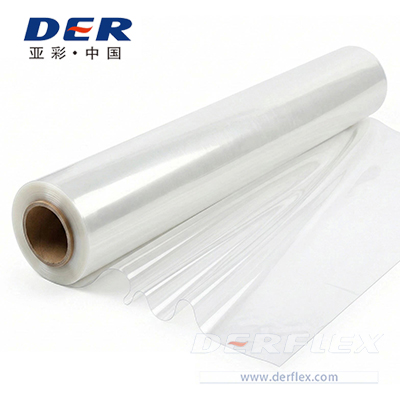
Representative DERFLEX material and application images. Final appearance varies by base cloth, TPU layer, finish, color and production batch.
The purchasing format should match your conversion capacity, trial stage and repeat-order plan.
Designed for manufacturers and converters running cutting, welding and assembly in-house.
Useful for prototype work, defined panel sizes, trial welding and smaller conversion operations.
For OEM products that need a repeatable material specification and controlled commercial presentation.
These ranges are quotation directions rather than a universal product promise. Final values depend on structure, process, target test and order arrangement.
| Product description | TPU tarpaulin / TPU coated fabric / TPU laminated fabric / reinforced TPU sheet |
|---|---|
| Base textile | Polyester or nylon woven fabric; common project directions include 210D, 420D, 500D, 840D, 1000D, 1300D, 1500D and 1680D. Custom textile construction can be discussed. |
| TPU chemistry | Polyether TPU for water, humidity and hydrolysis-oriented projects; polyester TPU for abrasion, oil and mechanical-performance directions. Formulation must match the exposure profile. |
| Coating structure | One-side coating, two-side coating or TPU film lamination. Smooth, matte, glossy, embossed, textured or anti-blocking surfaces may be available. |
| Total weight | Approx. 150–1500 gsm for many programs; selected heavy-duty TPU tarpaulin material can be developed above this direction. Do not select only by GSM. |
| Width | Approx. 1.0–3.2 m depending on grade, thickness and production method. Wider finished panels can be created through qualified welding and fabrication. |
| Colors | Black, grey, blue, red, yellow, orange, white, army green, transparent or semi-transparent directions, plus custom color development. |
| Fabrication methods | HF/RF welding, hot-air welding, heat sealing, ultrasonic welding or stitched-plus-sealed construction where appropriate. Trial welding is recommended. |
| Functional directions | Waterproof, airtight, hydrolysis-resistant, abrasion-resistant, UV-resistant, antimicrobial, flame-retardant, oil-resistant or chemical-resistant versions can be discussed subject to formulation and test requirements. |
| Supply and packing | TPU tarpaulin wholesale rolls, custom sheets, sample cuts, labeled cores, cartons, pallets and private-label export packing according to order specification. |
The correct combination depends on what the finished product will hold, how it will be made and where it will operate.
No material is universally correct. The best commercial choice is the one that meets the required performance without adding unnecessary cost or complexity.
Often selected for sealed, flexible and premium technical products.
Commonly selected for economical heavy-duty covers and large outdoor structures.
Often used for lighter waterproof textiles, apparel and bags.
A clear approval process reduces the risk of buying a fabric that looks correct but does not convert or perform correctly.
Define what the product covers or contains, expected pressure, service temperature, exposure media and target life.
Select TPU chemistry, base textile, coating side, weight, width, color and surface direction.
Check hand feel, color, adhesion, seam settings, leakage, peel strength and finished-product compatibility.
Record the accepted construction, appearance, roll format, test items and packaging details before bulk production.
Use agreed tolerances and inspection records to support wholesale, OEM and repeat-order consistency.
A TPU tarpaulin factory should be able to discuss more than color and price. The supplier should understand coating or lamination structure, welding behavior, application media, batch control and export packing. DERFLEX combines coated-fabric experience with custom material planning for brands, fabricators, distributors and industrial-product manufacturers.
Inspection scope can be defined according to the order and may include incoming material review, in-process checks, roll appearance, width, weight, thickness, surface condition, color, adhesion, winding and packaging. Application tests and third-party reports should be agreed before production when they are contractually required.
A detailed request usually produces a more useful sample and quotation than asking only for “TPU tarpaulin price.”
Use these six related pages to compare general TPU fabric, laminated structures and application-specific materials.
Practical answers for importers, converters, product brands and wholesale buyers.
TPU tarpaulin is made by coating or laminating thermoplastic polyurethane onto a reinforced textile, commonly polyester or nylon. The textile provides strength and stability, while the TPU layer provides the barrier surface, flexibility, abrasion resistance and weldability.
Yes, selected constructions can be engineered for waterproof and airtight products. Finished performance depends on the coating structure, pinhole control, valve design, seam method and fabrication quality, so the complete product should be tested.
A roll is supplied continuously for production cutting and conversion. A sheet is cut to a defined length or panel size for trials, prototypes or specific fabrication needs. The underlying material can be the same, but packing, handling and order quantity differ.
DERFLEX supports roll supply, sample cuts, custom color, base fabric, coating side, width, surface finish, roll length and private-label packing. MOQ and production arrangement depend on the selected specification.
Depending on the TPU grade and construction, HF/RF welding, hot-air welding, heat sealing or ultrasonic welding may be suitable. A welding trial should confirm temperature, pressure, dwell time, seam width and peel strength before mass production.
No. TPU is often preferred for flexible, airtight, low-temperature or PVC-free product directions. PVC can be more economical and practical for large covers, tents and common heavy-duty tarpaulins. Selection should be based on the required performance and total product cost.
Send your application, contents, working temperature, base-fabric preference, welding method, target GSM or thickness, width, color, quantity and required tests. DERFLEX will use that information to prepare a practical material direction for sampling and quotation.