News
Company News

TPU vs TPH PPF: Material Differences & Buyer Guide | DERFLEX

Update:2026/9/21 16:59:54 Views:
Paint Protection Film · Material Comparison

TPU vs TPH PPF

The material label matters—but the finished PPF system matters more.

This buyer guide compares TPU and TPH-type paint protection films by material identity, stretch and recovery, top-coat behavior, optical appearance, aging risk, installation handling and sourcing control. It is designed for distributors, installers, detailing brands and private-label PPF buyers who need to approve real film—not just a name on a datasheet.

Quick Answer

What is the difference between TPU and TPH PPF?

TPU is a defined polymer family—thermoplastic polyurethane—and is widely used for professional paint protection film because well-designed TPU systems can provide high conformability, elastic recovery and strong long-term product positioning. TPH, by contrast, is used inconsistently as a market label for lower-cost modified or hybrid film constructions. It should not be treated as one universally standardized chemistry. For sourcing, ask the supplier to state the actual film body, top coat, adhesive, thickness basis and test evidence.

Material Definition

Do not compare “TPU” and “TPH” as if both labels were equally precise

The most useful procurement question is not “Which acronym is better?” It is “What material and construction am I actually buying?”

Defined polymer family

What is TPU PPF?

TPU stands for thermoplastic polyurethane. In automotive PPF, the TPU body is normally only one part of the finished product. The final film also depends on a functional top coating, pressure-sensitive adhesive, release liner, coating quality, winding and converting control.

Why TPU is used in PPF

TPU is selected when the film needs to conform to compound curves, recover after stretching, absorb normal road abrasion and maintain a transparent flexible layer over painted surfaces. Exact behavior still varies with TPU grade and finished-film design.
Market term — verify construction

What is TPH PPF?

“TPH” is widely used in PPF sales as a commercial label for lower-cost modified or hybrid films, but the term is not applied consistently across suppliers. Some products are described as PVC-associated hybrids; other suppliers use different formulations or naming.

What this means for buyers

Never approve a TPH product only because the label says “hybrid.” Ask for the actual base polymer, film construction, top-coat function, adhesive system and sample performance. Two products both called TPH can be materially different.

Buyer rule: “TPU” identifies a polymer family; “TPH” often identifies a commercial product tier or hybrid direction. A sourcing specification should describe the physical film system, not only the acronym.
Side-by-Side Comparison

TPU vs TPH PPF comparison for professional buyers

The table below shows the typical procurement direction. Actual results must be confirmed on the selected film and approved sample.

Comparison Point TPU PPF TPH-Type PPF What the Buyer Should Verify
Material identity Thermoplastic polyurethane. Commercial hybrid label; exact chemistry can vary by supplier. Request material declaration / grade description for the film body.
Stretch & recovery Generally a strong direction for elastic recovery and compound curves when the TPU grade is suitable. Highly product-dependent; some lower-cost constructions can show lower recovery or more stress marking. Install the sample on real curves and record stretch, whitening, recovery and edge behavior.
Self-healing Commonly offered on professional TPU PPF through a functional top coat. May be claimed on some products, but the behavior and mechanism must be verified. Do not assume the film body alone creates self-healing. Test the finished top-coated product.
Optical clarity Can support high-clarity premium PPF systems. Can look clear when new; long-term optical stability depends strongly on formulation and coating. Inspect haze, gloss, orange-peel direction and adhesive appearance on dark and light paint.
UV / aging direction Quality aliphatic TPU is widely used where long-term clarity and outdoor stability are important. Performance varies; price-focused hybrid constructions may have greater aging uncertainty. Ask for the test method, exposure conditions and acceptance criteria—never only “anti-yellowing” wording.
Installation behavior Usually the stronger starting direction for professional compound-curve installation. Can be workable for simpler or price-sensitive programs, depending on the actual film. Compare tack, repositioning, squeegee response, edge finishing and cold/warm handling.
Removal risk Depends on adhesive quality, aging, paint condition and service environment—not TPU alone. Also depends on adhesive and aging; lower-cost construction can add uncertainty. Run controlled removal tests after conditioning; do not accept “no residue” without conditions.
Purchase price Usually higher because of raw material and finished-system positioning. Usually lower and often positioned for price-sensitive programs. Normalize quote by roll area, total construction, finish, packaging and trade term.
Best commercial fit Professional installer networks, long-term brand programs and premium private-label lines. Budget-oriented programs where the actual sample and claims have been validated. Match film tier to your warranty language, installer capability, climate and after-sales risk.
Image Pack

What finished PPF quality looks like beyond the datasheet

Real installation, multilayer construction, production handling and application coverage help buyers evaluate the complete product system.

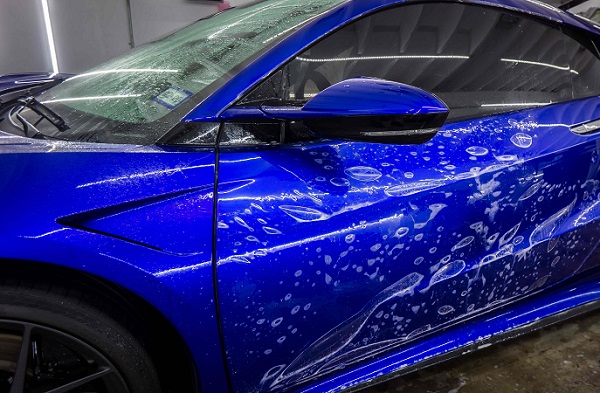
DERFLEX TPU paint protection film being installed on blue vehicle body
Vehicle installation A useful sample approval should include wet installation, stretch control, edge work and final appearance on real painted panels.
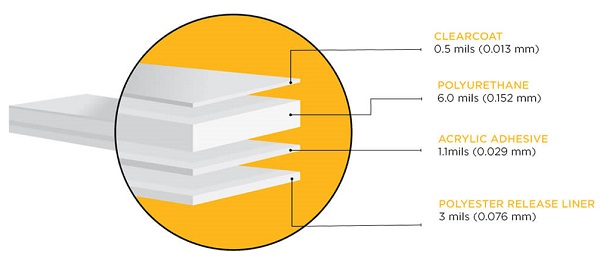
Paint protection film multilayer structure showing clearcoat polyurethane adhesive and release liner
Finished PPF is multilayer Top coat, film body, adhesive and liner jointly affect the installer experience and end result.
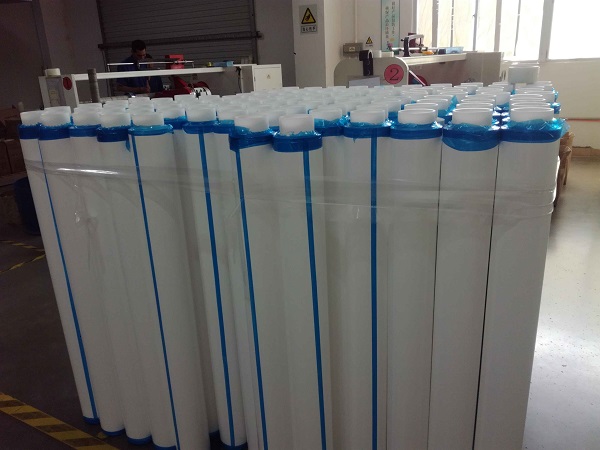
DERFLEX paint protection film rolls prepared for packaging
Roll consistency matters Winding, surface cleanliness, identification and packing should stay connected to the approved film model.
Sample Approval Protocol

Five checks before you approve a TPU or TPH PPF roll

These are sourcing checks, not shortcuts. Use the same sample code, panel type and observation method when comparing suppliers.

Verify the material statement

Ask the supplier to state the actual film body and grade direction. Avoid relying on “premium,” “hybrid” or “nano” labels alone.

Install on compound curves

Record stretch, recovery, whitening, adhesive movement, squeegee feel and edge finishing on realistic geometry.

Inspect optics

Compare clarity, gloss, haze, orange-peel direction and adhesive appearance on dark and light paint under controlled lighting.

Review aging evidence

Request test methods and conditions for weathering, yellowing, stain or surface claims. A claim without a method is difficult to audit.

Freeze the approved reference

Connect the accepted film to model code, sample reference, roll label, packaging revision and purchase specification before bulk production.

Selection Logic

Which material direction fits your PPF business?

Material choice should be linked to market position, installer expectations and after-sales exposure—not only purchase price.

Premium installer network

Start with a well-documented TPU system

Prioritize consistent stretch, optics, top-coat behavior, adhesive response and repeat-order control.

Price-sensitive market

Validate the exact TPH-type construction

If a lower-cost tier is commercially necessary, approve the real sample and define its claims conservatively. Do not sell the acronym as proof of performance.

Private-label brand

Build the SKU around an approved film—not a marketing name

Keep material, finish, thickness basis, sample ID, roll format, label and carton revision linked to one controlled specification.

Important Nuance

Not every TPU PPF performs the same

Choosing TPU is only the first filter. Professional sourcing still requires comparison of the complete film system.

Six variables that can make two TPU films install differently

  • TPU grade and film-body formulation
  • Functional top-coat chemistry and surface feel
  • Pressure-sensitive adhesive tack and flow
  • Total thickness and how that thickness is measured
  • Liner release, winding and roll-flatness control
  • Surface cleanliness, optical uniformity and batch consistency

Why this matters to distributors

A roll that looks excellent in a sample book can still create installer complaints if tack, stretch, liner release or edge behavior changes in bulk production. For that reason, approval should connect visual quality + install behavior + product identity.

Thickness alone is not a product grade. A 7–8 mil label, for example, does not tell you which layers are included, how the surface behaves or how the adhesive installs.
DERFLEX TPU PPF Reference

Current DERFLEX PPF specification direction

The values below are reference directions currently shown on DERFLEX PPF pages. Final purchasing values should be tied to the exact model and approved sample.

TPU paint protection film system

DERFLEX currently documents a finished PPF construction based on a functional top coat, TPU film body, pressure-sensitive adhesive and release liner.

MaterialTPU
Thickness direction150–220 μm
Gloss reference≥ 90 GU
Elongation reference≥ 300%
Reference roll1.52 m × 15 m
OEM routeBy approved program

Confirm before purchase

  • Exact model and finish direction
  • Whether thickness means total construction or a specific layer
  • Measurement method for gloss / optical claims
  • Adhesive response and installer acceptance
  • Roll width, length, winding and protective-layer requirement
  • Packaging, label, barcode / QR and private-label scope

Do not treat one reference specification as universal across all PPF models. Confirm the order specification with DERFLEX for the selected film.

Procurement Checklist

What to send when requesting a TPU PPF quotation

A detailed brief allows the supplier to compare the correct film direction and prevents quote comparisons based on mismatched products.

1. Target market & channelCountry, distributor, installer network, detailing brand or wholesaler.
2. Film directionClear gloss, matte, satin or another approved finish direction.
3. Material requirementTPU grade direction or a reference sample for side-by-side evaluation.
4. Thickness basisTarget value plus a clear definition of what the measurement includes.
5. Installer prioritiesTack, repositioning, stretch, recovery, edge work, liner release and clarity.
6. Roll formatWidth, length, core, winding, protective layer and carton requirement.
7. Brand & packagingNeutral or private label, artwork, roll label, barcode / QR and language needs.
8. Commercial informationQuantity, destination, trade term, sample requirement and desired launch timing.
People Also Ask

TPU vs TPH PPF FAQ

Direct answers to common material and sourcing questions from PPF buyers.

Is TPU PPF better than TPH PPF?

For professional PPF programs that prioritize conformability, repeatable installation and long-term brand positioning, a well-designed TPU system is usually the stronger starting direction. However, “TPU” alone does not guarantee finished-film quality; top coat, adhesive, optics, winding and batch consistency still need sample approval.

Is TPH the same as TPU?

No. TPU is thermoplastic polyurethane. TPH is used as a commercial label for hybrid or modified PPF constructions and is not applied consistently across all suppliers. Ask for the actual polymer description instead of assuming the acronym defines one chemistry.

Can TPH PPF have self-healing?

Some TPH-type films may be sold with a heat-activated scratch-recovery claim. Self-healing behavior is strongly influenced by the functional top coat, so verify the specific finished film rather than assuming the body-material label determines the result.

How can a distributor confirm that a PPF is really TPU?

Ask for the material statement or grade description, review the full construction, then compare a coded production sample during installation. Material documentation and repeatable sample behavior are more reliable than a product name alone.

Why can two TPU PPF rolls with the same thickness feel different?

Thickness is only one variable. TPU grade, top coat, adhesive response, liner release, winding, surface cleanliness and stretch recovery can all change installation feel and finished appearance.

What should a private-label PPF buyer approve before bulk production?

Approve the film model or sample first, then lock the material direction, finish, thickness basis, installer behavior, roll format, product code, roll label and packaging revision. Keep that reference connected to the bulk purchase specification.

Comparing PPF samples for your market?

Send DERFLEX your target market, film finish, thickness direction, reference sample, installer priorities, , roll format, branding requirement, quantity and destination. We can discuss a TPU PPF sample and OEM supply route around the specification your team needs to approve.

Consulting Services
+86-021-54361792 / 54361798
Email
sales@derflex.com