Private Label PPF
Best suited to buyers who first want to approve a DERFLEX PPF direction and then launch it with their own product name, roll label and carton presentation.



Build a paint protection film line around an approved TPU film, your market position and your brand presentation—not just a logo on a carton.
DERFLEX supports OEM PPF and private label PPF discussions for distributors, detailing product brands, installer networks and automotive accessory wholesalers. Buyers can define the film direction, roll format, labels, carton graphics, product identification and sample-approval rules before bulk production.
Both models are used by automotive film businesses that want to sell paint protection film under their own commercial program, but the level of product development can be different.
Private label PPF usually starts from an approved existing film and adds the buyer's brand presentation, product identification and packaging. A deeper OEM program may also define film structure direction, surface finish, thickness, adhesive behavior, roll format, packaging and acceptance criteria. The exact scope should be confirmed before artwork and production are released.
Best suited to buyers who first want to approve a DERFLEX PPF direction and then launch it with their own product name, roll label and carton presentation.
Suited to brands that need a more defined product brief covering film direction, installation behavior, roll specification and packaging rules before approval.
Used when the buyer brings reference samples, target performance language, market feedback or a planned product ladder that requires additional sampling and comparison.
A private-label launch becomes easier to control when film approval and packaging approval are treated as separate gates.
Clarify target country, customer tier, installer profile, expected finish and the role of the new PPF line.
Compare clear or finish direction, total construction, top-coat feel, adhesive response and roll format.
Install on representative flat and curved panels and record handling, clarity, gloss and edge behavior.
Connect the approved film to product name, model code, roll label and internal purchase specification.
Review carton artwork, labels, barcode/QR data, language, warning text and packing marks separately.
Place production against the same approved model and artwork revision used during final sign-off.
Final availability depends on the selected PPF model, approved sample and production arrangement. Avoid treating one headline specification as universal across every film series.
| Program Item | DERFLEX Reference Direction | What the Buyer Should Lock Before Bulk Production |
|---|---|---|
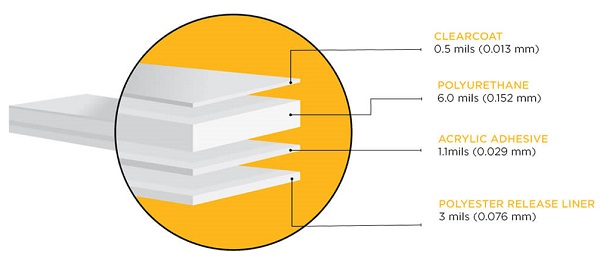
| Film system | TPU paint protection film with functional top coat, TPU body, pressure-sensitive adhesive and release liner. | Exact model, surface direction, adhesive response, liner and intended installer/customer segment. |
| Thickness | Current DERFLEX PPF page shows a 150–220 μm reference direction for selected PPF. | Confirm the selected model and whether the agreed figure represents total construction or a specific layer. |
| Surface / finish | Clear high-gloss is documented; matte, satin or project-specific directions can be discussed by program. | Approve real sample appearance under indoor light, daylight and on representative paint colors. |
| Roll format | 1.52 m × 15 m is shown on an existing DERFLEX car paint protective film page as a reference format. | Width, length, core, winding direction, protective layer, carton and pallet requirement. |
| Roll identification | Roll number, label and QR-code direction are documented on an existing DERFLEX PPF page. | Product code, batch/reference logic, language, barcode/QR content and version control. |
| Private label packaging | Brand labels, carton graphics, sample packs and private-label packaging can be discussed by project. | Approved artwork file, carton copy, legal/market text, barcode, label position and master-carton marks. |
| MOQ / lead time | Confirm with DERFLEX for the selected film and packaging scope. | Do not assume a generic number; film model, artwork, packing and production schedule can change the commercial plan. |
Reference specifications above are based on current DERFLEX PPF pages and must be reconfirmed for the exact model ordered. Product claims, test conditions, installation observations and bulk acceptance criteria should be kept distinct.
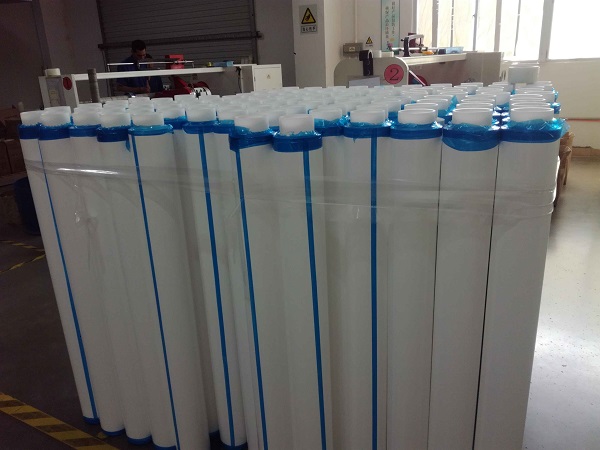
Packaging is not only visual design. A repeatable private-label program should make it easy for your warehouse, dealers and installers to know exactly which film they received.
Discuss branded roll labels, carton graphics, product naming and market-language requirements. Keep the artwork revision connected to the approved film model.
Use a clear SKU or model code, roll label and batch/reference system so customer service and repeat orders can trace the intended product direction.
Before printing warranty cards, installation notes or performance language, confirm that the wording matches the selected model and any supporting test method or market requirement.
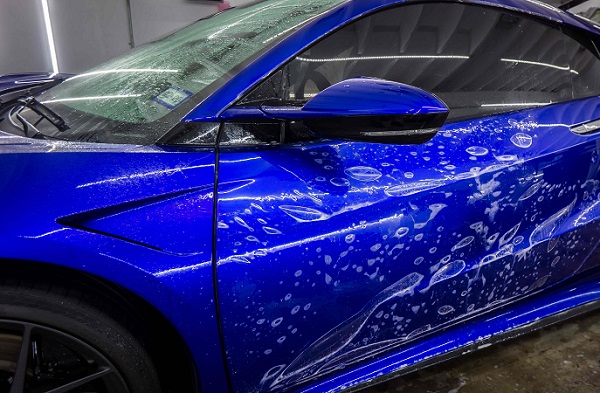
Evaluate PPF with real vehicle installation and product handling—not only a specification sheet.
The biggest private-label mistake is treating a beautiful carton as proof that the product is ready. The film should be approved first, using installer-facing observations that can be repeated.
Yes. Total thickness is only one variable. Top coat, TPU behavior, adhesive response, liner release, winding, surface cleanliness and stretch recovery can make two films with similar headline specifications feel very different to installers.
For this reason, a private-label brand should build its product description around the approved system rather than selecting film only by a single number. DERFLEX's current paint protection film page explains the multilayer construction, while the automotive protection film range places PPF in a wider vehicle-protection portfolio.
If your team is comparing finished PPF with raw transparent material, review DERFLEX's clear TPU film roll and transparent TPU film manufacturer pages. Finished PPF adds the functional coating, adhesive and release system needed for automotive installation.
A successful OEM PPF program is not defined by the first sample alone. Repeat ordering depends on clear references for film identity, packaging identity and buyer acceptance.
Keep the approved model or sample reference connected to each purchase specification.
Track recurring feedback on tack, repositioning, stretch, liner release and edge finishing.
Compare clarity, gloss, surface cleanliness and finish under consistent inspection conditions.
Use approved artwork versions and product codes so a design change does not create warehouse confusion.
Choose the level of customization according to how quickly you need to launch, how mature your specification is and how much installer feedback you already have.
| Buyer Situation | Recommended Starting Route | Priority Before Ordering |
|---|---|---|
| New distributor launching a first PPF line | Approve an existing film direction, then build private-label packaging around it. | Installer trial, target market, product naming and artwork approval. |
| Established film brand replacing or adding a supplier | Use a target sample plus measurable requirements and compare installation behavior. | Sample equivalency criteria, model coding and repeat-order documentation. |
| Installer network creating a house brand | Start from installer handling and finish expectations, then select a commercially suitable film tier. | Tack, stretch, edge work, clarity, packaging and dealer education. |
| Brand planning multiple product tiers | Create a product ladder only after differences between tiers can be explained and reproduced. | Clear tier logic, approved samples, SKU naming and sales claims linked to real differences. |
The more specific the brief, the easier it is to match film direction, packaging scope and sample route.
Use these verified DERFLEX pages to compare finished PPF, automotive protection categories and TPU material directions.
DERFLEX can discuss private-label PPF programs including brand labels, carton graphics, roll identification and packaging requirements by project. Final scope depends on the selected film model, artwork and order plan.
Private label usually starts from an approved existing film and adds the buyer's brand presentation. OEM can involve a deeper buyer-defined specification covering film direction, surface, thickness, roll format, packaging and acceptance criteria.
A universal MOQ is not stated here because it can vary with film model, packaging scope and production arrangement. Send the target specification and packaging plan so the applicable commercial terms can be confirmed.
For sourcing projects, a reference sample can be useful for defining the target. The comparison should include real installation behavior and visible acceptance criteria rather than thickness alone.
Review surface cleanliness, clarity, gloss, tack, repositioning, stretch, recovery, liner release, squeegee response, edge finishing and appearance on representative painted panels. Keep the approved sample or model reference connected to the purchase specification.
DERFLEX's existing PPF and automotive-film pages document private-label packaging discussions, brand labels, carton graphics, roll labels and QR/product-identification directions. Confirm exact artwork, data content and production feasibility before bulk packaging.
No. Transparent TPU film is a material layer. Finished automotive PPF is a multilayer product that normally combines a functional top coat, TPU base film, pressure-sensitive adhesive and release liner.
Send your market, target film type, thickness or reference sample, roll format, expected installer profile, branding/packaging requirement, quantity, destination and any testing or documentation requirement.
Tell DERFLEX your target market, film direction, reference sample, roll format, packaging plan, quantity and destination. The team can review the project around sample approval and a clearly defined private-label specification.