PVC Surface Barrier
The PVC layer is continuous rather than an open woven surface, so it is used to resist rain, splash and surface moisture penetration.



Yes. PVC-coated polyester tarps are commonly used as waterproof covers because the PVC layer forms a continuous barrier against rain and surface moisture. But the finished tarp is only as water-tight as its seams, edges, punctures, grommet zones and installation.
For truck cargo, construction materials, outdoor storage, equipment protection and industrial covers, buyers should specify the complete waterproof system—not only ask whether the base fabric is PVC.
An intact PVC-coated surface can block rain and moisture. Water can still enter through stitched seams, punctures, worn coating, damaged corners, poorly sealed joins, grommet openings or low areas where water is allowed to pool. For demanding B2B use, specify both the fabric and the finished tarp construction.
A PVC tarp is typically built from a polyester textile reinforcement combined with PVC coating or lamination. Each layer performs a different job.
The PVC layer is continuous rather than an open woven surface, so it is used to resist rain, splash and surface moisture penetration.
The internal textile structure supplies tensile and tear support so the waterproof layer is less likely to distort under handling and tension.
Many PVC tarpaulin grades can be joined by hot-air, hot-wedge or suitable high-frequency welding, helping avoid needle-hole leakage in wet zones.
UV, cold-flex, anti-mildew and surface-finish directions can be matched to outdoor exposure so the barrier remains useful through repeated service.
The intact sheet may be waterproof while the finished cover still leaks. In field use, water usually finds the weakest detail rather than passing straight through a sound PVC surface.
Use the service condition—not a marketing label—to decide how much waterproof engineering the finished cover needs.
| Application | Water Exposure | Recommended Construction Focus | Main Risk to Control | Fit |
|---|---|---|---|---|
| Outdoor machinery cover | Rain, splash, dew | PVC-coated polyester, reinforced perimeter, pitched installation | Abrasion and pooling | Strong fit |
| Truck / trailer cargo tarp | Rain, road spray, wind-driven water | Welded joins where appropriate, high-stress edge reinforcement, secure hardware | Flapping, edge tears, seam stress | Strong fit |
| Construction material cover | Heavy rain, repeated handling | Durable PVC grade, abrasion protection, drainage slope, repairable fabrication | Punctures, sharp corners, standing water | Strong fit |
| Temporary roof / shelter | Prolonged rain and wind | Project-specific seam plan, tensioning, support spacing and drainage | Wind uplift, ponding, seam loading | Engineer details |
| Liquid containment / ponding duty | Continuous hydrostatic pressure | Purpose-designed liner or containment membrane with verified seam system | Pressure, seam integrity, chemical compatibility | Do not assume |
| Breathable moisture-sensitive cover | Light rain + condensation risk | Evaluate whether breathability is more important than a sealed PVC barrier | Condensation trapped underneath | Compare options |
A reliable waterproof cover is a system. These details often matter more than simply increasing GSM.
Sewing can be structurally useful, but exposed needle holes may need sealing or a different joining method when leak control is critical.
Dirty surfaces, poor temperature control, insufficient pressure or incorrect overlap can produce weak or discontinuous joins.
Water may enter after the surrounding fabric tears. Reinforcement design and correct tension are therefore part of waterproof reliability.
Sharp edges and repetitive rubbing can thin or puncture the PVC coating even when the original material was fully water-blocking.
A flat tarp can form low pockets. Pooling increases load, deforms the cover and may drive water toward seams or damaged areas.
UV exposure, folding, cold, contamination and repeated installation can change the condition of the coating and finishing over time.
The comparison below is directional. Exact performance depends on the grade, construction, treatment and finished-cover details.
| Material Family | Water Protection Direction | Fabrication / Seams | Typical Buyer Reason | Key Limitation to Check |
|---|---|---|---|---|
| PVC / Vinyl Tarp | Commonly specified as waterproof | Can support welded joins depending on grade | Reusable heavy-duty covers, trucks, industrial protection | Weight, flexibility, seam quality, abrasion, drainage |
| PE / Poly Tarp | Many laminated grades are waterproof when intact | Different joining and repair behavior | Economical temporary or general-purpose coverage | Grade variation, UV life, hardware durability |
| Treated Canvas | Often water-resistant rather than fully waterproof | Usually sewn | Breathability and reduced trapped condensation | Prolonged wetting and saturation |
| Mesh Tarp | Not intended as a sealed rain barrier | Open structure | Shade, debris control, airflow, wind reduction | Allows water and air to pass |
For a broader material comparison, see DERFLEX's related PVC tarp and waterproof coated-fabric pages linked below.
A better RFQ describes the water risk and construction details so the supplier can match material and fabrication to the job.
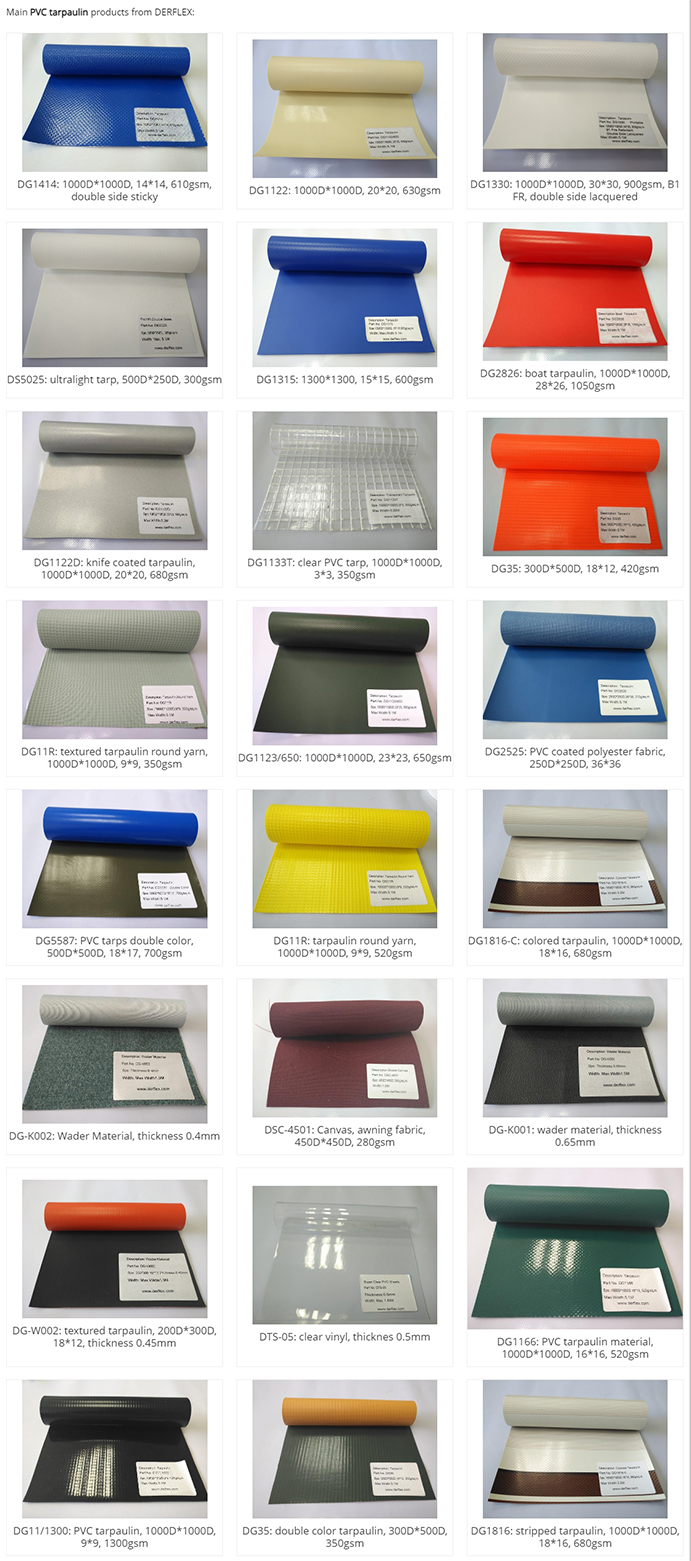
Real product and application imagery helps buyers understand what the material looks like and where it is used.
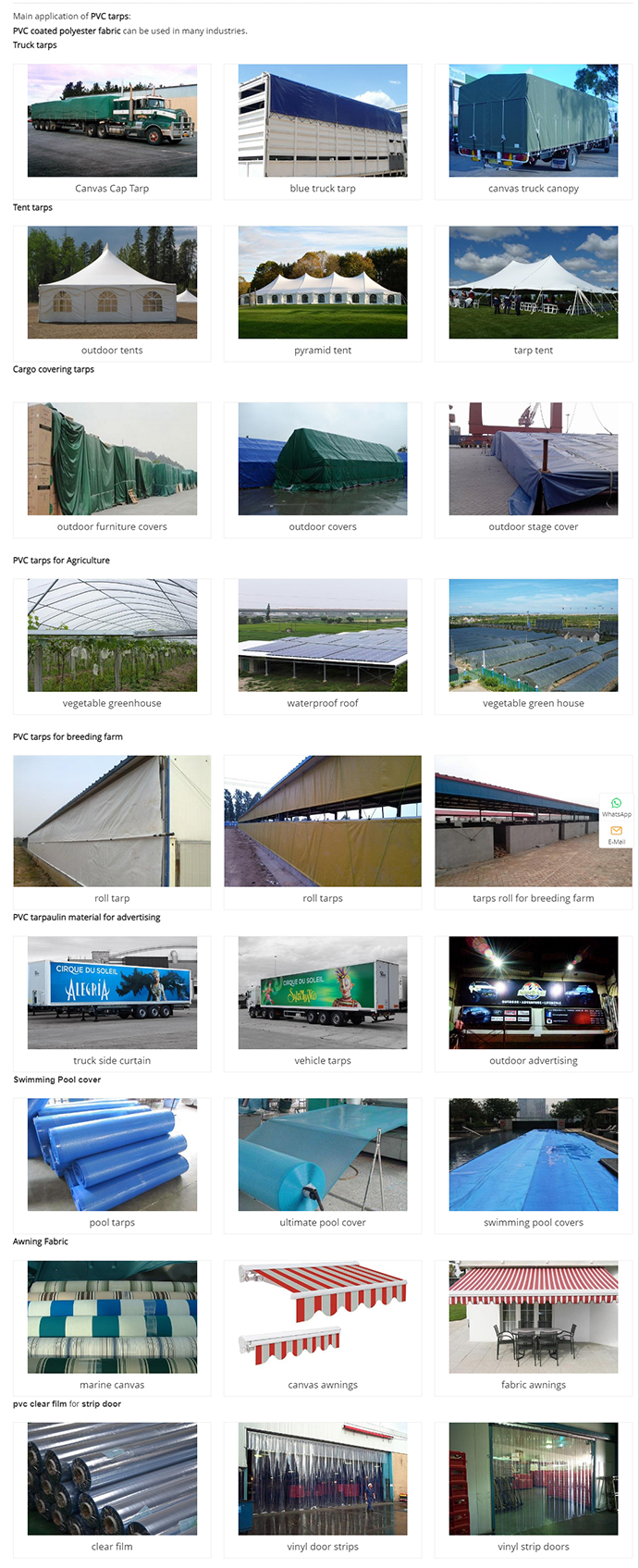
The same PVC material can behave very differently depending on cover geometry, movement, fastening and abrasion. Match the finished design to the job.
Prioritize waterproof surface integrity together with tear strength, abrasion resistance, weldability, flexible handling and reinforced tie-down points.
Rain protection must work alongside puncture resistance, edge reinforcement, safe anchoring and drainage. Sharp building materials should be isolated from the tarp.
For machinery, pallets and raw materials, create slope and ventilation where appropriate rather than laying the tarp flat and allowing water to collect.
Farm covers may need waterproofing plus UV resistance, mildew-conscious design, repeated seasonal handling and practical repairability.
Waterproof roof performance depends on panel welding, pitch, tension, structural support and details around edges, openings and connection points.
Check for hot surfaces, sharp corners, chemicals, oils, moving parts and abrasion. Waterproofing alone does not prove compatibility with the operating environment.
Most avoidable leaks come from damage, poor drainage or overstressed finishing rather than spontaneous water penetration through intact PVC.
Install with enough slope or support to shed rain. Avoid broad unsupported low points where water can accumulate.
Use padding or corner protection where the tarp touches metal, timber, masonry or machinery edges.
Check grommets, D-rings, webbing, corners and hems for elongation or tearing before damage spreads into the waterproof field.
Small punctures, worn coating or seam damage should be repaired with a method compatible with the PVC construction before the next severe rain event.
These verified DERFLEX pages cover the closest material, roll-goods and application topics.
An intact PVC-coated polyester tarp material is commonly specified as a waterproof barrier against rain and surface moisture. A finished tarp can still leak at seams, punctures, grommets, damaged edges or poorly welded joins, so complete performance depends on both material and fabrication.
They can. Stitched seams create needle holes unless they are protected or sealed. Properly executed welded seams are often selected when stronger leak control is required. The correct joining method depends on the PVC grade and finished-cover design.
Water can enter around damaged or poorly reinforced grommet zones. The larger risk is often mechanical: excessive tie-down force can elongate or tear the fabric around the hardware, creating an opening. Reinforcement and correct tensioning matter.
Many PE tarps are also waterproof when intact. PVC is often preferred for heavier-duty, reusable and fabricated covers because it can provide a strong combination of water barrier, textile reinforcement, abrasion resistance and weldability. The better choice depends on duty level, budget and expected service life.
Do not assume a general weather tarp is suitable for liquid containment. Standing water creates sustained hydrostatic pressure and higher seam loads. If the application is a tank, pond, liner or containment system, specify a purpose-designed material and verified seam construction for that duty.
Not automatically. Higher GSM can contribute to durability, but waterproof performance also depends on coating continuity, coating adhesion, base fabric, seams, puncture resistance and finished design. Compare the complete specification rather than GSM alone.
Create sufficient slope, support broad spans and tension the tarp so water can drain. Avoid flat installations that form low pockets. Pooling adds weight and can stress seams, grommets and support points.
Send the application, finished size or roll width, quantity, target GSM or thickness if known, color, expected weather exposure, seam requirement, edge reinforcement, grommet or D-ring layout, printing or packaging needs, destination market and any required test or compliance documents.
Send DERFLEX the use case, size, quantity, weather exposure, target weight, seam design, reinforcement and fastening requirements. The useful quotation is the one that matches the complete cover system—not just a material name.