


 Material rolls · Surface development · OEM
Custom Embossed PVC Film Rolls
Specify the surface your customer will see and feel. Embossed PVC film rolls combine a flexible vinyl base with physical surface relief for selected converting and decorative applications. Bring DERFLEX your reference sample, target thickness, usable width and processing method to review a custom textured PVC film request. The starting point is an agreed tactile sample, followed by a trial of the actual printing, welding or lamination process.
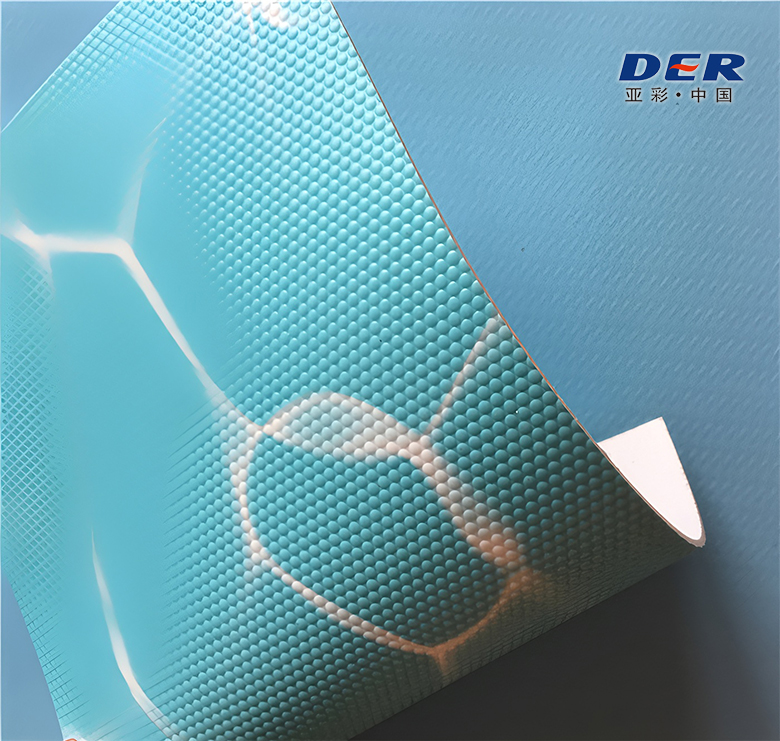
From a visible pattern to an approved material
Pattern appearance is only one part of a roll specification. The texture must also suit the film, its reverse side and your converting process.
- Texture identityPhysical master, surface side and pattern direction.
- Film constructionUnbacked film or a separately specified laminate.
- Production fitUsable width, gauge, softness and roll handling.
- Approval basisMaterial sample and finished-product trial.
What makes PVC film embossed?
Embossed PVC film has a physically formed surface pattern that can be felt as well as seen. A printed design changes the image; embossing changes the surface profile. A matte or frosted appearance alone does not identify a specific emboss pattern.
DERFLEX lists embossed finishes within its PVC film range. For a custom textured vinyl sheet, identify the required result using a physical reference rather than a name such as “leather,” “linen” or “sand.” Those descriptions can cover very different scales, depths and gloss levels.
Describe the relief
State whether the surface has rounded dots, an irregular grain, repeated lines or another geometry. Mark the face side and the direction along the roll. Include a ruler in close-up photographs so the pattern scale is visible.
Describe the appearance
Specify color, transparency and gloss separately. Compare the material flat and gently curved, under the lighting used for approval. A photograph helps start the discussion; the master sample defines the touch and visual target.
Relief, visual pattern and backing are separate choices
Use these DERFLEX material photographs to distinguish the questions that a sample must answer. They are construction and appearance references, rather than a catalog of interchangeable emboss patterns.
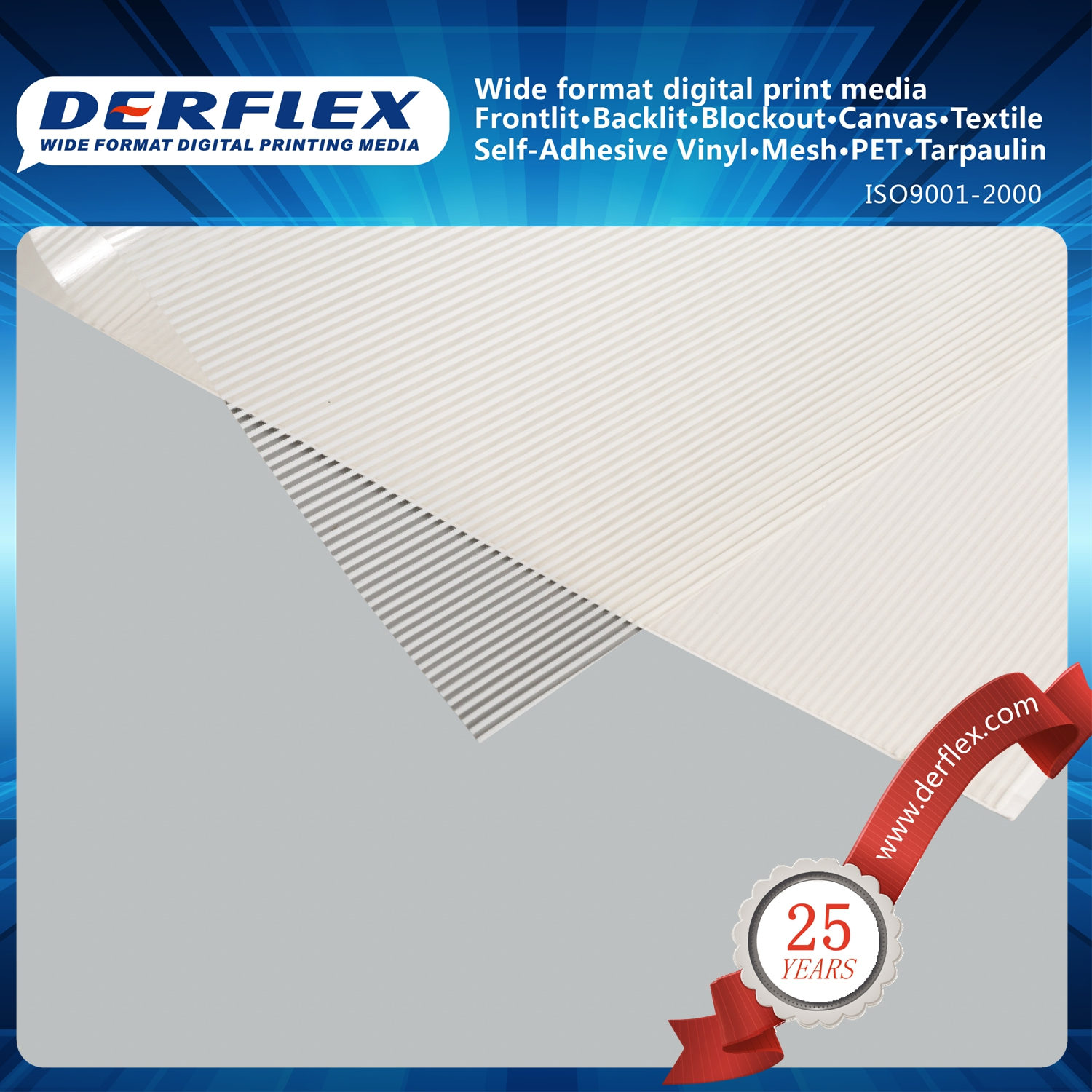
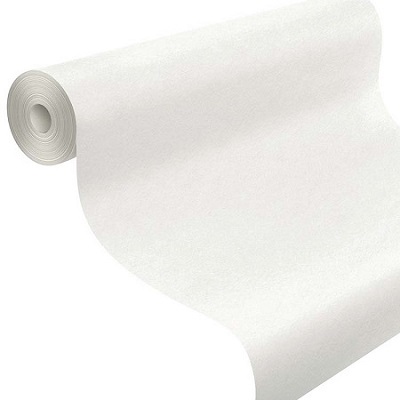
If the intended product is a wallcovering, review the wallpaper roll material constructions. For glazing or privacy work, compare the relevant PVC window-film options. Similar-looking surfaces can have different backing and installation requirements.
Build the specification around your converting line
There is no single gauge or roll width that suits every embossed PVC film request. Base-film capability and embossing capability must be checked together. A range published for calendered PVC film should not be treated as a guaranteed range for a particular embossed surface.
On small screens, swipe the table horizontally to read all columns.
| Specification | What to define | Approval check |
|---|---|---|
| Construction | Flexible PVC film; identify any backing, adhesive or other layer separately. | Review the face and reverse of the actual sample. |
| Texture | Master sample, pattern direction, repeat dimensions if relevant, and which side is embossed. | Agree the pattern reference and acceptable appearance. |
| Thickness / gauge | Nominal thickness in mm or µm and required tolerance. | Agree how textured areas are measured; relief can affect a gauge reading. |
| Width | Total roll width, usable width and required edge condition. | Check the actual texture coverage and trimming allowance. |
| Color / optics | Physical color standard; clear, translucent or opaque appearance. | Review gloss, haze and color on the selected formulation. |
| Softness | Handling sample and the bend, drape or stiffness needed in the finished part. | Trial cutting, forming and assembly on the proposed film. |
| Roll format | Length, core, winding face, roll-weight limit, splice policy and labeling. | Check unwinding and storage against your equipment. |
For a product that needs to bend, drape or roll up, the flexible PVC film construction is part of the decision. Selecting a surface name alone will not define the handling behavior.
How a textured surface is formed
In mechanical film embossing, a patterned roll transfers relief to the PVC surface under controlled process conditions. Film condition, tooling geometry, pressure, cooling and web handling influence the result. The practical task is to reproduce the approved surface without creating unacceptable distortion or handling problems.
Existing texture or new tooling?
Begin by comparing the reference with available textures. If a new tool is needed, agree feasibility, development scope, sample stages and commercial terms before committing to it. A drawing of a pattern is not proof that it can be reproduced on the selected film.
Uniform texture or registered texture?
A general emboss can run across the surface independently of a printed image. An emboss that must align with specific artwork needs a separate review of registration and repeat geometry. Include that requirement in the initial brief.
Choose the texture for the finished product
Different buyers use textured vinyl sheet for different reasons. Establish the assembly and service conditions before choosing a surface. A decorative effect, a printable face and a weldable film need different approval checks.
Each application below is a selection task; grade suitability must be established on the proposed sample.
| Buyer / product | Priority | Trial before approval |
|---|---|---|
| Stationery and cover converters | Hand feel, repeated folding and visible face quality. | Cut, crease and assemble a representative finished part. |
| Pouches and flexible covers | Flexibility, seam appearance and surface behavior during assembly. | Test the actual weld or sewn construction and inspect around the seam. |
| Decorative laminate producers | Face appearance after bonding and compatibility with the substrate. | Laminate with the intended adhesive and evaluate after the agreed conditioning period. |
| Print and display converters | Ink contact, visual detail and surface uniformity. | Print the actual artwork; check adhesion and appearance with the chosen ink system. |
Where visibility matters more than a tactile finish, compare clear PVC film rolls. Where the intended product is a pool membrane, use a dedicated PVC pool-liner specification rather than transferring properties from a decorative film.
A practical route from reference to repeat order
Use a staged approval plan for custom textured PVC film. The following sequence is a purchasing framework to agree with DERFLEX for the selected project.
- STEP 01
Define the finished use
Share a product photograph or drawing, quantity, market and processing route. Identify the visible face and what the surface must achieve.
- STEP 02
Review film and texture together
Compare the physical reference with the proposed film and available tooling. Separate essential requirements from appearance preferences.
- STEP 03
Agree the development scope
Record whether existing tooling or a new pattern is proposed. Confirm trial quantities, charges, ownership terms where relevant and the review schedule.
- STEP 04
Evaluate a representative sample
Check face, reverse, gauge, usable width, gloss and handling. Preserve the accepted physical reference and its identification.
- STEP 05
Run the converting trial
Use the intended ink, adhesive, substrate or welding equipment. Review the finished assembly after processing rather than approving only the loose film.
- STEP 06
Release the order specification
Sign off the material, sample reference, tolerances, packing and acceptance criteria. Refer to that same version when discussing repeat orders.
Check the texture after the work is done
Face quality and repeatability
Agree the lighting and viewing conditions for appearance checks. Look for uneven relief, gloss variation, directional differences and visible marks. For repeat orders, compare against the retained master rather than a screen image.
Define a simple defect record: the roll identification, the location along or across the roll, a photograph and whether the issue affects usable material. Set acceptance limits in the order documents.
Processing and service conditions
Assess how the face looks after heat, pressure, bonding or assembly. Check any flattening, distortion, print variation or unintended marking against the finished product requirements.
If a claim such as outdoor durability, flame behavior or slip resistance matters to the purchase, request evidence tied to the exact material and use conditions. An attractive texture does not establish those properties.
Send a brief that makes the quotation useful
Material and sample information
- Finished application and a photograph or drawing.
- Physical texture reference, face side and roll direction.
- Thickness, usable width, color and handling preference.
- Printing, welding, lamination or other converting details.
Order and delivery information
- Trial quantity, initial order and expected repeat demand.
- Required roll length, core and handling limits.
- Destination, required documents and target schedule.
- Appearance approval, testing and acceptance requirements.
Price depends on the film formulation, material usage, texture tooling, trial work, order quantity and packaging. Ask for development charges and bulk-roll pricing to be identified separately where they apply. Confirm the minimum order and delivery plan against the chosen specification.
Embossed PVC film rolls: frequently asked questions
Is textured vinyl sheet the same as embossed PVC film?
Vinyl commonly refers to PVC in this context, but textured describes an appearance or feel rather than a complete specification. Confirm that the requested product has physical surface relief, then specify its backing, thickness, softness and intended processing.
Can I request a texture based on my own sample?
Send a physical reference, a close-up photograph with a scale, the intended width and the finished application. DERFLEX can review the request against its film range. Existing-pattern availability, new tooling feasibility, development cost and approval stages must be agreed before an order.
Will an embossed surface match a printed design?
Ordinary surface embossing and print registration are separate requirements. A general texture does not automatically follow a printed woodgrain or other image. If alignment is essential, submit the artwork and repeat dimensions for a specific feasibility review.
Can textured PVC film be printed, welded or laminated?
The selected formulation, surface and construction must be evaluated with the intended equipment. Trial the actual ink, adhesive or welding method on the proposed film, and examine both the bond or seam and the appearance of the textured face after processing.
Does a raised texture make the film anti-slip?
A visible or tactile pattern alone does not establish slip resistance. A walking surface, wet area or other safety-related use needs evidence for the exact grade and intended conditions. No slip classification is claimed for the reference photographs on this page.
What determines MOQ, price and delivery time?
The chosen film, usable width, color, available texture tooling, trial work, quantity and roll packaging all affect the quotation. New tooling and sample approval can add separate stages. Request a written quotation against the agreed specification and required delivery plan.
Turn your texture reference into a clear roll specification
Send DERFLEX your sample or close-up reference, finished application, thickness, usable width and order quantity. Start with the surface and converting requirements so the material review addresses the product you intend to make.