



Coated fabric · OEM roll supply
PVC & TPU Water Tank Fabric
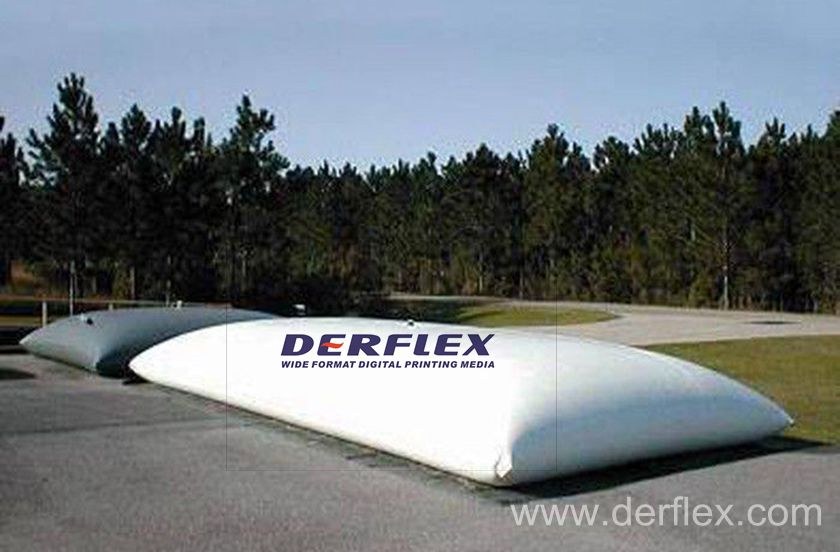
Source reinforced, weldable fabric for flexible water tanks, pillow tanks and water bladders. DERFLEX helps tank manufacturers and OEM buyers match PVC or TPU construction to the water type, tank design and welding process.
Start with your application, drawing or current fabric sample.
- PVC & TPU options
- Custom roll specifications
- Fabricator & OEM sourcing
01 / Choose the construction
Two material routes. One application brief.
Water tank fabric is a reinforced textile with a liquid-retaining polymer coating. The textile carries mechanical loads; the coating forms the barrier and welding surface. A successful tank depends on the interaction between that fabric, the welded joints and the fittings.
Choose PVC or TPU by the actual service conditions. A higher fabric weight alone does not establish a stronger finished tank, and a change of coating chemistry does not automatically validate an existing seam design.
| Decision point | PVC coated fabric | TPU coated fabric |
|---|---|---|
| Reinforced structure | Polyester reinforcement with PVC coating for water-containment fabrication. | Polyester or nylon reinforcement with thermoplastic polyurethane coating. |
| Starting application | General water storage, agricultural tanks and industrial fabricator programs. | Specialized water bladders where folding behavior, flexibility or abrasion performance drives selection. |
| Processing decision | Match coating and surface finish to the established welding line. | Match TPU grade, coating side and thickness to the available welding equipment. |
| Exposure review | Specify sunlight, temperature, handling and cleaning conditions. | Also identify prolonged wet exposure and any hydrolysis-resistance requirement. |
| Commercial evaluation | Compare material cost, cutting yield and qualified seam production. | Compare the required performance benefit with material cost and processing changes. |
| Water-contact status | Potable-water suitability is grade-specific. Review the exact formulation and supporting documentation for the destination market. | |
On smaller screens, scroll the comparison horizontally.
Explore the TPU water tank fabric range or DERFLEX’s existing PVC water tank fabric reference for material-specific context.
02 / Define the roll specification
Specify the fabric your tank actually needs
Begin with the filled shape, working water depth and deployment cycle. Then agree the roll construction and acceptance criteria. A fabric specification is a purchasing document; tank capacity is an assembly-design outcome.
What is inside the material?
Schematic · layer thicknesses are not to scale.
Coating arrangement and finishes are selected by construction. Do not assume both faces have identical properties.
Roll supply built around fabrication
DERFLEX offers PVC and TPU coated fabric directions with project-based choices of reinforcement, coating arrangement, weight, thickness, width, color and finish. Share an existing approved sample when you need a replacement material.
Specify the usable width required by the cutting plan, along with roll length, core and packing preferences. A nominally wider roll only helps when it improves panel nesting or reduces necessary joins.
For projects involving liners supported by a rigid tank, see the separate industrial tank liner fabric selection route.
| Specification field | Include in your brief | Why it changes the selection |
|---|---|---|
| Water and service | Potable or non-potable; composition, contact time, cleaning agents and temperature. | Defines the liquid-contact and exposure requirements. |
| Tank and reinforcement | Drawing, filled height, panel orientation, base textile and any existing denier/weave specification. | Connects fabric behavior with the actual load path. |
| Mass and thickness | Target g/m² and mm, tolerance, and the approved reference sample or grade. | Controls repeat supply without treating weight as a substitute for performance. |
| Width and finish | Usable roll width, length, color, coating faces and any surface treatment. | Affects cutting yield, weld contact and handling. |
| Acceptance evidence | Agreed test methods, direction, conditioning, limits and lot identification. | Makes samples and production rolls comparable. |
Do not convert GSM directly into thickness. They measure different properties. Likewise, a fabric tensile result does not establish a finished-tank pressure or capacity rating.
03 / Match the operating conditions
Select for the way the tank will be used
The same water volume can involve very different stresses in a shallow pillow tank, a tall supported liner or a repeatedly folded field bladder.
Outdoor, seasonal service
Start with a reinforced PVC construction for review. Specify exposure, ground protection, contact duration and storage practice. Evaluate TPU if a defined folding or handling requirement calls for another construction.
Repeated packing and deployment
Compare qualified PVC and TPU samples for the intended fold pattern, abrasion points and low-temperature handling. Include the empty-tank packing method rather than considering filled performance alone.
Service-specific liquid contact
Identify sediment, contaminants and cleaning chemistry before choosing a coating. A general water-storage fabric should not be extended to fuel or chemical duty without separate compatibility evidence.
Documentation before approval
State whether the water is for drinking, washing or fire-water reserve. Drinking-water programs require a qualified contact surface and documented system requirements; review potable-water material considerations.
For an accessible upper opening and separate tank-support requirements, review open-top flexible water tanks.
04 / See the material & application
Real fabric. Real containment formats.
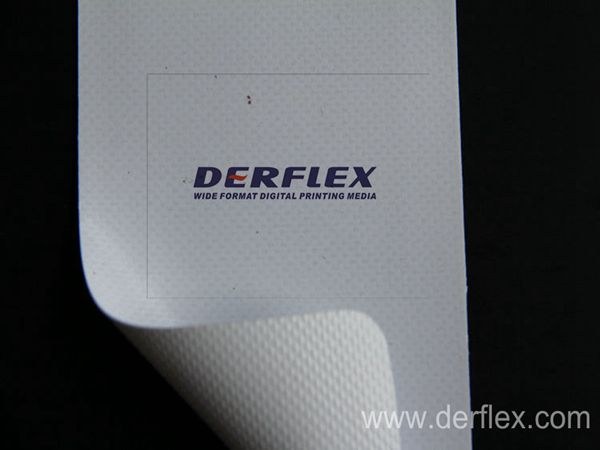
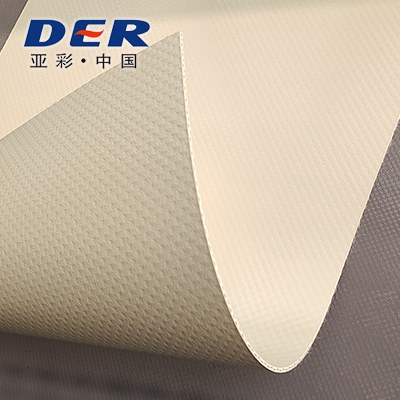
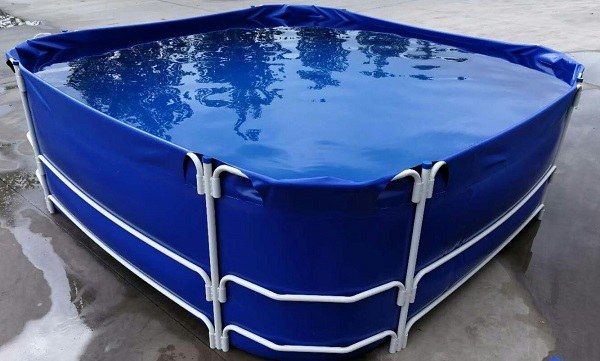
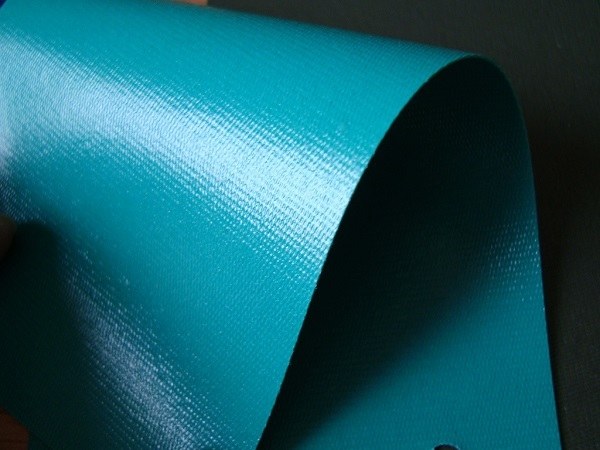
DERFLEX material and application references show coating surfaces, reinforcement texture and a supported tank format. Photographs identify the product direction; they do not establish a test result or potable-water approval.
05 / Qualify before bulk conversion
Approve the roll, the seam and the tank separately
A waterproof fabric coupon is one piece of evidence. Production approval should also address the weld and the complete tank, using the intended materials, equipment and working conditions.
Agree the material reference
Record the grade, faces, thickness, weight and usable width. Define tensile, tear, adhesion and barrier checks with the required methods, directions and acceptance limits.
Run representative weld trials
Use production equipment and the intended overlap geometry. Examine seam strength, liquid tightness and any failure through coating separation or reinforcement damage. Welding settings are specific to the material and machine.
Validate a pilot assembly
Include corners, junctions, fittings and local reinforcements. Establish a controlled filling and inspection plan at the design’s working conditions; do not derive an assembly rating from a fabric value.
Keep the approved build traceable
Retain the sample, roll identification, agreed specification and seam record. Reassess the process when the coating, textile, finish or welding line changes.
06 / Before you order
Make the supply scope clear
For fabric rolls
Send the water application, tank drawing or current sample, welding method, quantity and delivery country. Include any required document scope and the agreed test criteria. DERFLEX can review the PVC or TPU roll specification for the proposed conversion process.
Price depends on formulation, reinforcement, thickness, width utilization, finish, quantity and documentation. Compare quotations against the same accepted construction and delivery terms.
For finished tanks
Specify a finished assembly request and include working capacity, available footprint, filled height, inlets, outlets and support arrangement. See the separate flexible water tank range; a roll-goods quote does not automatically include valves, a frame or a complete tank.
For operation, plan ground protection, compatible cleaning and drying before folding. Avoid dragging the empty tank across sharp surfaces or adding lifting points without a reviewed design.
07 / Buyer questions
Water tank fabric FAQ
Should I choose PVC or TPU water tank fabric?
Start with the water type, tank geometry, operating environment and fabrication process. PVC coated polyester is a practical direction for many general water-storage programs. TPU coated polyester or nylon can be evaluated for specific folding, flexibility or abrasion needs. Compare qualified samples and seams under the same conditions before approving a material.
What GSM or thickness does my water tank need?
There is no universal GSM or thickness for every tank capacity. Filled height, panel geometry, reinforcement, seam design, fittings and handling all affect the specification. Provide a tank drawing and service conditions, or send your current fabric sample and technical requirements for a comparable construction.
Are PVC and TPU tank fabrics suitable for drinking water?
Only an appropriately qualified formulation should be considered for potable-water service. Ask for documentation covering the exact liquid-contact grade and destination requirements, then review seams, fittings and the assembled tank. A waterproof surface or the name PVC or TPU alone does not establish drinking-water suitability.
Can the fabric be HF or hot-air welded?
HF/RF and hot-air welding are possible fabrication directions for selected PVC and TPU constructions. The selected coating, surface treatment, thickness and equipment must work together. Establish settings using representative coupons and verify seam strength and liquid tightness before tank production.
What affects price, MOQ and lead time?
The coating formulation, reinforcement, thickness, usable roll width, color, finish, order size and required documentation affect the quotation. Ask DERFLEX to quote against one agreed specification, quantity and destination. MOQ, sample arrangements and production timing are confirmed with the individual offer.
Do you supply fabric rolls or complete water tanks?
This page focuses on PVC and TPU coated fabric roll supply for tank manufacturers and OEM buyers. DERFLEX also has a separate flexible-water-tank product range. If you need a finished tank, specify that scope together with usable capacity, footprint and connection layout so the quotation covers the correct deliverable.
Your next step
Tell us about the tank you are making.
Share your application, drawing or current fabric sample. We will help identify the PVC or TPU construction to evaluate and prepare a project-specific roll quotation.
A short brief is enough to start
- What water will be stored?
- What tank are you making, and how will it be welded?
- How much fabric do you need, and where will it be delivered?
Not sure about the fabric specification? Include an application photo or sketch in your inquiry.
Product: PVC / TPU water tank fabric rolls
Application and water type:
Tank drawing, working capacity and filled height:
Current fabric sample or target specification:
Welding method and usable roll width:
Quantity, destination and required documents: