



Large Waterproof
Cover Fabric
PVC-coated polyester fabric for large industrial covers, outdoor storage protection and custom tarp fabrication. Source the material around the cover you need to build.
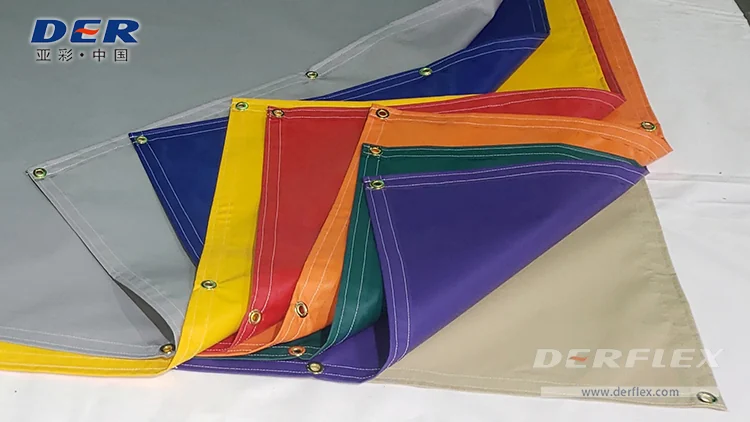
Waterproof material. A cover built around its use.
Large waterproof cover fabric is a reinforced textile converted into broad protective sheets or fitted covers. In PVC-coated polyester, the woven base provides reinforcement while the PVC surface creates the water barrier and a surface suitable for compatible welding processes.
DERFLEX supplies PVC tarpaulin materials for professional conversion. Specify the finished application first: a cover removed daily needs a different handling balance from a seasonal enclosure or a fitted machinery hood.
Choose the supply format
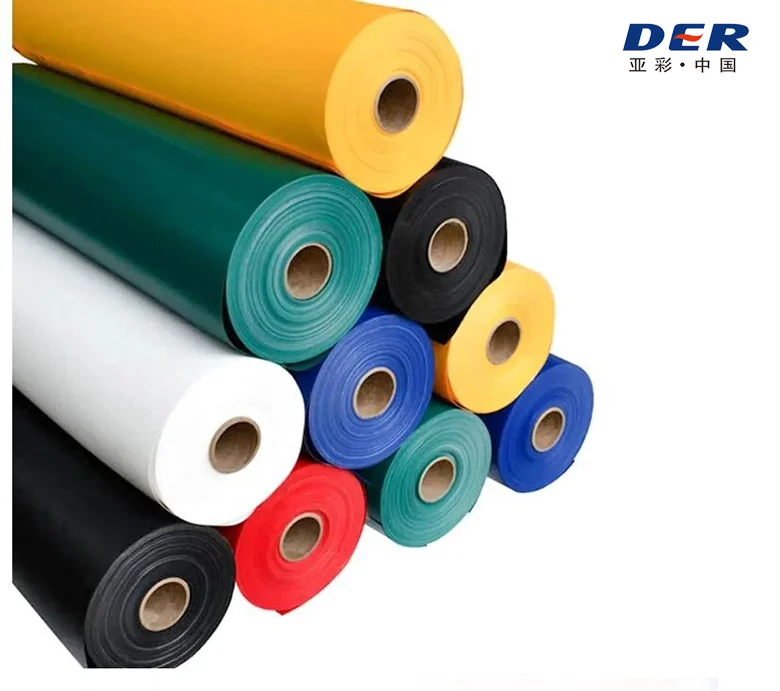
Fabric rolls: for buyers handling cutting, welding and finishing in their own workshop. Compare tarpaulin roll supply by usable width and conversion needs.
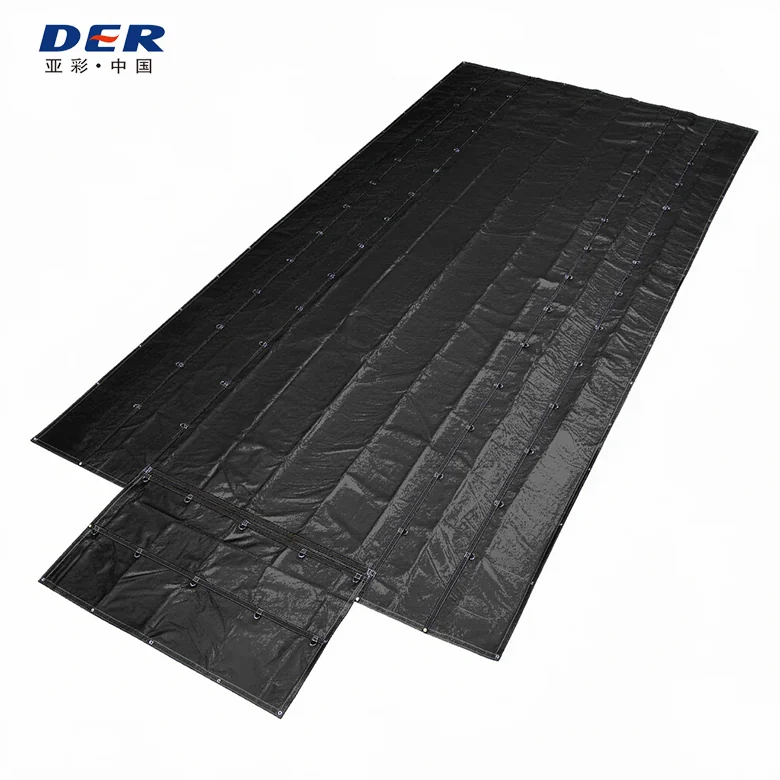
Cut panels or custom covers: define the drawing, finished dimensions, seams and hardware separately. See made-to-measure tarpaulin options. Frames, installation and structural design require their own scope.
The water barrier continues through the details. A waterproof material surface does not automatically make a finished cover leak-proof. Seams, stitched areas, penetrations and drainage paths need to be resolved together. Read the PVC tarp waterproofing guide for the distinction.
| Item | Sourcing direction | What to specify |
|---|---|---|
| Construction | Polyester reinforcement with PVC coating or a laminated PVC layer | Confirm the production route, base cloth and sample for your application. |
| Fabric mass | Published DERFLEX PVC tarpaulin range: 350–1100 g/m² | Select a specific construction and tolerance; this range is not a strength rating. |
| Roll width | Published typical range: 1.02–3.20 m; wider options require review | Usable width, roll length, panel layout and seam allowances. |
| Color & surface | Color, matte or gloss, and application-specific finishes | Approved reference sample, coated sides and any printing or cleaning requirements. |
| Outdoor performance | UV, cold-flexibility or flame-retardant options by selected grade | Exposure conditions, required method and grade-specific supporting documents. |
| Finished cover | Drawing-based panels, hems, reinforcement and fastening details | Finished dimensions, tolerances, openings and agreed inspection criteria. |
Ranges above come from DERFLEX’s published PVC tarpaulin information. Availability and measured performance depend on the selected construction; request its current data before approval.
What will your large cover protect?
The application determines which failure risks deserve attention. Use the cover’s geometry and working conditions to narrow the material brief.
| Application | Prioritize | Resolve before fabrication |
|---|---|---|
| Outdoor machinery | Abrasion zones, access, repeated removal | Pad sharp edges; position openings and ventilation around the equipment. |
| Pallets & stored goods | Coverage, side drop, moisture management | Check stacking geometry and clearance; avoid trapping moisture beneath the sheet. |
| Farm equipment & seasonal storage | Outdoor exposure, folding, handling | Define the storage period, contact surfaces and deployment method. |
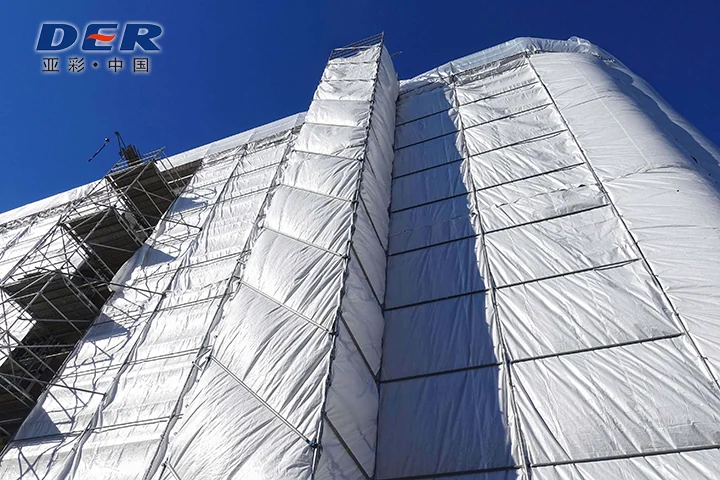
| Construction protection | Panel joints, attachment and rain runoff | Review support and fixing with the responsible site team; material data is not an assembly wind rating. |
| Transport cover programs | Edge reinforcement, wear, fastening layout | Separate cover retention from cargo restraint and confirm the vehicle-specific drawing. |
For more specific geometry and moisture considerations, explore custom equipment covers or outdoor storage tarps.
See the material and the fabrication details.
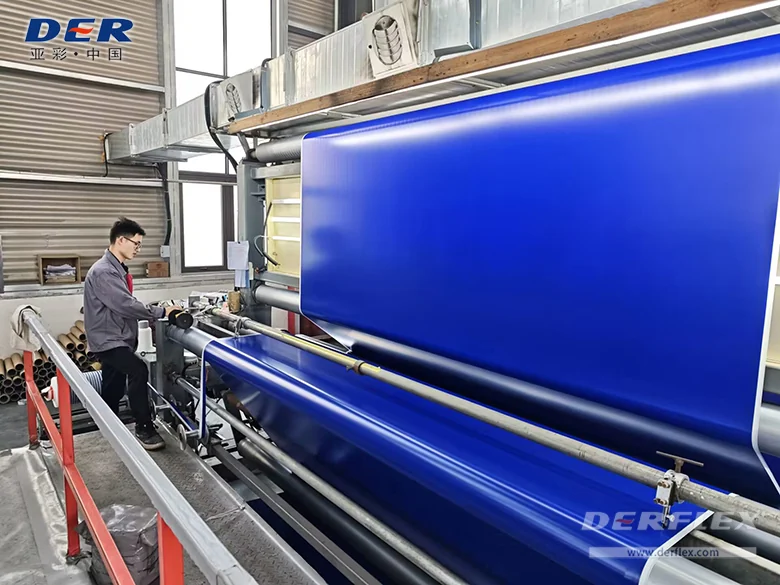
Plan the width, seams and handling together.
“Large” is a fabrication and logistics question as well as a size. A wider fabric can reduce some joins, while a manageable panel plan can make deployment and replacement easier.
- 01 / Finished geometry
Measure the covered object.
Provide top length and width, each side drop, overlap and fixing locations. Distinguish finished dimensions from cut sizes. Add photos of corners, projections and access points.
- 02 / Panel layout
Allow for seams and edges.
Usable width is less than a simple multiplication of roll widths once weld overlap and finishing are included. Review seam positions, runoff direction and wear zones before cutting.
- 03 / Conversion trial
Check the selected sample.
Evaluate a representative seam on your equipment. Coating, finish and processing conditions affect the joint; welding settings should come from a validated trial with the actual fabric.
- 04 / Deployment
Design for real handling.
Review total mass, fold or roll packaging, access and lifting arrangements. Large panels may need a different deployment plan from several smaller replaceable sections.
Estimate fabric mass before choosing a grade.
Fabric mass (kg) = length (m) × width (m) × GSM ÷ 1000.
Illustrative fabric-only estimate for a rectangular panel. The default 650 g/m² is a calculation input, not a grade recommendation. Excludes overlaps, hems, reinforcements, hardware, packing and retained water; this is not a handling-capacity calculation.
Approve what matters for your cover.
Match the evidence to the grade
Ask for the selected fabric’s current mass, thickness, base construction and usable width. When strength or exposure performance matters, compare results using the same method and conditions, including warp and weft directions where applicable.
A flame-retardant option needs documentation for the agreed material and requirement. UV test hours do not directly establish a fixed outdoor service life.
Make repeat orders easier to inspect
Agree a reference sample, color, surface finish, roll labeling and acceptance points. For fabricated pieces, include finished dimensions, seam appearance, reinforcement positions and the water-resistance check appropriate to the finished design.
Review DERFLEX’s coated-fabric quality control information and specify which records you need with your order.
A clear brief produces a more useful quotation.
Send these essentials
- Application, exposure and contact surfaces
- Finished dimensions, sketch or reference photos
- Rolls, panels or finished covers; expected quantity
- Color, surface finish, openings and reinforcement
- Destination, required documents and planned date
Unsure about GSM or base cloth? Start with the object, working conditions and handling method. Those details are more useful than selecting a weight without context.
Understand the quotation scope
Material construction, usable width and nesting affect fabric consumption. Welding length, edges, hardware, packaging and order size affect conversion and delivery costs.
Request a quotation against an agreed specification. MOQ, sample charges, production timing, payment terms and delivery terms are confirmed for that request.
Before deployment: plan slope and drainage, protect sharp contact points, and keep the underside ventilated where moisture-sensitive goods require it. Inspect seams and fixing points after handling, clean with a method suitable for the selected coating, and dry the cover before storage.
Large waterproof cover fabric FAQ
What is large waterproof cover fabric?
Large waterproof cover fabric is reinforced, coated material used to fabricate broad protective sheets or fitted covers. PVC-coated polyester combines a woven reinforcement with a waterproof surface. The final cover also needs suitable seams, edges, openings and drainage.
Can the finished cover be wider than the fabric roll?
Yes. Compatible PVC-coated panels can be welded into a larger cover. Finished dimensions depend on usable roll width, seam overlap, edge allowances and layout. A single wide roll reduces some joints, but does not remove the need to review handling and installation.
Which GSM should I choose for a very large cover?
Choose GSM together with base-fabric construction, tensile and tear requirements, abrasion, exposure and handling. A heavier fabric increases total cover mass. Compare samples and grade-specific data before selecting a construction; GSM alone does not establish strength or service life.
Will a waterproof cover prevent condensation?
A waterproof outer surface does not prevent condensation beneath a cover. Temperature changes and trapped moisture can still wet the protected goods. Plan ventilation, clearance and a dry starting condition around the sensitivity of the stored equipment or materials.
Does DERFLEX supply material rolls or finished covers?
DERFLEX supports PVC tarpaulin roll sourcing and custom tarp programs. Request fabric rolls, cut panels or a drawing-based finished cover as separate supply formats. Finished seams, hems, hardware and packaging must be specified in the quotation.
How do I request a quotation or sample?
Send the application, finished dimensions or a sketch, estimated quantity, destination and supply format. Add the intended exposure and any required test documents. DERFLEX can then discuss a material direction, sample requirements and the scope for quotation. MOQ, sample charges and lead time are confirmed for the selected specification.
Send your size. Tell us what it needs to protect.
Talk to DERFLEX about large waterproof cover fabric, roll supply or a custom tarp program. A sketch, quantity and destination are enough to start the discussion.