


 DERFLEX Technical Coated Fabrics
TPU Containment Berm Fabric for Flexible Fuel and Chemical Spill Control Systems
DERFLEX supplies custom TPU containment berm fabric for manufacturers of portable secondary containment berms, spill pads, drive-over work mats, emergency response basins, tank maintenance liners and industrial spill control products that require weldable seams, folding durability and dependable barrier performance.

What Is TPU Containment Berm Fabric?
TPU containment berm fabric is a technical coated textile made by bonding thermoplastic polyurethane to a high-strength polyester or nylon base fabric. The textile base provides tensile strength, tear resistance and dimensional stability, while the TPU layer creates a flexible, weldable and liquid-resistant barrier surface. In spill control products, this fabric can be converted into containment floors, raised side walls, collapsible berms, drip trays, maintenance pads and temporary liquid isolation zones.
Unlike a fuel bladder fabric that mainly holds liquid inside a sealed tank, containment berm fabric works as a secondary protection layer outside the primary container. It must resist folding, dragging, puncture risk, vehicle contact, repeated cleaning, exposure to oil or chemicals and stress at corners or welded wall transitions. DERFLEX develops TPU coated fabric from the final product requirement backward: liquid type, expected exposure time, ground surface, wall height, deployment frequency, welding method, packing size and target market.
Built for Portable Spill Control Products That Must Be Strong, Foldable and Weldable
Flexible deployment
Containment berms are often stored folded and deployed on job sites, service yards, fuel transfer areas or emergency response zones. TPU coated fabric can be engineered for flexible folding without the stiff handling of many rigid containment systems.
Sealed construction
Spill control fabric must become a basin. DERFLEX TPU grades can be selected for hot-air welding, high-frequency welding, heat sealing and reinforced seams so fabricators can create leak-resistant floors, corners and sidewalls.
Field durability
Ground contact, boots, tools, drums, generators, tanks and vehicle maintenance equipment can damage weak materials. TPU fabric can be specified with a heavy base textile and coating thickness to improve abrasion, puncture and tear resistance.
Liquid compatibility focus
Fuel and chemical spill control is not a one-formula market. DERFLEX supports grade selection and sample testing based on diesel, lubricants, hydraulic oil, selected chemicals, cleaning agents and actual exposure conditions.
Reusable product design
Many berms are cleaned, dried, folded and reused. A smooth TPU surface can support practical cleaning, while custom surface finish, color and reinforcement options help manufacturers build higher-value product lines.
OEM consistency
DERFLEX supports custom roll width, roll length, color matching, coating side, private-label packing and repeatable production documentation for spill control product manufacturers and distributors.
Where DERFLEX TPU Containment Berm Fabric Is Used
The same base concept can be engineered into different spill control products. Instead of selling a generic coated fabric, DERFLEX helps buyers select a material direction according to the containment system they plan to fabricate.
Fuel and oil spill containment berms
For diesel transfer points, fuel drums, generator maintenance, lube oil handling, oil-filled equipment, fuel tank service areas and temporary refueling operations.
- Double-side TPU coating options for sealed basin construction.
- Heavy-duty polyester base fabric for dimensional stability.
- Optional bright safety colors or dark industrial colors.
Chemical spill control pads and liners
For selected industrial liquid handling zones, small chemical drum storage, maintenance benches, hose connection areas and temporary isolation of risky work surfaces.
- Compatibility testing recommended before bulk production.
- Smooth surface for easier cleanup and inspection.
- Custom reinforcement for corners, seams and lifting points.
Drive-over and equipment maintenance mats
For vehicles, portable machinery, pumps, compressors, transformers, agricultural machinery and heavy tools that may leak fuel, oil, coolant or hydraulic fluid.
- Abrasion-resistant TPU surface for repeated placement.
- High tear strength base fabric for handling and dragging.
- Material direction available for weldable edge details.
Emergency response and field service kits
For portable containment products used by spill response teams, maintenance contractors, construction sites, mining service crews, logistics fleets and industrial safety suppliers.
- Foldable roll goods for compact product packaging.
- Custom weight selection for reusable or disposable project levels.
- OEM color and logo-ready product development support.
TPU Containment Berm Fabric Specification Guide
The following table is a practical starting point for buyers. Final values should be confirmed by application testing, welding trials, chemical compatibility review, regional compliance requirements and the finished berm design.
| Item | Available Direction | Selection Notes |
|---|---|---|
| Product name | TPU containment berm fabric / TPU spill control fabric / TPU coated fabric for secondary containment | Designed for welded flexible containment products rather than general tarpaulin use. |
| Base textile | Polyester or nylon; common directions include 500D, 840D, 1000D, 1680D and custom woven structures | Polyester is often selected for stability and cost control; nylon can be considered when flexibility and tear performance are priorities. |
| Coating side | Single-side TPU or double-side TPU coating / lamination | Double-side TPU is commonly considered for demanding basin, wall and liner constructions. |
| Total weight | Approx. 450–1500 gsm direction, with lighter and heavier custom grades by project | Higher weight may improve toughness but also affects folding, packing and cost. |
| Thickness | Approx. 0.35–1.50 mm direction | Choose according to containment capacity, deployment frequency, ground conditions and finished product category. |
| Width | Approx. 1.0–3.2 m depending on grade and production arrangement | Wider rolls can reduce seams in large berm floors, but welding equipment and shipping should be considered. |
| Surface finish | Smooth, matte, glossy, embossed, anti-blocking or custom texture | Smooth surfaces help cleaning; textures can improve handling and visual differentiation. |
| Color options | Black, grey, yellow, orange, green, blue and custom project colors | Yellow and orange help safety visibility; black and dark grey are common for industrial oil environments. |
| Processing | HF welding, hot-air welding, heat sealing, cutting, reinforced corner construction | Confirm welding parameters by sample because coating thickness and base textile affect seam behavior. |
| Functional options | Fuel-resistant direction, selected chemical-resistant direction, UV-resistant, cold-flexible, flame-retardant direction by request | Functional claims should be validated by the buyer’s test protocol and local regulatory requirements. |
| Packaging | Roll packing, pallet packing, labels, export cartons and private-label support | DERFLEX can support bulk roll supply for fabricators and OEM spill control product programs. |
How to Choose TPU Fabric for Fuel and Chemical Spill Containment Berms
Start from the contained liquid
The first question is not GSM or price. The first question is: what liquid may contact the fabric, for how long and under what temperature? Diesel, gasoline, lubricating oil, hydraulic oil, coolant, mild acids, alkalis, solvents and cleaning chemicals can require different formulation directions.
- Share liquid name, concentration and exposure time.
- Confirm whether exposure is drip, standing liquid or emergency overflow.
- Request sample testing before finalizing bulk production.
Confirm the berm structure
A flat ground mat, foam-wall berm, bracket-wall berm, inflatable-wall berm and drive-over containment system do not stress the fabric in the same way. Wall transitions, corners, folds, wheel entry points and drain fittings need different reinforcement ideas.
- Provide drawings or photos of the finished containment design.
- Identify corners, grommets, seams, drains and handles.
- Test welding and folding before mass conversion.
Define deployment frequency
Some spill berms are installed semi-permanently under equipment, while others are folded and redeployed many times. Reusable products normally need better abrasion resistance, low-temperature flexibility and anti-blocking surface behavior.
- For repeated field service, choose stronger base fabric and coating.
- For emergency kits, balance compact folding and durability.
- For long-term outdoor use, discuss UV resistance and weathering.
Match welding method to fabric
Even a good material can fail if welding parameters are not matched. DERFLEX helps customers check TPU coating side, total thickness, peel strength direction and seam construction so the finished berm can hold liquid until cleanup.
- Tell us your welding method: HF, hot-air or heat sealing.
- Request trial rolls for seam strength and leak testing.
- Use reinforced patches at high-stress points when needed.
Material for Secondary Containment Products, Not a One-Size-Fits-All Compliance Claim
Fuel and chemical spill control products are often used to support environmental protection, site safety and secondary containment planning. DERFLEX supplies the coated fabric material; final compliance depends on local regulations, containment capacity calculations, finished product construction, operating procedures, inspection records and user responsibility.
Containment capacity
Finished berms should be designed to hold the intended spill volume and additional freeboard where required. Fabric strength, wall height and floor area all affect usable capacity.
Leak path control
The floor, walls, corners and seams must work together. TPU fabric selection should be paired with correct welding, seam overlap, reinforcement and quality inspection.
Inspection and cleaning
Reusable containment systems should be inspected after deployment. Punctures, cuts, seam damage, chemical swelling or hardening should be addressed before reuse.

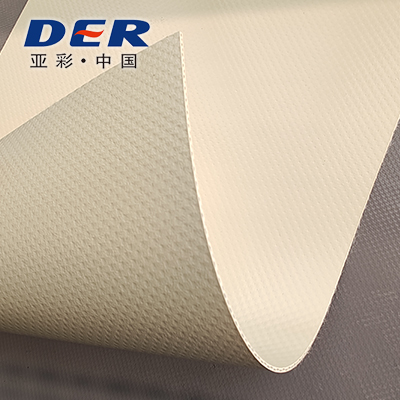
Why Choose TPU for Premium Spill Control Fabric Programs?
TPU coated fabric
Recommended when the finished product requires flexible folding, welded seams, reusable handling, abrasion resistance and a higher-performance material direction for containment systems.
- Good for premium flexible berms and spill pads.
- Supports soft folding and welded structures.
- Custom fuel-resistant and chemical-resistant direction available.
PVC coated fabric
Often selected when cost efficiency and heavy-duty general containment are priorities. PVC is widely used in spill berm products, but may be less preferred for premium PVC-free positioning.
- Broad industrial availability.
- Cost-effective large-area supply.
- Suitable for many standard spill berm designs.
PE / rigid containment
Rigid trays, pallets and molded containment systems are useful for fixed storage points, but flexible coated fabric berms are easier to fold, ship, deploy and customize for large or mobile work zones.
- Good for fixed drum or IBC storage.
- Less compact for field kits.
- Limited custom size flexibility compared with fabric berms.
From Requirement Review to Bulk Roll Supply
DERFLEX supports B2B buyers who need more than a sample. We help convert application requirements into repeatable roll goods that fabricators can weld, cut, fold, package and sell with confidence.
Why Spill Control Product Manufacturers Choose DERFLEX
Coated fabric manufacturing base
DERFLEX has long-term experience in technical coated fabric production, supporting TPU, PVC and specialty coated textile programs for industrial and OEM markets.
Application-based material selection
Instead of pushing a single material, DERFLEX helps buyers compare TPU coated polyester, TPU coated nylon, double-side coating and functional additive directions.
Welding-ready development
Containment berm fabric must be fabricated into a leak-resistant basin. DERFLEX pays attention to coating surface, thickness, peel strength direction and welding compatibility.
Custom roll supply
Custom weight, width, color, finish, coating side, roll length and packaging help converters build stable product lines for distributors, rental fleets and safety equipment brands.
Export project support
DERFLEX serves global markets and can support sample development, bulk production, export packing and communication for long-distance OEM projects.
Material portfolio advantage
Because DERFLEX supplies multiple coated fabric categories, buyers can compare TPU and PVC directions for different price tiers, product uses and market positioning.
6 Relevant Internal Links for TPU Spill Control Fabric Buyers
Explore related DERFLEX material pages that help buyers compare TPU grades, base fabrics and industrial oil / containment material directions.
TPU Containment Berm Fabric FAQs
What is TPU containment berm fabric used for?
It is used to manufacture flexible secondary containment berms, fuel spill pads, chemical spill control mats, maintenance trays, temporary containment floors, drive-over work mats and emergency response containment products.
Is TPU better than PVC for spill containment berms?
TPU is often selected for premium flexible products where folding, weldability, abrasion resistance and softer handling are important. PVC remains a common cost-effective option for many standard berms. The better choice depends on chemical exposure, budget, product life, welding method and market positioning.
Can TPU fabric resist diesel, oil and chemicals?
TPU coated fabric can be customized toward fuel-resistant and selected chemical-resistant performance, but there is no universal fabric for every liquid. Actual liquid compatibility should be tested using the customer’s diesel, oil, chemical, cleaning method, exposure time and working temperature.
Which fabric structure is recommended for reusable containment berms?
Reusable berms normally require a stronger base fabric, double-side coating direction, reliable welding surface, reinforced corners and an abrasion-resistant finish. DERFLEX can recommend a construction after reviewing the finished product design and target service environment.
Can DERFLEX provide bright safety colors?
Yes. DERFLEX can discuss black, grey, yellow, orange, green, blue and custom colors. Safety colors help visibility for temporary containment areas, emergency response kits and field maintenance products.
Can DERFLEX supply finished spill berms?
DERFLEX primarily supports coated fabric material and OEM roll goods. Depending on project details, we can discuss material development, fabric roll supply, conversion support and cooperation for fabricated containment products.
What information is needed for quotation?
Please provide application, liquid type, exposure time, target size, wall height, base fabric preference, GSM or thickness target, color, surface finish, welding method, required tests, annual quantity and packaging requirements.
Need TPU Fabric for Fuel or Chemical Spill Control Products?
Send DERFLEX your liquid type, containment berm design, target fabric weight, coating side, width, color and welding method. Our team will recommend a TPU coated fabric direction for sample testing and bulk roll supply.