



Is PE Tarpaulin Waterproof?
Yes—PE tarpaulin with an intact, continuous polyethylene laminate can keep rain from passing through the sheet. Protection also depends on the finished cover: seams, damaged areas, fixing points and drainage can all create routes for water.
For importers, distributors and cover manufacturers, the useful question is which construction will keep working in the intended conditions. This guide explains what to inspect, how to investigate leaks and what to put in a specification before ordering PE material or finished tarps from DERFLEX.
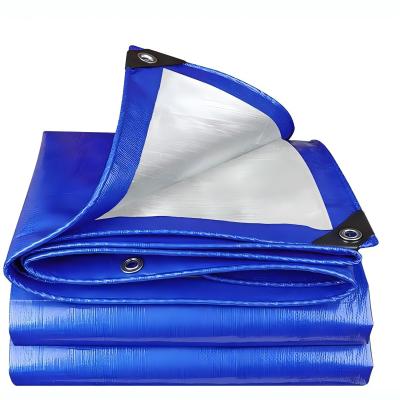
What makes polyethylene tarpaulin waterproof?
A common PE tarp construction combines a woven high-density polyethylene (HDPE) reinforcement with low-density polyethylene (LDPE) lamination on both faces. The weave supports the sheet; the continuous surface layers provide the rain barrier. The same basic construction appears in the UNHCR plastic tarpaulin specification.
Do not judge a cover only by whether water beads on its surface. Beading shows how droplets behave on that surface; it does not establish the condition of every seam or prove resistance to sustained water pressure. Open mesh PE covers serve a different purpose and should not be selected as rain barriers.
Continuous polyethylene barrier
HDPE tapes support the sheet
Polyethylene layer on the other face
Start with the intended exposure, then discuss the DERFLEX PE tarpaulin material range. An uninterrupted rain-facing surface, a suitable join and a workable cover shape belong in the same buying decision.
Why can a waterproof PE tarp still leak?
Investigate the location and timing of the first wet area. The following table is a troubleshooting aid, not a diagnosis from a photograph. Dry the cover and the protected surface before checking one suspected route at a time.
| What you observe | What to check | What to specify next time |
|---|---|---|
| Drops at isolated points | Pinholes, punctures and abrasion where the tarp touches an edge or rough support. | Surface inspection and protection at the actual contact points. |
| A wet line beneath a join | The seam itself, its ends and any stitched or repaired section. | A drawing of seam positions and a check of the finished join. |
| Wetness near eyelets or corners | Rain entering around the perimeter, torn holes or runoff reaching the fixing line. | Coverage allowance, reinforcement and fixing layout. |
| A wet patch beneath a sagging area | Water collecting in a low spot and damage concentrated around that pocket. | A supported shape with drainage; do not rely on extra GSM alone. |
| Moisture underneath without an obvious hole | Condensation, damp contents, edge entry and the timing of rainfall. | Ventilation and storage conditions as well as the tarp specification. |
On a phone, swipe within the table to compare all columns.
Record both sides of the affected area, the seam location and the way the cover is secured. These details are more useful for a supplier discussion than describing the whole sheet as “not waterproof.” For a wider material comparison, read what a waterproof tarp claim actually covers.
Which specifications matter beyond GSM?
GSM is mass per unit area. It helps define a material, but it is not a water-resistance rating. Compare quotations against the same construction, dimensions and acceptance conditions; “heavy duty” on its own leaves too much open to interpretation.
| Specification | Ask the supplier to identify | Why it changes the decision |
|---|---|---|
| Material construction | Woven reinforcement and lamination on each face. | Identifies the water barrier and distinguishes solid sheet from mesh. |
| Weight and dimensions | Nominal GSM, tolerance, roll width or finished dimensions, and measurement method. | Supports consistent comparisons and avoids ordering to cut-size assumptions. |
| Water penetration | Method, pressure, duration, specimen condition and result for the proposed grade. | Makes the performance claim assessable. |
| Joining and edges | Join type, seam locations, hems, reinforcement and eyelet arrangement. | Describes parts of the finished cover a sheet test may not represent. |
| Outdoor exposure | Relevant weathering evidence and intended handling conditions. | Separates initial water resistance from retained performance after use. |
A useful test reference: ISO 1420
ISO 1420:2016 describes water-penetration testing of rubber- or plastics-coated fabrics under specified hydrostatic pressure for a fixed period. Ask a laboratory to select the applicable method and conditions for the proposed construction. Citing the standard is not evidence that a DERFLEX grade has passed it.
A test report should identify what was tested. A result for an unjoined material specimen cannot automatically be extended to every seam, repaired area or installed cover. Keep the approved sample reference and the agreed report requirements attached to the purchase specification.
When is a waterproof poly tarp a sensible choice?
Define the consequence of water getting through, how often the cover moves and whether someone can inspect it. These questions help decide whether a general rain cover is appropriate or a more specific material and fabrication programme is needed.
| Application | Main purchasing priority | Resolve before selection |
|---|---|---|
| Seasonal farm or equipment cover | Coverage, handling weight, exposed edges and outdoor conditions. | Whether ventilation and a raised support are needed to keep contents dry. |
| Construction material protection | Sheet dimensions, contact surfaces and a practical inspection routine. | Sharp corners, abrasion and how runoff leaves the stack. |
| Temporary roof protection | Cover layout, overlaps, drainage and attachment to the actual building. | Site conditions and installation requirements; a tarp is a temporary measure. |
| Repeatedly handled transport cover | Flexing, fixing points, abrasion and finished seam performance. | Whether the proposed PE construction or another coated fabric fits the duty. |
| Pond, tank or retained-water application | A purpose-specified liner and its complete joining arrangement. | Water-contact requirements, support and evidence for retention service. |
Discuss the relevant conditions using our PE agricultural tarpaulin, construction tarp or temporary roof tarp pages as a starting point. An application name does not replace a project specification.
How to check a PE tarpaulin before a bulk order
Use a sample that represents what you are buying. A roll-material swatch helps compare the sheet, while a finished tarp sample can also show the proposed seam, hem, corner and eyelet arrangement. Keep a labelled reference so later discussions concern the same construction.
- Record the sample identity.Note the proposed grade, size, colour, weight specification and date. Photograph both faces, the edges and any joins.
- Inspect the likely weak areas.Look for visible coating gaps, damaged folds, rough cut edges, incomplete joins and distortion around fixing points. Record defects separately from normal surface texture.
- Agree an appropriate water check.A controlled wetting check can help locate an obvious leak. Establish the setup and what counts as failure; do not present a hose demonstration as a laboratory rating.
- Connect approval to production.Write down which material and finishing details the approval covers, how production samples will be selected and what happens if a delivered item differs.
For a formal water-resistance requirement, request a report tied to the proposed material and agreed conditions. If ageing, folding or abrasion is central to the use, discuss whether specimens should be conditioned before the water test. Avoid accepting an unrelated report simply because its cover page contains the word “tarpaulin.”
Drainage, fit and maintenance affect real-world protection
Plan the water route
Arrange the cover so rain can run off rather than collect in unsupported pockets. Position joins and perimeter openings with the expected runoff in mind. Provide enough coverage for the sides and fixing arrangement; measure the object and the intended cover shape before choosing a nominal size.
Keep sharp edges and rough contact surfaces away from the rain barrier. Review the support and attachment method together, because concentrating movement at one corner can damage an otherwise sound sheet.
Inspect after use and weather changes
Check low spots, rub points, seams and eyelets after a significant weather event or a change in installation. Clean and dry the tarp before storage and avoid dragging it over rough ground. Examine older folds when reopening it.
When repairing damage, use a repair system intended for polyethylene and evaluate the repaired area in the actual exposure. Extensive brittle, cracked or peeling areas call for a replacement assessment rather than repeated small patches.
Waterproof does not mean suitable for every wet application. General rain-cover material should not be assumed suitable for drinking water, food contact, chemical containment or permanent immersion. Those uses require their own material and finished-product evidence.
Is PE or PVC tarpaulin better for waterproofing?
Both laminated PE and appropriately coated PVC fabrics can form waterproof sheets. The buying decision should compare specific grades and the finished design. For a frequently moved cover, examine handling weight, flexing, abrasion, seam construction and the repair approach. For occasional protection, focus on the exposure, fit and cost of the complete cover.
Ask for equivalent test conditions before comparing performance numbers. Choosing a polymer name alone does not tell you which finished cover will last longer in your application. The DERFLEX tarp material guide can help you frame that comparison.
Give DERFLEX a specification that can be quoted clearly
DERFLEX supplies PE tarpaulin materials and supports custom tarp enquiries. State whether you need roll stock, cut sheets or finished covers so the quotation defines the proposed supply. For a finished item, ask for the drawing and finishing details to be included in the offer.
Your enquiry brief
- Use and exposure: what is being covered, the outdoor conditions, duration and handling frequency.
- Dimensions and quantity: roll requirements or finished size, plus a sketch of sides, joins and attachment points.
- Material and finish: a sample reference or desired construction, colour, printing and edge details.
- Acceptance and delivery: required tests or documents, packaging, destination and target delivery date.
Compare the complete supply: material consumption, usable width, joins, reinforcement, accessories, inspection and packaging can all affect price. Agree minimum quantity, sample arrangements and production timing for the actual order rather than relying on a generic website estimate.
PE tarpaulin waterproofing FAQ
Is PE tarpaulin waterproof or just water-resistant?
An intact PE tarpaulin with continuous polyethylene lamination can provide a waterproof barrier against rain. The woven base alone does not make the sheet waterproof. The finished cover must also have suitable seams, sound edges and a layout that lets water drain.
Does a higher GSM guarantee a waterproof PE tarp?
No. GSM measures mass per unit area, not resistance to water penetration. A heavier sheet can still leak through a pinhole, damaged coating or poorly made seam. Compare construction and test conditions as well as weight.
Why is there water under my poly tarp when I cannot see a hole?
Possible causes include wind-driven rain entering at an edge, leakage at a join, or condensation forming beneath the cover. Note where moisture first appears and whether it follows rainfall. Check these routes before assuming water is passing through the sheet.
Can a PE tarp hold standing water?
A rain cover should be arranged to drain. A waterproof sheet is not automatically a suitable pond liner or water tank. Water retention requires a grade, seam system, support arrangement and test evidence specified for that purpose.
Can PE tarpaulin seams be made waterproof?
Compatible PE materials can be joined using suitable thermal welding processes. A sound weld can provide a continuous water barrier, but its performance depends on the material and process. Ask for checks on the actual seam construction; stitching alone leaves needle holes.
What should I send DERFLEX for a waterproof tarp quotation?
Send the intended use, outdoor exposure, finished cover dimensions or roll requirements, quantity, destination and any required water-resistance test. For finished tarps, add a sketch showing joins, hems, reinforced areas and eyelet positions. A photo of the item being covered can help define the specification.