


What Is the Best Fabric for Tents?
The right answer depends on tent size, climate, installation frequency, waterproof demand, flame-retardant requirements and expected service life. For commercial tents, event marquees, warehouse shelters and OEM tent manufacturing, PVC coated polyester fabric is often a practical choice because it balances waterproof performance, tear strength, weldability, cleanability and customization.
DERFLEX supplies waterproof tent fabric rolls, reinforced panels and OEM material programs for tent manufacturers, rental companies, shelter contractors, distributors and industrial buyers.
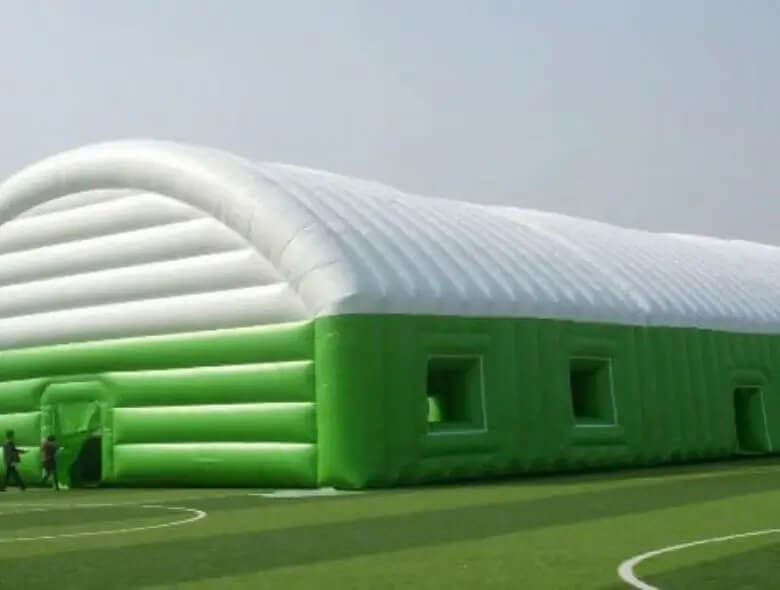
There is no single best tent fabric for every tent.
Backpacking tents, family camping tents, glamping tents, party marquees, warehouse shelters and industrial tents do not use the same fabric logic.
For B2B commercial use, the fabric should be selected by application, not by material name alone.
This is why DERFLEX supplies tent fabric by specification: base fabric, coating weight, surface finish, width, color, flame-retardant option and OEM packing can be aligned with the final tent application.
For commercial tents, DERFLEX recommends evaluating PVC coated polyester first.
PVC coated polyester fabric uses a high-strength polyester base cloth with PVC coating or lamination. It is designed for outdoor rain, sunlight, repeated folding, welding, cleaning, tensioning and fabrication into roof covers, sidewalls, keder systems and shelter membranes.
Compared with lightweight camping fabrics, PVC coated polyester is more suitable when the tent must be larger, stronger, easier to fabricate and more stable for repeated commercial use.
- For event tents and marquees: focus on appearance, flame-retardant options, waterproofing and easy cleaning.
- For warehouse and industrial shelters: focus on tear strength, UV resistance, weldability and long-term outdoor exposure.
- For glamping and hospitality tents: focus on color stability, surface finish, blockout options and comfortable interior conditions.
- For OEM production: focus on repeatable roll quality, custom width, color matching, packing and stable supply.
Common Tent Fabrics and Where They Fit
Different materials perform differently in waterproofing, weight, UV exposure, tear resistance, breathability, flame-retardant treatment, price and fabrication method.
PVC Coated Polyester
A strong choice for commercial tents, marquees, warehouse tents, sidewalls and semi-permanent shelters. It is waterproof, weldable, cleanable and can be customized in weight, color, finish and functional treatment.
Recommended for B2B tent projectsLaminated Vinyl
Frequently used for party tents and event tents where water resistance, smooth appearance and cost control are important. It can be a practical choice for many rental and event applications.
Good for event useNylon / Ripstop Nylon
Often used for lightweight camping and backpacking tents because of its strength-to-weight ratio. It is less suitable for large commercial tents where dimensional stability and long outdoor exposure are critical.
Lightweight camping directionPolyester with PU or Silicone Coating
Common in camping tents and lightweight outdoor shelters. Polyester can resist sagging better than nylon in wet conditions, but coating type and denier strongly affect final performance.
Useful for compact sheltersCanvas / Polycotton
Comfortable and breathable, often chosen for traditional camping or glamping style. It is usually heavier and may need extra treatment for long-term rain resistance and mildew control.
Comfort and classic appearanceClear PVC / Transparent Film
Used for transparent tent windows, clear sidewalls, viewing panels and special event designs. It should be matched with the roof fabric and fabrication method for stable installation.
For windows and clear panelsHow to Choose the Best Fabric for Your Tent Project
For professional buyers, the key question is not only “what fabric is best,” but “which fabric construction fits this tent application and service condition?”
| Project Requirement | Recommended Fabric Direction | Why It Matters |
|---|---|---|
| Event marquee, party tent, exhibition tent | White or custom-color PVC coated polyester | Balances waterproofing, surface appearance, cleaning, weldability and repeated installation needs. |
| Warehouse shelter or industrial tent | Heavy-duty PVC coated polyester with reinforced base fabric | Improves tear resistance, weather resistance and fabrication strength for larger span structures. |
| Glamping tent or hospitality structure | PVC tent membrane with matte, blockout or decorative finish options | Supports better interior comfort, appearance control and brand presentation. |
| Sidewalls, windows and clear tent panels | Transparent PVC film or clear PVC tent material | Creates natural light, visibility and special event design while keeping weather protection. |
| Frequent rental use | Easy-clean PVC coated fabric with anti-mildew and flame-retardant options | Rental tents need repeated folding, cleaning, transport and installation stability. |
| OEM tent production | Custom roll supply with controlled GSM, width, color and finish | Stable specification helps tent factories reduce variation and improve production consistency. |
DERFLEX Tent Fabric Applications
DERFLEX supplies tent fabric for commercial, industrial and outdoor shelter programs where performance and stable supply matter.
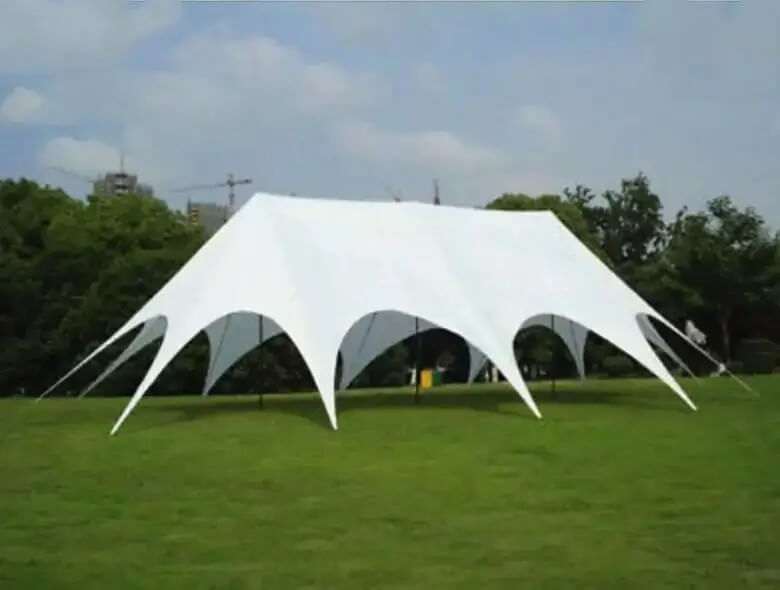
Event Marquees
Roof covers, sidewalls, keder systems and custom event tent programs.
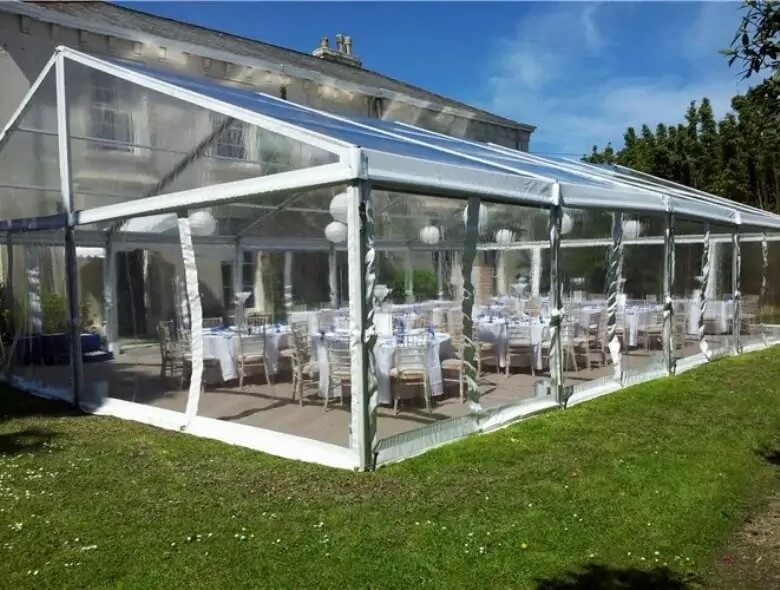
Clear Tent Panels
Transparent windows, panoramic sidewalls and special event structures.
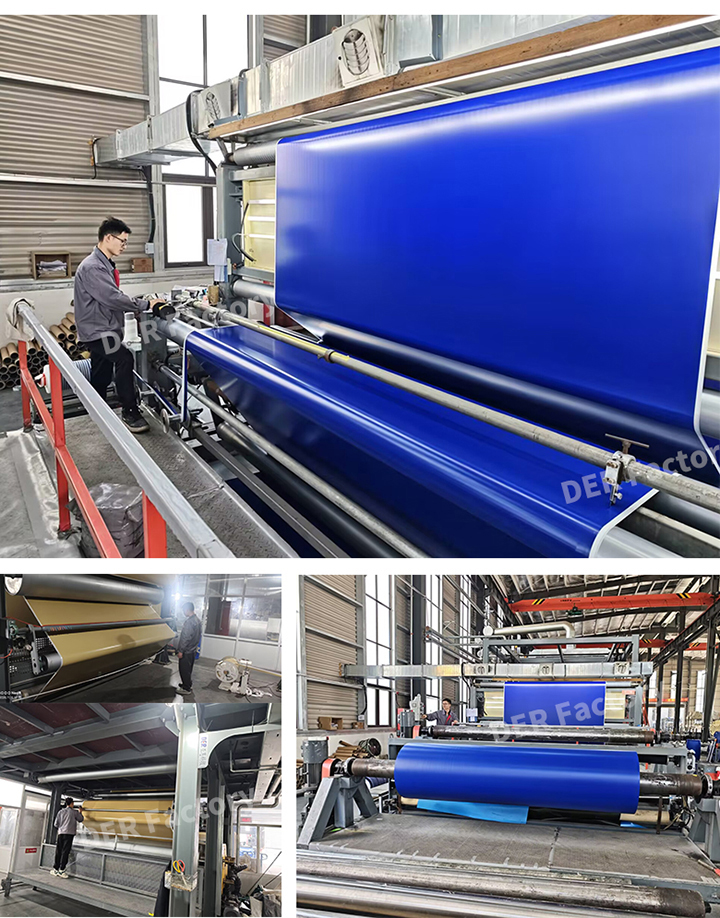
OEM Tent Factories
Roll goods and custom specification support for repeatable production.
Outdoor Shelters
Storage tents, field shelters, carports and agricultural protection covers.
Why PVC Coated Polyester Tent Fabric from DERFLEX
DERFLEX focuses on practical tent manufacturing requirements: waterproof coating, welding behavior, dimensional stability, surface finish, packing and export-ready supply.
Waterproof & Weather Resistant
PVC coated surface helps resist rain penetration and outdoor exposure. Optional UV-resistant and anti-mildew treatments can be selected according to climate and project duration.
Designed for Welding and Fabrication
Suitable for hot-air welding, high-frequency welding, sewing, reinforcement, keder edge work and panel fabrication for professional tent production.
Custom GSM, Width and Surface Finish
DERFLEX can support different weights, roll widths, colors, matte or glossy finish, blockout options, transparent panels and project-specific packing.
For B2B Supply and OEM Programs
Useful for tent manufacturers, distributors, rental brands and contractors who need repeatable specification, stable delivery and material matching across multiple product lines.
Recommended Specification Points for Tent Fabric Buyers
Before requesting a quotation, prepare the following information so DERFLEX can recommend the most suitable tent fabric construction.
Define Tent Type
Event marquee, glamping tent, warehouse tent, sidewall, clear panel, carport or emergency shelter.
Confirm Performance
Waterproof level, flame-retardant requirement, UV exposure, mildew resistance and expected outdoor duration.
Select Fabric Details
GSM, base fabric strength, coating type, surface finish, color, transparency, blockout and roll width.
Plan Fabrication
Hot-air welding, HF welding, sewing, keder edge, reinforced corners, eyelets, packaging and OEM labeling.
Explore Related Tent and Outdoor Fabric Pages
These internal pages help buyers compare tent fabric, tarpaulin, membrane and outdoor shelter materials within the DERFLEX product system.
Need help choosing the right tent fabric?
Send DERFLEX your tent type, target market, fabric weight, width, color, flame-retardant requirement, roll quantity and destination port. Our team can recommend a suitable PVC coated polyester tent fabric specification for sampling or bulk production.
- Roll goods, semi-finished panels and custom OEM supply
- White, ivory, blackout, transparent and custom color options
- Waterproof, UV-resistant, anti-mildew and flame-retardant options
- Suitable for commercial tents, shelters, marquees and fabric structures
Request A Quote
Tell us your application, required GSM, roll width, color, finish, processing method and purchase quantity. DERFLEX will help you match the fabric to real use conditions.
Frequently Asked Questions About Tent Fabric
Practical answers for buyers comparing waterproof tent fabric, commercial tent material and OEM PVC coated polyester fabric.
What is the best fabric for tents?
There is no single best fabric for every tent. For lightweight backpacking tents, nylon or coated polyester may be suitable. For commercial tents, event marquees, warehouse shelters and OEM tent production, PVC coated polyester fabric is often a practical option because it offers waterproofing, weldability, tear resistance, cleanability and customization.
Is PVC coated polyester good for outdoor tents?
Yes. PVC coated polyester is widely used for outdoor commercial tents because it can be waterproof, UV-resistant, easy to clean and suitable for hot-air or high-frequency welding. The exact construction should be selected according to tent size, climate and use frequency.
What GSM tent fabric should I choose?
Light-duty shelters may use lower GSM fabric, while commercial marquees, rental tents and industrial shelters often require heavier material. DERFLEX commonly supports 450–900gsm options and can recommend a structure based on your application.
Is canvas better than PVC tent fabric?
Canvas or polycotton can feel more breathable and traditional, but it is usually heavier and may need more maintenance. PVC coated polyester is often easier to clean and fabricate for commercial tent programs, especially when waterproofing and repeated use are priorities.
Can DERFLEX customize tent fabric?
Yes. DERFLEX can support custom fabric weight, width, color, surface finish, anti-UV treatment, anti-mildew treatment, flame-retardant options, transparent panels, packaging and OEM requirements.
Can PVC tent fabric be welded?
Yes. PVC coated polyester tent fabric is suitable for common fabrication methods such as hot-air welding, high-frequency welding, sewing, reinforcement, keder edge processing and panel assembly.