News
Company News

Coated vs Laminated Tarp: PVC Tarpaulin Comparison & Buyer Guide | DERFLEX

Update:2026/9/28 19:02:31 Views:
PVC Tarpaulin Buyer Comparison

Coated vs Laminated Tarp: Which PVC Tarpaulin Construction Fits Your Application?

Coated and laminated tarps can both be waterproof, weldable and durable, but they are built differently. The better choice depends on duty cycle, abrasion, folding, coating adhesion, surface finish, fabrication method, climate, expected service life and total cost per use.

Buyer rule: do not approve a tarp only because it is called “coated,” “laminated,” “heavy duty,” or a certain GSM. Approve the actual construction, representative sample, fabrication behavior and test criteria that match your failure risks.
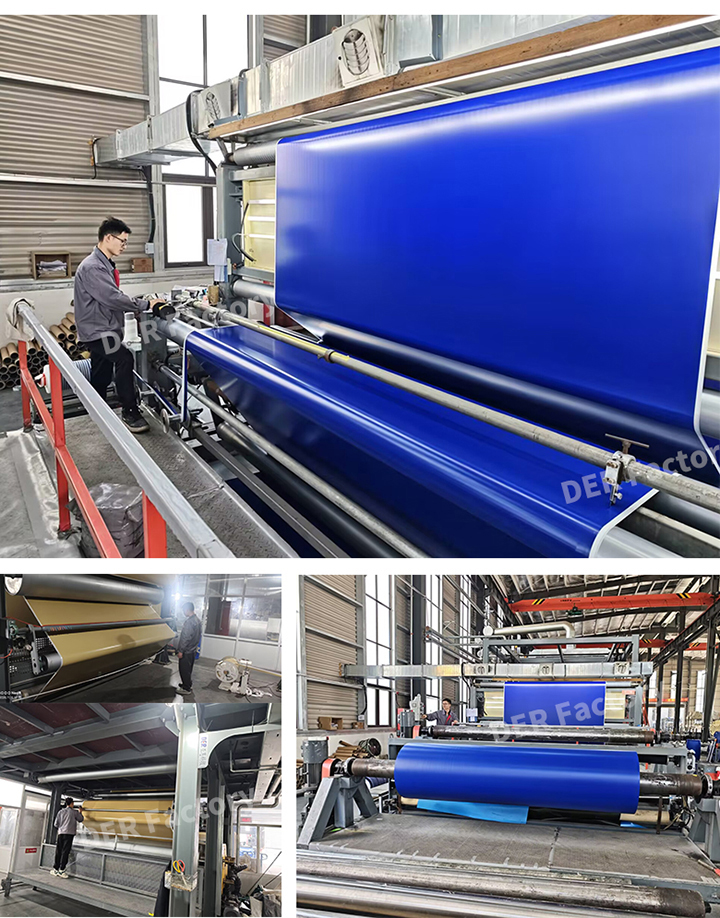
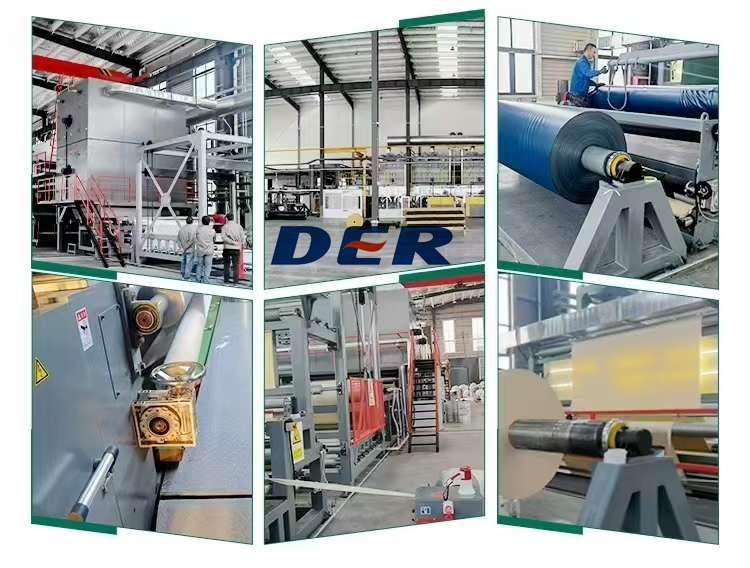
DERFLEX PVC coated fabric production line making blue tarp material
DERFLEX PVC coated fabric production. Coating route, polyester reinforcement, formulation, surface treatment and process control all influence the finished tarp.
Answer First

What is the difference between coated and laminated tarps?

Coated tarp and laminated tarp usually use a reinforced textile core, but the PVC is added differently. In a coated construction, PVC compound is applied directly to the textile and thermally fused into a continuous surface. In a laminated construction, pre-formed PVC films are bonded to the reinforcing scrim. Coated PVC is often a strong starting point for repeated folding, abrasion and demanding outdoor use; laminated PVC can be attractive for lower weight, smooth film surfaces, firmer handling and cost-controlled programs. Neither process is automatically better in every grade.

Frequent handling / abrasion? Start by evaluating a coated PVC construction.
Lower weight / smooth film / cost target? Compare a validated laminated PVC construction.
Safety-critical or long repeat orders? Decide with test data, golden sample and batch controls.
ConstructionDirect coating vs film bonding
PerformanceDepends on full material system
Best decision toolSample + tests + duty cycle
Cost decisionCompare cost per use
Material Anatomy

Coated vs laminated PVC tarp: the construction difference

Both routes can create useful reinforced PVC tarpaulins. The meaningful engineering difference is how the polymer layer is built and joined to the textile reinforcement.

PVC Laminated Tarp

Pre-formed PVC film layers are combined with a polyester scrim using heat, pressure and a compatible bonding interface. The film can create a consistent surface and a construction that is efficient for selected light- to medium-duty, printable or cost-sensitive programs.

PVC Film
Bond / Lamination Interface
Polyester Reinforcement
Bond / Lamination Interface
PVC Film

PVC Coated Tarp

PVC plastisol or another appropriate coating compound is metered directly onto the textile and processed with controlled heat to form and fuse the protective layer. Coated structures are commonly considered when coating adhesion, repeated flexing, abrasion resistance and higher-duty outdoor conversion are important.

Fused PVC Coating
PVC Integrated Around Textile Surface
Polyester Reinforcement
PVC Integrated Around Textile Surface
Fused PVC Coating
Important: a well-engineered laminate can outperform a poorly specified coated fabric. Process name alone does not establish tensile strength, tear resistance, coating adhesion, UV life, weld quality or finished-tarp durability.
Side-by-Side Buyer Review

Coated tarp vs laminated tarp comparison table

Buyer Decision PVC Laminated Tarp PVC Coated Tarp What to Verify Before Ordering
How the PVC is addedPre-formed PVC film is bonded to the textile.PVC coating compound is applied directly and thermally fused.Actual layer structure and production route for the quoted grade.
Typical commercial directionOften used for lighter, medium-duty, printable or cost-controlled constructions.Often used for medium- to heavy-duty, repeated-use and industrial constructions.Do not assume weight class from the process name; check the data sheet.
Repeated folding & flexingCan work well when film and bond are designed for the duty cycle.Common starting point for frequent rolling, folding and handling.Cold-flex, crease behavior and representative-cycle testing.
Abrasion & rubbingSuitable for protected or moderate-contact uses depending on film and finish.Often selected for truck, equipment and repeated-contact service.Abrasion method, top finish and actual contact points.
Coating / layer adhesionDepends strongly on film, bond system, heat, pressure and cooling.Depends on textile preparation, coating formulation and thermal processing.Peel / coating-adhesion test where delamination is a field risk.
Surface consistencyFilm face can offer a controlled, uniform surface for appearance or printing.Surface can be engineered by coating build, lacquer and finishing.Gloss, matte, embossing, print system and cleanability requirements.
Rigidity / handOften firmer, which can help certain bags, panels and shaped products.Often more conformable, depending on formulation and coating build.Approve physical sample; “soft” and “stiff” are not reliable RFQ specifications.
Waterproof barrierCan provide strong barrier performance when film and seams are intact.Can provide strong barrier performance with the correct coating and seam design.Finished tarp seams, welds, holes and hardware are part of waterproof performance.
WeldingMany PVC laminates can be hot-air or HF welded.Many coated PVC grades are widely fabricated by hot-air or HF welding.Surface treatment, formulation, weld settings and seam test on the actual grade.
UV & outdoor weatheringCan be formulated for outdoor use; film and bond quality matter.Commonly specified for long outdoor duty when UV and coating systems are designed for it.UV package, color stability, cold-crack requirement and service environment.
Initial material costOften commercially attractive for defined general-purpose programs.May cost more when higher coating build and functional additives are required.Compare equal construction targets and then calculate cost per service cycle.
Best use-case directionTemporary covers, printing, bags, shaped products, selected shelters and general protection.Truck tarps, industrial covers, high-use tents, side curtains and repeated outdoor protection.Use application stress, not marketing labels, to decide.

Comparison describes common market tendencies, not guaranteed properties of every grade. Final performance depends on polyester scrim, PVC formulation, coating/film weight, bonding, finish, fabrication and production control.

60-Second Decision Matrix

Which is better: coated or laminated tarp?

There is no universal winner. Use the operating environment to choose the starting construction, then approve the exact grade with test data and a production-representative sample.

Start with coated PVC when…

  • The tarp is folded, rolled, tensioned or installed repeatedly.
  • Truck, trailer, industrial or construction use creates abrasion and rubbing.
  • Longer outdoor duty and repeated weather exposure are expected.
  • Welded seams, reinforced hems and attachment hardware will carry recurring loads.
  • Repairability, flexibility and coating-to-textile integration are important.
  • Replacement downtime matters more than the lowest initial material price.

Start with laminated PVC when…

  • The program values lower material weight or controlled initial cost.
  • A consistent film surface is useful for printing, appearance or product handling.
  • The finished item benefits from firmer hand or shape retention.
  • The service is temporary, seasonal or medium duty rather than continuous heavy abrasion.
  • The selected laminate has validated weld, barrier and weather performance for the use case.
  • Shipping, handling or conversion economics favor a film-laminated construction.
Application Decision Table

Recommended starting construction by tarp application

Transport

Truck, trailer & side curtain

Starting direction: coated PVC polyester where repeated flexing, road abrasion, wind loading and tie-down cycles are central. Define scrim strength, abrasion, welds, hems and hardware—not only GSM.

Industrial

Equipment & outdoor covers

Starting direction: coated material for repeated installation, removal, cleaning and contact with edges. A laminated grade can still fit lighter protected environments if the bond and surface are validated.

Temporary Cover

Seasonal & general protection

Starting direction: compare laminated and coated options against actual expected reuse, wind, UV exposure and budget. Avoid over-specifying an expensive construction when the duty cycle is limited.

Tents

Tents, shelters & canopies

Starting direction: choose by panel size, welding, dimensional stability, weathering, appearance and any required flame standard. Coated PVC is common for demanding repeat-use structures; laminated options can fit defined programs.

Print

Printed covers & display

Starting direction: film-laminated surfaces can provide a consistent print face, while printable coated surfaces can also perform well. Test ink adhesion, drying, topcoat compatibility and outdoor exposure.

Agriculture

Farm, storage & large-area covers

Starting direction: choose by UV duration, puncture risk, dragging, chemicals, handling frequency and attachment design. Total lifecycle economics can matter more than initial price per square meter.

Failure-Mode Engineering

Choose the construction by how the tarp is most likely to fail

This is one of the fastest ways to avoid buying a material that looks correct on paper but fails in service. Start with the failure consequence, then specify the property and test that controls it.

Peeling or delamination

Look for: lifting layers after folding, weathering, welding or edge damage. Control: specify coating/lamination adhesion and evaluate peel behavior on the exact grade.

Tear propagation from a puncture

Look for: small cuts growing rapidly near cargo edges, grommets or straps. Control: verify base fabric, tear method, reinforcement layout and load path.

Abrasion through the surface

Look for: rubbing points on truck rails, equipment corners or repeated drag zones. Control: compare abrasion performance, coating build, top finish and local reinforcement.

Cold cracking or stiffening

Look for: cracking on folds, loss of flexibility or brittle behavior at winter temperatures. Control: specify the low-temperature requirement and test representative material.

Weld failure

Look for: seam opening, scorching, weak overlap or inconsistent peel after welding. Control: approve weld parameters on the actual coating/film surface and topcoat.

Grommet or edge pull-out

Look for: fabric tearing around eyelets even when the field fabric remains intact. Control: design hems, webbing, patches and hardware spacing together with the material.

Sample Approval & QC

How to compare coated and laminated tarp samples before bulk production

A professional comparison uses the same application target, test method and fabrication process for both samples. This prevents a lower-cost but lower-spec construction from being mistaken for a better commercial offer.

Freeze the use case

Define application, outdoor exposure, handling frequency, loading, cleaning and replacement expectations.

Freeze the construction

Record coating or lamination route, base cloth, GSM, thickness if controlled, width, color and surface finish.

Test the failure risks

Use tensile, tear, adhesion/peel, abrasion, cold-flex, UV, waterproof or FR tests only where relevant to the project.

Run your fabrication

Cut, weld, sew, print, eyelet and reinforce the material using the same equipment and process intended for production.

Build a finished sample

Evaluate seam geometry, folds, hems, stress points, hardware and handling—not only a flat swatch.

Approve a golden sample

Keep a signed, revision-controlled reference tied to the product code, TDS and acceptable appearance.

Set batch tolerances

Define which measurements are contractual, their test method, unit, permitted tolerance and sampling approach.

Control repeat orders

Keep construction, approved sample, packaging and revision history consistent across reorders.

Useful test framework: DERFLEX’s technical specification guide references ISO 1421 for coated-fabric tensile strength/elongation, ISO 4674-1 for tear resistance, and ISO 2411 for coating adhesion. The purchase order should identify the exact applicable edition, procedure and acceptance value where those properties are critical.
Published DERFLEX Directions

Use published ranges as a sourcing starting point—not as a universal specification

ItemCurrent DERFLEX published directionHow a buyer should use it
PVC laminated tarpaulinCurrent product page publishes 200–650 gsm, 1.02–3.2 m width, 500D / 1000D polyester and glossy / matte / embossed directions.Use only as a starting range. Confirm exact grade, tolerances, base cloth, formulation, test data and current production availability.
PVC coated fabricCurrent DERFLEX coated-fabric page publishes common 350–1200 gsm programs and width options up to 5.10 m for selected structures.Do not assume every coated grade is available at every width/weight combination. Confirm structure and line feasibility.
Tarpaulin reinforcementDERFLEX’s technical specification guide lists common directions including 500D, 840D, 1000D × 1000D and 1300D structures.Denier alone is not strength. Compare yarn, density, weave, tensile and tear data together.

Final composition, width, weight, tolerances, performance values, MOQ, lead time and compliance evidence depend on the confirmed product grade and purchase specification.

Lifecycle Cost

Do not compare coated vs laminated tarp by price per square meter alone

Use cost per service cycle

Lifecycle cost per use = material + fabrication + freight + installation + repair + downtime + replacement ÷ successful service cycles.

A laminated construction with lower initial price can be the better choice when the duty cycle is moderate and planned replacement is acceptable. A higher-spec coated material can make more commercial sense where failure interrupts operations or replacement labor is expensive.

Normalize supplier quotations

Before comparing price, make sure both suppliers quote the same base fabric, nominal GSM, width, surface finish, treatment package, test criteria, roll length, packaging and tolerances. Otherwise the “cheaper” offer may simply be a different construction.

For finished tarps, normalize seam type, hems, webbing, grommets, patches, D-rings, print, packing and dimensional tolerance as well.

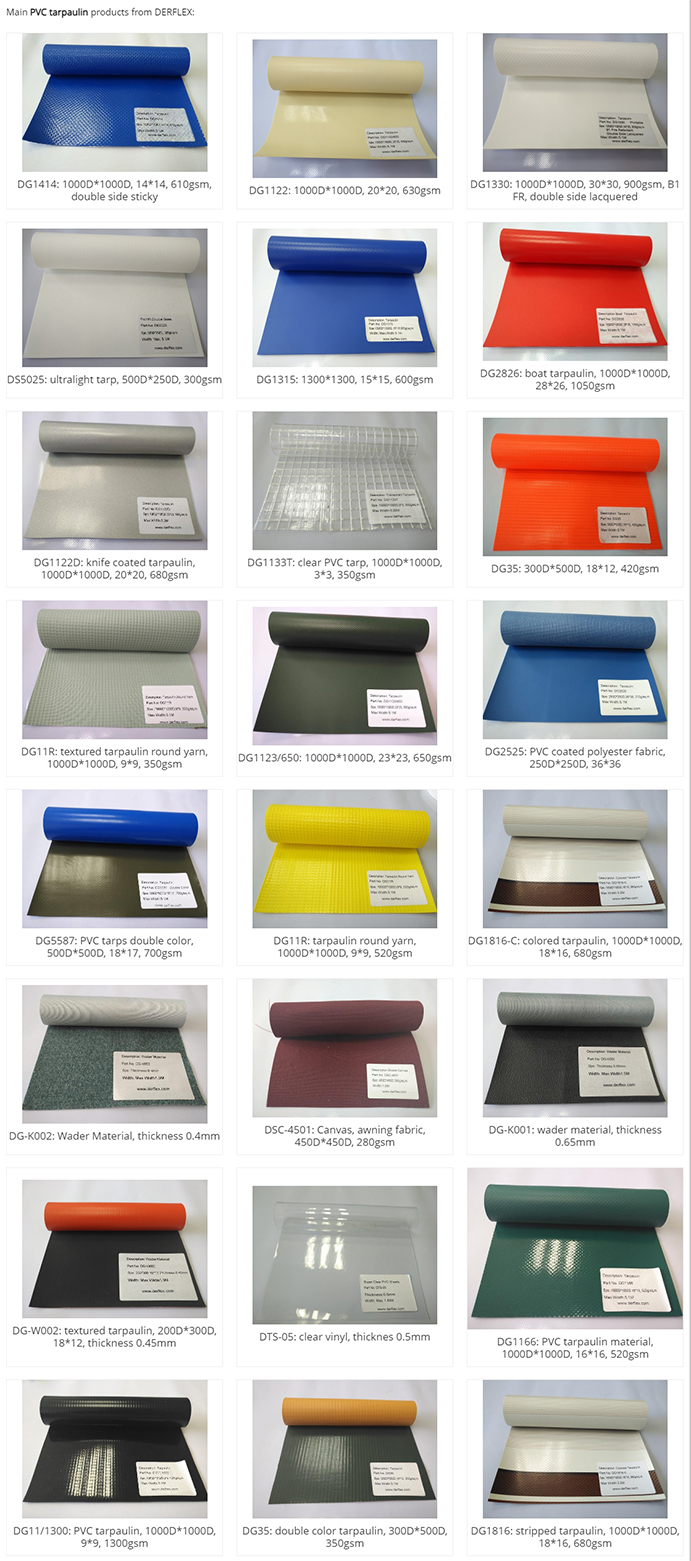
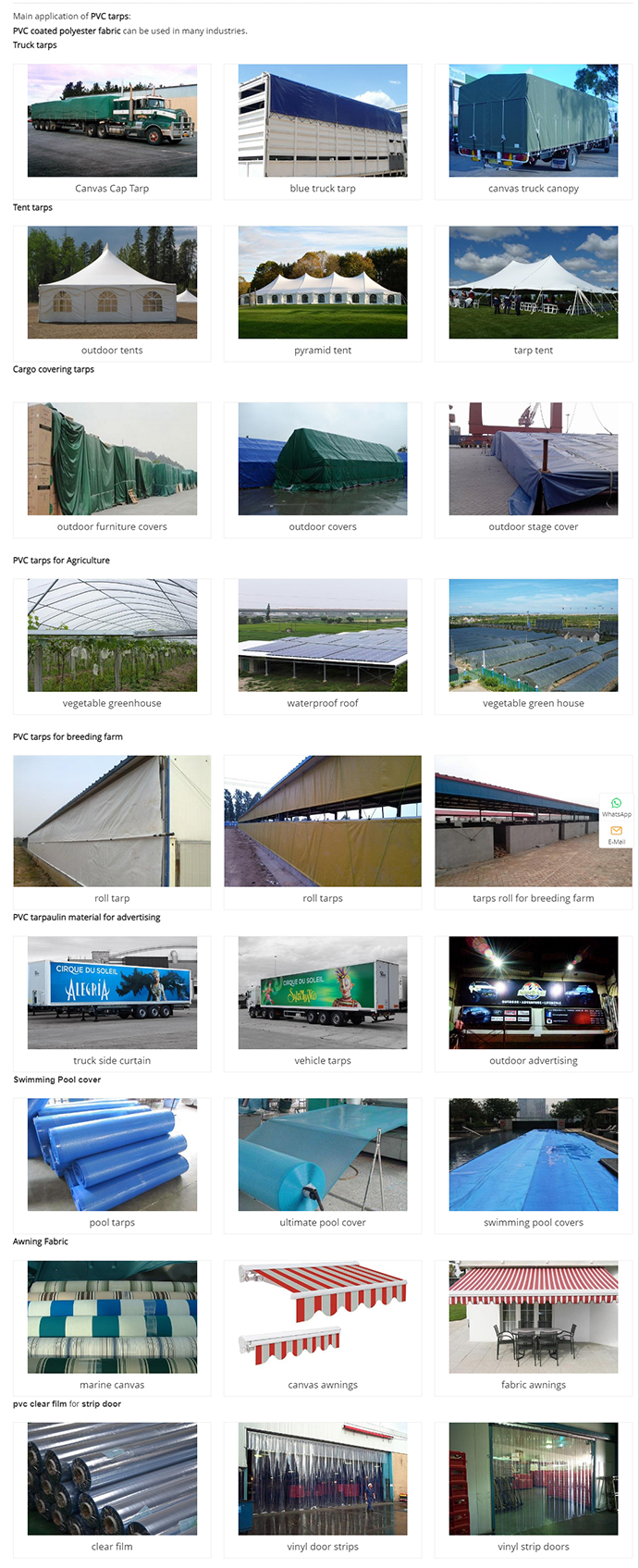
DERFLEX Image Package

PVC tarp materials, production and applications

Procurement Guide

What to send a tarp manufacturer for a useful coated vs laminated recommendation

Buyer RFQ checklist

  • Finished application and expected duty cycle
  • Roll material or finished tarp
  • Outdoor climate, UV, rain, cold and humidity conditions
  • Target GSM / thickness, if already defined
  • Base fabric or mechanical performance target
  • Width, roll length or finished dimensions
  • Color, gloss/matte, embossing or print requirements
  • Hot-air, HF welding, sewing or another conversion method
  • Required UV, FR, anti-mildew, low-temperature or other function
  • Quantity, packaging, destination and inspection requirements

Common procurement mistakes

  • Comparing only GSM while ignoring base-fabric structure
  • Assuming “coated” automatically means high quality
  • Assuming “laminated” automatically means low durability
  • Skipping peel / adhesion checks when delamination is a real risk
  • Approving a flat swatch without testing production welding or sewing
  • Ignoring hems, grommets and reinforcement in the finished-cover design
  • Comparing unit price before normalizing specification and packaging
Manufacturing & Specification Support

Why work with DERFLEX on coated and laminated PVC tarp programs?

Both construction routes

DERFLEX publishes both PVC coated and PVC laminated tarpaulin directions, allowing a buyer to compare construction against application rather than forcing every project into one material route.

Application-driven customization

Current DERFLEX product pages support discussion of GSM, base fabric, width, color, surface finish, UV direction, flame-retardant options, printing, welding, roll packing and finished fabrication according to project requirements.

Procurement-focused documentation

The DERFLEX technical-content system covers specification writing, manufacturing process, material selection, testing logic and RFQ preparation so repeat orders can be tied to a clearer approved construction.

People Also Ask

Coated vs laminated tarp FAQ

What is the main difference between a coated tarp and a laminated tarp?

A coated tarp has PVC compound applied directly to the textile and thermally processed into a continuous coating. A laminated tarp combines pre-formed PVC film with the reinforcing textile through heat, pressure and a bonding system. The manufacturing route affects layer adhesion, hand, surface, fabrication and common duty direction, but neither process name alone defines final quality.

Is a coated tarp always more durable than a laminated tarp?

No. Coated PVC is commonly selected for repeated folding, abrasion and demanding outdoor service, but durability still depends on base fabric, coating weight, formulation, adhesion, UV package, finish and finished-tarp design. A strong laminated construction can outperf, orm a weak coated construction.

Which is better for truck tarps: coated or laminated PVC?

For truck and trailer applications with repeated folding, wind load, road spray, rubbing and tie-down cycles, coated PVC polyester is often the safer starting direction. The final choice should still be based on base-cloth strength, tear and abrasion needs, welding, hems, hardware and the expected service cycle.

Can both coated and laminated PVC tarps be heat welded?

Many grades of both constructions can be welded with hot air or high-frequency equipment. Weldability depends on the PVC formulation, surface treatment, topcoat, film/coating structure and machine settings. Approve the actual production grade with a seam test before bulk conversion.

Is laminated tarp cheaper than coated tarp?

Laminated PVC is often commercially attractive for lighter or medium-duty programs, but price depends on base fabric, film quality, weight, width, finish, additives, quantity, packaging and market conditions. Compare equivalent specifications and total cost per use rather than assuming one process is always cheaper.

What should I test before approving a coated or laminated tarp order?

Start with the failure risks of the application. Common checks include finished weight, width, tensile strength, tear resistance, coating or layer adhesion, abrasion, low-temperature flexibility, UV/weathering, welding and finished reinforcement. Use the same test method and units when comparing suppliers.

What information should I send DERFLEX for a material recommendation?

Send the finished application, expected duty cycle, climate, target GSM or thickness if known, width or dimensions, color, surface finish, welding or sewing method, functional requirements, quantity, destination, packaging and any required test or certification criteria.

Next Step

Need help choosing coated or laminated PVC tarp?

Send DERFLEX the application, duty cycle, target GSM or thickness, width, color, surface, welding method, quantity, destination and required test criteria. The team can discuss a practical material direction for sampling and quotation.

Consulting Services
+86-021-54361792 / 54361798
Email
sales@derflex.com