
News
Industry News

Tarpaulin Manufacturing Process: From Yarn to Finished Tarp | DERFLEX

Update:2026/9/12 20:09:08 Views:
Technical Manufacturing Guide · DERFLEX

Tarpaulin Manufacturing Process: From Yarn to Finished Tarp

Industrial tarpaulin is built in stages. Polyester yarn creates the reinforcing textile; PVC is then coated or laminated onto that structure; the material is finished and inspected before it is cut, joined, reinforced, fitted with hardware and packed as a finished tarp.

This guide explains where strength, waterproofing, adhesion, weldability and finished-cover durability are created—so procurement teams can evaluate a tarp by process control, not by GSM or color alone.

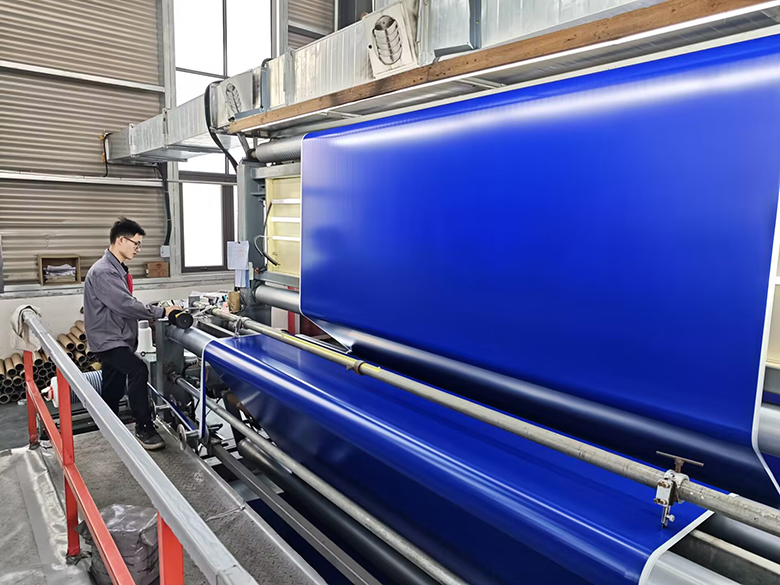
DERFLEX PVC tarpaulin manufacturing line producing blue coated tarp fabric
Coated fabric production is only the middle of the story. A finished tarp still depends on textile construction, PVC processing, surface control, conversion, reinforcement, hardware and final inspection.
60-Second Answer

How Is Tarpaulin Made?

A reinforced PVC tarpaulin is typically made by first building a polyester textile reinforcement from yarn, then combining that textile with flexible PVC by a coating or lamination process. Heat and pressure establish the composite structure, after which the surface is finished, the roll is inspected and the material is converted into the required tarp geometry.

Finished tarp production adds the steps that material-only explanations often miss: panel cutting, hot-air or high-frequency welding where suitable, sewing when specified, reinforced hems, webbing, grommets or D-rings, dimensional inspection, labeling and packing.

The key procurement lesson is simple: tarp quality is created across the whole process chain. Yarn and textile structure influence mechanical strength; coating or lamination influences waterproofing and adhesion; fabrication controls seams and stress zones; hardware and reinforcement determine how loads enter the finished cover.

Process Map

10 Stages from Textile Reinforcement to Export-Ready Tarp

The exact route changes with material construction and end use, but this sequence shows the practical manufacturing logic a B2B buyer should understand.

01

Yarn Selection

Choose reinforcement yarn direction for strength, flexibility and target construction.

02

Base Textile

Weave or knit the polyester structure that carries much of the mechanical load.

03

PVC Preparation

Prepare coating compound or PVC film according to the selected production route.

04

Coat / Laminate

Combine the polymer layer and textile under controlled machine settings.

05

Heat & Bond

Develop adhesion, polymer fusion and dimensional stability for the composite.

06

Surface Finish

Establish gloss, matte, embossing, lacquer or other required surface direction.

07

Roll Inspection

Check width, appearance, weight direction and agreed mechanical or bond tests.

08

Cut & Join

Cut panels and weld or sew them into the required finished geometry.

09

Reinforce & Fit

Add hems, webbing, patches, eyelets, D-rings, straps or other hardware.

10

Final QC & Pack

Confirm dimensions, seams, hardware, appearance, labeling and shipment packing.

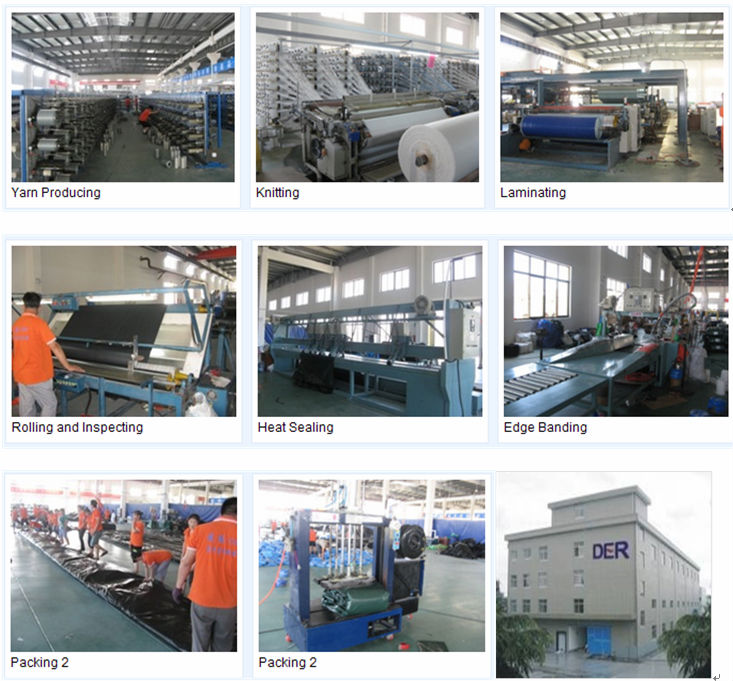
DERFLEX tarpaulin production process collage showing yarn production, knitting, laminating, inspection, heat sealing, edge banding and packing
Real Production View

Why a Process Image Matters More Than a Product Photo

A finished blue, green or black tarp does not reveal the structure underneath. Two tarps can look nearly identical while using different yarn, textile density, polymer add-on, bonding route, surface treatment and reinforcement design.

The production image at left is useful because it connects multiple manufacturing steps in one view: yarn/textile preparation, lamination, roll inspection, heat sealing, edge finishing and packing. For buyers, this makes it easier to ask where each performance characteristic is actually created.

Procurement rule: approve the construction + sample + test direction + finished-cover details together. Do not approve a repeat order from a photo and headline GSM alone.
Material Construction

What Each Layer Does Before the Tarp Is Ever Cut

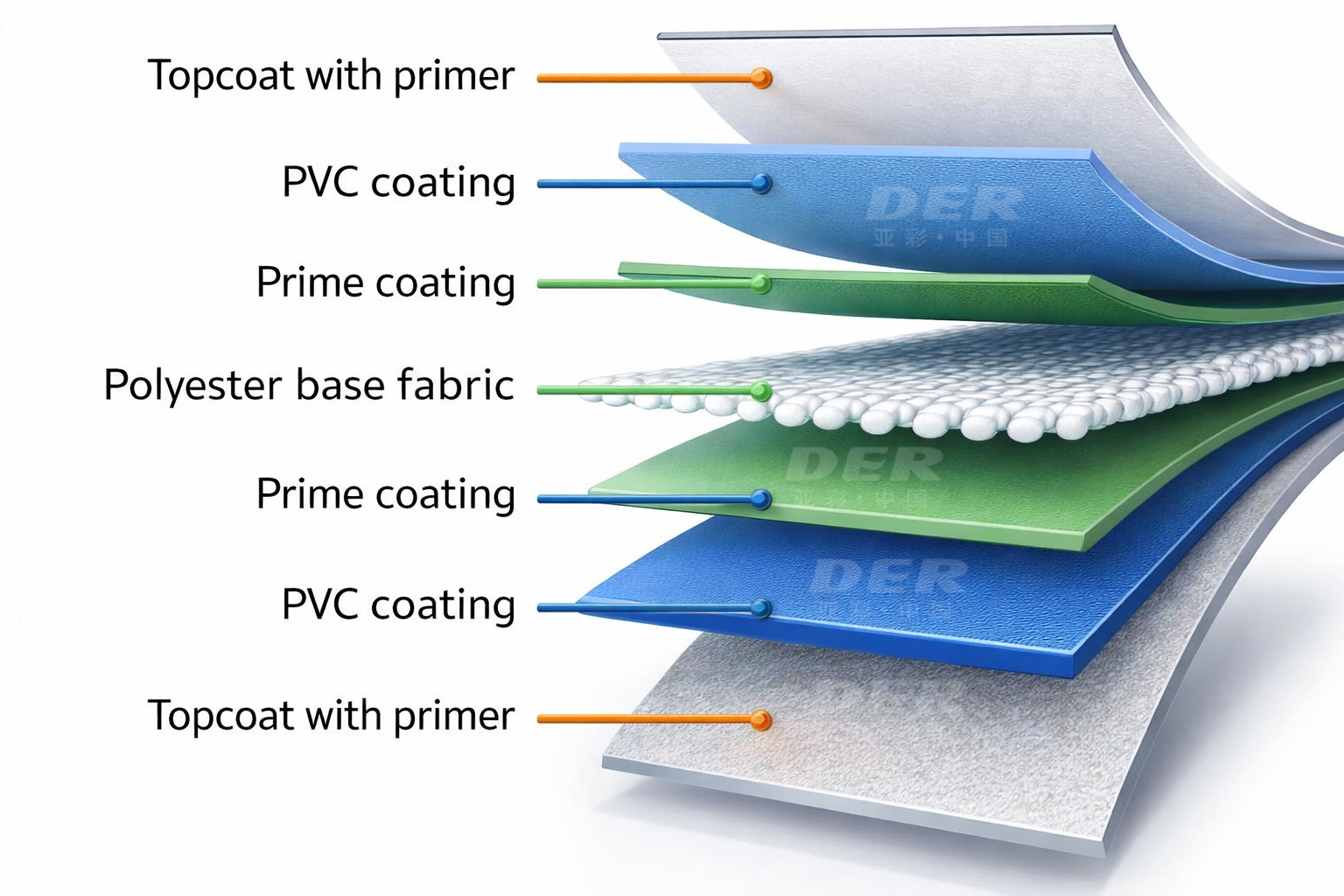
The reinforcing textile and PVC surface perform different jobs. The polyester structure carries much of the tensile and tear load, while the PVC system creates the continuous weather-protective surface and provides the thermoplastic behavior used for many welding processes.

Polyester Base Fabric

Yarn denier, warp/weft construction, textile density and dimensional stability influence how the material responds to pulling, folding, local puncture stress and tension. A heavier finished fabric is not automatically stronger if the reinforcement structure is weak or poorly matched to the application.

PVC Protective Layers

Flexible PVC is formulated for processing and end use. Color, flexibility, outdoor exposure, weldability and optional functional directions are part of the material specification. The formulation and amount of polymer cannot be understood from total GSM alone.

Surface Treatment

Gloss, matte, embossing and lacquered or application-specific finishes can affect appearance, cleanability, print behavior, surface friction and weathering behavior. The correct surface should be specified together with the downstream fabrication method.

For the broader material definition, see what PVC tarpaulin is made of.

PVC coated tarpaulin layer construction diagram with polyester base fabric, primer, PVC coating and topcoat
Production Routes

PVC Coating and Lamination Are Different Manufacturing Paths

Both can create useful tarpaulin products. The correct route depends on the target construction, performance, surface, cost, production plan and end-use requirements.

Route A

Direct Coating / Knife-Coated Direction

PVC compound is applied directly to the reinforcing textile and controlled by the coating equipment before thermal processing establishes the finished layer.

  • Direct control of polymer application to the textile.
  • Useful for demanding coated-fabric structures where adhesion and controlled surface build are important.
  • May involve primers, multiple coating passes or different face/back constructions according to the product design.
  • Final quality still depends on textile preparation, coating consistency, thermal processing and inspection.
Route B

PVC Film Lamination Direction

Preformed PVC film is combined with the reinforcing textile under controlled heat and pressure, with the bonding system selected for the material construction.

  • Separates film production from the fabric-combination stage.
  • Allows practical control of film surface, color and laminate construction.
  • Bonding quality must be confirmed because poor adhesion can later appear as peeling or delamination.
  • Process selection should be based on approved performance—not on the label “laminated” alone.
Buyer Question Why It Matters What to Confirm with the Manufacturer
How is the PVC applied? “PVC tarpaulin” is a family name; different routes create different material structures. Coated, laminated or another defined route; face/back build; surface finish.
How is adhesion controlled? Weak bonding can show up later as peeling, bubbling or delamination. Approved test method or sample validation appropriate to the project.
What does total GSM include? Finished GSM combines textile reinforcement and PVC/surface layers. Base textile construction, finished weight and any relevant coating/add-on information.
How will the material be fabricated? Welding, sewing, printing and hardware installation place different demands on the surface and structure. Actual downstream process and trial on the approved grade when necessary.

For a route-specific explanation, review DERFLEX's PVC laminated tarpaulin production process.

Finished Tarp Conversion

Roll Goods Are Not Yet a Finished Tarp

The final cover can fail even when the roll material is strong. Conversion determines seam strength, load distribution, fit, water paths and how tie-down force enters the tarp.

01

Panel Planning & Cutting

Finished dimensions, panel direction, seam location, overlap and edge geometry are planned before cutting. Large covers are often built from multiple panels, so material orientation and joining layout affect both appearance and load behavior.

Buyer checkpoint: provide a drawing or finished-size requirement, identify which dimensions are critical, and define whether dimensions are measured flat, installed or under tension.
02

Welding or Sewing

PVC coated fabrics are commonly joined by hot-air or high-frequency welding where the material and design are compatible. Sewing can be used for selected constructions and details. The correct method depends on coating system, thickness, panel geometry, equipment and end use.

Buyer checkpoint: confirm the actual seam method on the approved material—not merely that the fabric is “weldable.”
03

Hems, Webbing & Local Reinforcement

Tie-down loads concentrate at edges, corners, straps and hardware. Reinforced hems, webbing, corner patches or multi-layer stress zones spread those loads into a larger area of the tarp and reduce the risk of local pull-out.

Buyer checkpoint: specify where the tarp is pulled, tensioned, folded or repeatedly handled. These areas deserve different design attention than the center panel.
04

Grommets, D-Rings, Straps & Hardware

Hardware spacing should follow the installation and load path rather than a generic pattern. Grommet material, diameter, spacing, reinforcement and alignment all affect field use and maintenance.

Buyer checkpoint: include a hardware drawing or at least the required spacing, edge distance, reinforcement style and tie-down method.
05

Final Inspection, Labeling & Packing

Final inspection should verify the elements that matter to the purchase specification: dimensions, seam continuity, edge finish, hardware count and placement, appearance, marking, packing method and order consistency.

Buyer checkpoint: define how the tarp should arrive at your warehouse or production line—folded, rolled, individually packed, labeled, palletized or prepared for private-label distribution.

Buyers sourcing made-to-measure covers can continue with DERFLEX's custom tarp manufacturing guide.

Quality Control

Where Manufacturing Variations Become Field Problems

A useful QC plan connects process variables to the failure symptom a buyer is trying to prevent.

Manufacturing Stage Variable to Control Possible Field Symptom if Poorly Controlled Buyer Evidence to Request
Yarn / Base Textile Yarn direction, textile density, fabric uniformity, dimensional stability. Unexpected stretch, weak tensile/tear behavior, distorted panels or inconsistent handling. Approved construction and relevant mechanical test data for the exact grade.
PVC Preparation Formula consistency, pigmentation, process suitability and required functional direction. Color variation, processing inconsistency, unsuitable flexibility or surface behavior. Approved color/sample plus project-specific requirements written into the specification.
Coating / Lamination Coverage, layer uniformity, bond quality, heat/pressure control. Uneven surface, weak adhesion, peeling, pinholes or inconsistent material feel. Visual inspection criteria, weight/width check and agreed adhesion/performance tests.
Surface Finish Gloss/matte direction, embossing, lacquer or treatment uniformity. Uneven appearance, print or weld inconsistency, cleaning differences between batches. Master sample, color reference and finish definition.
Fabrication Cut accuracy, seam method, weld settings, stitch pattern where applicable. Leaks at seams, joint separation, poor fit or difficult installation. Finished sample or first-article approval and seam inspection criteria.
Reinforcement / Hardware Patch design, webbing, grommet/D-ring placement and local load distribution. Grommet pull-out, corner tearing, edge failure or premature damage around tie points. Hardware layout, reinforced-detail drawing and approved workmanship sample.
Strength starts in the textile.

Denier and fabric construction should be read with measured tensile and tear performance rather than as marketing labels.

Waterproofing starts in the polymer layer.

The finished cover also depends on welds, punctures, hems, hardware holes and installation geometry.

Durability is system-level.

Surface, abrasion, UV exposure, flexing, fold cycles, tie-down stress and edge design work together.

Repeatability needs a written spec.

Approved sample, technical values, color/finish, fabrication details and packing should reference the same product code or purchase specification.

For a deeper look at how construction numbers fit together, read the heavy duty PVC tarpaulin specification guide and the GSM, ounces and thickness guide.

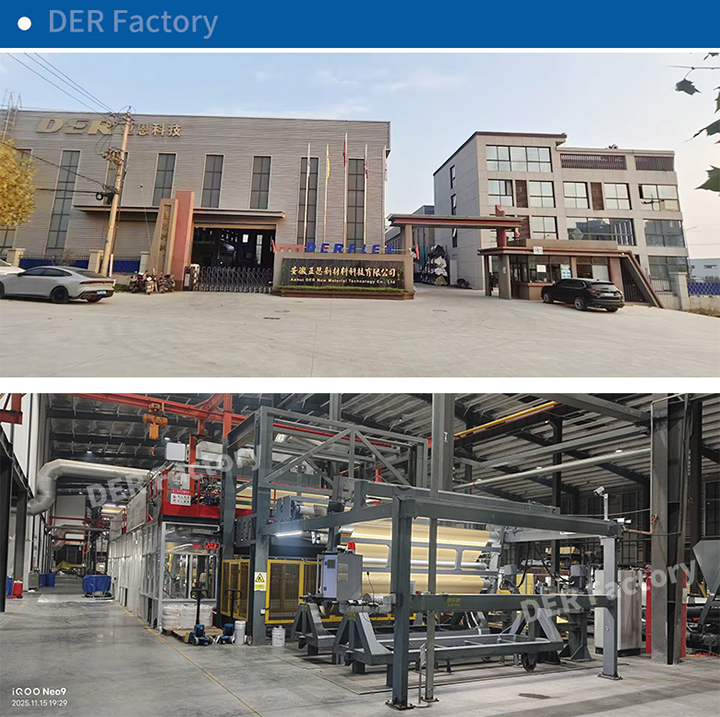
DERFLEX factory building and industrial tarpaulin production equipment
DERFLEX manufacturing imagery showing the factory base and coated-fabric production equipment. Actual product route should be confirmed according to the requested tarp construction.
Manufacturing Context

Why Buyers Ask to See the Factory Behind the Tarp

Process visibility matters because finished tarp quality is not created at one machine. It depends on material preparation, textile consistency, PVC processing, coating or lamination, roll inspection and—when finished covers are ordered—conversion and packing.

DERFLEX's current Factory Tour describes an integrated production system covering base fabric, PVC film, lamination/coating and finished industrial textile output. The figures below are published on that factory page and are provided here as manufacturing context rather than as a substitute for the exact specification of your order.

60,000㎡Published production area
450 + 25Workers + senior engineers
5 / 3 / 5Calendars / coating / lamination machines
1,500,000㎡/dayPublished base-fabric output
Buyer Audit

How to Audit a Tarpaulin Manufacturing Process Before Bulk Order

A factory visit is useful, but buyers can also learn a great deal by asking for the right evidence before approving production.

What a Strong Supplier Discussion Should Cover

  • Exact application, climate, handling frequency and service environment.
  • Base textile construction—not finished GSM alone.
  • Coated or laminated route and the intended surface finish.
  • Relevant tensile, tear, adhesion, waterproof, UV, cold or FR requirements when the project needs them.
  • Actual joining method: hot air, HF welding, sewing or a combination.
  • Reinforced edges, grommet/D-ring spacing and high-stress zones.
  • Approved sample and documented repeat-order specification.
  • Finished-cover inspection, labeling, folding/rolling and export packing.

Process Red Flags for Procurement Teams

  • A quotation describes only color and GSM with no base construction.
  • “Heavy duty” is used without measurable specification or intended load context.
  • Coated and laminated products are presented as interchangeable without explaining the actual route.
  • The supplier cannot explain how seam method and surface construction interact.
  • Hardware layout is decided only after bulk fabric has been cut.
  • Repeat orders rely on a generic product name rather than an approved sample/specification.
  • Testing claims are made without identifying the exact grade or requested method.
  • Packing is treated as an afterthought despite downstream handling or private-label needs.
Send with Your RFQ Why It Speeds Up Manufacturing Review
Application + use environmentLets the supplier match textile, polymer, surface and reinforcement to real stress.
Finished size / drawingClarifies panel layout, seams, hems and hardware placement.
Material targetGSM/oz, thickness direction, denier, construction or reference sample reduces ambiguity.
Color + finishEstablishes visual and surface requirements before bulk production.
Performance requirementsDefines which tests or functional options actually matter to the project.
Quantity + packingHelps plan production route, labels, cartons/pallets and shipment format.
Destination / market requirementHelps identify documentation or project-specific compliance needs before quotation.
Buyer Questions

Tarpaulin Manufacturing Process FAQ

Direct answers to the questions procurement teams commonly ask when comparing tarpaulin factories and production routes.

What is the basic tarpaulin manufacturing process?

For a reinforced PVC tarp, the process usually starts with polyester yarn and base-textile construction, followed by PVC preparation, coating or lamination, thermal bonding, surface finishing and roll inspection. If a finished tarp is required, the material is then cut, welded or sewn, reinforced, fitted with hardware, inspected and packed.

What is the difference between manufacturing tarp fabric and manufacturing a finished tarp?

Tarp fabric manufacturing creates the coated or laminated roll material. Finished tarp manufacturing converts that material into a specific cover using cutting, panel joining, hems, webbing, corner patches, eyelets, D-rings, straps, printing or other details. Both stages affect final field performance.

Is knife-coated tarpaulin always better than laminated tarpaulin?

No. Knife coating and lamination are different production routes, and the correct choice depends on required performance, construction, surface, cost and end use. Buyers should compare the exact grade by measurable properties, approved samples, fabrication behavior and repeat-order consistency rather than process name alone.

Which manufacturing stage controls tarp strength?

Strength is not controlled by one stage. The polyester yarn and base fabric provide much of the mechanical reinforcement, while coating/lamination protects and stabilizes the composite. Finished-cover seam design, edge reinforcement and hardware placement determine how loads are transferred into that material.

Why can two tarps with the same GSM perform differently?

GSM measures finished mass per square meter, not how that mass is distributed between the textile reinforcement and PVC layers. Two tarps with the same GSM can use different yarn denier, textile density, coating ratio, adhesion, finish and fabrication design, so their tensile, tear, handling and field durability can differ.

What should I inspect before approving bulk tarpaulin production?

Confirm the approved construction, sample, color/finish, dimensions, mec, hanical or functional requirements, coating/lamination route where relevant, seam method, reinforcement, hardware layout, labeling and packing. The purchase specification should reference the same approved version used for repeat orders.

Can DERFLEX supply both tarpaulin rolls and finished custom tarps?

DERFLEX publishes both tarp-material and finished-tarp manufacturing capabilities. The final supply format can be discussed according to the application, material structure, dimensions, reinforcement, hardware, branding and packaging requirements of the project.

Turn the Manufacturing Process into a Repeatable Purchase Specification

Send DERFLEX the application and finished-cover requirements first. The goal is to define the textile, PVC route, surface, fabrication and quality checkpoints before bulk production—not after the tarp reaches the jobsite.

Application & climate Finished size / drawing GSM / oz / thickness target Base fabric / denier if known Color & surface finish Welding / sewing method Hems / webbing / hardware Quantity / packing / destination
Request a Technical Quote

If you already have a sample, drawing or technical data sheet, include it with the inquiry so the manufacturing route can be reviewed against the same reference.

Consulting Services
+86-021-54361792 / 54361798
Email
sales@derflex.com