


Tarp Material Guide for Heavy Duty, Waterproof & Custom Industrial Covers
Choosing tarp material is not only about color, price or thickness. For truck covers, construction protection, agriculture storage, roofing, marine covers and OEM tarp programs, the right material depends on coating structure, base fabric strength, waterproof welding, UV exposure, handling frequency and the expected service life.
DERFLEX manufactures PVC coated fabrics and custom tarpaulin materials for global buyers who need reliable roll supply, stable batch quality and project-specific specifications. This guide helps you compare PVC, PE, canvas and mesh tarp materials so your team can choose the right structure before ordering bulk rolls or finished tarps.
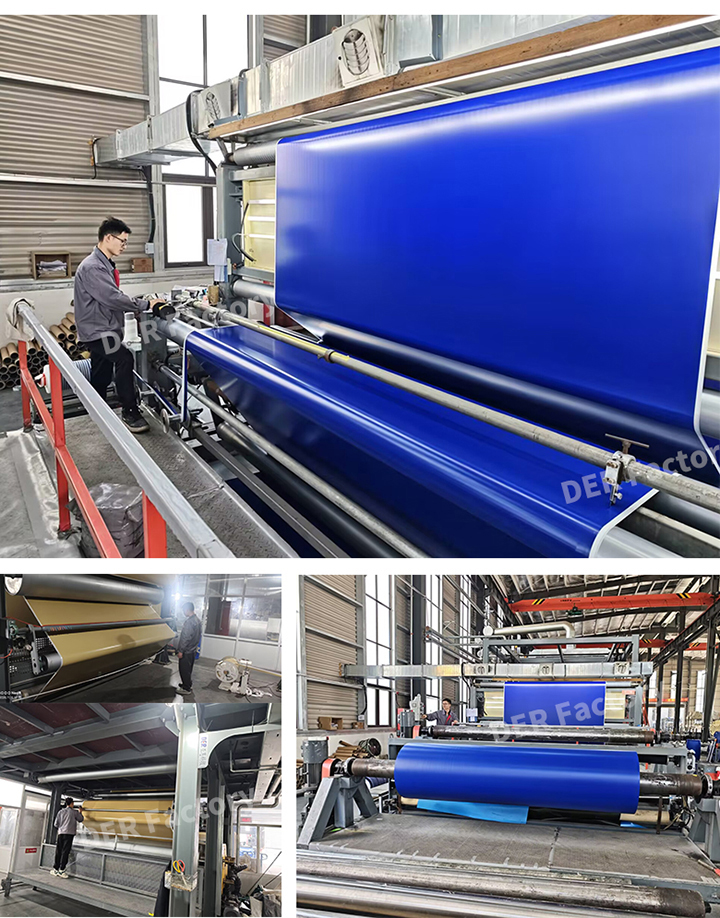
DERFLEX Tarp Material Supply
Roll materials and finished tarp solutions for OEM converters, tarp factories, distributors, contractors and industrial procurement teams.
Fast Selection Map: Which Tarp Material Should You Choose?
For business buyers, the best tarp material is the one that matches the application risk. A short-term dust cover should not be specified like a truck tarp that faces wind load, road abrasion and repeated fastening every day.
For long outdoor life
Choose PVC coated polyester when the tarp must resist rain, sun, tearing, welding stress and repeated handling.
For temporary coverage
Choose PE laminated tarp material when cost control and lightweight handling are more important than long service life.
For breathable protection
Choose canvas when airflow matters and full waterproof sealing is not the top priority.
For shade or airflow
Choose mesh tarp material for shade, wind pass-through, debris control or ventilated transport applications.
PVC vs PE vs Canvas vs Mesh Tarp Material
This comparison is written for buyers who need to select a specification, not only read a simple material definition.
| Material Type | Best Fit | Strengths | Limitations | DERFLEX Buying Advice |
|---|---|---|---|---|
| Heavy Duty PVC Coated Polyester |
Truck tarps, industrial covers, construction tarps, equipment covers, roofing covers, reusable outdoor protection. | Excellent waterproof performance when welded, strong tear resistance, good dimensional stability, printable surface, custom color and finish options. | Heavier than PE and usually higher cost, but better for demanding and repeat-use applications. | Recommended for B2B buyers who need performance consistency, export-grade roll supply and OEM customization. |
| Economy PE Laminated Woven Fabric |
Temporary roof covers, short-term construction covers, warehouse dust covers, agricultural seasonal covers. | Lightweight, economical, easy to fold and suitable for high-volume temporary coverage. | Lower abrasion resistance and shorter service life than PVC in heavy outdoor use. | Use PE when budget and deployment speed are the key factors, not long-term repeat handling. |
| Breathable Canvas Tarp Fabric |
Breathable equipment covers, machinery storage, applications where condensation control is important. | Good breathability, natural textile feel and lower condensation risk. | Usually water-resistant rather than fully waterproof; can absorb moisture and needs careful storage. | Choose canvas only when airflow is more important than welded waterproof sealing. |
| Ventilated Mesh Tarp Material |
Shade tarps, debris covers, dump truck mesh covers, agriculture shading, sports field and wind-exposed areas. | Allows airflow, reduces wind pressure, provides shade and can be easier to handle in large panels. | Not designed for full waterproof protection because the structure is open. | Specify shade rate, mesh openness, tensile strength and edge reinforcement before ordering. |
| Specialty TPU / Specialty Coated Fabrics |
Flexible tanks, liquid containment, high-flex or low-temperature applications requiring special compatibility. | Strong flexibility, high-frequency welding options and project-specific chemical compatibility. | Not a standard choice for ordinary cover tarps; must be matched to the liquid or environment. | Use only after confirming application, liquid type, welding method and performance test requirements. |
Why PVC Coated Polyester Is Often the Safer Choice for Industrial Tarps
For short-term consumer covers, PE may be enough. For industrial buyers, the risk is different: a failed cover can damage cargo, delay a project, create safety problems or cause replacement costs across many units.
PVC coated polyester gives buyers a stronger balance of waterproofing, welding performance, tear strength, UV resistance and customization. That is why it is widely used for truck tarps, machinery covers, outdoor storage, construction protection and OEM tarp programs.
Key performance points to confirm before buying
- Base fabric yarn strength and polyester structure
- Finished weight in gsm or oz/yd²
- PVC coating thickness and coating adhesion
- Waterproof welding or sewing requirements
- UV resistance, cold crack performance and outdoor exposure level
- Flame retardant, anti-mildew, anti-static or lacquered surface options
- Edge reinforcement, grommet spacing, webbing and corner patch design
- Roll width, roll length, color tolerance and private label packaging
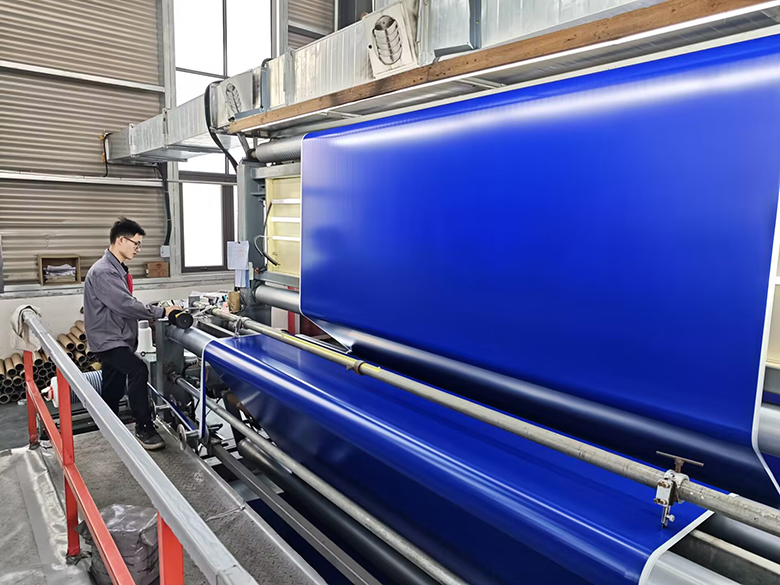
Recommended Tarp Material by Application
A good tarp material guide should lead buyers to the correct project specification. Below are practical directions DERFLEX commonly uses when discussing custom tarp material with distributors, cover makers and contractors.
Truck & Trailer Covers
Truck tarp material should handle wind load, tie-down tension, road abrasion and repeated folding. Select 650–900 gsm PVC coated polyester with reinforced edges for demanding logistics use.
Construction Site Covers
Use PE for short-term dust or rain coverage. Use PVC for long exposure, high-value equipment, scaffolding screens, temporary roofing and repeat-use contractor programs.
Agricultural Storage
Seasonal hay, grain and machinery covers may use PE, while silage, long-term outdoor storage and reinforced cover systems benefit from stronger PVC structures.
Canopy & Tent Tarps
Canopy tarps need stable color, clean welding, UV resistance and optional flame retardancy. Specify coating finish and color stability if the tarp is visible to end users.
Shade & Debris Control
Mesh allows airflow and reduces wind pressure. It is ideal when the goal is shade, containment or wind pass-through rather than full waterproof protection.
Marine & Outdoor Covers
Boat covers and outdoor equipment covers should consider UV, mildew, salt exposure, folding frequency and soft handling against painted surfaces.
How to Write a Clear Tarp Material Specification
Many tarp problems happen because the buyer only asks for a color and size. A strong specification makes production, quotation and quality control much more accurate.
1Define the job
Explain whether the tarp is for truck cargo, rooftop emergency cover, canopy, agriculture, machinery, construction, marine use or OEM resale.
2Confirm exposure
Share expected sunlight, rain, snow, wind, chemical exposure, cold temperature and whether the tarp is used daily or only stored for emergency deployment.
3Select structure
Choose PVC coated polyester, PE laminated fabric, canvas or mesh. Then confirm gsm, coating surface, yarn strength, finish and welding requirements.
4Design reinforcement
Specify hem width, corner patches, webbing, rope, D-rings, grommet spacing, welded seams and any stress zones that need additional layers.
5Set roll or finished size
For roll supply, confirm width, length and packing. For finished tarps, confirm cut size, finished size tolerance, eyelet spacing and folding method.
6Request samples
Before large orders, compare hand feel, welding behavior, color, coating adhesion and tensile performance with real production samples.
From Material Selection to Stable Bulk Supply
DERFLEX is not only writing a tarp material guide. We help buyers convert a project requirement into a manufacturable material specification and repeatable supply program.
Manufacturing Capability
Integrated production support for PVC coated fabrics, tarpaulin rolls and custom industrial textile materials.
Application Engineering
Material recommendations based on waterproofing, UV exposure, welding, tensile strength, tear risk and actual cover design.
OEM Customization
Custom colors, surface finish, logo printing, roll packing, private label cartons, palletizing and export documentation.
Quality Consistency
Batch control for color, width, weight, coating surface, roll length and performance requirements across repeat orders.
DERFLEX vs Ordinary Online Tarp Sellers
Many online tarp pages list finished sizes and retail products. That can help small buyers, but it often does not solve the needs of tarp factories, importers and industrial procurement teams who require custom specifications and stable repeat supply.
- Material recommendation before production, not only product listing
- Roll supply and finished tarp support for OEM programs
- Custom specification control for weight, width, coating and surface finish
- Industrial applications including truck, construction, agriculture, canopy and equipment covers
- Export packing, documentation and long-term supply coordination
| Buyer Need | Retail Tarp Seller | DERFLEX Material Manufacturer |
|---|---|---|
| Custom material structure | Usually limited to existing products. | Supports project-based PVC coated fabric and tarp material specifications. |
| Bulk roll supply | Often not the main service model. | Supports roll width, roll length, color, packing and batch repeatability. |
| OEM brand program | Limited customization. | Supports private label, printed logo, package design and stable production planning. |
| Technical selection | Product description focused. | Selection based on application, exposure, reinforcement, welding and performance risk. |
Explore More Tarp Material Solutions
These related pages help buyers move from material comparison to application-specific tarp selection.
Information to Send for a Faster Quotation
The more accurate your application details, the faster DERFLEX can recommend the right tarp material and avoid over-specification or under-specification.
Send these details
- Application and expected outdoor service life
- Preferred material: PVC, PE, canvas, mesh or unsure
- Finished weight, thickness or sample reference
- Roll width, roll length or finished tarp size
- Color, logo printing and surface finish
- Waterproof, UV, flame retardant or anti-mildew requirements
- Reinforcement design: hems, corners, grommets, webbing and seams
- Estimated quantity, destination port and packing method
DERFLEX can help if you are unsure
If you only know the application, DERFLEX can recommend a suitable tarp material direction. For example, a contractor roof cover, a truck fleet program, a farm storage cover and a canopy replacement fabric may all use different material weights, coatings and reinforcement designs.
Send photos, drawings, sample weight, current tarp problems or target market requirements. Our team can help convert them into a practical specification for production.
Get Material RecommendationTarp Material Guide FAQ
Common questions from buyers comparing waterproof tarp material, heavy duty tarp fabric and custom tarpaulin options.
What is the best tarp material for heavy duty use?
PVC coated polyester is usually the better choice for heavy duty and repeat-use applications because it offers strong waterproof welding, tear resistance, UV performance and customization options. PE is better for temporary or budget-focused coverage.
Is PVC tarp material the same as vinyl tarp material?
In many tarp markets, vinyl tarp commonly refers to PVC coated polyester fabric. Buyers should still confirm the base fabric, coating weight, finished gsm, surface finish and welding performance before ordering.
Is canvas tarp material waterproof?
Canvas is breathable and can be treated for water resistance, but it is usually not the best option when full waterproof sealing is required. For welded waterproof covers, PVC coated polyester or suitable PE tarp material is normally more practical.
How thick should tarp material be?
Thickness depends on the application. Temporary covers may use lighter PE material, while truck tarps and industrial covers often need heavier PVC coated polyester. Instead of selecting only by thickness, buyers should confirm gsm, tensile strength, tear strength, coating adhesion and reinforcement design.
Which tarp material is best for truck covers?
Truck covers usually require PVC coated polyester because it can handle road abrasion, wind load, waterproof welding and repeated tie-down stress better than lightweight temporary materials.
Can DERFLEX customize tarp material?
Yes. DERFLEX can customize weight, width, color, surface finish, flame retardant performance, anti-mildew treatment, UV resistance, logo printing, packing and finished tarp reinforcement according to project requirements.
What is the difference between tarp material and finished tarps?
Tarp material usually refers to the roll fabric used by factories and converters. Finished tarps are cut, welded or sewn products with hems, grommets, reinforced corners and packaging. DERFLEX can support both material selection and finished tarp requirements.
How can I get the right tarp material quotation?
Send the application, material preference, weight or thickness, roll width, quantity, color, finish, reinforcement requirements and destination. DERFLEX will recommend a suitable structure and quotation direction.
Need Help Choosing the Right Tarp Material?
Send your application, required size, usage environment and target quantity. DERFLEX will recommend a practical tarp material specification for industrial supply, OEM production or custom finished tarps.