News
Industry News

Commercial Grade Tarps for Industrial & Trade Use | DERFLEX

Update:2026/7/9 23:33:47 Views:
DERFLEX logo Commercial Protection Materials

Commercial Grade Tarps Built Around the Job, Not a Generic Label

PVC coated tarp materials and reinforced commercial covers for construction, transport, equipment, storage, agriculture and OEM distribution.

DERFLEX helps professional buyers define material weight, base fabric, coating, edge reinforcement, tie-down hardware and supply format according to actual exposure and handling conditions.

COMMERCIAL DUTY / DEFINED

“Commercial grade” is a buying category, not one universal tarp standard.

A tarp used once for temporary weather cover and a tarp opened, tied, dragged and folded every day should not share the same material specification.

Commercial performance depends on the complete system: base fabric, coating or lamination, seam method, reinforcement layout, hardware spacing, installation and maintenance.

A Better Way to Specify

Start with exposure, handling cycle and load geometry.

Many buyers initially ask for a “heavy tarp,” but weight alone does not determine whether a cover will perform well. A commercial tarp must be matched to rain exposure, sunlight, wind pressure, abrasion points, load shape, tie-down tension, temperature and how often workers handle it.

DERFLEX structures the inquiry around these operating conditions. This helps avoid two common sourcing problems: buying a lightweight cover for a repetitive industrial task, or over-specifying a tarp that becomes unnecessarily heavy and difficult to install.

Practical principle: choose the lightest construction that can reliably support the required duty cycle, rather than selecting by GSM or price alone.
Product Image Display

Commercial tarp construction for repeated field handling.

Solid PVC tarpaulin is commonly selected where waterproofing, weldability, surface durability and customized reinforcement are important.

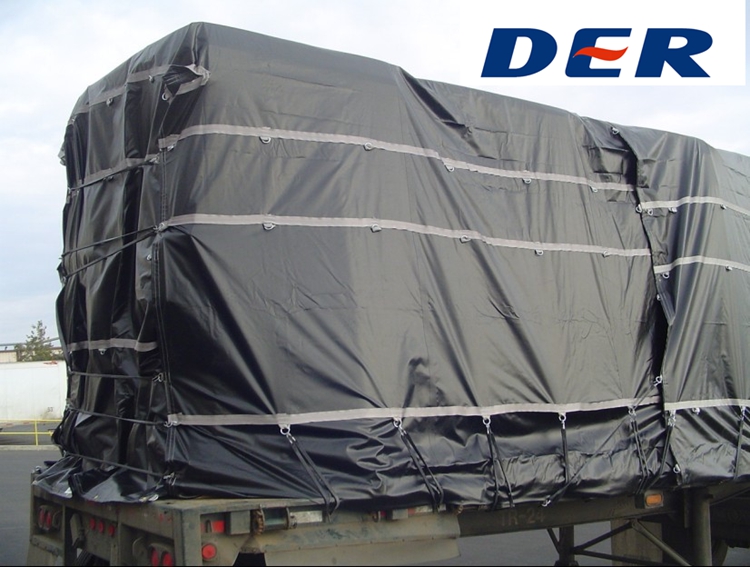
Commercial grade PVC tarp protecting an industrial truck load
Reinforced Commercial Cargo Cover Example of a fitted PVC tarp with webbing, eyelets and repeated tie-down points for transport use.
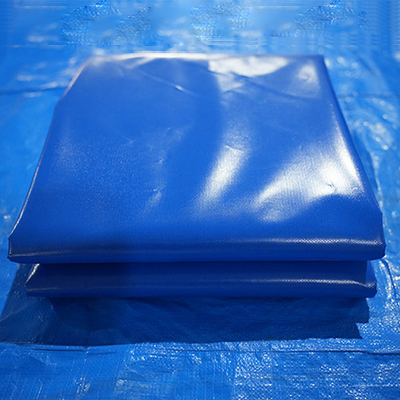
Blue heavy duty PVC tarpaulin material sample

PVC Coated Polyester Structure

The polyester scrim supports tensile and tear performance, while the PVC surface provides a waterproof, cleanable and fabrication-friendly outer layer. Final properties depend on yarn, weave, coating formulation and finish.

Waterproof options UV treatment Weldable seams Custom reinforcement OEM colors
Commercial Duty Framework

Four useful ways to classify a tarp before requesting price.

This framework is intended for early product planning. Final construction should be confirmed through samples, technical data and the actual use environment.

LEVEL 01

General Commercial Cover

For seasonal storage, light equipment, warehouse protection and lower-frequency outdoor use.

  • Moderate handling frequency
  • Limited sharp-edge contact
  • Standard hems and eyelets
LEVEL 02

Repeated Worksite Use

For construction materials, machinery, contractor supplies and covers installed many times.

  • Higher tear and abrasion demand
  • Reinforced perimeter recommended
  • UV and weather options considered
LEVEL 03

Transport & Fleet Duty

For trucks, trailers, cargo and load restraint systems exposed to wind, vibration and road conditions.

  • Planned stress-zone reinforcement
  • Welded seams and hardware layout
  • Driver handling weight evaluated
LEVEL 04

Special-Function Duty

For applications requiring ventilation, flame-retardant direction, cold flexibility, oil resistance or custom containment.

  • Application-specific formulation
  • Testing requirement confirmed
  • Prototype or pre-production sample
Material Architecture

Choose the cover structure by what it must block, release or withstand.

A solid waterproof tarp is not automatically the right answer for every commercial application.

01

Solid PVC / Vinyl Tarps

Best suited to: rain protection, cargo covers, equipment, construction supplies, outdoor storage and fitted covers.

  • Waterproof material direction
  • Strong welding compatibility
  • Wide color and surface options
  • Supports reinforced fabrication
02

PVC Mesh Tarps

Best suited to: debris control, shade, truck loads, fencing and applications where reduced wind pressure matters.

  • Airflow through the cover
  • Lower ballooning in wind
  • Multiple openness and shade levels
  • Not intended for full rain blocking
03

Application-Specific Structures

Best suited to: clear enclosures, breathable covers, temporary economy use and projects with special compliance needs.

  • Clear PVC where visibility matters
  • Canvas directions where breathability matters
  • PE directions for selected temporary uses
  • Functional treatments by confirmed requirement
Specification Planning

Commercial grade tarp options for a clearer RFQ.

The ranges below are sourcing directions rather than a promise that one specification fits every project.

Specification Item Common DERFLEX Direction Why It Matters
Material System PVC coated polyester, PVC laminated fabric, PVC mesh, clear PVC and selected custom coated textile structures Controls waterproofing, airflow, strength, flexibility, appearance and fabrication route.
Weight Range Approx. 350–1200 gsm for PVC tarp directions; application-specific structures may fall outside this range Higher weight can improve robustness but also increases handling load and shipping weight.
Base Fabric Polyester scrim with yarn, density and weave selected according to tensile and tear requirements The base fabric often determines how a tarp behaves under pulling, tie-down and edge stress.
Surface Glossy, matte, lacquered, embossed, anti-fouling, printable or application-oriented finishes Influences cleanability, friction, visual appearance, printing and dirt pickup.
Performance Options UV-resistant, flame-retardant, anti-mildew, cold-flexible, abrasion-oriented, anti-static or oil-resistant directions Functional requirements should be confirmed before sampling and may require agreed test methods.
Fabrication Hot-air or high-frequency welded seams, stitching where suitable, reinforced hems, webbing, rope edges, pockets and corner patches Finished construction often determines service performance as much as the tarp fabric itself.
Hardware Grommets, D-rings, buckles, straps, hooks and custom tie-down spacing Hardware should match load tension, installation frequency, corrosion exposure and operator workflow.
Supply Format Rolls, cut lengths, panels, semi-finished sheets or finished covers Allows distributors, converters, contractors and OEM brands to buy at the stage that fits their operation.
OEM Program Custom color, logo, label, barcode, folded packing, cartons and repeat-order product specifications Supports private-label ranges and more consistent replenishment across future orders.

Final values, tolerances and test requirements should be confirmed by DERFLEX according to material structure, sample approval, order quantity and destination market.

Commercial Applications

Protection systems for businesses that work outdoors, in transit and around equipment.

Each use case creates a different balance between waterproofing, wind response, handling weight and reinforcement.

Construction

Materials, Debris & Temporary Enclosures

Cover lumber, scaffolding supplies, aggregates, tools and work zones while planning for sharp edges, wind and repeated movement.

Transport

Truck, Trailer & Cargo Protection

Specify for road spray, airflow, vibration, straps, D-rings, load shape and the handling routine of drivers and fleet teams.

Industrial

Machinery & Equipment Covers

Protect machinery, production equipment and outdoor assets from rain, dust and contamination with fitted or flexible covers.

Warehouse

Storage Covers & Flexible Dividers

Use tarps for pallet protection, temporary separation, weather shielding and project storage where reusable coverage is required.

Agriculture

Hay, Equipment & Seasonal Storage

Plan UV exposure, rain shedding, air movement, anchoring and the risk of contact with crop edges or farm equipment.

Trade & OEM

Distributor and Private-Label Programs

Build a consistent product range with controlled material, sizes, colors, labeling, packaging and repeat-order documentation.

Risk-Based Selection

Match the tarp to the failure mode you need to prevent.

A useful specification begins by identifying what is most likely to damage the cover or the asset underneath it.

Water Ingress

Choose a waterproof material direction, then review seam welding, overlap, drainage, installation angle and puncture risk. Material waterproofing alone does not guarantee a watertight finished installation.

Sunlight Aging

Discuss UV stabilization, color, exposure duration and climate. Covers stored outdoors continuously need a different formulation from covers used only during transport.

Abrasion & Edges

Map contact points with steel, timber, corners, straps and moving equipment. Add patches, webbing or sacrificial layers where repeated rubbing is expected.

Wind Pressure

For solid tarps, reduce loose areas and plan tie-down spacing. For certain loads or fences, a mesh construction may be more suitable because it allows airflow.

Cold Handling

Cold climates can reduce flexibility. Confirm working temperature and folding behavior when a tarp must be opened and stored in winter conditions.

Fire or Compliance

State the required standard, test method and destination market before material selection. “Flame retardant” should be supported by the agreed specification and documentation.

Custom Development Process

From working conditions to a repeatable commercial tarp specification.

DERFLEX can support material-only buyers and customers who require fabricated covers.

Application Brief

Confirm asset, environment, handling frequency, installation method and expected duty cycle.

Material Route

Select solid PVC, mesh or another structure, then define weight, base fabric, finish and functional options.

Reinforcement Map

Plan hems, webbing, patches, pockets, hardware spacing and high-stress contact zones.

Sample Confirmation

Review material feel, color, welding, size, hardware and relevant testing before production.

Production & Packing

Control repeat-order details, inspection points, labels, folding, cartons and export packaging.

Why DERFLEX

Material manufacturing and finished-cover thinking in one sourcing conversation.

DERFLEX has worked with PVC coated materials since 1998 and supplies tarpaulin products for transport, construction, agriculture, industrial covering and OEM programs.

For commercial buyers, the key advantage is not simply h, aving more sizes. It is the ability to connect the fabric structure with the finished tarp design, so coating, welding, reinforcement and packaging can be considered together.

Material and application matching
Rolls through finished covers
Custom color and surface
Reinforcement planning
OEM and export packing
Repeat-order specification control
Procurement Guidance

Information that helps DERFLEX quote the right commercial tarp faster.

A complete inquiry reduces unnecessary specification changes and makes sample evaluation more useful.

Send with Your RFQ

  • End application and photos or drawings
  • Finished size or roll width and length
  • Indoor, outdoor, transport or fixed installation
  • Expected handling frequency and service environment
  • Target material weight, color and surface if known
  • Hems, webbing, grommets, D-rings and other hardware
  • Required test standard or documentation
  • Quantity, packaging and destination market

Questions to Ask Any Supplier

  • Is the quoted size cut size or finished size?
  • Which base fabric and coating structure are included?
  • How are seams made for waterproof applications?
  • Where are reinforcement patches placed?
  • What hardware material and spacing will be used?
  • Which functional claims are supported by testing?
  • How will repeat orders be matched to the approved sample?
  • What packing method protects the tarp during export?
Frequently Asked Questions

Commercial grade tarps: practical buyer answers.

What makes a tarp commercial grade?

Commercial grade generally describes a tarp intended for business, trade or industrial use, but it is not one universal technical standard. The real specification should define material structure, weight, strength, waterproofing, UV requirement, reinforcement, hardware and expected duty cycle.

Which material is suitable for heavy-duty commercial tarps?

PVC coated polyester is widely used for demanding commercial tarps because it can combine waterproofing, tear support, abrasion resistance, weldability, cleanability and custom finishing. Mesh, canvas, clear PVC or PE may be more suitable for specific airflow, breathability, visibility or temporary-use requirements.

Are commercial grade tarps waterproof?

Solid PVC tarp materials can be supplied in a waterproof direction. The finished cover also depends on seam construction, edge details, puncture risk, installation and drainage. Mesh tarps allow airflow and are not intended to provide full rain protection.

What tarp weight should I choose?

The right GSM depends on use, not on a single “commercial grade” number. Consider exposure duration, abrasion, handling frequency, load shape, wind, temperature and operator usability. DERFLEX can recommend a practical material direction after reviewing the application.

Can DERFLEX make custom sizes and reinforcement layouts?

Yes. Custom projects can include finished dimensions, panel layout, welded seams, hems, webbing, rope edges, corner patches, grommets, D-rings, pockets, straps, logo, labels and packaging according to project requirements and order conditions.

Does DERFLEX supply fabric rolls or only finished tarps?

DERFLEX can discuss roll materials, cut lengths, panels, semi-finished sheets and finished tarp covers. The supply format can be matched to distributors, converters, contractors, fleet operators and OEM brands.

Can commercial tarps include UV or flame-retardant options?

UV-resistant, flame-retardant, anti-mildew, cold-flexible and other functional directions can be discussed. Buyers should state the required standard, test method and destination market so the material and documentation can be evaluated correctly.

How do I request a quotation?

Send the application, dimensions, material preference, use environment, reinforcement and hardware details, order quantity, packing requirements and destination market through the DERFLEX Request A Quote page.

Start with the Working Conditions

Build a commercial tarp specification that your team can reorder with confidence.

Share your application, size, handling cycle, climate, reinforcement requirements and quantity. DERFLEX will review the material and fabrication route for your project.

Consulting Services
+86-021-54361792 / 54361798
Email
sales@derflex.com