Coated-Fabric Manufacturer
Produces the technical textile itself. For PVC tarpaulin, this typically means a woven polyester substrate combined with PVC coating or lamination, followed by curing and surface finishing.



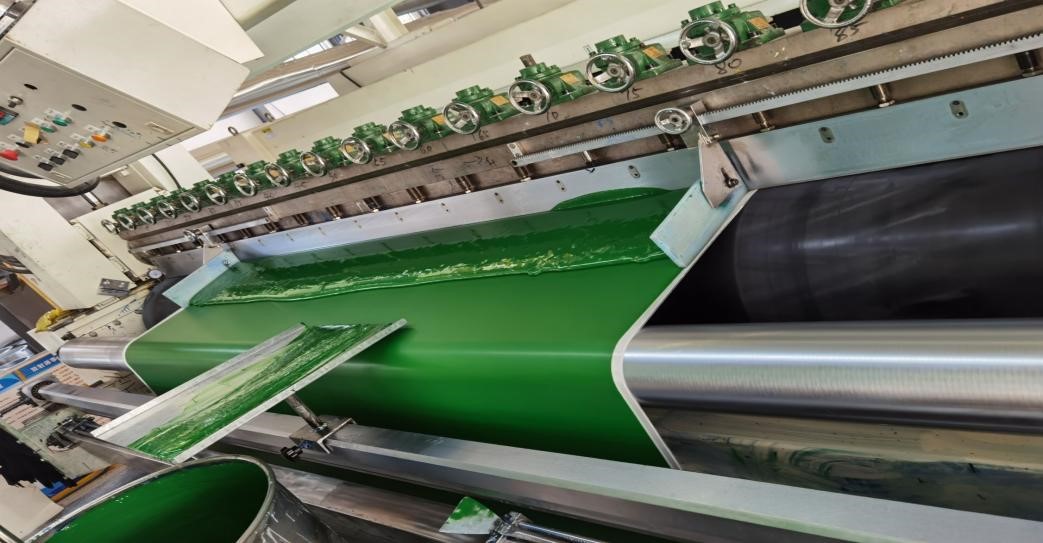
Tarpaulins are made by several kinds of companies: coated-fabric manufacturers that produce the base tarp material, converters that cut and weld or sew that material into covers, and integrated manufacturers that can manage both material production and finished-tarp fabrication. Retail brands and online tarp stores may sell tarpaulins without making the underlying fabric themselves.
For industrial, transport, construction, agriculture and OEM purchasing, the important question is not only “who sells tarps?” but “who controls the material, fabrication and repeat-order specification?” This guide explains the manufacturing chain and how to qualify a real production partner.
Two companies can both describe themselves as tarp manufacturers while controlling very different parts of production. One may coat polyester fabric but outsource sewing. Another may buy finished roll material and specialize in custom covers. A third may import standard tarps and only provide distribution.
For B2B sourcing, ask where material production happens, where final conversion happens, and which party owns the approved specification. That tells you more than the word “manufacturer” alone.
DERFLEX’s published tarpaulin program is built around PVC coated fabric and finished-cover directions for professional buyers. For a direct overview of its commercial manufacturing scope, see the DERFLEX tarpaulin manufacturer page.
Produces the technical textile itself. For PVC tarpaulin, this typically means a woven polyester substrate combined with PVC coating or lamination, followed by curing and surface finishing.
Turns roll goods into practical covers by cutting, welding or sewing panels, forming hems, reinforcing edges and adding grommets, D-rings, straps, pockets or other fittings.
Coordinates material construction and final fabrication so the base fabric, coating, seam method and fastening system can be reviewed as one product rather than separate purchases.
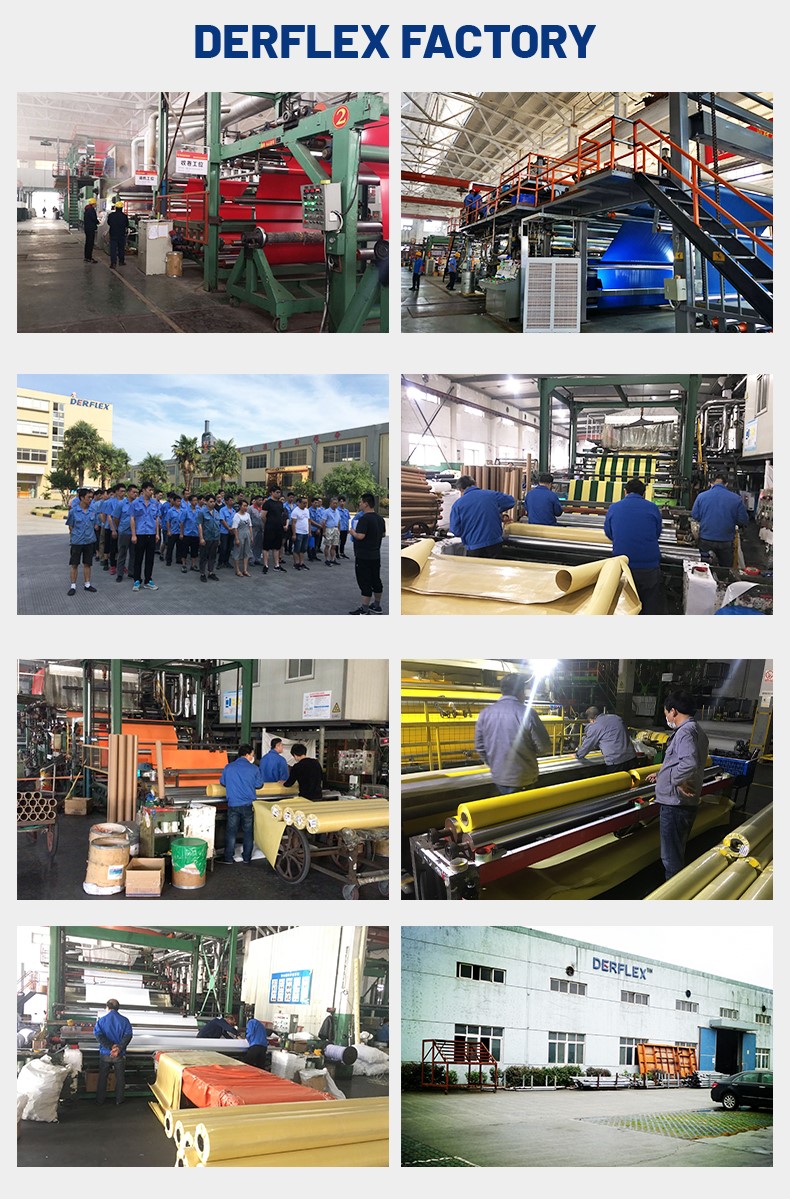
The exact process changes by material. A heavy-duty PVC tarpaulin follows a different route from a lightweight PE tarp or breathable canvas cover. The sequence below shows the common production logic for a reinforced coated-fabric tarp.
The “maker” you need depends on the material and end use. Heavy-duty logistics and industrial covers often require coated textile expertise, while economy temporary covers may come from woven-polyethylene producers and converters.
| Tarpaulin Type | Typical Manufacturing Base | Common Strengths | Buyer Priority |
|---|---|---|---|
| PVC coated polyester tarp | Polyester scrim + PVC coating or lamination | Waterproofing, weldability, abrasion resistance, reusable heavy-duty construction | Confirm base fabric, finished weight, coating, UV direction, welding and reinforcement. |
| PE tarpaulin | Woven polyethylene with laminated/coated PE film | Light weight, economical coverage, easy handling | Confirm weave, thickness/weight, UV stabilization, edge construction and intended service period. |
| Canvas tarp | Cotton or polyester woven textile, untreated or treated | Breathability, soft handling, abrasion protection | Distinguish water-resistant from waterproof and confirm shrinkage/finish behavior. |
| Mesh tarp | Open mesh textile, often coated for durability | Airflow, shade, debris control, reduced wind load | Specify openness/shade factor, edge reinforcement and whether waterproofing is actually required. |
| Specialty technical tarp | Application-specific coated textile | Can target heat, chemical, FR, low-temperature or other project requirements | Name the required test or working environment before production; do not rely on a generic “special grade” label. |
DERFLEX publishes both PVC tarpaulin and PE tarpaulin directions. For PVC material structure and current product ranges, review PVC tarpaulin. For a different material family, see PE tarpaulins.
A seller can still be useful, especially for standard sizes and fast stock purchases. But for custom specifications or repeat industrial programs, verify who controls the production variables that determine performance.
A production-focused supplier should be able to discuss base fabric, coating or lamination, finished weight, width, surface and performance options—not only finished dimensions.
Confirm which operations are performed in-house or under controlled production: cutting, welding, sewing, hems, webbing, grommets, D-rings, printing and packing.
For distribution and OEM programs, approved sample references, color/finish requirements and documented construction details matter more than a one-time catalog description.
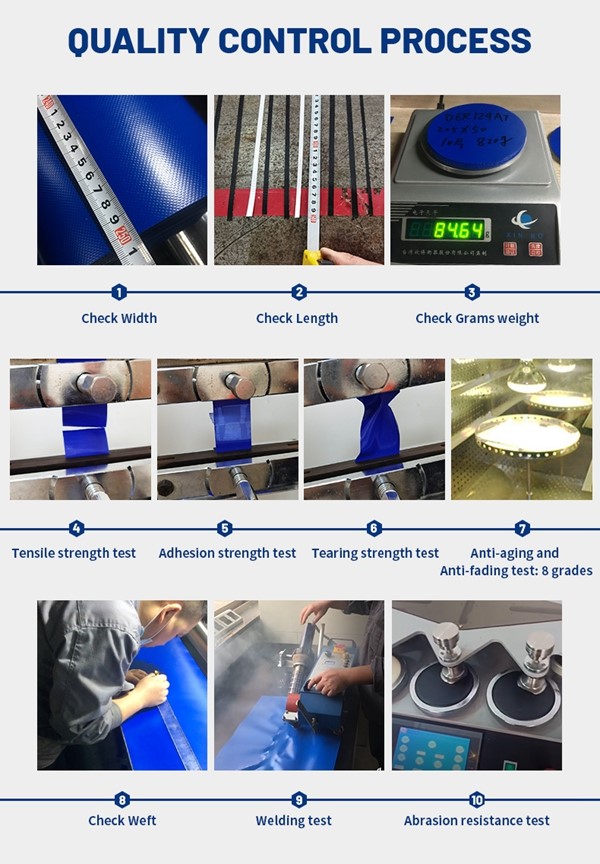
Factory/process photos, material-level specifications, sample approval, explanation of welding/reinforcement, clear scope of customization, QC checkpoints and willingness to identify project-dependent requirements.
Only stock-size language, no material details, vague “heavy duty” claims, unclear origin, no explanation of seams or hardware, and no method for preserving repeat-order specifications.
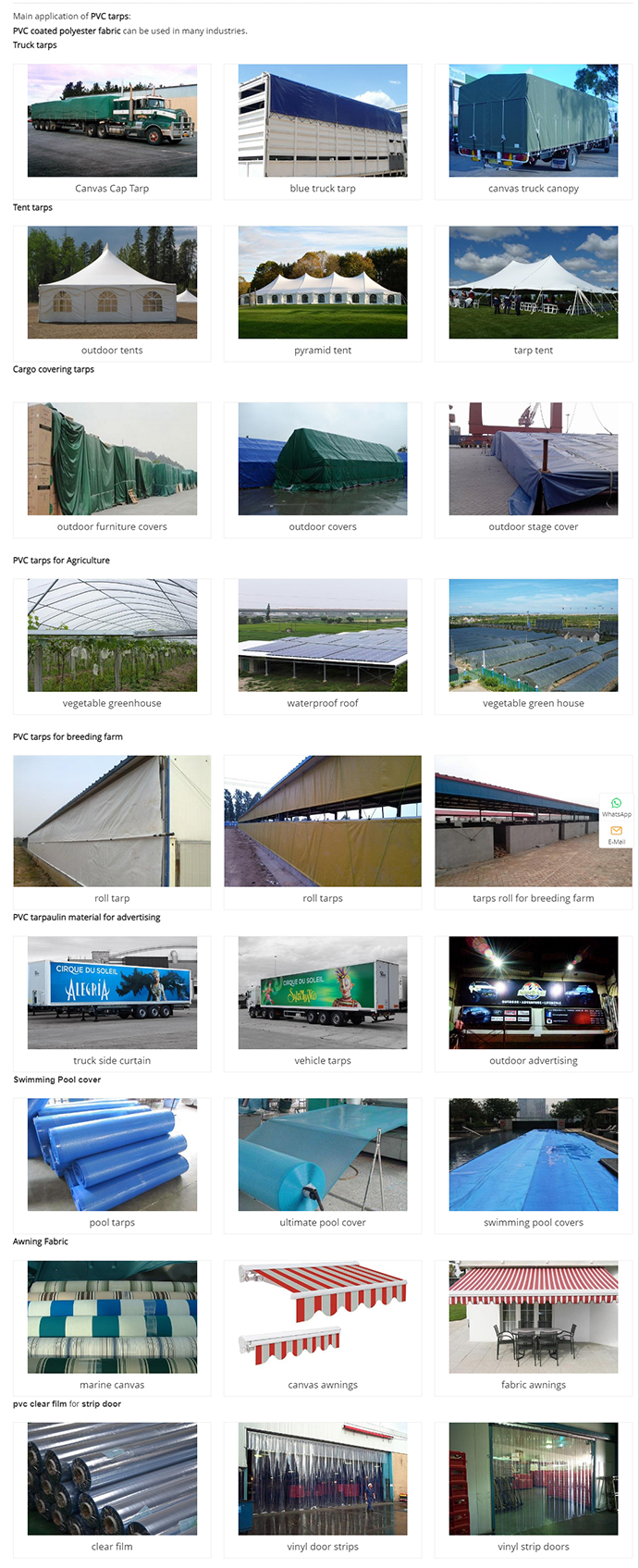
The best manufacturing route depends on how the tarp will fail if it is under-specified. A truck cover is exposed to wind, repeated tension and abrasion. A machinery cover may fail around sharp projections. A construction sheet may need puncture resistance, tie-down reinforcement and project-specific fire requirements.
| Application | Manufacturing Focus | What to Send the Factory |
|---|---|---|
| Truck / trailer | Base fabric strength, abrasion, UV, welds, hems and tie-down reinforcement | Vehicle dimensions, fixing points, folding frequency, route conditions, hardware layout |
| Industrial equipment | Shape accuracy, stress zones, abrasion/contact points, access openings | Drawing or photos, dimensions, protrusions, access needs, environment |
| Construction | Weather barrier, puncture risk, anchoring, seam and FR direction where required | Site use, size, exposure, fastening, required standard if any |
| Agriculture / storage | UV, moisture, cleanability, handling and seasonal reuse | Stored product/equipment, climate, size, handling frequency, target grade |
| OEM / distributor program | Grade architecture, private label, packaging, repeatability and market positioning | Target market, size range, desired material grades, label/packaging, forecast quantity |
A strong RFQ makes supplier comparison more meaningful. Instead of asking only for “heavy duty tarp price,” give factories the information needed to propose the same target product.
DERFLEX publishes coated-fabric production, factory and quality-control imagery alongside its commercial tarpaulin pages. Its current site also states a 60,000㎡ production area, 450+ employees, 25+ senior engineers and customers in 120+ countries. These figures should still be confirmed against the current quotation or company documents when they are material to vendor qualification.
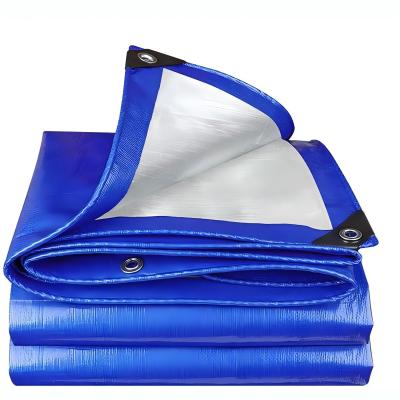
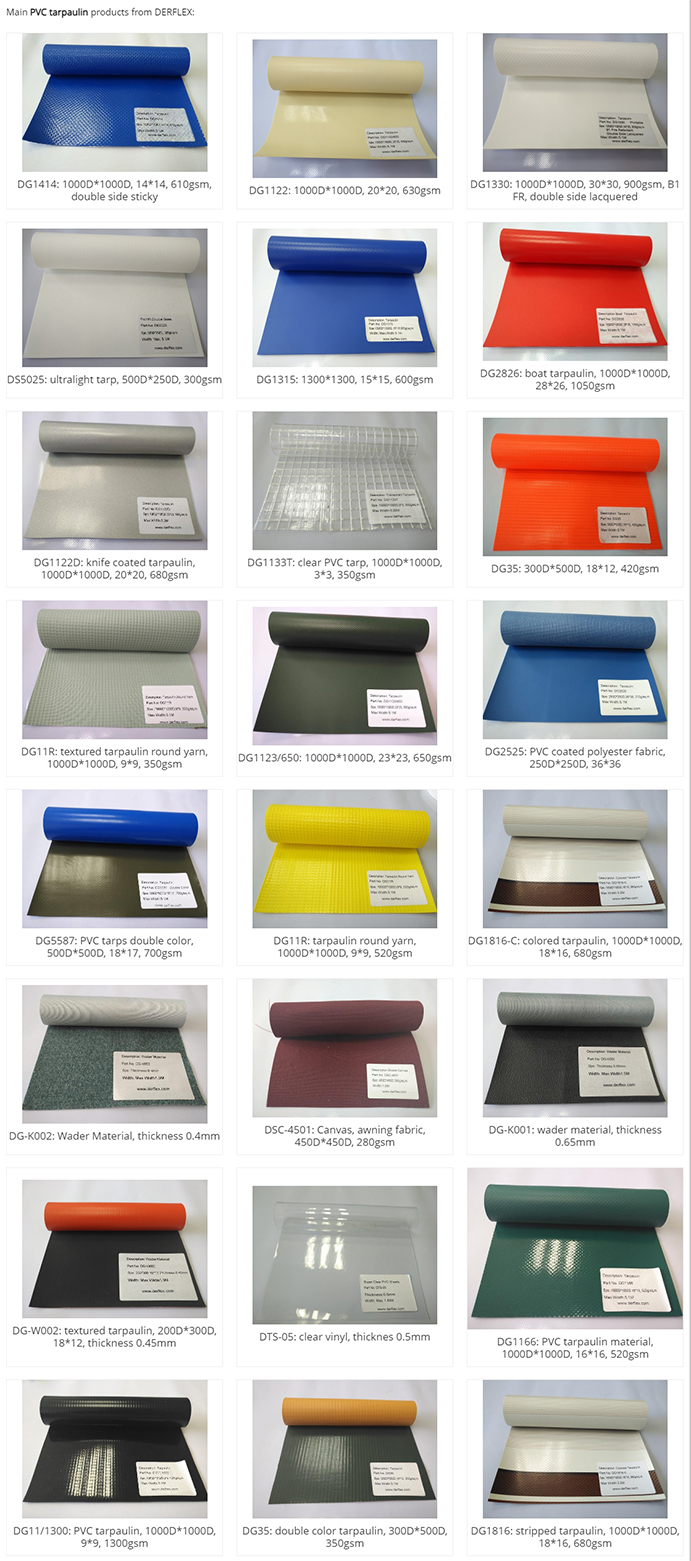
If you are sourcing roll material rather than finished covers, review the PVC coated fabric manufacturer page. For made-to-measure finished products, continue to custom tarps.
These pages separate the broad manufacturer question from specific material and application decisions.
Tarpaulins can be made by coated-fabric manufacturers, tarp converters/fabricators or integrated factories that control both material and finished-cover production. Some retailers and brands sell tarps made by outside factories. For B2B sourcing, confirm which company controls the fabric, fabrication and approved specification.
No. A manufacturer performs or controls production processes, while a seller may primarily stock, import or distribute finished products. Both models can be useful, but custom and repeat industrial orders usually require deeper visibility into material construction and fabrication.
Heavy-duty PVC tarpaulins are commonly made by technical textile manufacturers and tarp fabricators working with reinforced polyester fabric coated or laminated with PVC. The finished performance also depends on seams, hems, webbing, grommets and other stress-point details.
Ask for factory and process evidence, clarify where coating/lamination and final fabrication occur, review material-level specifications, ask how samples and repeat-order standards are controlled, and confirm the actual production scope for the product you are buying.
No. The supply chain can be split between a coated-fabric mill and a specialist converter. What matters is transparent responsibility, compatible material/fabrication choices and a controlled specification. An integrated supplier can be convenient when buyers want one party to coordinate both stages.
Send the application, dimensions or roll size, estimated quantity, material or GSM if known, color, environment, seam method, reinforcement, grommet or D-ring layout, logo/label needs, packing format, destination and any required test standard. Photos or drawings are useful when the shape is irregular.
Send DERFLEX the information you already have. The team can review the material route, supply form and fabrication direction before quotation rather than forcing your project into a generic stock tarp.