News
Industry News

Welding Blanket and Curtain Fabric | Heat Resistant Roll Material | DERFLEX

Update:2026/8/27 17:34:40 Views:
Hot-Work Protection Roll Goods

Welding Blanket and Curtain Fabric

Heat-resistant roll materials for fabricators producing welding blankets, vertical welding curtains, spark shields, equipment covers and industrial hot-work barriers.

DERFLEX can discuss fiberglass, high-silica and coated fiberglass material directions with project-based weight, thickness, width, coating, color, roll format and converting requirements. The correct construction depends on orientation, spark and spatter severity, radiant heat, molten-metal risk, handling frequency and the test method required by the buyer.

Fiberglass & Silica Directions Silicone / Acrylic / Vermiculite Coatings Roll Goods for Converters Custom Width & Weight
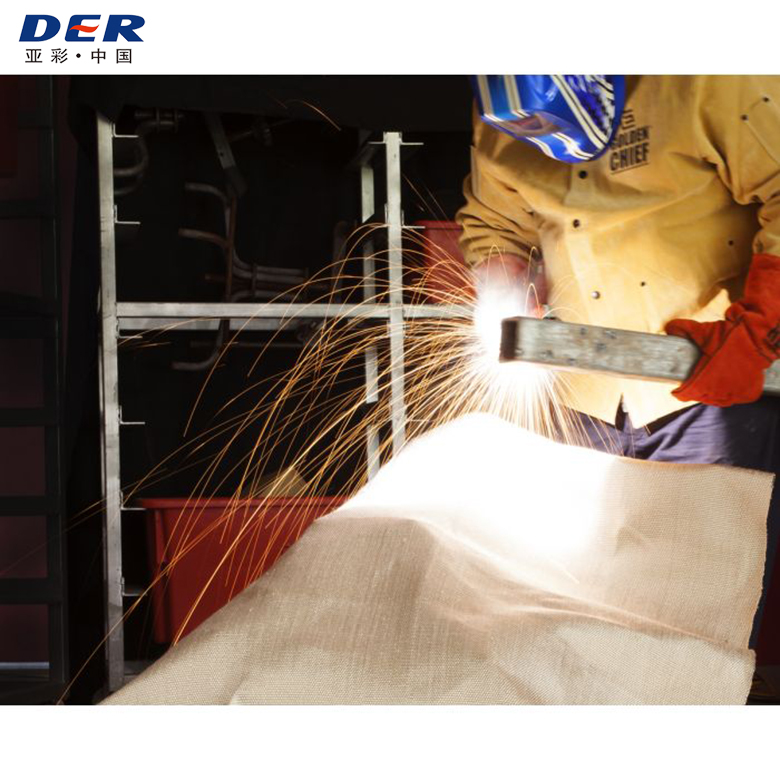
DERFLEX welding blanket and curtain fabric used for hot work spark protection
DERFLEX-hosted welding protection image. Final fabric construction and suitability must be confirmed for the actual hot-work exposure.
Answer First

What Is Welding Blanket and Curtain Fabric?

Welding blanket and curtain fabric is a heat-resistant industrial textile supplied as roll goods or converted panels for controlling sparks, spatter, radiant heat and hot-work debris around welding, cutting and grinding operations.

Unlike a finished welding blanket, the fabric is the material platform used by converters, safety-product brands and industrial fabricators. The base may be woven or texturized fiberglass, high-silica fabric or another project-qualified heat-resistant textile. Coatings such as silicone, acrylic or vermiculite can be selected to change abrasion resistance, surface handling, flexibility and exposure behavior.

A material that works as a lightweight vertical curtain is not automatically suitable as a horizontal blanket under falling sparks or molten spatter. DERFLEX therefore treats welding curtain fabric and welding blanket fabric as related but not interchangeable specifications.

Safety boundary: This fabric is an engineering control material, not personal protective equipment. No single “fireproof” claim applies to every fabric, coating, orientation or exposure. Confirm the selected grade, test method, working distance, exposure duration and finished assembly with the responsible safety professional before use.

Selection Principle

Blanket or Curtain? Orientation Changes the Specification

The same spark may create a very different load when it falls onto a horizontal blanket versus when it strikes and falls away from a vertical curtain.

Horizontal / Draped Protection

Welding Blanket Fabric

Used over floors, equipment, machinery, pipework or adjacent surfaces where sparks and spatter may remain on the textile for longer periods.

  • Evaluate burn-through and retained-hot-particle exposure
  • Consider heavier or higher-temperature constructions when needed
  • Review abrasion when blankets are dragged, folded and reused
  • Do not select only by nominal temperature of the base fiber
Vertical / Hanging Barrier

Welding Curtain Fabric

Used as hanging spark barriers, work-zone curtains and temporary hot-work partitions where drape, hanging weight, edge strength and repeated movement matter.

  • Balance protection with manageable curtain weight
  • Plan reinforced top edges, grommets or track attachment
  • Consider surface abrasion and repeated flexing
  • Keep optical arc-screening needs separate from opaque heat barriers
Specification Overview

Define the Fabric by Material System, Not by One Temperature Number

Heat-resistant textile specifications should separate the base fiber, coating, orientation, mechanical duty and required evidence. Final values are confirmed against the selected grade and approved sample.

Specification Item DERFLEX Supply Direction Buyer Decision Point
Product Form Roll goods, slit rolls, cut pieces or converted fabric direction Confirm whether the buyer will sew/finish locally or requires further conversion.
Base Material Fiberglass, high-silica and project-matched heat-resistant textile directions Select according to actual heat, spatter, slag and service severity.
Coating Options Silicone, acrylic, vermiculite or other project-matched coating direction Coating changes handling, abrasion behavior, surface protection and thermal limits.
Weight / Thickness Available by material family and project requirement Heavier is not automatically better; match protection with drape, handling and fabrication.
Width / Roll Length Custom direction subject to fabric construction and production route Plan width around seam count, cutting yield, curtain height and converter equipment.
Coating Side Single-side or double-side options for applicable coated fiberglass grades Choose according to exposure direction, abrasion, handling and cleanability.
Color / Surface Project-defined options depending on coating chemistry Color should never be treated as proof of a fire or welding performance class.
Required Test Route To be confirmed before sampling and quotation Provide the exact customer, project, ASTM, EN, ANSI/FM, NFPA or other required method.

Reference specification only. Do not use a generic website range as a substitute for the technical data sheet and report scope of the actual ordered fabric.

Material Map

Which Welding Fabric Construction Fits the Finished Product?

A useful supplier conversation starts with the duty of the finished blanket or curtain, then works backward into fiber, weave, coating and weight.

General Hot Work

Fiberglass Fabric

A common base direction for welding drapes, curtains and blankets where heat-resistant reinforcement, flexibility and cost control need to be balanced.

  • Available in woven or texturized directions by project
  • Can be sewn and converted into curtains or blankets
  • Surface handling should be evaluated before repeated use
Abrasion & Handling

Silicone Coated Fiberglass

Silicone coating can improve surface durability, flexibility and resistance to moisture or oil contact, making it useful for reusable protective textile products.

Review DERFLEX silicone coated fiberglass fabric for the dedicated coating and roll-goods selection page.

Light / Medium Curtain Direction

Acrylic Coated Fiberglass

Acrylic-coated glass fabric can be considered for vertical spark and spatter barriers where coating protection and manageable curtain weight are important.

  • Discuss coating weight and surface condition
  • Validate flame and hot-work performance by required test
  • Do not infer blanket suitability from curtain use alone
Higher Heat Direction

Vermiculite Coated Fiberglass

A mineral-coated fiberglass direction used in demanding thermal protection products where buyers need a different heat-facing surface than polymer-coated fabrics.

  • Useful for selected curtains, shields and protective layers
  • Evaluate stiffness, folding and edge construction
  • Confirm exact exposure and report requirements
Higher Thermal Demand

High-Silica Fabric

High-silica textile is considered when the application needs a higher-temperature material direction than standard fiberglass constructions can reasonably provide.

  • Suitable for demanding hot-work and heat-shield programs
  • Final temperature and molten-material suitability are grade specific
  • Sample conversion should be completed before bulk approval
Separate Curtain Family

Tinted PVC Arc-Screen Material

Transparent or tinted welding PVC is a different solution used when visual separation and arc-screening performance are required. It should not be substituted for a high-temperature horizontal welding blanket.

See DERFLEX industrial door curtain fabric for welding-grade PVC curtain directions.

Decision Matrix

Specify the Hazard Before You Specify the Fabric

“Welding use” is too broad for a reliable material recommendation. Define how the heat and particles reach the textile.

1

Orientation

Vertical curtain, horizontal blanket, draped equipment cover, pipe wrap or suspended shield.

2

Exposure

Grinding sparks, welding spatter, hot slag, radiant heat, intermittent flame or higher-temperature process heat.

3

Duty Cycle

Occasional maintenance, daily shop use, repeated folding, dragging, track movement or long-duration fixed installation.

4

Evidence

Exact test method, acceptance criteria, report scope and destination-market requirements before mass production.

Application Decision Table

Match Material Direction to the Working Environment

The table below is a purchasing framework, not a universal safety rating. Final selection must be validated against the specific hot-work process.

Use Condition Material Direction to Evaluate Selection Focus
Vertical spark curtain for fabrication bay Fiberglass or coated fiberglass curtain fabric Drape, hanging weight, spark exposure, edge strength, grommet/track loading and required test class.
Reusable horizontal equipment blanket Heavier fiberglass, silicone-coated fiberglass or higher-duty construction Particle dwell time, abrasion, folding, surface durability, seam/binding and actual blanket test requirement.
Higher-temperature welding or cutting zone High-silica or project-qualified specialty fabric Peak and continuous heat, molten-metal behavior, working distance and finished assembly design.
Maintenance shutdown around pipes and machinery Flexible coated fiberglass direction Wrapping flexibility, oil/moisture contact, repeated installation and removal, fastening and abrasion.
Opaque work-zone divider requiring weather resistance FR-direction coated industrial fabric or specialist hot-work textile Do not assume waterproof FR PVC equals a welding blanket; define heat exposure and required fire documentation.
Visible arc-screen partition Tinted welding-grade PVC curtain material Optical/UV transmission, shade, thickness, installation and applicable welding-screen standard—not horizontal hot-work blanket duty.

For projects that need waterproof flame-retardant partitions rather than heat-resistant blanket textiles, compare fire retardant PVC fabric as a separate material family.

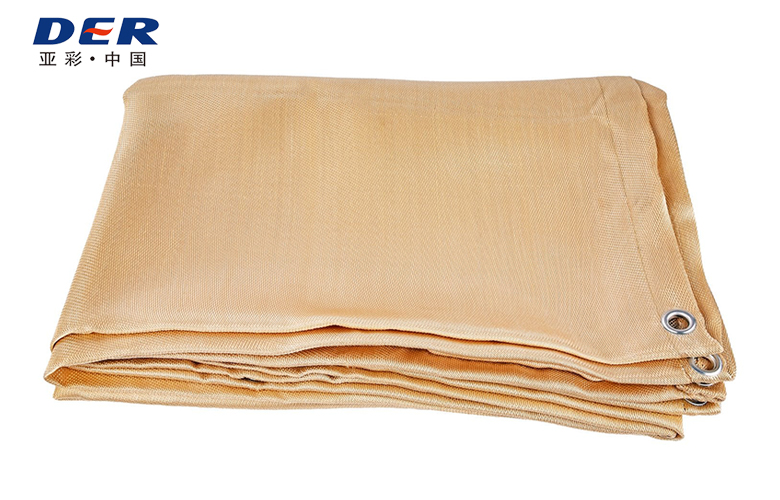
Folded DERFLEX welding blanket fabric with reinforced edge and grommet
Finished blanket reference showing why edge finishing, grommet placement and repeated handling should be considered while the roll fabric is being specified.
Fabrication Engineering

Roll Fabric Performance Is Only Half of the Finished Product

A strong base textile can still become a poor blanket or curtain if the converter ignores edge loads, seam placement, coating direction or attachment hardware. Include fabrication details during sampling, not after bulk rolls arrive.

Cutting & Edge Control

Fiberglass-based textiles can fray or release fibers at cut edges. Define binding, hemming or other edge treatment around the converter’s real process.

Sewing & Thread Selection

Thread, stitch density and seam position must match temperature, load and repeated flexing. Do not apply a general PVC-tarp sewing recipe to every hot-work textile.

Grommets, Straps & Hanging Loads

For curtains, reinforce the suspension zone and set grommet spacing around panel weight, track/frame design and movement frequency rather than appearance alone.

Coating Side & Heat Direction

On single-side coated fabric, state which face points toward the exposure. The coating and fiberglass substrate may have different thermal limits.

Do Not Assume HF or Hot-Air Weldability

Many fiberglass, silica and silicone-coated fabrics are sewn or mechanically fabricated rather than thermoplastic welded. Validate the actual joining method on the selected grade.

Common Procurement Errors

Five Mistakes That Create Wrong Welding Fabric Specifications

The material name alone does not tell a converter how the finished product will behave.

1. Treating curtain and blanket as interchangeable

A vertical curtain can shed hot particles while a horizontal blanket may hold them on its surface. The exposure mechanism must be defined.

2. Buying by “maximum temperature” only

Base fiber, coating, exposure time, direct flame, radiant heat and molten material behave differently. Ask what the quoted temperature actually refers to.

3. Using GSM as the only durability indicator

Weight does not replace information about weave, coating, tensile/tear behavior, abrasion, drape and finished edge design.

4. Requesting generic “fireproof certification”

Provide the exact test method and acceptance requirement. A report for one fabric structure cannot automatically qualify another.

5. Approving the roll without a conversion trial

Cut, sew, bind, grommet, fold and hang the sample using the real production method before approving repeat bulk orders.

6. Mixing arc-screen and hot-work barrier functions

Tinted transparent welding curtain material and opaque high-temperature blanket fabric solve different problems. A project may need both, but they should be specified separately.

Industries & Use Cases

Where Welding Blanket and Curtain Fabric Is Converted and Used

Material duty changes by industry, so procurement should include process details rather than only finished dimensions.

Shipbuilding & Marine Repair

Temporary curtains and blankets around steelwork, confined repair zones and nearby equipment. Handling, hanging and spark exposure can be frequent.

Metal Fabrication Shops

Bay curtains, machine covers, welding blankets and grinding barriers used repeatedly around production cells and maintenance work.

Construction Hot Work

Temporary shielding around structural welding and cutting. Site layout, wind, combustible materials and working distance must be reviewed.

Power & Process Plants

Maintenance blankets, removable shields and protective curtains around pipes, turbines, valves and process equipment during shutdown work.

OEM Safety Products

Roll material for brands producing private-label blankets, curtains, screens and hot-work protection accessories with controlled SKUs.

Thermal Barrier Projects

Where radiant heat rather than welding spatter is dominant, reflective systems may also be considered. Review DERFLEX reflective fabric material as a separate thermal-shield direction.

Sample-to-Bulk Control

What Should Be Validated Before a Repeat Roll Program?

A converter needs more than a pass/fail visual inspection. The approved sample should become the reference for the characteristics that affect both safety performance and manufacturing yield.

,
Checkpoint Why It Matters Practical Validation
Weight & Thickness Affects drape, handling, material consumption and finished-product structure. Agree on target, tolerance and measurement method for the ordered grade.
Usable Width & Roll Length Directly changes panel yield, seam count and converter efficiency. Check usable width, edge condition, roll length and packaging.
Coating Uniformity Bare spots, uneven coating or defects can affect handling and exposure behavior. Inspect both faces and cross-roll consistency on coated grades.
Cutting / Sewing Trial Some high-temperature textiles fray, shed fibers or require different machine settings. Run the real production method before bulk approval.
Edge & Hanging Test Curtain failures often begin around grommets, top hems or load concentration points. Build a sample panel and test the intended suspension system.
Thermal / Flame Test Claims must match the actual selected structure and required test route. Confirm relevant technical data and report scope for the ordered construction.

Buyers building broader industrial textile programs can also review DERFLEX technical textiles manufacturing for adjacent coated and engineered material capabilities.

DERFLEX Manufacturing Support

Build the Roll Specification Around the Product You Need to Convert

DERFLEX supports B2B buyers with application review, material selection, coated-fabric discussion, roll specification, sample coordination and OEM conversion direction.

Material-Level Discussion

Instead of quoting one generic “welding fabric,” DERFLEX can review base textile, coating system, coating side, weight, thickness, width, color, roll length, finished orientation and required test method.

  • Fiberglass / silica material directions
  • Silicone / acrylic / vermiculite coating directions
  • Single-side / double-side coating for applicable grades
  • Roll goods and conversion planning
  • Sample-to-bulk specification control

Useful for Converters and OEM Brands

The buying value is repeatability: the same fabric construction, usable width, surface, packaging and conversion behavior should be controlled around the approved specification rather than changing with spot-market stock.

For adjacent waterproof industrial covering materials where flame-retardant direction is needed, DERFLEX also supplies fireproof PVC tarp solutions.

20+ Years Coated fabric experience stated by DERFLEX
60,000㎡ Integrated production area stated by DERFLEX
450+ Full-time employees stated by DERFLEX
120+ Countries / regions served stated by DERFLEX
Buyer Checklist

Send These Details Before Asking for a Welding Fabric Quotation

A precise RFQ helps avoid unsuitable samples and lets the supplier separate curtain-grade, blanket-grade and higher-temperature material directions.

Application & Exposure

  • Finished product: curtain, blanket, shield, cover or wrap
  • Vertical, horizontal, draped or suspended orientation
  • Welding, cutting, grinding or other hot-work process
  • Spark, spatter, slag, radiant heat or direct flame exposure
  • Continuous / peak temperature and heat-source distance if known
  • Indoor, outdoor, oily, wet or chemically exposed environment

Commercial & Conversion Data

  • Preferred material or current reference sample
  • Weight / thickness / width / roll length target
  • Single- or double-side coating preference where relevant
  • Cutting, sewing, binding, grommeting or other conversion method
  • Required standard, report or customer specification
  • Trial quantity, estimated bulk demand, packing and destination
FAQ

Welding Blanket and Curtain Fabric Questions

Direct answers for industrial fabricators, safety-product buyers and procurement teams.

What fabric is used to make welding blankets and welding curtains?

Common directions include fiberglass, texturized fiberglass, coated fiberglass and high-silica fabrics. Silicone, acrylic or vermiculite coatings may be used to change surface durability, flexibility, abrasion behavior and thermal performance. The correct construction depends on whether the product is a vertical curtain, horizontal blanket, equipment cover or higher-temperature shield.

Is welding blanket fabric the same as welding curtain fabric?

Not necessarily. A curtain normally hangs vertically, so sparks and spatter can fall away from the surface. A blanket may be horizontal or draped over equipment, allowing hot particles to remain in contact longer. Material weight, coating, test class and finished construction should therefore be selected for the actual orientation.

Is silicone coated fiberglass suitable for welding blankets?

Silicone coated fiberglass can be a useful direction where buyers need a flexible heat-resistant composite with improved surface handling, abrasion resistance and resistance to moisture or oil contact. Suitability still depends on the selected grade, coating amount, heat exposure, spatter severity and required test method.

What is the best fabric for high-temperature welding protection?

There is no universal best fabric. Standard fiberglass may suit general hot-work protection, coated fiberglass can improve handling and surface durability, and high-silica or specialty materials may be considered for higher thermal demand. Selection should be based on actual process heat, spark/spatter/slag severity, orientation, working distance and required evidence.

Can transparent PVC welding curtain material be used as a welding blanket?

It should not be assumed suitable. Tinted welding-grade PVC is generally used as a vertical visual barrier or arc-screen material. A horizontal hot-work blanket has different thermal and molten-particle exposure. Use a material specifically selected and validated for the intended blanket duty.

Can DERFLEX supply welding fabric as rolls instead of finished blankets?

Yes. DERFLEX can discuss roll-goods supply for converters as well as project-based cut or converted directions. Buyers should provide the base material preference, coating, weight or thickness, width, roll length, quantity, conversion method and required test route.

What information should I send for a quotation?

Send the finished product type, orientation, hot-work process, heat and spatter exposure, working distance, preferred material, weight/thickness/width target, coating side, roll length, conversion method, required test standard, quantity, packaging and destination. A drawing or current sample is especially useful for OEM programs.

Build the Right Material Program

Need Welding Blanket or Curtain Fabric for Conversion?

Send DERFLEX the finished product, orientation, welding process, heat/spatter conditions, target material, weight or thickness, width, roll length, quantity and required test route. The team can review a practical material direction for sampling and quotation.

Include in Your RFQ

  • Blanket / curtain / shield / cover
  • Vertical or horizontal use
  • Heat, sparks, spatter and slag exposure
  • Material / coating preference
  • Width, weight/thickness and quantity
  • Required test method and destination market

Product-selection information on this page is for procurement discussion. Final performance, temperature limits, fire/hot-work test status, tolerances and application suitability must be confirmed for the exact ordered grade and finished assembly.

Consulting Services
+86-021-54361792 / 54361798
Email
sales@derflex.com