H?S Level and Variation
Provide a measured range when available. Short peaks and long continuous exposure may create different project expectations, so avoid specifying only a single nominal number if the process varies.



DERFLEX supplies coated technical membrane material for biogas systems where hydrogen sulfide (H?S), moisture, condensate and methane containment must be reviewed together. Instead of treating “H?S resistant” as a generic label, we help buyers define the gas-contact layer around actual gas chemistry, permeability criteria, welding process, mechanical movement and project test requirements.
In double-membrane gas holders and digester covers, the inner or gas-contact layer normally sees the most direct chemical exposure. The outer membrane has a different job: maintaining structure shape and resisting UV, rain, wind and other weather loads. A membrane specification for elevated H?S exposure therefore should not be copied from an outer weather membrane datasheet.
DERFLEX already supplies broader biogas membrane materials and layer-specific inner membrane for biogas holder applications. This page focuses specifically on the chemical-exposure questions buyers should resolve before approving a gas-contact membrane for H?S-bearing biogas.
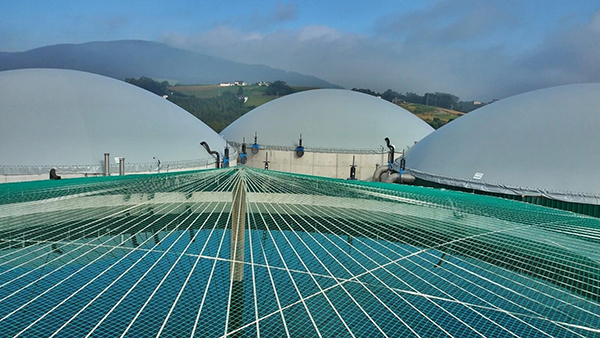
H?S concentration is important, but procurement decisions become more reliable when it is reviewed with the rest of the gas environment.
Provide a measured range when available. Short peaks and long continuous exposure may create different project expectations, so avoid specifying only a single nominal number if the process varies.
Dry gas and wet chemical contact are not equivalent service conditions. Identify whether the membrane sees vapor only, droplets, persistent condensate or liquid pooling at folds and low points.
Temperature influences coating flexibility, gas permeability, chemical interaction and weld performance. Include normal and expected extreme temperatures in the material review.
Clarify which surface faces raw biogas. A weather-resistant top finish on an outer membrane does not automatically define the chemical performance of the gas-contact surface.
Inner membranes rise and fall with gas volume. Chemical resistance must coexist with flexing, fold behavior, tensile/tear performance and dimensional stability.
The gas envelope is only as reliable as its seams. Coating formulation, overlap, welding temperature/power, speed and pressure should be validated as part of sample approval.
Values that have not been verified for a specific DERFLEX grade are intentionally left project-defined. This keeps the RFQ technically useful without inventing performance data.
| Specification Item | DERFLEX Project Direction | Why It Matters for H?S-Bearing Biogas |
|---|---|---|
| Primary Use | Gas-contact inner membrane, selected digester cover, bottom/sealing membrane or other biogas containment layer. | Each membrane position has a different balance of chemical, mechanical and weather exposure. |
| Base Reinforcement | High-tenacity woven polyester or other project-approved reinforcement structure. | Provides tensile, tear and dimensional control while the coating handles barrier and environmental exposure. |
| Coating Direction | PVC coated polyester is a common direction; PVC/PVDF or TPU-related structures can be discussed when project chemistry, surface or fabrication requirements justify them. | Coating selection should match gas-side exposure, flexibility and welding requirements rather than brand terminology alone. |
| H?S Exposure | Project-specific. Provide gas analysis, H?S range if known, exposure duration, temperature and wet/condensate condition. | No responsible resistance claim can be separated from the real service environment. |
| Gas Permeability | Low-permeability structure to be specified by gas type, test method, temperature, units and acceptance criterion. | Methane retention is a separate requirement from chemical resistance and should be evaluated independently. |
| Fabric Weight / Thickness | Project-defined according to membrane role, mechanical requirement, flexibility and fabrication method. | Higher GSM alone does not prove better H?S resistance or lower gas permeability. |
| Welding Compatibility | HF/RF, hot-air or hot-wedge welding can be supported depending on formulation and fabricator equipment. | Trial weld quality affects seam strength and gas containment of the finished system. |
| Surface / Finish | Project color and functional surface direction; outer-layer PVDF surface options can be discussed where weathering and cleanability are priorities. | Outer-surface durability and gas-side chemical resistance are different selection problems. |
| Optional Requirements | Flame-retardant, anti-mildew, anti-wicking, low-temperature flexibility, antistatic or other project-defined options where applicable. | Biogas systems often have multiple safety and durability requirements beyond H?S exposure. |
| Supply Form | Roll goods, custom width, cut material or fabricated-panel direction subject to project agreement. | Supply form should match seam planning, cutting yield, fabrication equipment and installation workflow. |
Final technical values, tolerances and test methods should be agreed through the project specification and approved sample documentation.
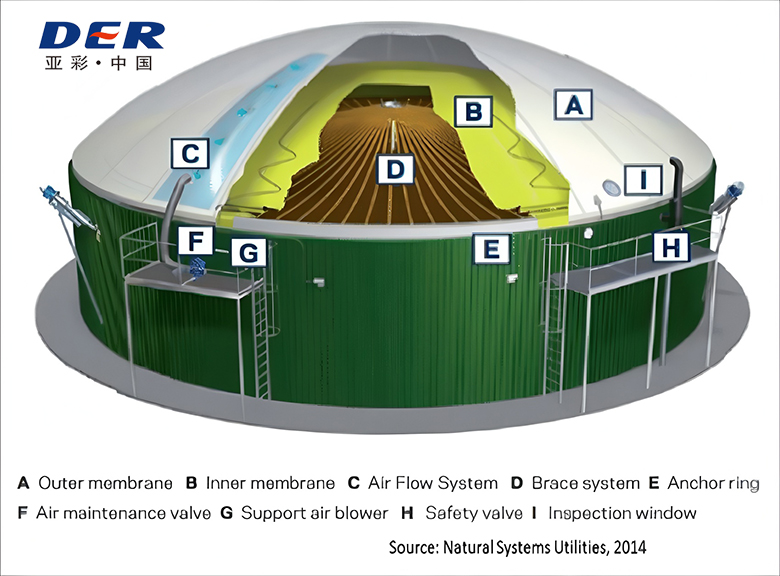
The biogas holder membrane system may contain inner, outer and bottom membrane roles. For elevated H?S concerns, the first question is which surface actually contacts raw biogas.
| Layer | Primary Selection Priorities | H?S Review |
|---|---|---|
| Inner Gas Membrane | Gas barrier, chemical exposure, cyclic flexibility, seam reliability. | Direct review required when the layer contacts raw biogas. |
| Outer Weather Membrane | UV, rain, wind, snow, surface durability, structural shape. | Usually indirect unless process gas can reach the outer surface through leakage or system design. |
| Bottom / Sealing Layer | Gas tightness, substrate interface, anchoring, abrasion and seam design. | Review if it is part of the raw-gas envelope or exposed to condensate. |
| Tank / Digester Cover | Gas containment, load path, anchors, condensate management and maintenance access. | Review based on which side is gas-facing and how liquid condensate behaves. |
For exposed outer layers, DERFLEX also offers a PVC / PVDF coated fabric direction for biogas projects. PVDF surface selection should be made for its relevant outdoor/surface objectives and should not be used as a substitute for evaluating the gas-contact coating against H?S exposure.
This matrix is a procurement screen, not a substitute for project engineering or laboratory qualification.
| Project Condition | Buyer Should Provide | Material / Approval Focus |
|---|---|---|
| H?S present, dry or low-condensate gas | Gas composition, H?S range, temperature, pressure and membrane position. | Gas-side coating compatibility, permeability requirement, flexing and weld seam validation. |
| H?S with frequent condensation | Condensate location, drainage behavior, liquid contact duration and other process compounds. | Wet chemical exposure, coating stability at folds/low points, seam area exposure and inspection plan. |
| Large H?S variation or process spikes | Normal range, expected peaks, duration and operating upset information if available. | Define a realistic test/approval condition rather than qualifying only at nominal gas chemistry. |
| Cold-climate inner membrane | Minimum temperature, fold/movement behavior, welding process and storage/installation conditions. | Low-temperature flexibility plus gas-side chemical and barrier requirements. |
| Replacement membrane after early failure | Old TDS/sample, failure location, gas analysis, operating history and seam/anchor details. | Failure-mode review before copying the previous thickness or GSM. |
| New OEM gas-holder series | Holder geometry, capacity, pressure range, membrane pattern, welding line and repeat-order plan. | Freeze an approved material + welding + inspection specification for reproducible supply. |
Weight can influence mechanical strength and handling, but it does not by itself define gas permeability or chemical resistance. Review coating structure and test criteria separately.
A membrane exposed to wet condensate can face a different chemical environment than one exposed primarily to gas vapor. Tell the supplier where liquid can collect and how long it remains.
An outer weather surface and a gas-contact surface have different functions. Select each layer according to its actual exposure rather than assuming one premium finish solves every requirement.
Gas containment depends on the finished membrane envelope. Trial welds using actual equipment, overlap and seam parameters should be part of approval where practical.
A useful approval process connects the material datasheet to the real gas-holder or digester fabrication workflow.
Share H?S range, methane/CO? data, moisture, condensate and other known constituents.
Agree gas permeability method, gas type, temperature, units and acceptance criterion.
Review coating, reinforcement, thickness/weight, flexibility and required optional treatments.
Use the production welding method and representative seam geometry before bulk approval where practical.
Record the approved material, width, color, batch controls, packaging and repeat-order requirements.
H?S review is relevant wherever raw biogas directly contacts a flexible membrane. The objective is not to label every project “high H?S,” but to identify the chemical conditions before material approval.
For broader tank-cover design questions, see DERFLEX anaerobic digester cover membrane guidance. For low-pressure gas storage material selection beyond H?S-specific concerns, review the gas storage membrane page.
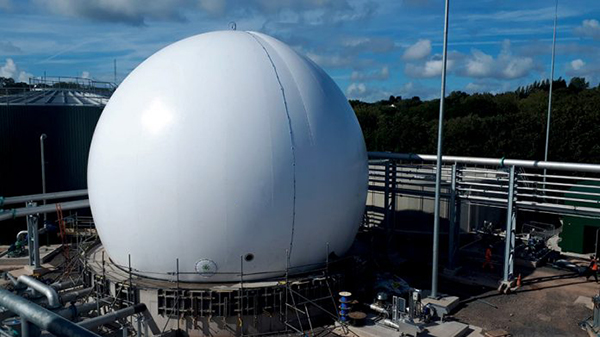
Gas barrier and weld behavior depend on repeatable coating structure. Define the approved surface, coating direction and batch inspection items.
Choose roll width with panel cutting and seam count in mind. Fewer or better-positioned seams can improve fabrication efficiency, but structural design remains the engineer’s responsibility.
Record equipment type, power/temperature, speed, pressure, overlap and conditioning. Do not assume settings transfer unchanged between different coating structures.
Anchoring interfaces, flanges, inspection openings and penetrations can concentrate stress. Material choice should be coordinated with the full membrane detail.
Panel geometry and system design should avoid uncontrolled liquid accumulation where possible. Persistent wet contact should be disclosed during chemical-resistance review.
OEM buyers should freeze material identity, roll width, color, coating, label, packaging and inspection expectations after approval.
DERFLEX’s role is the coated-fabric and membrane material layer: project matching, sample development, weldability review and repeatable supply.
Inner, outer, bottom and cover membranes can be treated as different specifications instead of forcing one material to solve unrelated service conditions.
DERFLEX works across PVC coated fabric, PVDF-surface directions, TPU coated materials and other industrial membrane applications, allowing project discussion around function and process.
Material development can be discussed together with welding method, roll width, panel fabrication, seam trials, packing and repeat-order requirements.
These verified DERFLEX pages cover adjacent material and system questions without duplicating the H?S-specific focus of this page.
A stronger RFQ reduces back-and-forth and makes sample selection more relevant to the actual operating environment.
H?S suitability depends on the gas-contact coating system and the complete exposure condition. Buyers should provide H?S concentration or range if known, temperature, moisture/condensate condition, other gas constituents, exposure duration and required test criteria. A generic “chemical resistant” label is not enough for engineering approval.
No. Humidity, condensate, temperature, contact side, exposure duration, gas mixture, membrane movement and welded-seam conditions can all influence the material and approval strategy.
The inner gas-contact membrane normally requires the most direct review because it contains raw biogas. Bottom or digester-cover layers should also be reviewed if they are part of the raw-gas envelope or see condensate. Outer weather membranes are usually selected primarily for UV and external load exposure.
No. PVDF surface directions can be useful for outdoor weathering, cleanability and surface durability, especially on exposed outer membranes, but the gas-contact coating and actual H?S/condensate exposure still need to be evaluated separately.
No universal ppm limit is stated here because final suitability depends on the selected membrane grade, test method, temperature, moisture/condensate and exposure conditions. Send project gas data and required test criteria so the material direction can be reviewed responsibly.
Define the permeability test method, test gas, temperature, units and acceptance criterion rather than relying only on words such as “gas-tight.” Chemical resistance and methane permeability should be treated as separate but coordinated requirements.
Where practical, yes. Trial welds using the actual HF/RF, hot-air or hot-wedge process help confirm coating compatibility, seam quality and repeatable fabrication before bulk production.
Please provide the gas-holder or digester type, membrane role, dimensions, storage volume, pressure, gas composition, H?S range if known, condensate condition, temperature, welding process, required tests, color, width, quantity, project country and any available drawings or existing membrane datasheet.
Send DERFLEX the gas chemistry, membrane position and fabrication requirements first. We can then discuss a practical coated-fabric direction for sampling, welding trials and project quotation.