Knife Coated PVC Fabric
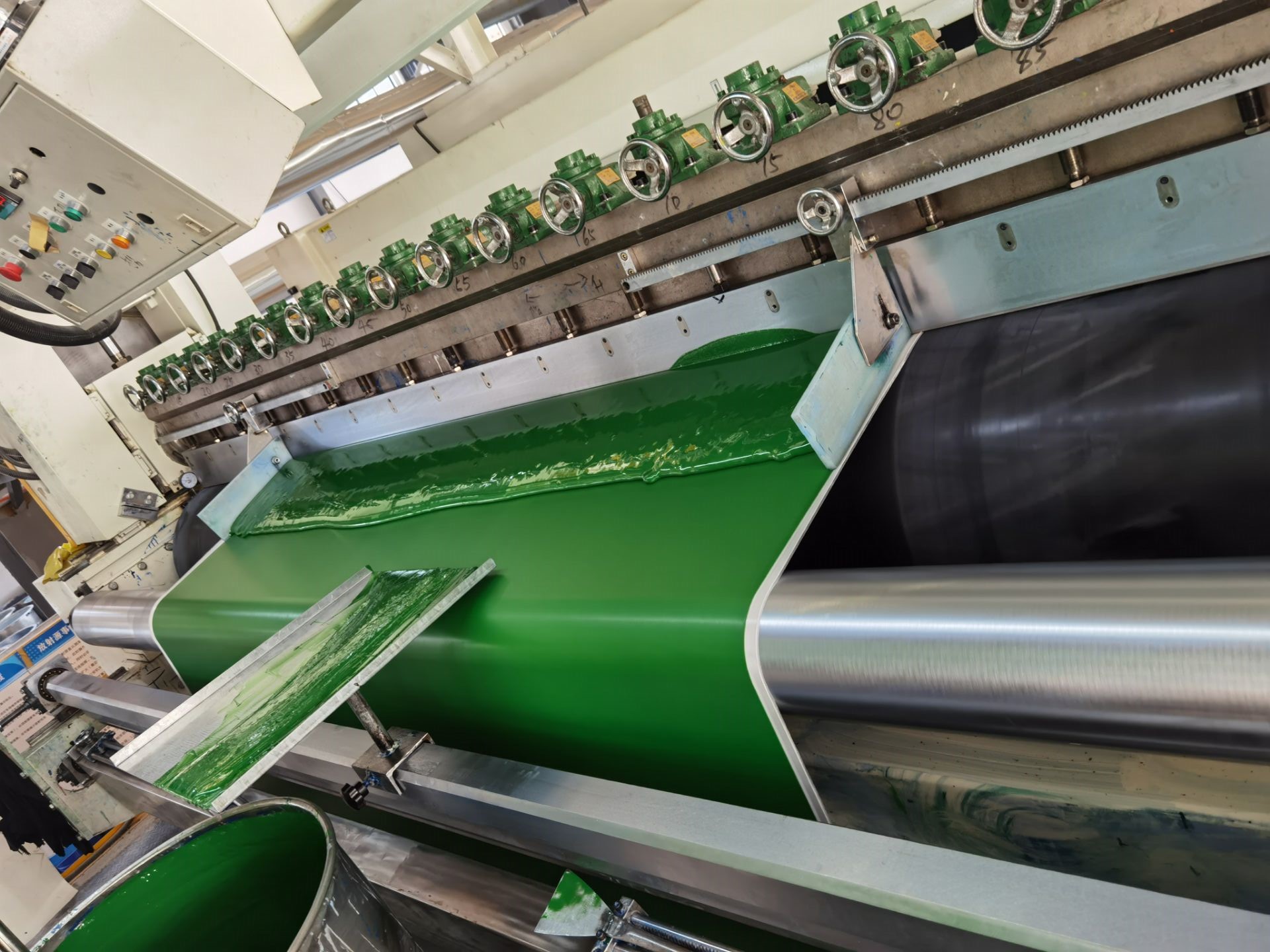
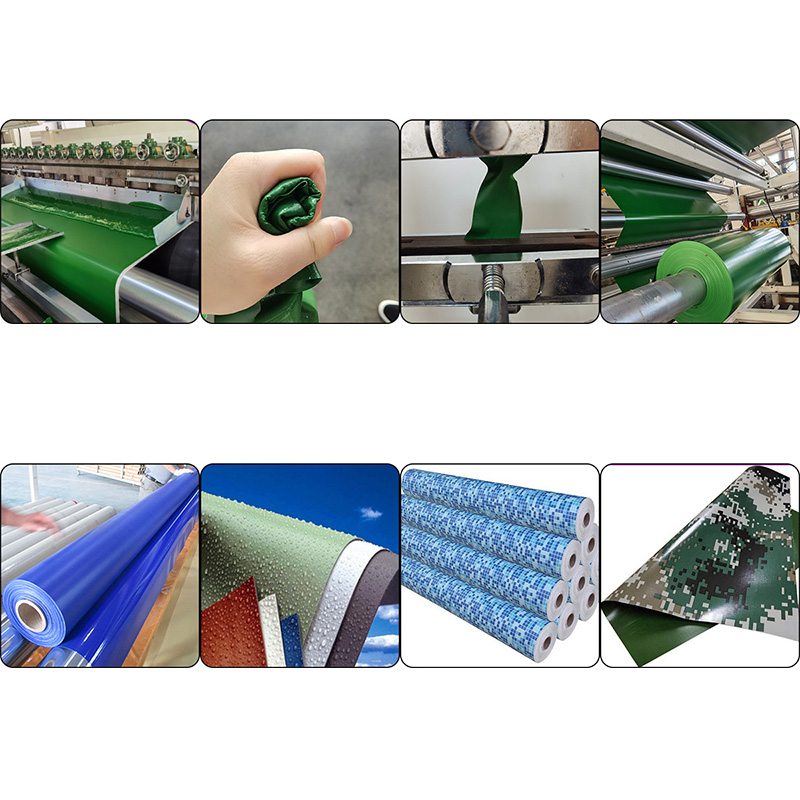
Viscous PVC plastisol or compound is applied directly to the textile. The coating knife meters the wet layer; thermal processing gels/fuses the PVC. Multiple passes may be used to build the required coating structure.
The process name affects how the PVC layer is built and bonded—but it does not, by itself, tell you which roll will perform better. Compare the exact construction, adhesion, polyester reinforcement, weld behavior, surface system and aging data before choosing.
For truck tarps, side curtains, industrial covers, tents, flexible doors, inflatables and OEM roll programs, this guide shows where knife coating usually has an advantage, where hot-melt lamination can be the better commercial fit, and what test data should decide the order.
The important qualifier is often. A well-engineered laminate can outperform a poorly made coated fabric. Tensile and tear strength are strongly influenced by the polyester scrim; peel strength depends on the interface and process control; weathering depends on the PVC formulation and topcoat; welding depends on the full surface system. Buy to an approved construction and test data—not to a process label alone.
This table describes typical process tendencies. Final performance must be confirmed on the exact yarn, weave, PVC formulation, bond system, thickness, topcoat and finished roll.
| Decision point | Knife coated PVC fabric | Hot melt laminated PVC | What the buyer should verify |
|---|---|---|---|
| How the PVC layer is formed | PVC plastisol/compound is metered directly onto the textile and thermally gelled/fused. | Pre-formed PVC film layers are bonded to the reinforcing textile under controlled heat and pressure; a compatible bonding system may be used. | Ask for the actual layer construction and production route for the quoted grade. |
| Coating-to-textile interface | Direct coating can penetrate and mechanically integrate with the fabric structure, supporting strong adhesion when properly formulated and cured. | Performance depends on film, adhesive/bond layer, heat, pressure and textile preparation. | Compare coating adhesion / peel strength on production samples. |
| Thickness control | Knife gap, viscosity, line speed and multiple coating passes can be adjusted for coating build. | Film thickness is primarily established before lamination; the final structure depends on film and bond layers. | Check total thickness, coating weight and cross-roll uniformity. |
| Surface appearance | Can be matte, glossy, embossed, lacquered or surface-treated after coating. | Pre-formed film can provide a very smooth and consistent face appearance. | Approve a surface master sample and color standard. |
| Tensile strength | Not determined by process name alone. The reinforcing textile—yarn denier, weave/knit, density and pretreatment—is a major driver. | Compare warp/weft tensile data on the exact construction. | |
| Tear resistance | Also strongly dependent on the textile reinforcement, coating level and test method; do not assume one process is automatically stronger. | Specify tear method and minimum values before bulk production. | |
| Delamination risk | Reduced when direct coating, gelation and layer-to-layer adhesion are well controlled. | Highly dependent on bond quality and aging resistance of the laminate interface. | Test peel strength before and after heat/humidity/flex exposure when critical. |
| Welding behavior | Often selected for demanding HF or hot-air fabrication, subject to formulation and topcoat compatibility. | Can weld well if film and bond design are compatible with the chosen equipment. | Run the buyer's real weld recipe and seam test before approving bulk. |
| Outdoor durability | Common choice for higher-duty outdoor constructions because coating build and topcoat systems can be tailored. | Can perform well outdoors, but film/bond formulation and UV package must match the exposure target. | Compare accelerated aging direction, color change, cracking and peel retention—not just initial appearance. |
| Airtight / water-retention use | Can be engineered for airtight and liquid-retention products with appropriate formulation and seam design. | Film-based laminates can also be engineered for low leakage and smooth barrier layers. | Leak test the finished welded structure, not only the raw roll. |
| Production economics | Often justified where higher-duty construction, coating control or surface systems are required. | Can offer high throughput and attractive economics in suitable film-laminated programs. | Compare cost per service cycle, scrap rate and conversion yield—not only price per square meter. |
| Best selection logic | Choose when the application rewards adhesion stability, heavy-duty coating build and repeated fabrication/outdoor service. | Choose when the laminate meets the real performance target with a more efficient film-based structure. | Approve by application, TDS, sample, conversion trial and test values. |

Practical rule: process is one specification line—not the complete specification. Base fabric, coating/bond chemistry, surface finish, UV/FR package, weld recipe and QC determine the finished result.
Both materials can look almost identical from the outside. The key difference is how the PVC layers are created and attached to the reinforcing textile.
Viscous PVC plastisol or compound is applied directly to the textile. The coating knife meters the wet layer; thermal processing gels/fuses the PVC. Multiple passes may be used to build the required coating structure.
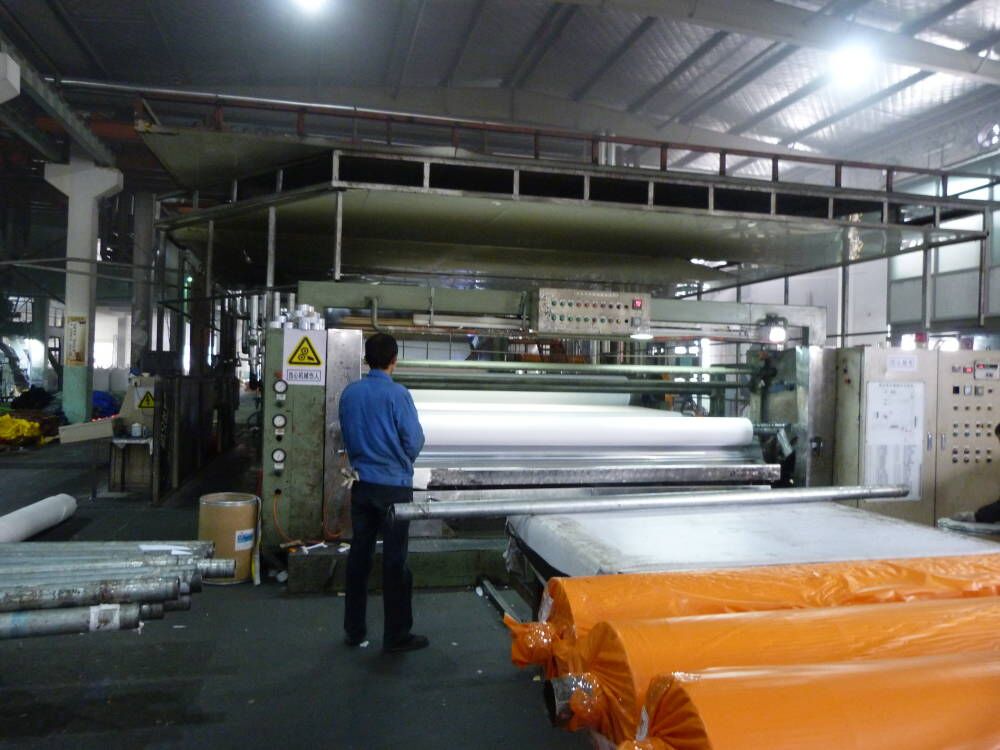
Film layers are brought together with the textile under heat and pressure. The integrity of the laminate depends on film quality, surface preparation, bonding system, temperature, nip pressure, line speed and cooling control.
The process sequence explains why two rolls with the same nominal GSM can behave differently during welding, folding, abrasion or long-term exposure.
Yarn denier, weave/knit style, thread density, shrinkage and textile pretreatment influence tensile, tear, dimensional stability and coating/bond behavior.
Resin, plasticizer, stabilizer, pigment and functional additive package control flexibility, weathering, cold behavior, flame-retardant direction and weld response.
Direct coating penetration or laminate bond quality must survive flexing, heat, humidity, tension and downstream welding without premature separation.
Under-processing can leave weak fusion; excessive heat can affect textile or polymer properties. Process window control is critical on both production routes.
Acrylic, PVDF-compatible lacquer, print treatment, anti-scratch or other top finishes change dirt resistance, weld settings, printability and weather performance.
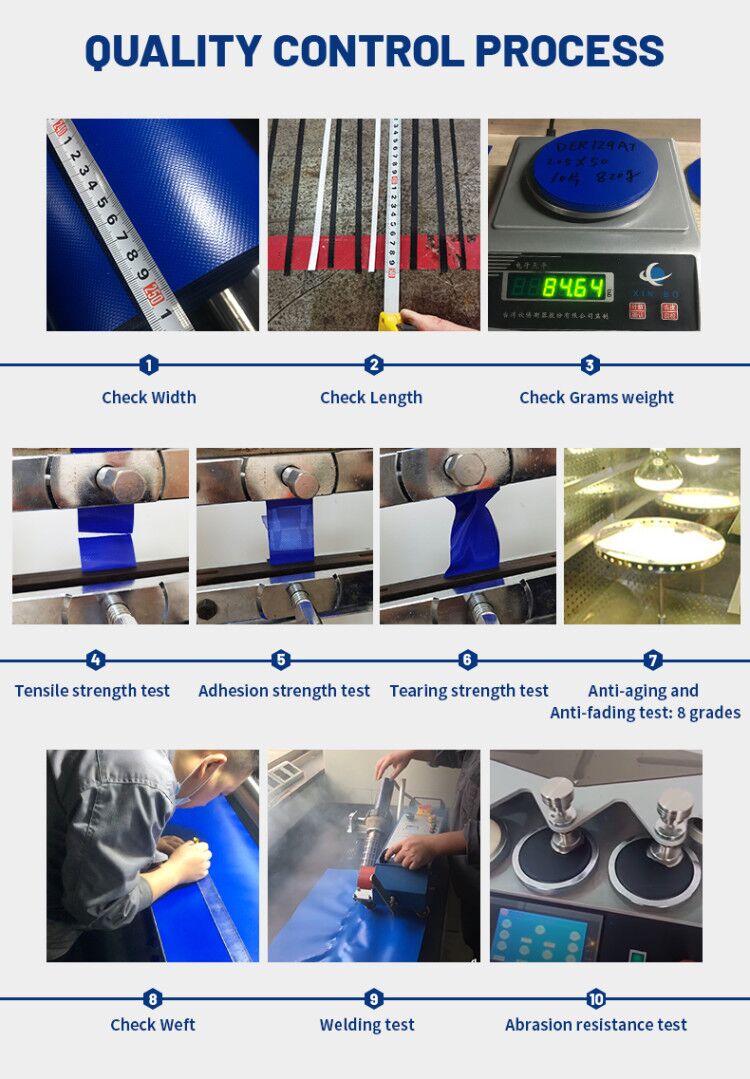
Cross-roll GSM, width, appearance, color, peel, tensile, tear and weld trials reveal whether the nominal specification is actually repeatable in production.
Use the end product and conversion process to choose the manufacturing route. The recommendations below are procurement directions—not substitutes for approving the exact sample and data sheet.
Repeated flexing, abrasion, welding, edge reinforcement and outdoor exposure make adhesion stability and durable surface systems important.
High-cycle rolling and movement reward a structure validated for flexibility, tear resistance, weldability and surface abrasion.
Coating build, lacquer options, weathering package and dimensional control become more important as expected exposure increases.
Airtightness, low leakage, weld seam strength and hydrostatic behavior should be tested on the finished welded construction. Do not select on process name alone.
A film-laminated construction can be commercially attractive when the expected service level, peel strength and weld behavior are adequately validated.
Air leakage, flexibility, flame-retardant/anti-static requirements, spiral or layflat construction and welding method should drive the choice.
For heavy-duty roll conversion, see DERFLEX knife coated tarpaulin rolls. For broader material selection, compare PVC tarpaulin material and heavy-duty PVC fabric roll options.
For critical OEM programs, the purchase specification should identify the test method as well as the minimum value. That makes repeat orders easier to control and supplier comparisons more meaningful.
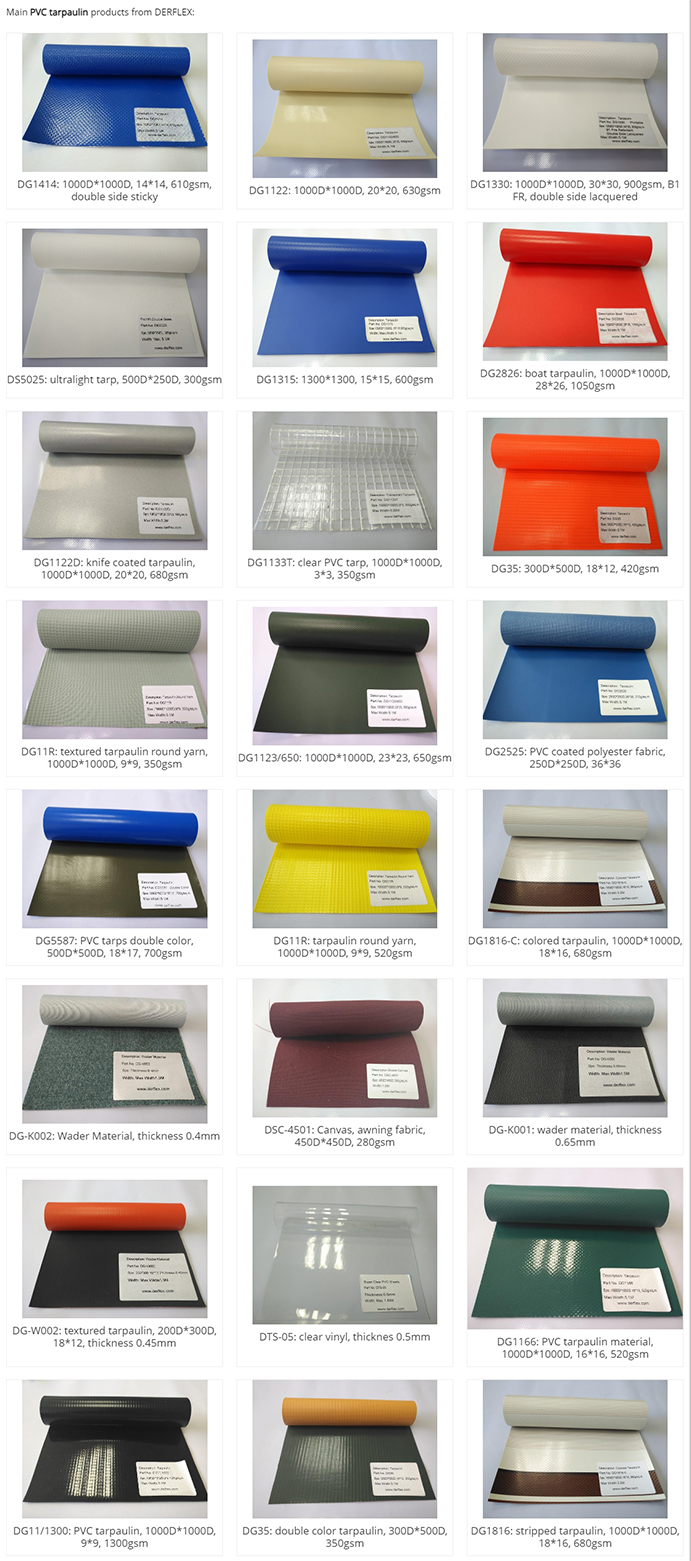
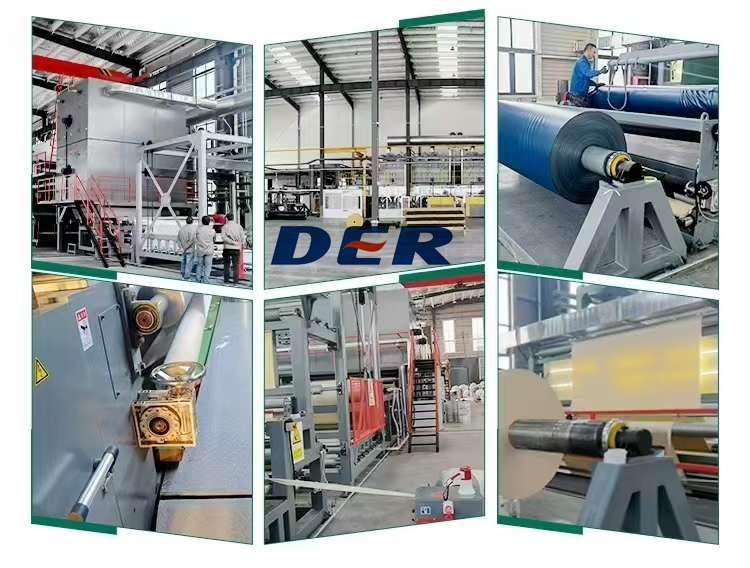
DERFLEX also shows its broader production route in the factory tour, and its current coated textile range on the PVC coated fabric manufacturer page.
Use an agreed peel / coating adhesion method to compare how strongly the PVC layer or laminate is attached to the textile.
Reference method: ISO 2411:2024, Rubber- or plastics-coated fabrics — determination of coating adhesion.Compare warp and weft strength on the exact finished construction—not only the greige fabric.
Reference method: ISO 1421:2016.Tear values are especially relevant for tarps, covers, curtains and products with grommets, webbing or concentrated loads.
Reference method: ISO 4674-1:2016.Confirm total GSM and, when required, the mass contribution of coating and substrate to understand what the quoted weight actually represents.
Reference method: ISO 2286-2:2016.Color and surface appearance are not enough to identify the process or predict performance. Always connect the physical sample to the TDS, product code and approved construction.
Knife coating describes a manufacturing route. Resin quality, coating weight, textile reinforcement, curing, topcoat and QC can still vary significantly.
Two 650gsm fabrics may have different yarn denier, thread density, coating weight and surface treatment. The same headline GSM does not mean the same strength or life.
A fabric that looks excellent on the roll can create production problems if the surface system, softness or melting behavior does not match the actual HF/hot-air line.
Critical products may need peel retention after heat, humidity, flexing or aging. Initial adhesion is useful, but service conditions should guide the approval protocol.
If you already use a competitor sample, send a physical swatch or data sheet. DERFLEX can compare the construction rather than guessing from GSM alone. For related material structures, review vinyl coated polyester fabric and truck side curtain tarpaulin.
DERFLEX supplies coated and laminated PVC textile programs for converters, distributors, OEM brands and industrial buyers. The practical advantage is the ability to discuss application, textile reinforcement, coating/lamination route, surface treatment, welding and roll supply as one specification.
No. Knife coating often suits demanding outdoor and repeated-flexing applications, but the finished performance depends on base textile, PVC formula, coating/bond control, surface finish and QC. A well-designed hot-melt laminate can be the better choice for a specific cost, appearance, barrier or production target.
Knife coating meters a viscous PVC compound directly onto the textile before thermal gelation/fusion. Hot-melt lamination bonds pre-formed PVC film layers to the textile under heat and pressure, with a compatible bonding interface where required.
Knife-coated constructions are often selected when strong coating-to-fabric adhesion is a priority, but peel strength must be measured on the actual grade. Laminate bond quality can vary with film, adhesive/bond system, surface preparation and process control.
Both can be weldable. The better option depends on PVC formulation, topcoat, thickness and your equipment. For OEM production, run the exact HF or hot-air welding recipe on a sample and test the seam before approving bulk.
No. Tensile and tear performance are strongly influenced by the polyester reinforcement: yarn denier, weave or knit, density and construction. Coating can influence tear behavior, but the process name alone does not define mechanical strength.
Either route can be engineered for barrier applications. The correct decision should be based on material leakage, weld seam strength, peel retention and finished-product pressure or hydrostatic testing.
Send the finished application, target GSM/thickness, width, color, surface finish, quantity, service environment, welding method, required test values, functional options and destination. A competitor sample or current TDS is useful when matching an existing construction.
DERFLEX's current coated textile pages describe knife coating and lamination options. Final process, width, weight, finish and performance should be confirmed against the specific project and production program.
Send DERFLEX the end use, target GSM/thickness, width, color, expected exposure, welding method, quantity and any required test values. The team can review the construction direction and quote an application-matched PVC coated fabric program.