


PPF Thickness Guide: 6 Mil vs 7 Mil vs 8 Mil vs 10 Mil
PPF thickness changes how much material sits between the road and the paint, but the thickest film is not automatically the right film. Compare protection reserve, conformability, installation behavior, layer construction and purchasing specifications before selecting a gauge.
This guide is written for automotive-film distributors, detailing brands, installer networks, fleet programs and private-label buyers comparing TPU paint protection film by mil and micron.
Which PPF thickness should you choose?
When the material system is otherwise comparable, 6 mil PPF favors lighter construction and easier conformability; 7 mil PPF adds material while retaining good handling; 8 mil PPF is a common comparison point for balanced automotive protection; and 10 mil PPF adds more physical material for high-exposure zones but can demand more installer skill on complex curves. Thickness should be selected together with TPU quality, top coat, adhesive, clarity and the exact measurement basis.
Lightweight direction for buyers prioritizing flexibility, clean conformability and a lower material build.
Middle range for product lines that want more material than 6 mil without moving to a heavier construction.
Balanced comparison point for general paint-protection programs, daily-use vehicles and broad installer networks.
Heavy construction direction for buyers comparing extra impact reserve with reduced drape on difficult body geometry.
What does “mil” mean in PPF?
A mil is a thickness unit equal to 0.001 inch. It is not a millimeter. For international purchasing, converting mil to micron helps prevent specification errors between markets that use imperial and metric units.
The conversion is exact: multiply the mil value by 25.4 to get microns. A nominal 8 mil film is therefore 203.2 μm, while 10 mil equals 254 μm.
If you are comparing raw transparent polyurethane with finished automotive film, see the DERFLEX clear TPU film roll guide. Finished PPF is a system, not simply a clear TPU sheet.
PPF Mil → Micron Converter
Enter a nominal PPF thickness in mil.
PPF Thickness Comparison Table
Use this table as a selection framework, not as a substitute for testing an actual film model on representative vehicle panels.
| Nominal PPF Thickness | Exact Metric Equivalent | General Material Direction* | Installation Tendency* | Useful Buying Question |
|---|---|---|---|---|
| 6 mil PPF | 152.4 μm / 0.1524 mm | Lighter film build; useful where conformability and handling are important. | Generally easier to drape around curves than a heavier film from the same material family. | Does this model provide the impact and durability target required by the market? |
| 7 mil PPF | 177.8 μm / 0.1778 mm | Intermediate construction between lighter and mainstream-heavy gauges. | Usually retains good contour handling while adding material over a 6 mil direction. | What measurable difference separates this tier from the supplier’s 6 and 8 mil models? |
| 8 mil PPF | 203.2 μm / 0.2032 mm | Balanced thickness reference for many automotive PPF comparisons. | Good working balance on common panels when TPU, adhesive and top coat are properly matched. | Is the 8 mil value the installed film construction, TPU base or another measurement basis? |
| 10 mil PPF | 254.0 μm / 0.2540 mm | Heavier construction with more physical material over the painted surface. | Can be less forgiving on tight radii and compound curves; installer validation becomes more important. | Which vehicle zones or customer segments justify the added gauge and installation effort? |
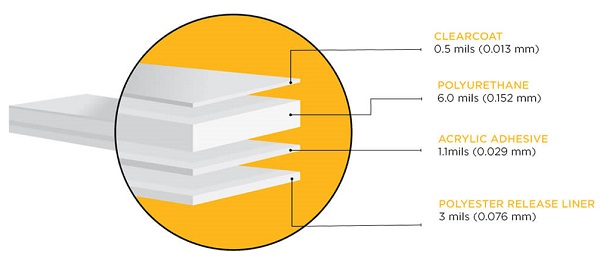
Thickness is only one part of the PPF system
A finished film combines a surface coating, polyurethane body, pressure-sensitive adhesive and release liner. The installed film specification should clearly state which layers are included in the nominal gauge.
Ask what the thickness number actually measures
“8 mil PPF” sounds precise, but the purchasing specification is incomplete until the supplier explains the measurement basis. Two products marketed at the same nominal gauge can use different TPU base thicknesses, top-coat builds, adhesive constructions and tolerance rules.
A useful RFQ should identify whether the quoted value refers to the finished installed film, the TPU base alone or another defined layer stack. The release liner should be described separately rather than silently mixed into the installed-film comparison.
DERFLEX’s paint protection film page explains the four-layer construction used in its current PPF presentation, while the TPU PPF manufacturer guide emphasizes locking the selected model and measurement basis before bulk production.
Is thicker PPF always better?
No. More gauge adds physical material, but film quality and market fit depend on the entire construction.
What thickness can influence
- Amount of material available to absorb minor impact and abrasion.
- Film stiffness, drape and how easily it conforms to compound curves.
- Installer technique, edge work and heat management on difficult geometry.
- Product positioning, material usage and often the cost structure of the finished roll.
What thickness does not prove by itself
- Top-coat self-healing behavior or stain resistance.
- UV stability, yellowing resistance or long-term optical clarity.
- Adhesive tack, repositionability, residue behavior or edge stability.
- Surface quality, orange-peel appearance, liner release or batch consistency.
How to choose between 6, 7, 8 and 10 mil PPF
Start with the market and installation problem, then choose the gauge. Do not build a product ladder around thickness numbers alone.
Define exposure
City use, highway mileage, fleet duty, off-road exposure and high-impact front zones create different protection priorities.
Map body geometry
Flat hoods, mirrors, bumpers, deep recesses and sharp edges do not place the same demand on conformability.
Define installer profile
A professional network experienced with heavier film may accept a gauge that is less forgiving for entry-level installers.
Approve the system
Test clarity, tack, stretch, recovery, edge finishing, surface appearance and liner release before freezing the final SKU.
| Buyer / Program | Useful Starting Comparison | Why | Do Not Forget |
|---|---|---|---|
| Distributor building a value-to-premium range | 6 / 7 / 8 mil | Creates distinct gauge points without forcing every customer into a heavy film. | Each tier needs a real performance and installer-handling difference, not only a new label. |
| General detailing network | 7 / 8 mil | Useful range for comparing protection with contour handling across many vehicle types. | Validate complex bumpers, mirrors and edge wrap on actual installations. |
| High-exposure front-end program | 8 / 10 mil | Lets buyers compare added physical gauge against installation complexity. | Do not assume a 10 mil full-body program is automatically preferable. |
| Private-label automotive film brand | Multiple controlled tiers | Thickness can help define a clear product ladder for dealer education. | Keep model code, measurement basis, tolerance, packaging and approved sample tied together. |
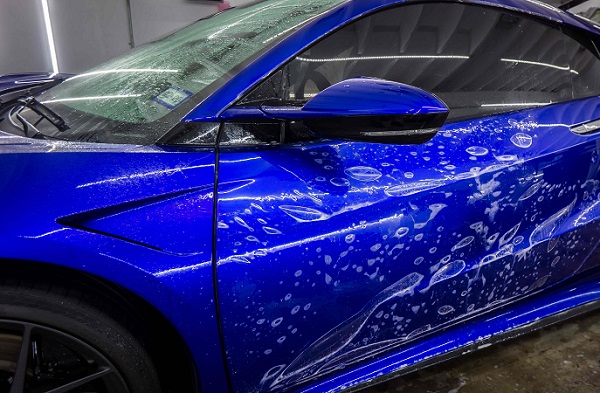
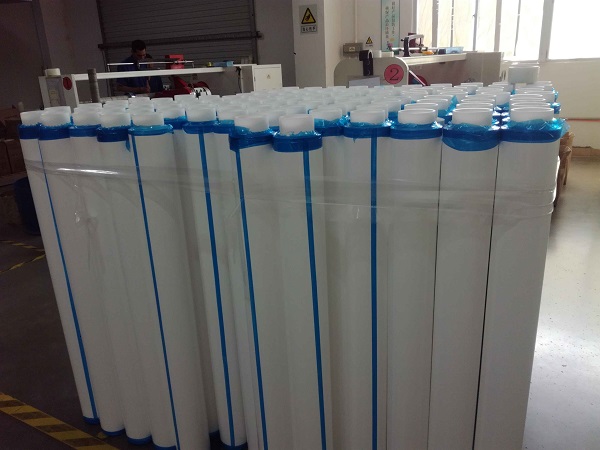
Evaluate thickness on the car, not only on the data sheet
Google Images and buyers both benefit from clear product context: installation, finished appearance, structure and roll handling should all be visible.

How DERFLEX currently presents PPF thickness
Current DERFLEX PPF pages show more than one thickness reference because the website covers both selected paint-protection-film specifications and a wider automotive-protection portfolio.
The dedicated PPF page currently lists a 150–220 μm customizable thickness direction for selected PPF, while the broader automotive protection category shows a 6–10 mil customizable direction. These ranges should not be treated as one universal model specification.
Before ordering, confirm the exact film model, nominal thickness, tolerance and measurement basis. Buyers who also need roll format and commercial planning can review DERFLEX’s PPF price, MOQ and roll-size guide.
A better RFQ than “Send me 8 mil PPF price”
Include enough information for the supplier to quote the same product you actually intend to test and sell.
- Target market and customer tier
- 6, 7, 8 or 10 mil target — plus micron reference
- What the thickness number must include
- Clear gloss, matte, satin or other finish direction
- Roll width × length and core requirements
- Installer handling priorities: tack, repositioning, stretch and edges
- Private-label carton, roll label, barcode or QR requirements
- Quantity, destination and required test or compliance documents
What to lock before approving a PPF thickness
Thickness is useful only when it is connected to a repeatable product identity and sample-to-bulk approval process.
| Control Item | What to Confirm | Why It Matters |
|---|---|---|
| Nominal gauge | Mil and micron value on the purchase specification. | Prevents unit confusion and makes cross-market documentation easier. |
| Measurement basis | Finished installed film, TPU body or another clearly defined stack. | Prevents two “8 mil” products from being compared on different definitions. |
| Tolerance / method | Supplier tolerance and agreed measurement method or inspection procedure. | Turns a marketing number into an acceptance criterion. |
| Installation trial | Tack, slip, stretch, recovery, squeegee response, edge behavior and liner release. | Thickness alone cannot predict installer experience. |
| Optical inspection | Clarity, gloss, surface cleanliness and visible texture on representative paint colors. | Automotive PPF is both a protection product and a visible finish layer. |
| Repeat-order identity | Model code, approved sample, batch/reference logic, artwork revision and carton label. | Helps distributors and private-label brands receive the intended film again. |
Continue the paint protection film buying path
These DERFLEX pages cover the material, product, supplier and commercial questions around PPF thickness.
PPF Thickness FAQ
Direct answers to common questions from installers, distributors and automotive-film buyers.
How thick is 6 mil PPF in microns?
6 mil equals exactly 152.4 microns, or 0.1524 mm. Confirm whether a supplier’s nominal 6 mil value refers to the finished installed film construction or another defined layer basis.
How thick is 7 mil PPF?
7 mil equals 177.8 microns, or 0.1778 mm. It sits between lighter 6 mil and heavier 8 mil constructions and can be useful when a product line needs an intermediate gauge.
How thick is 8 mil paint protection film?
8 mil equals 203.2 microns, or 0.2032 mm. It is a common comparison point in the PPF market, but the number alone does not define TPU quality, top coat, adhesive behavior or optical appearance.
Is 10 mil PPF better than 8 mil PPF?
Not automatica, lly. A 10 mil film contains more physical material than an 8 mil film of similar construction, which can increase the available impact reserve, but it may also be stiffer and less forgiving on tight curves. The right choice depends on the vehicle zone, installer capability and the complete film system.
Does PPF thickness include the adhesive?
Do not assume one industry-wide convention. Ask the supplier to state the measurement basis explicitly: for example, whether the nominal value represents the installed film stack, the TPU base or another construction definition. The release liner should be identified separately.
Does thicker PPF self-heal better?
Thickness by itself does not prove self-healing performance. Light-scratch recovery is primarily connected to the functional top-coat system and its response under the stated conditions. Compare the actual model and test or sample behavior rather than the mil number alone.
What PPF thickness is suitable for highway driving?
Buyers commonly compare mid-to-heavier PPF constructions for higher road-debris exposure, but there is no single correct gauge for every vehicle. Compare 8 and 10 mil directions against body geometry, desired impact reserve, installer handling and the actual product sample.
What should a B2B buyer send when requesting a PPF quote?
Send the target market, film finish, nominal thickness in mil and micron, measurement basis, roll size, installer priorities, quantity, destination, private-label requirements and any testing or documentation needs. A reference sample can also help define the target more clearly.
Specify the film system, not only the mil number.
Tell DERFLEX your target market, 6 / 7 / 8 / 10 mil direction, required measurement basis, finish, roll format, installer profile, quantity, destination and private-label scope. The project can then be discussed around a defined sample and repeatable specification.