Controlled grain and color
Consistent embossing and color direction help brands coordinate bodies, trims, straps, gussets and repeat collections.



 Custom coated material development
Handbag & luggage material
Develop handbag PU leather around the collection you are building—not around a generic color card. DERFLEX supports custom grain, color, backing, thickness, hand feel, finish and roll packing for handbags, backpacks, travel goods, wallets and private-label accessory programs.
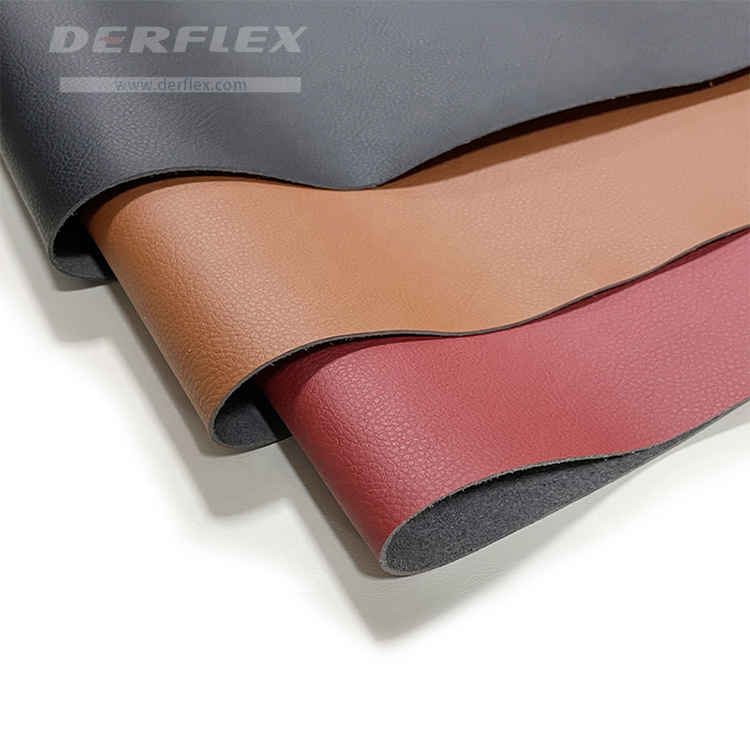
Material selection starts with the product
PU leather for bags is an engineered leather-look roll material formed with a polyurethane-based surface system over a selected textile, nonwoven or microfiber backing. It is widely considered for handbags and luggage because it gives product teams broad control over color, grain, gloss, softness and repeat production while remaining compatible with industrial cutting and sewing workflows.
In a professional bag program, “PU leather” is not a complete specification. A soft material for a gathered fashion handbag may be unsuitable for a structured briefcase panel. A fine-grain finish that looks refined on a wallet may not provide the body expected for travel luggage. The same material can also behave differently after skiving, folding, edge painting, bonding or repeated flexing.
DERFLEX therefore develops handbag PU leather from the finished product backward. Buyers can provide a current swatch, target bag, color reference, surface image, processing method or market position. The material path is then reviewed around the required appearance, handling and commercial supply conditions.
Handbag and luggage factories, accessory brands, importers, material distributors, product developers, sourcing offices and OEM teams comparing synthetic leather for bags, backpacks, wallets, cosmetic cases, portfolios, belts and travel goods.
Material structure
Knitted, woven, nonwoven and microfiber backings create different balances of flexibility, body and process behavior. A fashion tote may need soft drape; a luggage shell panel may need firmer support; a wallet or small leather good may need a cleaner edge after skiving and folding.
Surface design can include fine pebble, napa-style grain, smooth minimal finish, crosshatch, saffiano-inspired texture, vintage effects, matte, semi-matte, gloss, metallic, printed or project-specific embossing. Final suitability should be confirmed through sample evaluation and a production trial.
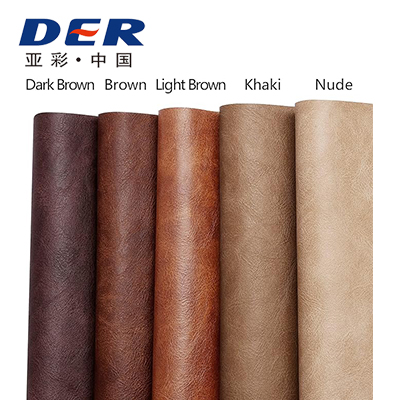
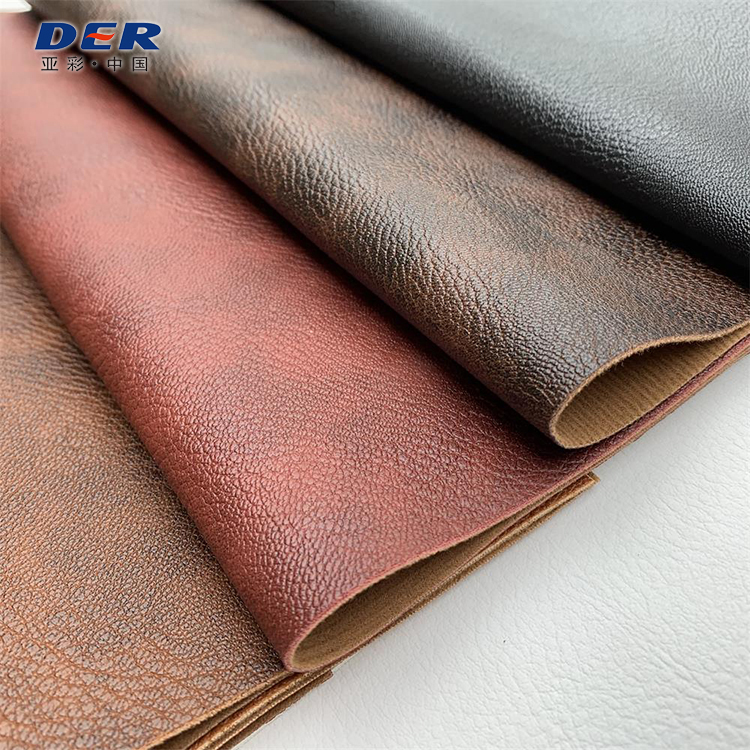
Product image display
DERFLEX website product images are used below to show roll colors, flexible backing and adjacent synthetic leather textures. Final bag material is developed according to the approved project specification.
Performance priorities
The correct target depends on the bag style, construction, price band, use frequency and destination market. These factors should become measurable sample-approval points rather than broad marketing claims.
Consistent embossing and color direction help brands coordinate bodies, trims, straps, gussets and repeat collections.
Soft does not always mean suitable. The structure should support the silhouette without creating unwanted collapse or stiffness.
Backing, stretch, thickness and surface finish affect feeding, seam appearance, needle marks, turning and topstitch quality.
Small leather goods and structured bags often require controlled thinning, clean folds, stable bonding and compatible edge coating.
Handles, corners, straps and opening zones experience repeated contact. Test targets should reflect the actual component and use pattern.
Color, gloss, grain, backing and roll presentation should be controlled against the approved reference for future replenishment.
Application mapping
Handbag PU leather should be selected by product architecture. A single generic construction rarely fits every item in a collection.
Totes, shoulder bags, hobo bags and gathered silhouettes may prioritize hand feel, drape, grain definition and seasonal color development.
Satchels, briefcases and box bags may require firmer body, cleaner folding, stable panel lamination and consistent edge presentation.
Suitcases, travel bags and luggage panels may prioritize abrasion direction, cleanability, reinforcement compatibility and dimensional control.
Backpacks, laptop bags and commuter products need material that works with webbing, foam, lining, reinforcement and repeated opening cycles.
Wallets, card holders, cosmetic cases and organizers often require thin, stable material with clean skiving, folding and edge finishing.
Handles, straps, belts, tags, patches and decorative panels can use coordinated or contrasting grain, color and gloss to build collection identity.
Specification guide
The table below is a sourcing framework, not a one-size-fits-all technical promise. Exact construction, tolerance and test requirements should be confirmed through approved samples and written order documents.
| Product Description | PU leather for bags, handbag PU leather, luggage synthetic leather, faux leather roll material | Use the finished product and component name in the inquiry. |
|---|---|---|
| Surface Direction | Fine pebble, napa-style, smooth, crosshatch, saffiano-inspired, vintage, matte, semi-matte, gloss, printed or custom embossing | Send a physical swatch or high-quality visual reference when possible. |
| Backing Options | Knitted, woven, nonwoven, polyester or microfiber direction | Backing affects drape, strength, stretch, sewing and edge handling. |
| Thickness Direction | Common bag programs are often discussed around 0.6–1.2 mm; other structures may be developed by application | Confirm the final thickness after lamination or backing combination where relevant. |
| Width Direction | Common commercial widths are often around 137–140 cm, subject to construction and production route | Share marker layout and cutting equipment to improve yield planning. |
| Color Development | Standard color, buyer sample match, collection palette or brand-specific tone | Define light source, tolerance method and approved master reference. |
| Performance Route | Abrasion, flexing, adhesion, hydrolysis, colorfastness, cold-crack, water-resistance or other project-specific directions | Testing should be selected by the finished product and target market. |
| Processing Method | Cutting, sewing, skiving, folding, edge painting, gluing, lamination, embossing, printing or logo application | Provide process details before sample development. |
| Supply Format | Roll goods, sample swatches, color cards, custom roll length, labels and export packing | Confirm net length, roll diameter, core, wrapping and carton marks. |
| Compliance Review | Destination-market and buyer-specific documentation or test requests | No compliance claim should be assumed without project-specific verification. |
Important: physical performance varies with coating chemistry, backing, thickness, finish, storage, processing and final product design. Approve the material through testing that reflects actual use.
Material comparison
Choose by product position and production need, not by a universal “better material” claim. DERFLEX can help compare adjacent leather-look systems before sampling.
Often selected for flexible handbag construction, softer touch, broad grain development and fashion color programs. Confirm hydrolysis, abrasion and backing requirements by project.
Considered for higher-positioned bags or small goods requiring a more substantial backing, refined hand feel, cleaner structure or improved component stability.
May suit cost-controlled luggage, travel goods or easy-clean applications where firmer body, water-resistance direction and practical surface durability are priorities.
Can be discussed where a buyer has a defined material strategy and documentation requirement. The exact chemistry, declarations and test scope must be confirmed for the project rather than assumed from a general label.
OEM development process
A clear development path helps reduce rounds of sampling, protects the approved design direction and makes later replenishment easier to manage.
Share product type, component, target customer, silhouette, price band and expected use environment.
Provide color, grain, gloss, hand feel, embossing depth and visual references for the collection.
Select backing, thickness, firmness, stretch and width around cutting, sewing, folding and lamination.
Review swatches, laboratory direction and a bag-making trial before commercial production where required.
Confirm approved reference, roll packing, labels, documentation and repeat-order communication.
Why DERFLEX
DERFLEX supports custom coated and synthetic leather programs for factories, importers, distributors and product brands. For bag buyers, this means the discussion can cover surface design, backing, thickness, hand feel, processing compatibility, sample development, packing and future repeat supply rather than stopping at a photograph and unit price.
The practical advantage is specification clarity. A buyer can compare PU leather material, microfiber direction and adjacent PVC leather material against the same finished bag requirements. This helps purchasing and product teams make a more balanced decision around appearance, processing, performance and cost logic.
Buyer checklist
A complete inquiry helps the supplier select a more suitable starting construction and reduces avoidable sample rounds.
Handbag body, gusset, handle, strap, luggage panel, wallet, trim, tag or another component.
Physical swatch, Pantone direction, finish image, embossing reference and expected gloss level.
Current material data, target body, flexibility, stretch, lamination and edge construction.
Cutting, sewing, skiving, folding, bonding, edge paint, printing, embossing or logo process.
Destination market, customer protocol, restricted-substance request and finished-product test plan.
Estimated order quantity, color split, roll width, roll length, sample deadline and delivery plan.
Many commercial bag programs discuss material around 0.6–1.2 mm, but the suitable thickness depends on the backing, bag structure, component, lamination and required hand feel. A soft handbag body, structured panel, handle and wallet insert may all need different constructions. Confirm through sample and production trial.
DERFLEX can review a physical sample or detailed reference for color, grain, gloss, hand feel, backing and thickness direction. Exact matching feasibility depends on the reference, quantity, material structure and approved tolerance.
PU leather can be used for travel bags, decorative luggage panels and selected luggage components. For higher-wear travel goods, buyers should review abrasion, backing strength, cleanability, corner design, reinforcement and seam construction. PVC or microfiber structures may also be compared.
Custom embossing, grain direction and logo effects can be discussed according to artwork, tooling route, quantity and surface construction. Confirm the visual result and repeatability on an approved sample before bulk production.
The surface can be developed toward water-resistance, but the finished bag is not automatically waterproof. Backing, needle holes, seams, zippers, edge construction and product design all influence water entry. Use a finished-product test when waterproof performance is required.
These material directions can be discussed when the buyer provides a clear composition, chemistry and documentation requirement. “PU leather,” “vegan leather” or “waterborne” should not be treated as sufficient proof by itself. Confirm the approved construction and supporting declarations for the specific order.
Send the finished product, component, color and grain reference, thickness direction, backing preference, width, estimated quantity, processing method, test request, packing expectation and delivery destination. This creates a clearer path to sampling and quotation.
Related DERFLEX resources
Six closely related internal pages support material comparison, specification development and adjacent application research.
Send DERFLEX your bag style, current sample, grain, color, thickness, backing, processing route and estimated quantity. The team can review a suitable PU leather or adjacent synthetic leather development path.
Technical values, material descriptions and application directions on this page are for sourcing discussion. Final specification, tolerances, test methods, compliance documents and suitability must be confirmed for the approved material, finished product, production process and destination market.