


Broad formulation range, flexible-to-rigid options, practical processing and strong cost control for many commercial applications.
Material Comparison · Buyer Selection Guide
PVC Film vs TPU Film vs PET Film
PVC, TPU and PET can all be supplied as clear or functional films, but they solve different engineering problems. PVC emphasizes formulation flexibility and practical fabrication, TPU emphasizes elasticity and wear resistance, while PET emphasizes dimensional stability, stiffness and thermal performance.
Use this guide to compare the three materials by end-use stress, converting method, temperature, optical requirements and total production needs before requesting a sample or bulk quotation.

Quick Answer: What Is the Main Difference Between PVC, TPU and PET Film?
There is no universal winner. Flexible PVC film is often selected for economical clear panels, curtains, covers and products that need adjustable softness or convenient welding. TPU film is usually considered when repeated bending, elastic recovery, abrasion resistance, low-temperature flexibility or airtight/waterproof welding is important. PET film is typically chosen where the film should remain comparatively firm, dimensionally stable, printable, electrically insulating or resistant to higher processing temperatures.
Elastic, tough and abrasion-oriented film family for repeated flexing, sealing, protective laminates and demanding soft products.
Polyester film with strong dimensional stability, tensile performance, smooth surfaces and good heat/electrical application direction.
Understand the Material Families
Three Films, Three Different Design Philosophies
The polymer name is only the starting point. Grade chemistry, additives, orientation, surface treatment, thickness and downstream conversion can change actual performance.
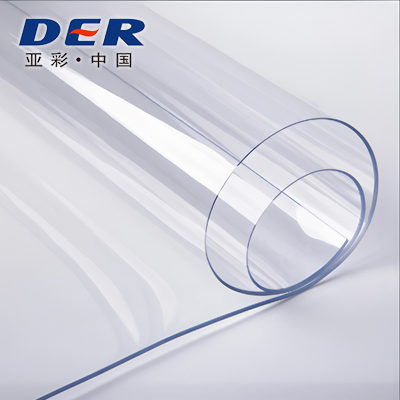
PVC · Polyvinyl Chloride
PVC Film
PVC can be formulated from rigid sheet to very soft flexible film. Flexible grades normally rely on a plasticizer system, allowing softness and handling to be tuned for the finished product.
- Useful when buyers need adjustable softness, clarity, color or functional additives.
- Common in curtains, windows, covers, packaging, signage and protective products.
- Suitable grades can support heat sealing, HF/RF welding, sewing, printing and lamination.
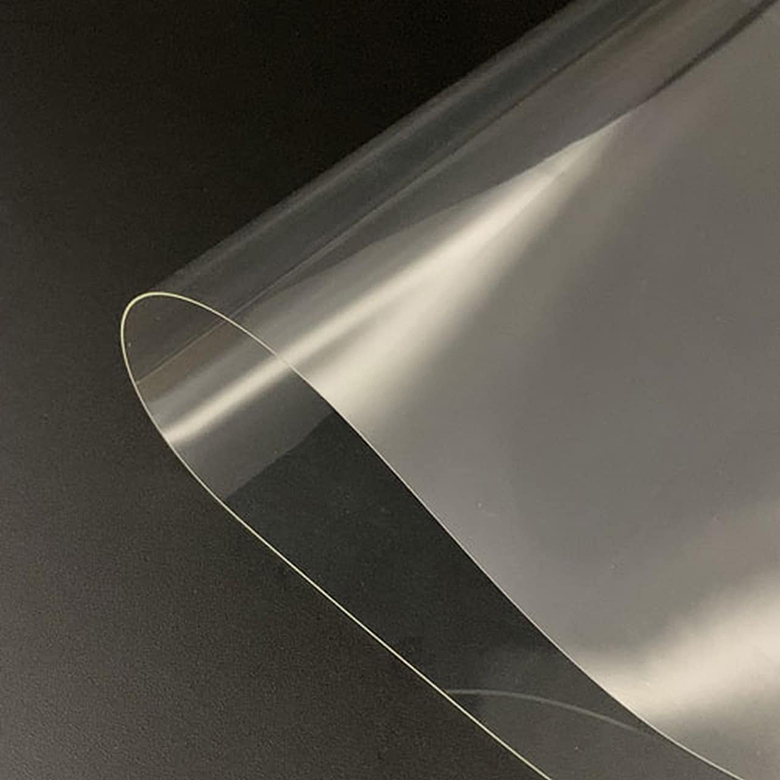
TPU · Thermoplastic Polyurethane
TPU Film
TPU behaves more like an elastic engineering film than a conventional rigid plastic sheet. Its chemistry can be tuned for softness, hydrolysis resistance, abrasion, bonding, optical requirements and different exposure conditions.
- Strong direction for repeated flexing, abrasion-sensitive surfaces and soft technical products.
- Used in bladders, waterproof bags, inflatable systems, medical air products and textile laminates.
- Polyether/polyester and aliphatic/aromatic grade choices should be matched to the environment.

PET · Polyethylene Terephthalate
PET Film
PET is a polyester film family often selected when buyers need a stable, smooth and comparatively stiff substrate. Biaxially oriented PET is widely used in printing, packaging, electronics and industrial laminates.
- Good direction for dimensional stability, high-speed converting and smooth printable surfaces.
- Common in labels, overlays, electrical insulation, release structures and display applications.
- Heat, coating, corona treatment and orientation should be specified by grade rather than assumed.
Side-by-Side Comparison
PVC vs TPU vs PET Film: Buyer Comparison Table
Use this table for first-stage screening only. Final selection should be based on the exact grade, thickness, treatment, sample and finished-product test conditions.
| Selection Factor | PVC Film | TPU Film | PET Film |
|---|---|---|---|
| Material behavior | Can range from rigid to very flexible depending on formulation and plasticizer system. | Elastic thermoplastic film with strong recovery and toughness in suitable grades. | Polyester film generally selected for firmer, dimensionally stable film structures. |
| Flexibility | Highly adjustable; soft flexible grades are widely available. | Typically high, with strong repeated-bending and elastic behavior. | Usually lower than soft PVC or TPU; useful where shape stability matters. |
| Elastic recovery | Depends on formulation; flexible does not necessarily mean highly elastic. | One of TPU's key strengths in many film grades. | Limited compared with TPU; PET is generally chosen for stability rather than stretch recovery. |
| Abrasion / puncture direction | Practical for many covers and barriers; performance is grade and thickness dependent. | Often selected where wear, puncture or repeated handling is a major design variable. | Good surface and tensile performance; impact behavior differs from elastic TPU. |
| Dimensional stability | Depends strongly on softness, temperature and formulation. | Balanced flexibility and stability can be engineered by hardness and thickness. | Commonly selected when stable dimensions and low deformation during converting are important. |
| Heat direction | Processing and service temperature depend on formulation; flexible PVC is not usually the first choice for higher-temperature precision films. | Heat performance varies by TPU chemistry and grade. | PET is commonly selected for applications requiring higher thermal stability than many flexible films. |
| Low-temperature flexibility | Cold-resistant formulations are available; ordinary grades can stiffen as temperature falls. | Selected TPU grades can remain flexible in cold conditions. | Remains dimensionally stable but is not selected for rubber-like cold flexing. |
| Optical clarity | Clear and super-clear grades are available for windows and visual barriers. | Clear grades support premium flexible windows, overlays and protective structures. | Clear PET is widely used where smooth optics, print surfaces and thin stable films are needed. |
| RF / HF welding | Widely used with suitable flexible PVC grades. | Possible with selected TPU grades and constructions; actual equipment trials are important. | Not normally chosen as the base film for conventional HF-welded soft products. |
| Heat sealing / bonding | Common with suitable grades. | Strong potential for heat bonding, hot air and lamination depending on chemistry. | Often laminated or coated; heat-sealable PET grades require the correct surface/coating structure. |
| Printing & coating | Printable grades and surface treatments are widely available. | Printable/coatable after correct surface treatment; process testing is important. | Widely used for printing, coating, metallizing and converting, especially in BOPET structures. |
| Typical commercial logic | Balanced cost, processability, width, thickness and formulation flexibility. | Higher-performance direction when elasticity, wear resistance or premium flexible behavior justifies the specification. | Selected for stable thin films, heat-related processing, printing, electrical and laminate applications. |
Important: Film properties are grade-specific. Do not treat one supplier's value for one TPU, PVC or PET grade as a universal value for the whole polymer family.
Processing Matters
Do Not Choose Film Before You Confirm the Converting Method
A material can look correct on a data sheet and still fail during welding, printing, lamination, forming or repeated folding. Conversion compatibility is part of the material specification.
PVC is widely used in RF/HF welded flexible products. TPU can also support welded constructions, but grade chemistry, thickness, electrode design and process window should be tested. PET is more often laminated, coated or heat-sealed with a designed seal layer.
TPU can function as a flexible bonding or barrier layer in technical textiles. PET is a common stable carrier for coatings and laminates. PVC can also be laminated where its softness and surface structure fit the final product.
PET is widely used for precision printing and coated graphics films. PVC offers broad printable product families. TPU printing normally requires attention to ink chemistry, surface treatment, elongation and whether the printed layer must stretch with the film.
Application Decision Matrix
Which Film Should You Use for Different Products?
These are practical screening directions—not universal prescriptions. Use the finished-product stress and conversion route to narrow the material family, then validate the exact grade.
Clear Curtains, Tent Windows & Flexible Partitions
PVC is usually the first material to evaluate when the project needs clear flexible panels, broad thickness choices, practical welding/sewing and cost control.
- Confirm UV exposure, cold resistance, softness and shrinkage.
- Use TPU only when repeated folding, abrasion or PVC-free positioning justifies a different material system.
Inflatable Bladders, Waterproof Bags & Soft Chambers
TPU is often the stronger direction when the film must flex repeatedly, recover after deformation and support welded air- or water-holding structures.
- Define polyether or polyester TPU direction according to water, oil, humidity and abrasion exposure.
- Validate welded seam strength using the buyer's actual equipment.
Printed Overlays, Labels, Electronics & Stable Laminates
PET is commonly evaluated first when the film needs smooth printing, dimensional stability, stiffness, electrical insulation direction or higher-temperature processing capability.
- Specify BOPET orientation, surface treatment, corona/chemical treatment and coating needs.
- Do not substitute PET for an elastic conformable film simply because both materials are transparent.
Transparent Film Where the Use Case Is Not Yet Defined
If the RFQ only says “clear film,” the material cannot be selected responsibly. Start by defining movement, temperature, surface contact, processing method and expected service environment.
- PVC: broad flexible commercial film direction.
- TPU: elastic technical film direction.
- PET: stable polyester film direction.
Engineering Selection
Seven Tests to Run Before Bulk Ordering Film
The most useful comparison is not “PVC vs TPU vs PET” in the abstract. It is how three candidate grades behave on the buyer's actual product, equipment and exposure conditions.
Recommended Sample Evaluation Sequence
- Visual check: clarity, haze, color tone, gloss/matte surface, scratches, gel points and roll flatness.
- Handling check: stiffness, drape, blocking, fold behavior, memory and elastic recovery.
- Conversion check: welding, heat sealing, lamination, printing, die cutting or thermoforming as required.
- Mechanical check: tensile, elongation, tear, puncture or abrasion based on the finished-product failure mode.
- Temperature check: cold flexing, thermal shrinkage or heat exposure using the project's realistic range.
- Exposure check: water, humidity, oils, cleaning agents, UV or other media that the film will actually contact.
- Finished-product check: test the complete laminate, seam, adhesive or assembly—not only the raw film.
Procurement Risk Control
Common Mistakes When Comparing PVC, TPU and PET Film
Many film sourcing problems begin before the purchase order—when unlike materials or unlike test data are treated as equivalent.
1. Comparing by Price per Kilogram Only
Film economics depend on density, thickness, yield, scrap rate, converting speed and service life. Price per kilogram can hide the true cost per finished part.
2. Assuming All “Clear Film” Has the Same Optics
Clarity, haze, gloss, surface texture and color tone can differ substantially. Approve a visual standard using a production-representative sample.
3. Treating Every TPU Grade as the Same
Polyether, polyester, aliphatic and aromatic directions can differ in hydrolysis, optical, weathering and processing behavior.
4. Ignoring the PVC Plasticizer System
Flexible PVC performance is affected by formulation. Softness, migration, cold behavior, regulatory requirements and service environment should be specified together.
5. Ignoring PET Orientation & Surface Treatment
BOPET film behavior is directional and treatment-dependent. Printing, coating, sealing and shrinkage should be checked against the exact film structure.
6. Approving Raw Film but Not the Finished Assembly
A film may pass incoming inspection yet fail after adhesive coating, welding, lamination, forming or outdoor exposure. Validate the full construction.
Buyer RFQ Checklist
What to Send DERFLEX for a Useful Film Recommendation
The more clearly the end use is defined, the faster a supplier can narrow the material family and prepare a meaningful sample.
Core RFQ Information
- Finished product and application environment
- Preferred material, if already specified
- Target thickness and width
- Roll length, core and packaging requirements
- Clear, tinted, matte, glossy, frosted or treated surface
- Required flexibility, stiffness or elastic recovery
- Welding, sealing, lamination, printing or forming method
- Operating / processing temperature direction
- Water, oil, chemical, humidity or UV exposure
- Required test method, compliance document or customer standard
- Order quantity and sample-testing objective
Related DERFLEX Resources
Move from Material Comparison to Product Specification
These verified DERFLEX pages cover the three material families and adjacent transparent-film selection topics.
PVC Film Factory
Flexible and rigid PVC film manufacturing direction, processing and OEM supply.
PVC Super Clear Film
Transparent PVC for windows, curtains, covers and custom flexible panels.
Clear TPU Film Roll
Transparent polyurethane film for flexible, sealed and abrasion-sensitive products.
Transparent TPU Film
TPU material selection by hardness, chemistry, welding and end-use requirements.
Polyester PET Film Material
PET film direction for printing, electrical, packaging and industrial applications.
Clear Film Comparison Guide
Compare PVC, EVA, PP and TPU clear film for broader transparent-film procurement.
Frequently Asked Questions
PVC Film vs TPU Film vs PET Film FAQ
Direct answers to common material-selection questions from converters, OEM buyers and industrial procurement teams.
Is TPU film better than PVC film?
Not in every application. TPU is often selected when elastic recovery, abrasion resistance, repeated flexing or low-temperature performance matters. PVC is often more practical when the project needs economical clear flexible film, a broad thickness range, adjustable softness and familiar welding or fabrication methods. The correct choice depends on the finished product and test conditions.
What is the biggest difference between TPU film and PET film?
TPU is generally an elastic, flexible thermoplastic film family, while PET is usually selected for a firmer, dimensionally stable polyester substrate. TPU fits soft conformable products and welded flexible structures; PET is common in printing, labels, electrical insulation, overlays and stable laminates.
Is PET film flexible?
PET film can bend and roll, especially in thin gauges, but it does not behave like an elastomeric TPU film. Its advantage is usually controlled stiffness and dimensional stability rather than rubber-like stretch and recovery.
Which film is more suitable for inflatable or airtight products?
TPU is often evaluated first for demanding inflatable bladders, air chambers and flexible waterproof products because suitable grades combine flexibility, toughness and weldability. Flexible PVC is also widely used in many inflatable products. Final material selection should be based on seam testing, temperature, pressure, chemical exposure and product lifetime requirements.
Which film should be considered for higher-temperature or dimensionally stable applications?
PET is commonly considered when the film must remain comparatively stable during printing, coating, lamination or electrical applications involving more heat. However, exact temperature capability is grade-specific and should be taken from the supplier's technical data sheet and verified in the real process.
Can PVC, TPU and PET all be high-frequency welded?
No single answer applies to all grades. Flexible PVC is widely used for RF/HF welding. Selected TPU grades can also be welded by RF/HF, hot air or heat methods after process validation. PET is more commonly laminated, coated or used with a designed seal layer rather than selected as a conventional HF-welded soft film.
Which material is better for printing?
PET is widely used as a stable printing and coating substrate, while PVC also has broad printable film families. TPU can be printed or coated, but the ink, surface treatment and elongation of the final product must be compatible with the flexible substrate. Printing performance should be tested on the exact grade.
What information should I provide for a PVC, TPU or PET film quotation?
Provide the end use, target material if known, thickness, width, roll format, clarity or finish, processing method, temperature direction, expected exposure, compliance needs, quantity and the tests you plan to run on the sample. This allows DERFLEX to discuss a more appropriate material direction.
Still Deciding Between PVC, TPU and PET Film?
Send the application, thickness, width, converting method, exposure conditions and quantity. DERFLEX can review the material direction and help you define a sample-testing plan before bulk production.