


CONTRACTOR GRADE / BULK BUYING
Heavy Duty Canvas Drop Cloths for Professional Painting
For painting contractors, importers and private-label supply programs, a heavy duty canvas drop cloth needs more than a thick-sounding description. Compare fabric mass, yarn construction, finished edges, joined seams and how the sheet behaves through repeated folding. DERFLEX can review a professional canvas drop cloth sourcing brief against an approved sample and a clearly defined supply route. Choose the required construction first; confirm product-specific availability before ordering.
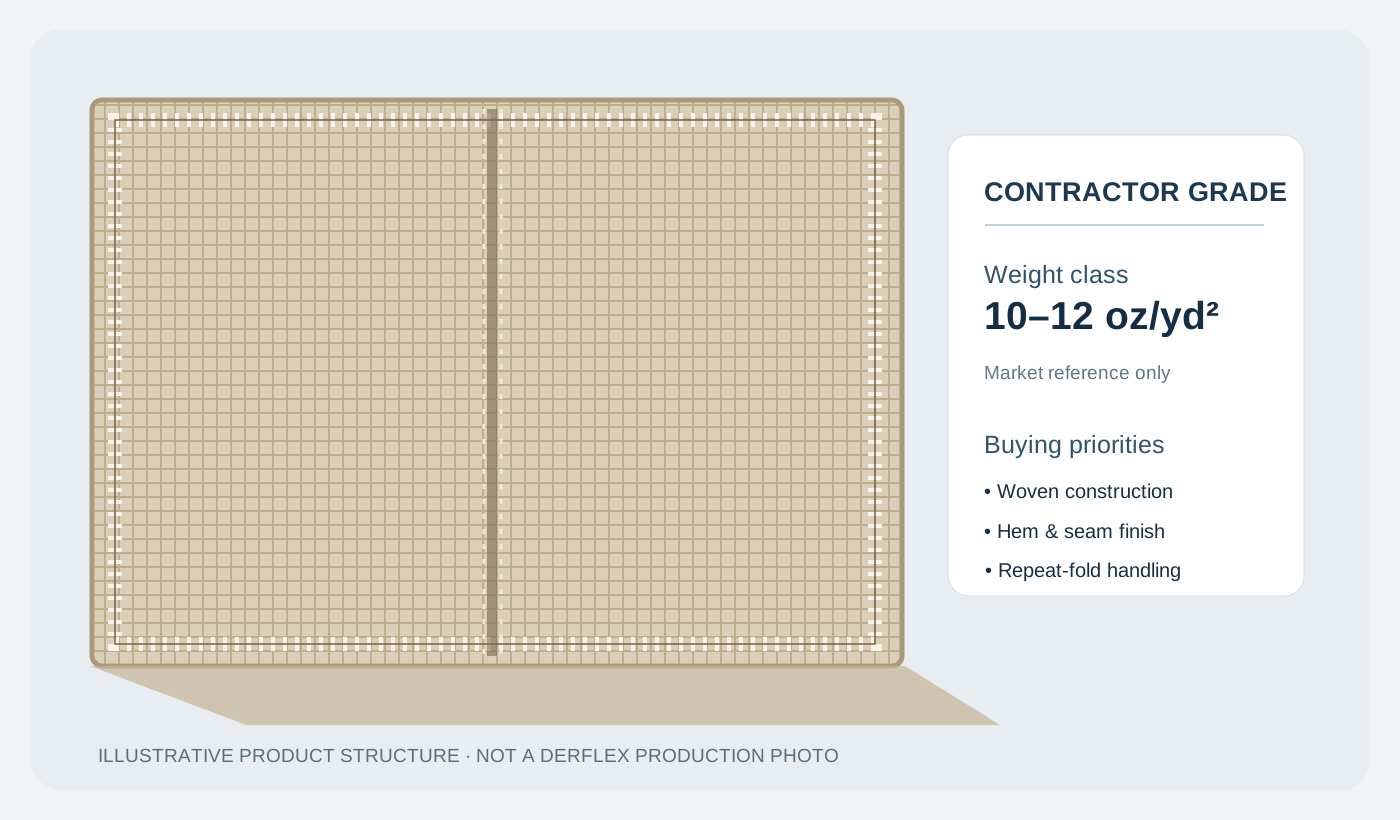
What Makes a Painter’s Canvas Drop Cloth Heavy Duty?
A professional heavy canvas drop cloth is a reusable woven protective sheet selected for repeated contractor handling. Its duty level depends on areal weight, weave construction, sewn finishing and use conditions together—not on the phrase “heavy duty” alone.
Weight is the starting point—not the final specification
A 10 oz/yd² or 12 oz/yd² trade description describes nominal fabric mass per area. It does not, by itself, prove higher thread density, better seam durability, higher absorption, fewer drips passing through, or safer traction on a particular floor. Fiber blend, yarn size, finishing, sample conditioning and testing method matter.
Contractors often prefer a heavier cloth where drapes are repeatedly moved between rooms or where broad sections need to lie with fewer light folds. A greater mass can also make very large pieces harder to carry, shake out, launder and dry. Grade selection is therefore a handling decision as well as a coverage decision.
For the broader range of absorbent woven cloth, roll sourcing and branding directions, visit the canvas drop cloth bulk and OEM overview. This page focuses specifically on heavier finished products.
Contractor Canvas Grade Matrix: 8 oz vs 10 oz vs 12 oz
Use mass per unit area to shortlist constructions, then match the entire finished sheet to the painting workflow. Values below are conversions of trade descriptions, not DERFLEX test results or stocked SKUs.
| Market grade | Approximate GSM | Why buyers compare it | What must be verified |
|---|---|---|---|
| 8 oz/yd² General contractor reference | 271 g/m² | Balances folding and carrying convenience with reusable cloth construction. | Weave coverage, drip handling, seam finish, intended reuse and any backing. |
| 10 oz/yd² Heavy contractor reference | 339 g/m² | Useful benchmark for a thicker-feeling contractor drop cloth used repeatedly across jobs. | Measured mass tolerance, softness, seam thickness, wet handling and sample traceability. |
| 12 oz/yd² Extra-heavy reference | 407 g/m² | Candidate for frequent redeployment when larger mass and robust finishing suit the job. | Foldability, pack volume, drying, edge behavior and resistance to bleed-through on target floor. |
Conversion: 1 oz/yd² ≈ 33.906 g/m². Ounces here mean ounces per square yard, not ounces per sheet. GSM measures mass per area and cannot be converted to mil thickness without more material data.
Ask for samples from the same product family and measure fabric mass, dimensions and seam construction using agreed conditions.
Woven Density, Sewn Hems and Joined Seams
A thick painters drop cloth performs as a finished textile system. The fabric face, joined panels and edges need their own inspection rules.
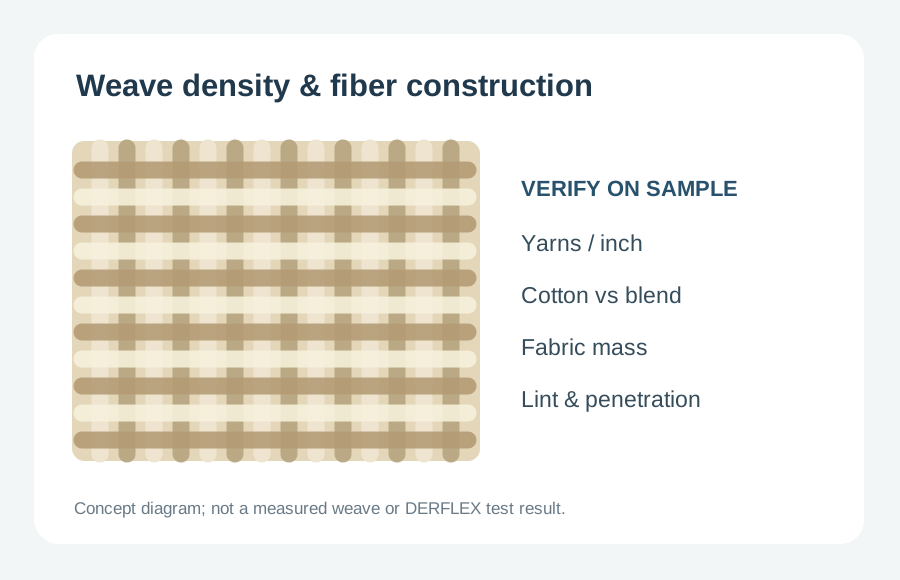
Fabric mass and weave density are not interchangeable
Two cloths at the same nominal gsm can differ in yarn thickness, ends and picks, weave tightness, finishing and perceived flexibility. Ask whether the stated canvas is cotton duck, cotton blend or another construction. Request a fiber declaration rather than assuming that every “canvas” means 100% cotton.
Check pinholes, loose yarns, lint transfer and visible uneven areas under representative lighting. For work around sensitive finished surfaces, both upper and lower fabric faces matter. A tighter weave may help manage small incidental drips, but an uncoated woven sheet is not automatically leakproof.
If a barrier—not absorbency—is mandatory, inspect the coated industrial paint drop cloth material as a separate product direction.
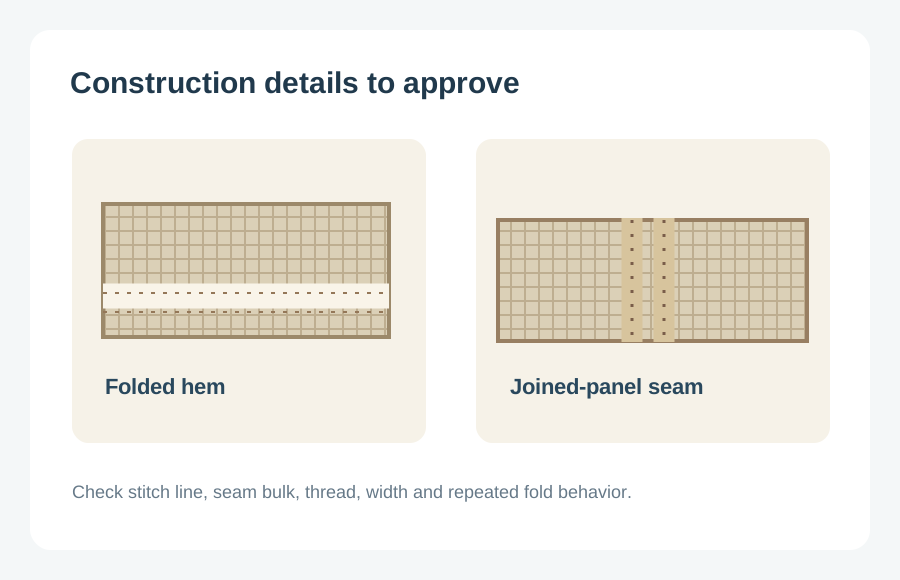
Finish details can decide whether a sheet is contractor-ready
Agree a hem width and stitch pattern with the sample; inspect skipped stitches, loose ends, puckering and seam allowance. Where large sheets use joined panels, identify the join location and evaluate whether its raised profile affects foot traffic or repeated folds.
For completed-sheet inspection, define cut size versus finished size, allowable measurement deviation, seam appearance and the agreed wash/conditioning state. A sample that looks flat before folding may crease differently after repeated job-site use.
Hardware found on outdoor heavy canvas tarps should not be assumed suitable for painter’s floor protection: exposed metal eyelets can contact or scratch delicate flooring.
Where Contractor Drop Cloth Grades Make Practical Sense
Pick sheet geometry and handling properties according to where the crew works. Greater cloth weight cannot replace safe positioning or a compatible barrier when substantial liquid may reach the floor.
| Painting situation | Useful construction focus | Validation or limitation |
|---|---|---|
| Occupied interior repainting | Controlled lint, soft handling, lower-profile sewn edges and practical folded pack. | Check the actual furniture and flooring finish; remove grit and test color transfer. |
| Commercial fit-out and repeated crew moves | Stitch consistency, stable edges, manageable panel weight and repeat-fold behavior. | Inspect joins, corners and defects after multiple deployments; no universal reuse-cycle claim. |
| Hallways, long trim and narrow work zones | Runner dimensions, neat seams, overlap planning and convenient folding. | Secure position and test movement; heavy cloth alone is not certified non-slip. |
| Furniture and equipment draping | Flexible canvas, safe contact face and smooth folded finish. | Test lint and dye transfer, particularly on sensitive coatings. |
| Heavy paint spill or wet processes | Verified layered barrier or a different protective system. | Unbacked canvas can absorb and later pass liquid through; compare waterproof floor protection tarps. |
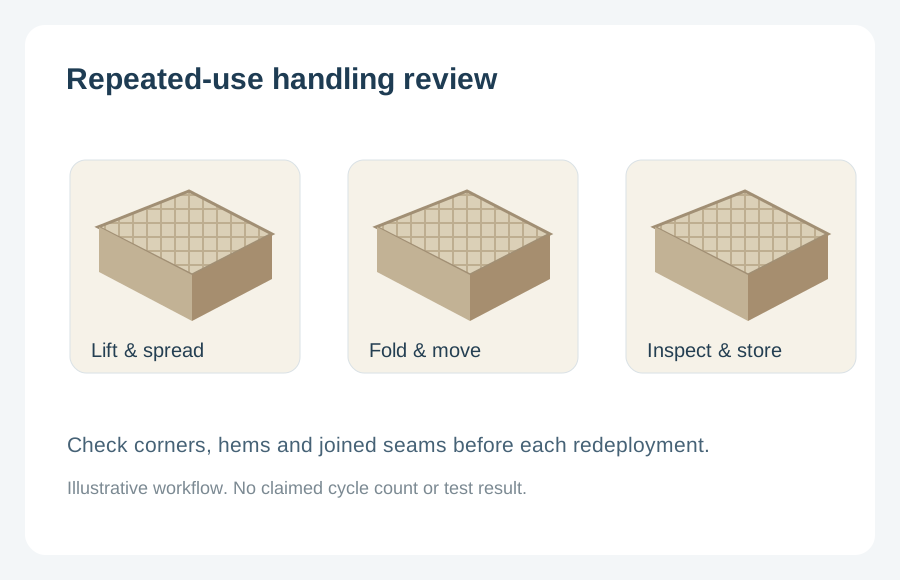
Repeated folding exposes construction weaknesses
Fold a conditioned sample using the crew’s normal method, unfold it on a clean floor and inspect the seams, corners and top/bottom faces. Record any loose threads, seam opening, stubborn ridges or changes in laying-flat behavior. Also consider packed dimensions: a very heavy single sheet can be inconvenient even if its fabric is robust.
Repeated reuse is a practical buying aim, not a guaranteed number of wash cycles. Establish pass/fail criteria from a real sample and agree on care practices. With staining, moisture or prolonged spills, remove or replace the cloth before liquid reaches vulnerable surfaces.
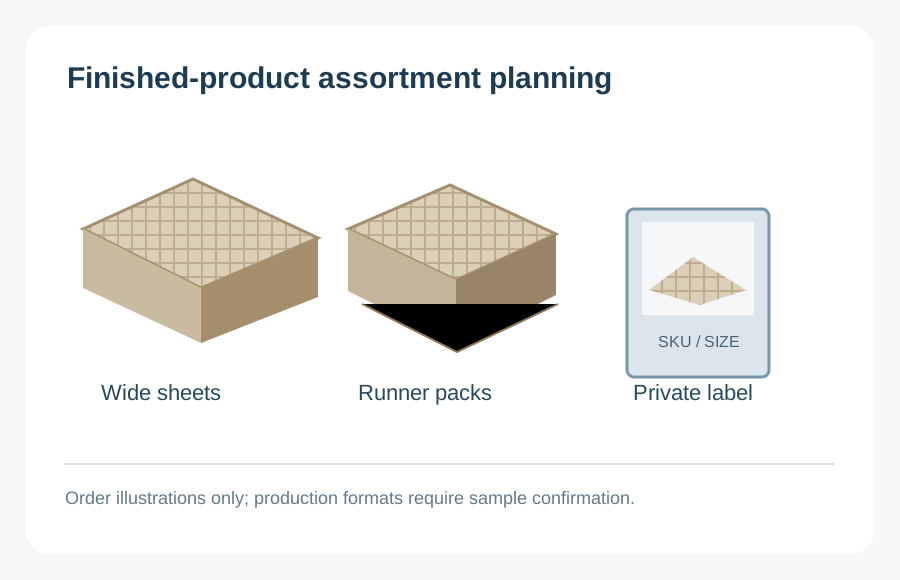
Build a Professional Assortment Around Sheet Sizes and Pack Formats
A contractor drop cloth line is easier to reorder when each size and construction has an unambiguous identity. The options below describe potential RFQ configurations, not a DERFLEX stock catalogue.
Typical market inquiry examples include 9 × 12 ft and 12 × 15 ft. Confirm whether dimensions are cut or finished and the number of joined panels.
A 4 × 12 ft or 4 × 15 ft format is useful when protecting a corridor or trim route. Request hem and seam placement that will not create unnecessary floor ridges.
Define fold count, label, barcode, individual wrap, carton quantity and mixed-size carton requirements. Compare the packed weight and handling after transport.
For full OEM label and bundle planning, refer to the canvas drop cloth sourcing program. For a different application, the painting containment tarp page covers enclosure and industrial splash-control applications rather than absorbent floor sheets.
Heavy Duty Canvas Drop Cloth Inspection & Sample Approval Matrix
Make the phrase “contractor grade” inspectable. Use one approved sample and written tolerances to evaluate shipments and repeat orders. Values should be set by buyer and supplier for the selected construction, not copied from an unrelated canvas or PVC product.
| Inspection characteristic | What to record | Acceptance rule to agree |
|---|---|---|
| Fabric identity | Fiber composition, weave, finish, backing status, reference swatch. | Approved sample and matching declaration; identify permitted shade/texture variation. |
| Fabric mass | Actual g/m² or oz/yd², conditioned sample method and lot reference. | Nominal target and numerical tolerance to be agreed for each product. |
| Finished dimensions | Length/width at agreed measurement condition; hem and panel count. | Specify finished, not only cut, size and allowable deviation for each dimension. |
| Seam / edge quality | Hem width, stitch consistency, skipped stitches, visible seam opening. | Approved construction drawing or sample and agreed defect criteria. |
| Repeated use | Handling, folding, visible distortion and seam response after a defined trial. | Agree trial cycle and observable rejection conditions without inventing service life. |
| Paint / floor compatibility | Representative paint drip, penetration, lint and color transfer on target floor. | Use conditions and observable result agreed before bulk approval. |
| Packing / labels | SKU/grade, size, fold method, barcode, pack count, carton and lot ID. | Match signed sample, final art and purchase-order packing checklist. |
Sample-to-shipment control
- Approve one physical reference sample per weight / weave / size group.
- Confirm fiber, finished dimensions, seam positions and agreed numerical tolerances.
- Photograph the top and underside, hem, panel seam, folded pack and carton label.
- Define an inspection sampling method and defect classification before production.
- Recheck repeat orders against the same approved identity and revision number.
Performance Boundaries That Matter on Professional Jobs
Thicker or heavier cotton canvas may be a sensible contractor choice, but must be matched to the floor and paint conditions.
Not automatically waterproof
Unbacked woven canvas can absorb paint, then let pooled liquid soak through. For no-leak requirements, ask for a verified backing or a separate coated sheet; do not infer barrier performance from oz weight.
Not automatically slip-resistant
Floor finish, dust, wet paint, wrinkles and placement all influence movement. Heavyweight construction is not a substitute for testing on the target flooring or controlling free edges.
Not all canvas is suitable for every finish
Outdoor canvas treatments, exposed eyelets, dye transfer, trapped moisture and abrasive grit can damage sensitive interiors. Verify underside contact, curing status and cleaning procedure.
Related industrial cover constructions, including coated and treated tarp materials, are discussed separately in DERFLEX’s canvas versus vinyl tarp comparison. A contractor canvas drop cloth is a different purchasing decision from an outdoor weatherproof tarpaulin.
Frequently Asked Questions
Practical answers about contractor canvas weights, sewn construction, paint protection and ordering.
Is 10 oz canvas heavy duty enough for professional painters?
10 oz/yd² (approximately 339 gsm) is a common heavy-duty market class. Whether it works for a professional crew depends on weave density, fabric composition, seams, paint exposure, floor contact and the expected handling cycle. Check a sample instead of relying on the weight label alone.
What is the difference between 10 oz and 12 oz canvas drop cloths?
12 oz/yd² has approximately 20% more nominal fabric mass per square yard than 10 oz/yd². It may feel heavier, but does not automatically have better seam integrity, absorbency or leak resistance. Compare construction, folding comfort, finished size and the actual inspected sample.
Does a thick painter’s drop cloth stop paint from reaching the floor?
Not necessarily. Standard unbacked woven canvas is absorbent but not automatically leakproof; accumulated or prolonged wet paint may pass through. Where liquid penetration is unacceptable, evaluate a verified barrier or suitable underlay on the actual floor.
What should be checked on hems and joined panels?
Check hem width, stitch uniformity, exposed thread ends, skipped stitches, seam bulk, joined-panel location and finished dimensions. Repeat-fold handling should not create unacceptable seam opening or ridges.
Are these 10 oz and 12 oz grades confirmed DERFLEX SKUs?
No fixed heavy-duty canvas SKU or stock weight is confirmed in this specification guide. The figures show common market classes for comparing buyer requests. DERFLEX should confirm the applicable sourcing route, product sample and written quotation before any product is treated as available.
How do I request contractor-size or private-label drop cloths?
Provide intended painting use, preferred fabric and weight class, finished sizes, quantity per size, seam and hem requirements, packaging artwork and destination. A physical sample and inspection tolerances should be approved before a repeat bulk order.
Related Canvas, Painting and Protection Resources
Explore the adjacent product types without confusing an absorbent painter’s canvas with a coated protective tarp.
GRADE COMPARISON / BULK RFQ
Compare Contractor Grades Before You Specify a Bulk Order
Share the job conditions, target weight class, finished sizes, repeat-use expectations and proposed packaging. DERFLEX can review the brief and confirm what sourcing, sample and quotation arrangements are actually available.
Useful inquiry details: canvas fiber composition; 10 oz or 12 oz market reference; size mix; stitch and seam requirements; quantity; private-label needs; destination.