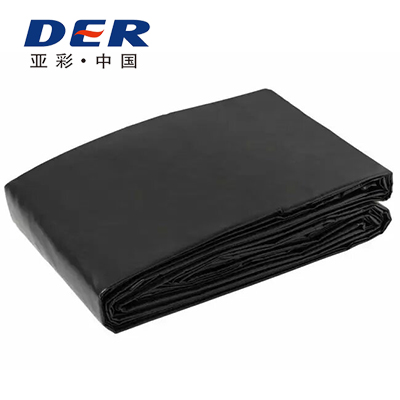
Custom Heavy Duty PVC Industrial Tarp
Available as coated fabric rolls, cut panels or finished tarps with project-specific dimensions, reinforcement, hardware, surface treatments and packaging.
Industrial tarp engineering & custom manufacturing
The strongest industrial tarp is not defined by one weight, one coating or one marketing label. It is the tarp whose material structure, reinforcement and fabrication are matched to the real load and environment.
DERFLEX supports PVC coated polyester tarp materials and finished custom covers for construction, transport, mining, machinery, warehousing and demanding outdoor protection. Buyers can specify fabric weight, yarn structure, coating, welds, edge reinforcement, hardware and functional treatments around the job.
In professional use, tarp strength is a system property. A thick coating may improve wear resistance, but it cannot compensate for a weak base scrim. A high-strength fabric may still fail early if the edge reinforcement, weld design or tie-down spacing concentrates stress in one area.
For this reason, DERFLEX evaluates industrial tarp projects across tensile load, tear propagation, abrasion, coating adhesion, outdoor exposure and finished-product construction. The goal is not to claim one universal “strongest tarp,” but to develop a practical structure for the expected working conditions.
Available as coated fabric rolls, cut panels or finished tarps with project-specific dimensions, reinforcement, hardware, surface treatments and packaging.
A reliable specification balances the load-bearing textile, protective coating and finished construction. Increasing only one component can add weight without solving the actual failure mode.
The polyester scrim carries pulling forces across the tarp. Yarn denier, weave density and fabric construction influence dimensional stability and load distribution.
Industrial tarps should resist the growth of small cuts around corners, fasteners and rough cargo. Base fabric and local reinforcement work together here.
Coating thickness, surface finish and protective patches matter where the tarp rubs against steel, machinery, pallets, trailer edges or ground surfaces.
The PVC layer must remain bonded to the textile through folding, welding, temperature changes and repeated handling. Consistent coating control supports long-term performance.
UV stabilizers, cold-flexible formulas, anti-mildew options and protective lacquers can be selected for the expected climate and exposure period.
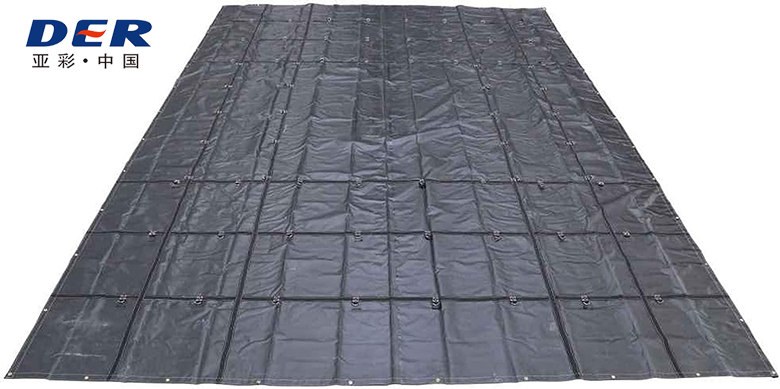
Weld width, hem layers, webbing, corner patches, grommet spacing and D-ring placement determine how the material performs after installation.
The ranges below are a procurement framework, not a fixed catalog promise. Final values should be confirmed against the required test method, production sample and intended use.
| Specification Area | DERFLEX Custom Options | Why It Matters |
|---|---|---|
| Material Structure | PVC coated polyester, PVC laminated polyester or application-specific coated textile | Coated polyester is commonly selected where waterproofing, weldability and repeated industrial use are required. |
| Fabric Weight | Common project grades from approximately 550gsm to 1300gsm; heavier structures can be discussed | Higher weight can increase coating and fabric mass, but handling requirements and actual strength data should also be reviewed. |
| Base Fabric | 500D, 840D, 1000D, 1300D and custom high-tenacity polyester constructions | The base scrim influences tensile strength, tear resistance, stretch and dimensional stability. |
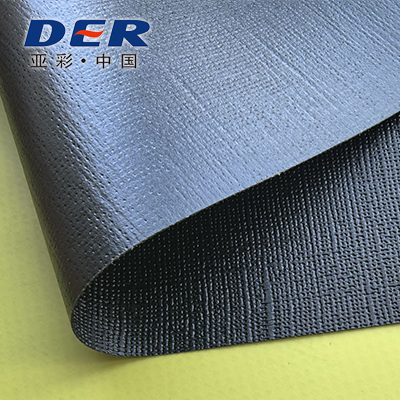
| Surface & Coating | Double-side coating, lacquered finish, matte or gloss surface, anti-slip or easy-clean options | Surface design can improve cleaning, welding, abrasion behavior and appearance for the target use. |
| Functional Treatments | UV-resistant, flame-retardant, anti-mildew, cold-resistant, anti-static, oil-resistant or project-specific options | Functional claims should be aligned with the target market, test standard and actual exposure. |
| Finished Construction | Heat or HF welded seams, reinforced hems, webbing, corner patches, rope edges, pockets and layered stress zones | The finished construction spreads force away from edges and high-load attachment points. |
| Hardware | Brass, stainless steel or plastic eyelets; D-rings; buckles; straps; hooks and custom layouts | Hardware spacing and reinforcement should match tie-down force, wind load and installation method. |
| Supply Format | Roll goods, cut-size sheets, welded panels, finished tarps, OEM packaging and private-label programs | Different buyers need different conversion stages depending on local fabrication and distribution capability. |

Important: numerical performance depends on the specific yarn, weave, coating formula, test standard, sample conditioning and production construction. Request confirmed test data for safety-sensitive or regulated projects.
A useful “strongest tarp” discussion should focus on where failures begin, not just how impressive a material sounds on paper.
Use wider reinforced hems, webbing, layered patches and suitable fastener spacing to distribute tie-down force.
Add abrasion pads, shaped reinforcement and protective interface material at sharp cargo contact points.
Improve fit, tension layout and attachment positions. Excess material and uneven loading can accelerate fatigue.
Specify compatible welded seams, sufficient weld width and a layout that avoids water pooling at joints.
Choose a suitable coating weight and add sacrificial patches where repeated sliding or rubbing is expected.
Discuss low-temperature flexibility and real operating temperatures instead of relying on a generic outdoor label.
Match the UV package, color, exposure duration and maintenance plan to the climate and storage conditions.
Reinforce attachment zones and select hardware size, material and spacing for the expected pull direction.
The same tarp is rarely ideal for occasional storage, daily fleet use and sharp-edged industrial cargo. These profiles help buyers organize the discussion before sampling.
For equipment covers, warehouse protection, construction materials and outdoor storage with regular handling.
For flatbeds, trailers, lumber, machinery, steel and cargo systems exposed to wind, road spray and repeated tensioning.
For mining, steel handling, industrial containment and applications with concentrated wear or heavy mechanical stress.
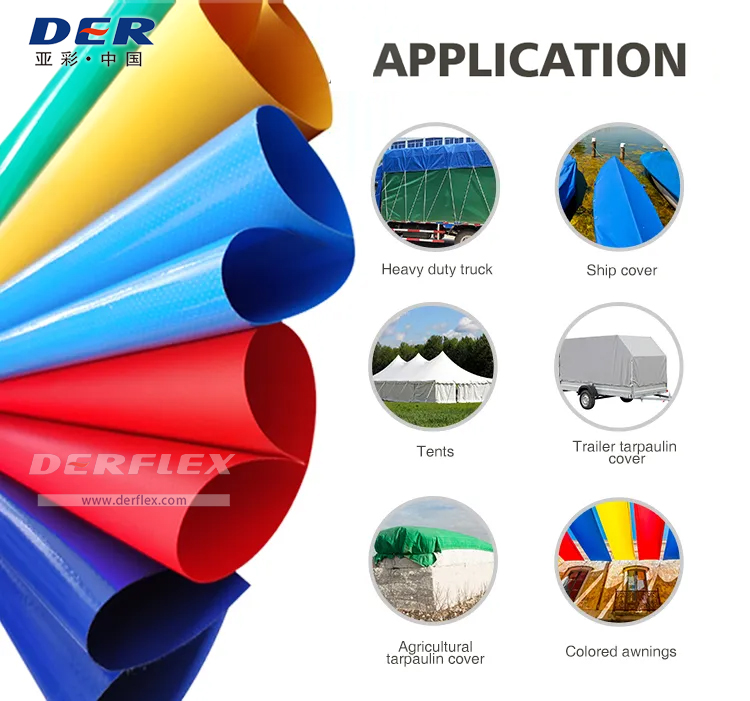
The images below are sourced from DERFLEX website product pages and show different material and finished-cover directions for project discussion.
Each industry creates different stress patterns. The tarp should be configured around how it is installed, moved, cleaned, stored and exposed.
Weather barriers, equipment covers, scaffolding protection, temporary enclosures, material covers and concrete-related protection.
Flatbed loads, trailer covers, lumber and steel cargo, machinery transport, side curtains and custom fleet programs.
Equipment covers, material containment, dust control, temporary protection and rugged storage applications.
Machinery, raw materials, palletized goods, temporary stockpiles and large custom cover systems.
Hay and feed protection, crop storage, equipment covers, seasonal shelters and water-related liner or containment projects.
Machine covers, process partitions, custom enclosures, private-label tarp ranges and roll material for local conversion.
There is no single winner for every environment. Material choice should reflect waterproofing, breathability, handling, weldability, duty cycle and replacement expectations.
| Material | Typical Strengths | Important Limitations | Common Industrial Fit |
|---|---|---|---|
| PVC Coated Polyester | Waterproof, weldable, customizable, good tensile and abrasion potential, suitable for repeated use | Heavier than light PE; formulation and reinforcement must be selected correctly | Truck, equipment, construction, storage, mining and custom industrial covers |
| PE Tarpaulin | Lightweight, economical and practical for temporary coverage | Lower long-term durability in demanding repeated-use programs; limited welding and repair approach | Short-duration protection, temporary covers and cost-sensitive applications |
| Canvas | Breathable, flexible and useful where moisture vapor needs to escape | Not inherently fully waterproof; can absorb moisture and may require treatment | Breathable equipment covers, indoor use and applications where condensation control matters |
| PVC Mesh | Airflow, wind reduction, debris control and lower wind loading than solid sheets | Not intended as a waterproof solid barrier | Dump trucks, waste hauling, shade, containment and ventilated covers |
A structured specification process helps reduce rework, inconsistent batches and performance disputes.
Application, dimensions, climate, expected service cycle and installation method.
Tension, wind, abrasion, sharp edges, temperature, chemicals and compliance needs.
Base fabric, GSM, coating, finish, functional options and reinforcement concept.
Review color, hand feel, weldability, dimensions, hardware and test requirements.
Batch consistency, finished inspection, packaging, labels and export documentation.
A useful industrial tarp quotation needs more than length and width. Supplying the information below allows the material and finished design to be evaluated around the job rather than priced as an unspecified commodity cover.
These six related pages connect material selection with finished tarp applications and help procurement teams compare the right solution path.
Practical answers for contractors, fleet operators, distributors, converters, manufacturers and project buyers.
PVC coated polyester is commonly selected for demanding waterproof industrial tarps because it combines a load-bearing textile with a durable, weldable coating. However, the strongest practical option depends on yarn structure, fabric weight, coating, reinforcement, hardware and the real working environment.
No. Higher GSM indicates more material mass, but it does not by itself define tensile strength, tear resistance, coating adhesion or finished tarp durability. Base fabric construction and reinforcement design should be reviewed alongside weight.
Common high-load areas include edges, corners, grommets, D-rings, seams and cargo contact points. Wider hems, webbing, layered patches, appropriate weld widths and correct hardware spacing can help distribute stress and reduce localized failure.
DERFLEX can discuss heavy duty PVC coated polyester structures, reinforced stress zones, custom hardware and abrasion patches for steel, machinery and other demanding cargo. The final design should be based on the cargo profile and tie-down method.
Yes. Flame-retardant, low-temperature, UV-resistant, anti-mildew, anti-static and other functional options can be discussed. Required standards and test methods should be provided before production so the correct formulation and documentation can be evaluated.
DERFLEX can support coated fabric rolls, cut panels, welded sheets, finished custom tarps, OEM packaging and private-label supply programs. The appropriate format depends on the buyer's conversion capability and market requirements.
Send DERFLEX your application, dimensions, exposure, handling frequency, reinforcement plan, hardware, performance requirements, quantity and destination. The team can recommend a practical material and fabrication direction for sampling and quotation.