
Tensile & tear behavior
Tensile strength concerns pulling the intact fabric. Tear testing concerns propagation after damage begins. Request both directions, the method and units; a single high value does not describe every failure mode.



Materials & procurement / DERFLEX
For repeated industrial use and outdoor rain protection, heavy duty PVC-coated polyester—often called a vinyl tarp—is a practical first choice. The woven core carries load, while the PVC surface supports water protection and welded fabrication.
The durable choice for your project also depends on sunlight, rubbing, folding, seams and attachment loads. Compare vinyl, poly and canvas below, then send DERFLEX your dimensions and operating conditions for a material and custom-cover quotation.
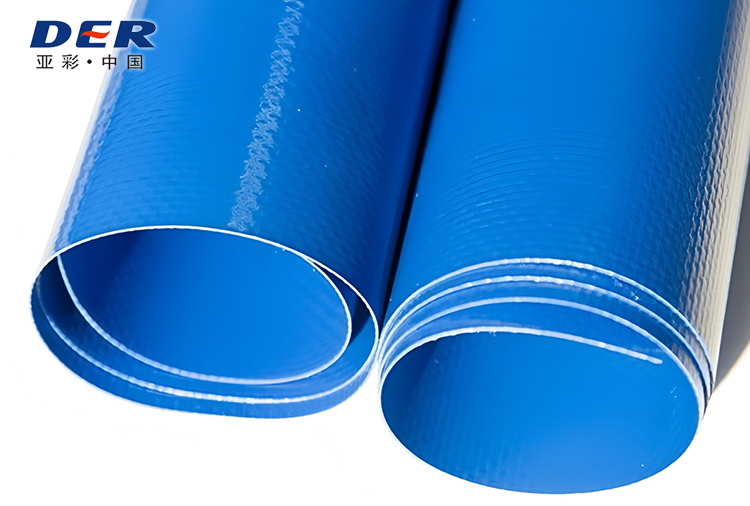
Evaluate reinforced PVC / vinyl.
Evaluate a suitable woven PE grade.
Evaluate canvas and its treatment.
Start with the job
There is no single durability ranking for every cover. For wet, repeated-use industrial work, reinforced PVC-coated polyester is a useful starting point. Lightweight handling or breathability can lead to a different choice.
| Material | Where it makes sense | Durability advantages to evaluate | Trade-off to resolve |
|---|---|---|---|
| Repeated-use direction PVC / vinyl-coated polyester |
Truck covers, industrial equipment, reusable jobsite covers and outdoor storage. | Load-bearing textile core; protective coating; weldable panels; options for reinforced edges and wear patches. | Greater handling weight. Confirm coating adhesion, cold flexibility, weathering and the entire fabricated assembly. |
| Woven polyethylene / poly | Temporary construction, seasonal coverage and applications that favor low mass and initial cost. | Waterproof coverage when intact; straightforward deployment; heavy-duty grades are available. | Quality varies widely. Compare laminate integrity, UV treatment, weave, finished hems and handling damage. |
| Canvas | Equipment or stored items where breathable textile coverage is useful. | Textile abrasion performance and air permeability in suitable constructions. | Water resistance and breathability depend on the treatment. Review sewn seams, wet storage and drying requirements. |
Explore the material platform and available formats in the DERFLEX PVC tarpaulin range.
Define durable before you buy
A tarp can remain strong in a tensile test yet become unsuitable because it leaks, cracks at folds or loses its attachments. Define the performance that matters throughout your actual use cycle.
For comparable construction details, read the GSM, denier and coating specification guide.
Tensile strength concerns pulling the intact fabric. Tear testing concerns propagation after damage begins. Request both directions, the method and units; a single high value does not describe every failure mode.
Look at the weather face and the face touching the load. Rubbing can wear a coating; poor bonding can separate it from the textile. More mass does not resolve every surface problem.
Evaluate the grade under the expected climate and folding temperature. A UV option or cold-flex claim needs a defined test and acceptance criterion, especially when covers stay outside between uses.
A central fabric sample excludes the welds, hems and hardware. Approve those features as part of the cover, and assess water protection after the relevant flexing or handling sequence.
A useful limit: handling weight
GSM measures finished mass per square meter. Raising the weight may add surface material, but it also changes lifting, folding and freight. Compare the benefit against the way the crew actually handles the cover.
For example, a flat 5 × 8 m sheet weighs approximately 26 kg at 650 GSM, before extra hems, patches and hardware. At 900 GSM, its base-material mass is 36 kg. A higher-weight cover that is difficult to deploy may create extra dragging or handling damage.
Base sheet mass (kg) = length (m) × width (m) × GSM ÷ 1,000
US area-weight references: 18 oz/yd² ≈ 610 GSM; 22 oz/yd² ≈ 746 GSM. A 650 GSM fabric is approximately 19.2 oz/yd². Thickness in mm or mil cannot be derived from GSM alone.
Enter flat sheet dimensions. This estimates fabric mass, rather than a finished-product shipping weight.
These are calculation examples, not a ranking of strength or a promise of material availability. Confirm finished dimensions, tolerances and shipping mass in the quotation.
Application decision matrix
Begin with the operating condition, then select construction and evidence. A weight class is a starting point for sampling, rather than a finished durability specification.
| Operating condition | Material direction | Specify first | Evidence to request |
|---|---|---|---|
| Transport & frequent installation | Reinforced PVC-coated polyester. | Fit, directional strength, reinforced load zones and abrasion protection. | Fabric results plus a representative welded seam and attachment sample. |
| Continuous outdoor storage | UV-stabilized PVC for reusable cover programs; evaluate PE where its grade meets the duty. | Weathering, drainage, contact protection and resistance to wind movement. | Grade-specific exposure conditions and retained performance after weathering. |
| Repeated folding in cold conditions | A coated textile formulated and evaluated for the stated temperature. | Folding temperature, fold radius, frequency and packaging. | Low-temperature bend and a relevant flexing assessment. |
| Short-cycle, lightweight coverage | Suitable woven PE; compare reusable PVC if replacement disruption is costly. | Deployment weight, sealed seams, corner quality and use interval. | Sample inspection and representative handling before bulk ordering. |
| Moisture-sensitive breathable coverage | Appropriate canvas or a ventilated cover assembly. | Air permeability, treatment, wet handling and contact compatibility. | Treatment details and a fit/ventilation check on the actual item. |
For the outdoor-exposure specification, review UV-resistant tarpaulin options.
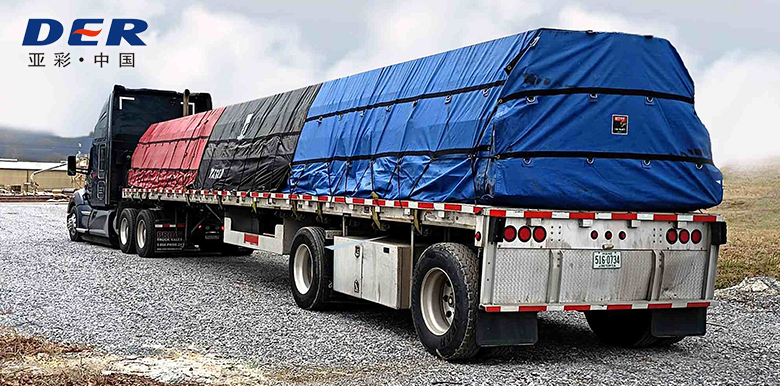
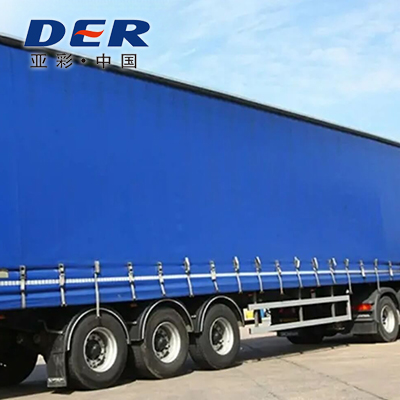
Fabrication changes the result
A durable tarp material needs an equally appropriate conversion process. Coordinate the reinforcing textile, panel layout and loaded edges before approving production.
Record the base yarn, weave, coating route, finish and functional requirements. Knife coating and lamination can both be used in tarp materials; approval should follow the selected grade’s results.
The sample, technical data sheet and bulk order should describe the same construction and agreed tolerances.
Hot-air or HF welding can suit appropriate PVC-coated fabrics. Validate the overlap, process settings and seam placement on the actual material. Sewing needs its own reinforcement and water-sealing plan.
Assess a representative seam after the conditioning or handling that matters to your application.
Hems, webbing, D-rings, grommets and local wear patches should distribute force into the cover. Give the fabricator the mounting drawing, protrusions and repeated contact zones.
Use the grommet pull-out and reinforcement guide to frame the attachment assessment.
Specification before quotation
DERFLEX publishes PVC tarpaulin constructions and supplies material for industrial cover applications. Use the following checklist to compare a proposed grade, rather than assuming every PVC tarp has the same properties.
| Specification item | Reference or requirement | What to confirm with DERFLEX |
|---|---|---|
| Material & base cloth | PVC-coated polyester for the reusable industrial direction. | Yarn, weave, coating/lamination route and product reference. |
| Published material example | 650 GSM; 1000D × 1000D; published 20 × 20 construction. | Current grade and technical data sheet; this example is not a specification for every cover. |
| Weight & thickness | Required finished GSM and measured mm or mil. | Tolerances and whether a value is nominal or an acceptance limit. |
| Strength & coating bond | Tensile, tear and adhesion requirements. | Direction, units, method, conditioning and minimum acceptance values. |
| Outdoor / cold requirements | Climate, sunlight, folding temperature and service cycle. | Formulation options and the evidence applicable to the selected grade. |
| Supply format & size | Roll goods, cut panels or finished custom tarp. | Roll width, seam layout, finished dimensions and dimensional tolerances. |
| Finish & accessories | Color, surface, printing, hems, webbing, hardware and wear zones. | Availability and compatibility with the material and fabricated design. |
| Special requirements | Flame performance or chemical contact only when relevant. | Exact method or substance, concentration, temperature and exposure; request grade-specific evidence. |
| Commercial approval | Quantity, approved sample, packing and destination. | MOQ, sample terms, production lead time, delivery terms and any warranty in the written quotation. |
Published construction reference: 650 GSM PVC-coated tarpaulin. Confirm the current quotation and agreed acceptance specification before production.
Approve evidence, then place the order
For a recurring bulk purchase, review the sheet, a representative join and a loaded edge. A short application trial can reveal fit and handling issues that material-only results miss.
Method references for discussion: ISO 2411 · coating adhesionISO 7854 · flexing damageISO 4675 · cold bending
Custom & bulk sourcing
DERFLEX can discuss PVC tarpaulin materials and custom cover requirements for fabricators, distributors, fleet buyers and OEM programs. The application brief helps connect the proposed construction to the reason you need a durable tarp.
Compare more than purchase price. Include fabrication, freight, deployment labor, repairs, replacement and interruptions to operations over the same planning period.
Keep lifetime assumptions explicit. A higher-priced fabric is only a better investment when the full cover and its use conditions justify the expected benefit. Confirm MOQ, samples and lead time for your actual grade and order.
Buyer questions
For repeated industrial use and outdoor rain protection, heavy duty PVC-coated polyester, commonly called a vinyl tarp, is often a practical durable choice. Its textile reinforcement, coating, welded seams and edge construction must be specified together. PE can suit lighter temporary work, while canvas can suit breathable coverage.
A well-specified heavy duty vinyl tarp is often preferred for repeated handling, abrasion and custom welded construction. This is a material-selection direction, not proof that every vinyl tarp outperforms every PE tarp. Compare equivalent grades, test methods, finished edges and exposure conditions.
Higher GSM means more finished mass per unit area. It does not establish yarn strength, coating adhesion, cold flexibility, seam performance or UV durability. Additional coating may help a wear problem, but reinforcement and installation may be more relevant when failure begins at an attachment point.
UV-stabilized PVC-coated polyester is a sensible material to evaluate for reusable outdoor covers. No universal number of years applies: climate, sunlight, wind movement, contact surfaces, folding and maintenance change service life. Ask for grade-specific evidence and written warranty terms rather than converting laboratory exposure hours directly into years.
No flexible tarp is rip-proof. A suitable base cloth, reinforced hem, local patches and a properly distributed attachment layout can reduce pull-out risk. Inspect sharp contact and over-tensioning, and evaluate a finished edge sample rather than relying only on a central-fabric tear value.
DERFLEX supplies PVC tarpaulin materials and discusses custom tarp construction for industrial and transport applications. Send the application, finished dimensions or roll format, quantity, exposure, attachment drawing, testing needs and destination. Confirm the selected material, fabrication options, samples, MOQ and lead time in the quotation.
Your application. A defined construction.
Send your dimensions, exposure, attachment drawing and order quantity. Add photos of the current cover or wear points so DERFLEX can review material, fabrication and sampling requirements together.