News
Company News

TPO Commercial Roofing Membrane for Low-Slope & Industrial Roofs | DERFLEX

Update:2026/9/24 0:35:48 Views:
Commercial & Industrial Low-Slope Roofing

TPO Commercial Roofing for Large Low-Slope & Industrial Roof Projects

DERFLEX supplies heat-weldable TPO roofing membrane rolls for warehouses, factories, logistics centers, retail buildings, public facilities and reroofing programs. The commercial focus is straightforward: stable roll supply, practical thickness and width planning, reflective membrane options, project documentation coordination, and specifications that can be aligned with the roof assembly instead of treating TPO as a generic sheet.

Single-Ply TPOCommercial roof membrane for flat and low-slope assemblies
Hot-Air Welded SeamsThermoplastic seam construction for continuous waterproof detailing
1.2–2.0 mm DirectionCommon DERFLEX project thickness range; final selection by project
Custom Roll PlanningWidth, length, color, packing and OEM direction can be discussed
Quick Answer

What Is TPO Commercial Roofing?

TPO commercial roofing is a single-ply thermoplastic polyolefin roof system used mainly on flat and low-slope commercial or industrial buildings. Reinforced membrane sheets are laid over the roof assembly and joined with hot-air welded seams. White and other light-color surfaces are commonly selected where roof reflectivity and heat management are part of the project design.

The membrane is only one layer in the finished roof. A commercial assembly may also include the structural deck, vapor control, insulation, cover board, fasteners or adhesive, perimeter edge details, penetrations, drains, walkway protection and flashings. That is why professional sourcing should start with the entire roof condition rather than a price-per-roll comparison.

DERFLEX positions this page specifically for commercial TPO roofing projects and industrial procurement. Buyers looking for the membrane as a general product should also review the DERFLEX TPO membrane page, which focuses more directly on membrane construction, roll supply and product specification.
Commercial Selection Logic

Why TPO Is Used on Large Commercial Roof Areas

For procurement teams, contractors and building owners, the value of TPO usually comes from how its material properties interact with installation scale, roof detailing, energy objectives and lifecycle maintenance.

01

Efficient Large-Area Coverage

Wide membrane rolls can reduce the number of field seams on large warehouse and industrial roofs. Fewer seams can simplify layout planning and welding workflow, although wider rolls also require appropriate handling and crew coordination.

02

Heat-Weldable Seam System

TPO is thermoplastic, so compatible membrane laps and details can be joined with controlled hot-air welding. The strength of a finished roof still depends on correct temperature, speed, pressure, overlap, substrate condition and daily test-weld verification.

03

Reflective Roof Direction

White TPO is widely used on commercial low-slope roofs where a light-colored surface is preferred. Reflectivity can support heat-management strategies, but building energy performance also depends on insulation, climate, HVAC, roof geometry and local requirements.

04

Flexible System Pathways

Commercial TPO roofing may be mechanically attached, fully adhered, or used in other engineered assembly pathways depending on the deck, insulation, design pressures and project specification. The membrane should be selected with the system, not separately from it.

05

Useful for Reroof Planning

TPO can be considered for certain roof recover or retrofit projects when the existing roof condition and local code permit. Moisture surveys, substrate compatibility, drainage and attachment design should be reviewed before a recover decision is made.

06

Commercially Repeatable Supply

For distributors and multi-building programs, stable roll dimensions, packaging, labels, surface color and batch consistency matter as much as individual membrane properties. DERFLEX can discuss repeat-order specifications and project-specific packing.

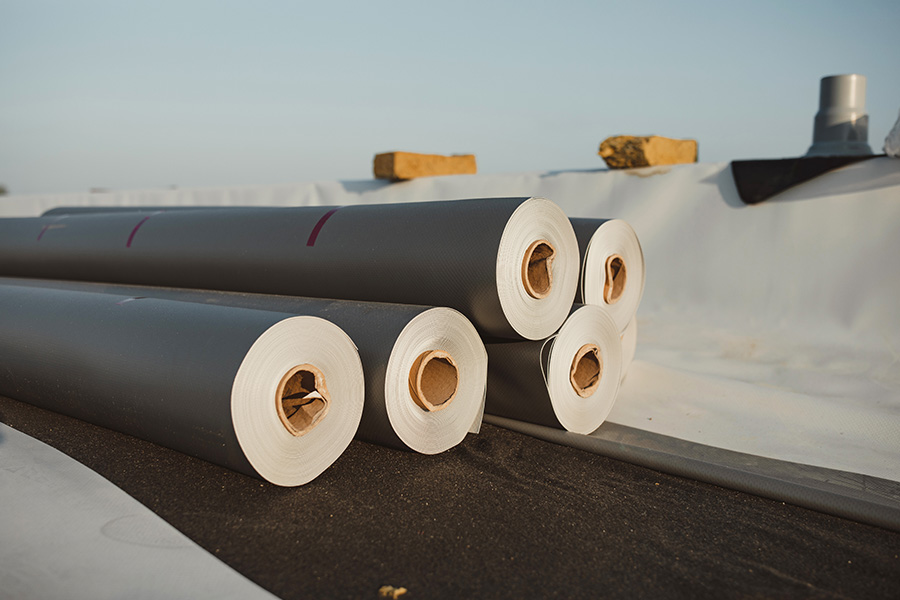
TPO commercial roofing membrane rolls prepared for roof installation
Roof-System Thinking

A Commercial TPO Roof Is More Than the Membrane

The most important procurement mistake is comparing membranes while ignoring the assembly below and the details around the field sheet. Roof performance is a system outcome.

1. Structural roof deckSteel, concrete, wood or another approved deck defines attachment and structural constraints.
2. Vapor control / air controlRequired strategy depends on climate, interior humidity, roof design and local building-science conditions.
3. Thermal insulationThickness, type and fastening pattern influence energy performance, condensation risk and system loads.
4. Cover board where specifiedCan provide a smoother, more robust substrate and support puncture or hail-performance strategies in engineered assemblies.
5. TPO field membraneThickness, reinforcement, surface, width and welding behavior should align with the project risk profile.
6. Details and accessoriesDrains, penetrations, parapets, corners, edge metal and traffic zones often determine leak risk more than the open roof field.
System Options

Commercial TPO Roofing Installation Pathways

Installation selection should be made by the project designer or roofing professional using deck type, wind uplift requirements, building use, climate, local code and the approved assembly.

Mechanically Attached

Membrane is secured through the roof assembly with approved fasteners and plates at defined spacing.

  • Common for large commercial low-slope roofs
  • Can support efficient installation sequencing
  • Fastening pattern must reflect design pressure and roof zones
  • Deck pull-out / attachment capability should be confirmed

Fully Adhered

Membrane is bonded to an approved substrate with a compatible adhesive system.

  • Useful where a smooth, fully bonded field is preferred
  • Can be selected for specific wind-uplift or detailing strategies
  • Substrate condition and adhesive compatibility are critical
  • Weather, application rate and cure conditions affect installation

Project-Specific / Recover

Some reroof and recovery projects may use TPO over an engineered intermediate layer or existing assembly after evaluation.

  • Existing moisture must be investigated
  • Drainage and roof slope must be reviewed
  • Code and attachment requirements vary by market
  • Do not assume every existing roof is suitable for recover

This page provides material and procurement guidance, not project-specific engineering. Final assembly design, fastening, wind-uplift, fire classification, code compliance and installation details should be confirmed by qualified project professionals and the applicable approval pathway.

Quick Specification

DERFLEX TPO Commercial Roofing Membrane Framework

The table below is useful for early-stage material planning. Final values and required test documentation should be confirmed before an order is released.

Specification ItemDERFLEX DirectionCommercial Project Decision
MaterialThermoplastic polyolefin (TPO) roofing membraneUsed as the exposed single-ply waterproofing layer in compatible low-slope roof assemblies.
Common thickness1.2 mm, 1.5 mm, 1.8 mm, 2.0 mm; custom discussion availableChoose by roof traffic, puncture risk, expected service conditions, local specification and budget.
Roll width2 m, 3 m, 4 m or project-specific width discussionWider rolls can reduce seams; handling, roof access, wind during installation and crew capability must also be considered.
Roll length20 m, 30 m, 50 m or project-specific packing directionConfirm practical roll weight, shipping method, crane / lift access and roof staging.
ColorWhite, gray, tan; custom color subject to production reviewWhite is commonly chosen for reflective roof design; color requirements may affect solar properties and order planning.
SeamingHot-air weldableField welding parameters must be validated by test welds and adjusted for weather, equipment and membrane condition.
Attachment conceptMechanically attached, fully adhered or project-defined system directionFinal system requires compatible fasteners, adhesives, insulation, cover boards, edge details and project approvals.
Performance focusWaterproofing, weather exposure, UV resistance, weldability, dimensional stability, puncture / tear directionAsk for the specific test standard and current report needed by your project instead of relying on general marketing claims.
Packaging / OEMRoll packing, labels, pallet direction and private-label discussionUseful for distributors, regional roofing brands and repeat commercial procurement programs.

For projects that require a named standard such as ASTM D6878, a specific fire classification, wind-uplift assembly, FM/UL pathway, CE documentation or another national requirement, send that requirement before quotation so the applicable product and documents can be confirmed rather than assumed.

Project Fit

Where TPO Commercial Roofing Is Commonly Considered

Commercial roof selection should respond to building use. A logistics warehouse, food-processing plant, shopping center and solar-ready facility do not create the same roof risks.

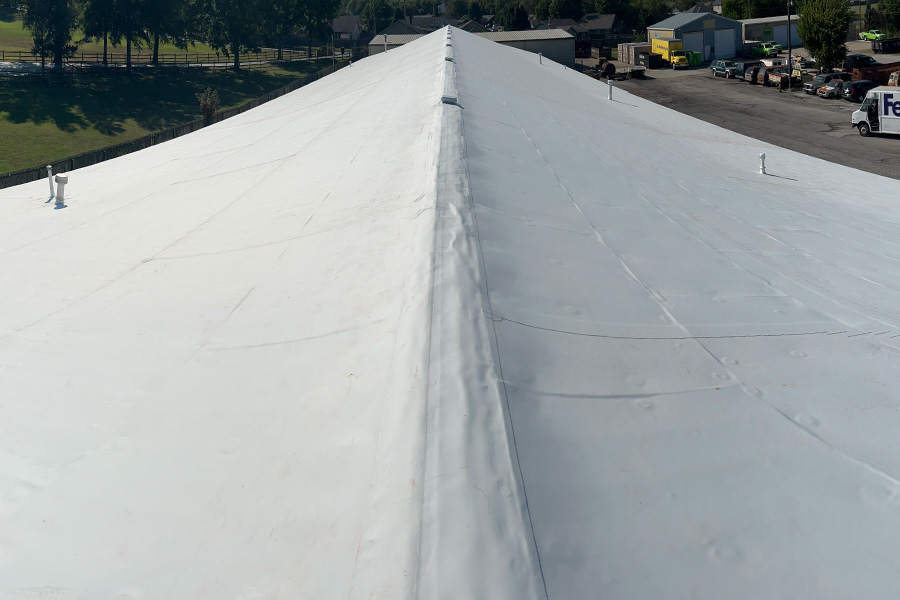
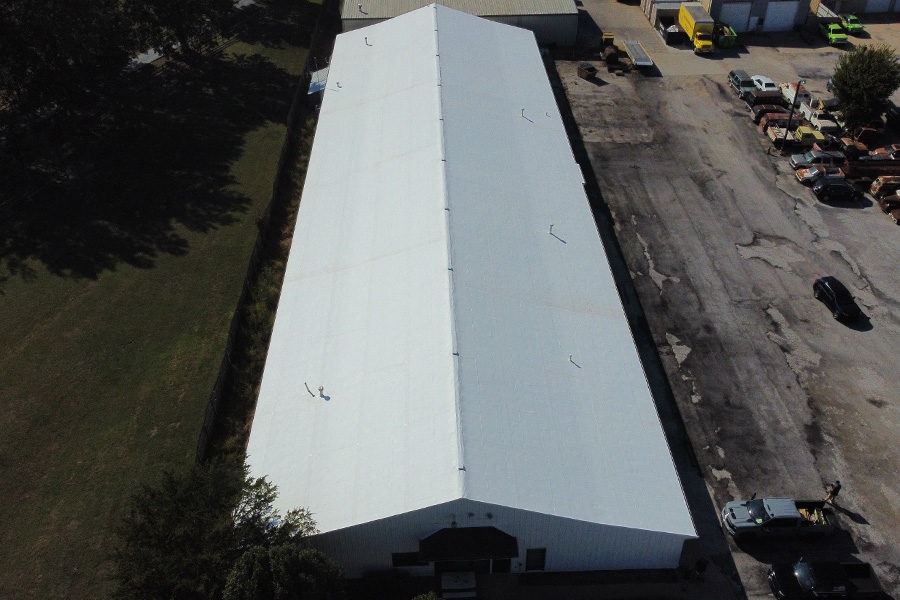
TPO commercial roofing retrofit on a large low-slope roof

Warehouses & Logistics Centers

Large uninterrupted roof areas make seam planning, roll width, fast installation workflow, reflective surfaces and future maintenance access important. Confirm roof-zone wind pressures around corners and perimeters.

Industrial TPO roofing membrane on factory roof

Factories & Industrial Buildings

Industrial roof design should consider rooftop equipment, penetrations, service traffic, internal humidity, exhaust conditions and potential chemical exposure. In harsher chemical environments, compare TPO with PVC and other membrane options.

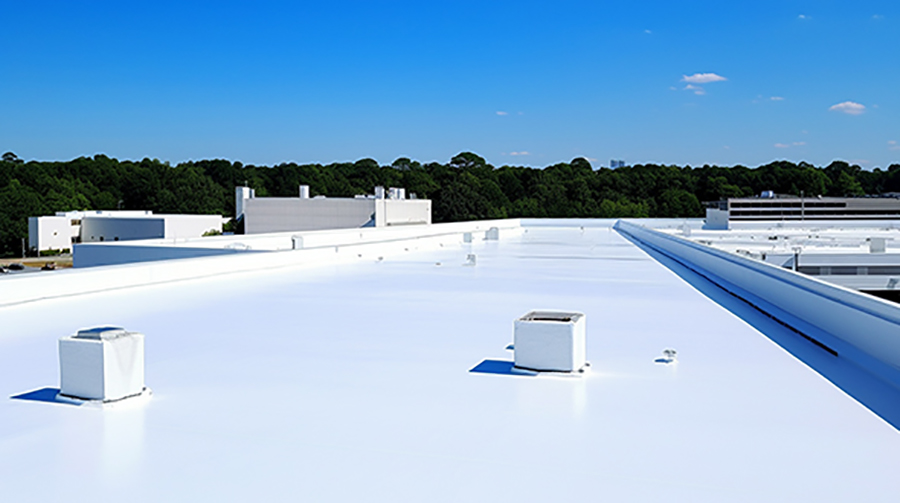
White TPO flat roof membrane for commercial building

Retail, Office & Mixed-Use Buildings

Roofing work may need to occur while the building remains occupied. Installation logistics, odor restrictions, access, drainage, edge safety and disruption planning can matter as much as membrane selection.

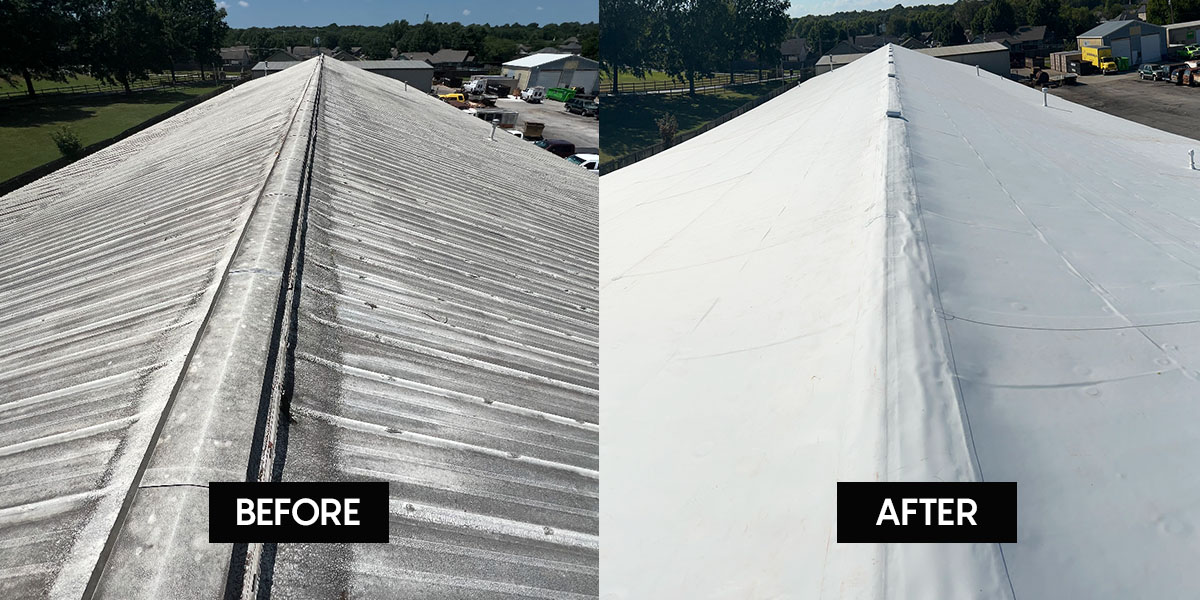
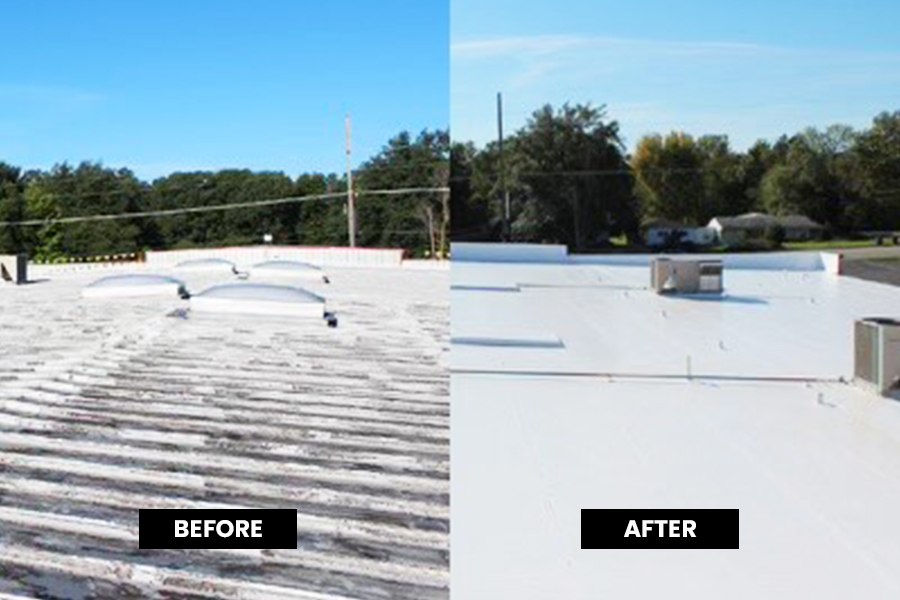
TPO roof recovery project for commercial building

Reroof & Roof Recovery Projects

Existing roofs should be inspected for trapped moisture, unstable layers, poor drainage, corrosion, unsupported areas and incompatible materials. Recovery can reduce tear-off in suitable conditions, but it is not automatically the lowest-risk option.

Selection Matrix

How Commercial Buyers Choose TPO Thickness & Roll Format

Thickness should not be chosen from one universal rule. Use roof traffic, detail density, climate, puncture exposure, service expectation, local specification and installation method together.

Project ConditionWhat to PrioritizeSpecification Discussion
Large warehouse with low routine trafficFast field coverage, stable welding, efficient roll layoutCompare common project thicknesses and wider roll options; confirm perimeter / corner attachment design.
Factory with frequent service accessPuncture protection and maintenance pathsConsider thicker membrane direction, cover board and dedicated walkway protection where appropriate.
Roof with many penetrations / rooftop unitsDetail execution, flashing materials and installer skillField sheet thickness alone will not solve detail risk; define boots, corners, drains, curbs and repair strategy.
Reroof over an existing systemMoisture, substrate condition and compatibilityCarry out investigation before deciding on recover; plan separator / cover-board layers and attachment only after review.
Hot, sunny climateUV / heat-aging direction and reflective surfaceWhite membrane is commonly evaluated; also verify insulation and local cool-roof requirements.
Distributor stock programRepeatable SKUs and efficient container utilizationStandardize thickness, width, length, color, label and packing to reduce reorder variation.
Commercial Cost

What Drives TPO Commercial Roofing Cost?

A useful commercial quote separates membrane cost from system and installation cost. The lowest roll price does not automatically produce the lowest installed roof cost.

Membrane Specification

Thickness, width, reinforcement, color, backing, surface finish and order volume affect membrane pricing and container planning.

Roof Complexity

Parapets, drains, curbs, pipes, rooftop equipment and irregular geometry increase detailing, labor and accessory demand.

Attachment & Insulation

Fasteners, plates, adhesives, cover boards, insulation thickness and vapor-control requirements can represent a significant share of the installed system.

Tear-Off vs Recover

Removal, disposal, deck repair and temporary weather protection can materially change reroof cost. A recover can be efficient only when the existing roof qualifies.

Local Compliance

Specified wind-uplift, fire, energy, code and insurer requirements influence which assembly is acceptable and which documentation is needed.

Logistics & Delivery

Roll dimensions, palletization, container loading, destination port, inland transport, staging space and delivery schedule affect total procurement cost.

Material Comparison

TPO vs PVC vs EPDM for Commercial Roofing

The right membrane depends on the building environment and project specification. The table is a decision aid, not a universal ranking.

FactorTPOPVCEPDM
Membrane familyThermoplastic polyolefinThermoplastic PVCThermoset synthetic rubber
Typical seam methodHot-air weldedHot-air weldedTape / adhesive-based seam systems
Reflective white roof directionCommonCommonDepends on product / coating selection
Chemical / grease-intensive environmentsProject-specific evaluation requiredOften considered where stronger chemical-resistance direction is neededProject-specific evaluation required
Commercial procurement focusBalance of weldability, reflectivity, large-area installation and cost efficiencyFrequently evaluated for specialty chemical, restaurant, grease or certain demanding environmentsEstablished rubber membrane option with different detailing and reflectivity logic
Best decision methodCompare actual project conditions, approved assemblies, local code, chemicals, roof traffic, climate, installer experience, detailing and lifecycle maintenance.

For a deeper material discussion, see DERFLEX's TPO vs PVC roofing membrane comparison.

Specification Review

What Should Be Confirmed Before a Commercial TPO Order?

  • Building location, roof height and roof dimensions
  • Deck material and current roof condition
  • New construction, full tear-off, partial repair or recover
  • Insulation, vapor-control and cover-board design
  • Target TPO thickness, roll width, color and reinforcement
  • Attachment method and wind-uplift / perimeter requirements
  • Required standards, test reports and code documentation
  • Roof traffic, rooftop equipment and maintenance routes
  • Destination port, packing, labels and requested delivery schedule
Risk Control

Common Commercial Roofing Sourcing Mistakes

  • Buying only by membrane price per square meter
  • Assuming a thicker sheet automatically solves puncture or hail risk
  • Not confirming deck compatibility before selecting attachment
  • Ignoring roof-zone wind pressure at corners and perimeters
  • Specifying wide rolls without considering roof access and handling
  • Failing to define accessories and detail membrane at penetrations
  • Assuming a material certificate equals an approved roof assembly
  • Ordering before confirming documentation required in the destination market
Commercial Roof Image Guide

TPO Roofing Membrane in Roll Supply & Retrofit Applications

Real project imagery helps procurement teams distinguish between roll-goods supply, field membrane installation and reroof conditions.

Roofing membranes should be specified with the project—not in isolation.

Major commercial roofing manufacturers structure their TPO offerings around membrane thickness, installation method, accessories, details, documentation and complete systems. For DERFLEX buyers, the practical implication is the same: define the assembly conditions and required documents first, then finalize the membrane specification. This reduces the risk of buying a technically usable roll that does not fit the actual roof design or destination-market requirement.

Solar & Future Maintenance

Planning TPO Commercial Roofing for Solar, HVAC & Roof Traffic

Many new commercial roofs are expected to support future equipment changes. Planning maintenance routes before installation can reduce avoidable membrane damage later.

Solar-Ready Roof Zones

Coordinate membrane, insulation and cover-board strategy with expected solar mounting, ballast or attachment design. Do not assume the membrane itself carries structural loads.

HVAC Service Routes

Technicians repeatedly walking the same paths can increase puncture and surface wear risk. Define walkways and access routes around rooftop units.

Future Penetrations

New pipes, vents and supports create detail work. Keep membrane repair materials, welding procedures and qualified installers available for future modifications.

DERFLEX Supply Scope

How DERFLEX Supports Commercial TPO Roofing Procurement

DERFLEX is most useful when the buyer needs a membrane manufacturing and export partner that can align roll supply with a defined commercial program.

Project Specification Discussion

Thickness, width, length, color, reinforcement, installation direction and required documents can be reviewed before commercial quotation.

OEM & Distributor Programs

Private-label discussion, roll labels, standard SKUs, packaging and repeat-order planning can be coordinated for building-material brands and regional distributors.

Export Logistics Planning

Commercial invoice, packing list, roll packing, pallet direction and shipment coordination can be discussed according to the destination and buyer's import process.

For a broader manufacturer-focused sourcing page, review the DERFLEX TPO roofing membrane supplier page. For material-category procurement beyond roofing, see DERFLEX TPO film and membrane solutions.

Buyer Questions

TPO Commercial Roofing FAQ

Direct answers to common commercial roofing and industrial procurement questions.

Is TPO good for commercial roofing?

Yes. TPO is widely used on flat and low-slope commercial roofs because it combines heat-weldable seams, light-color reflective options, weather resistance and efficient large-area installation. The final roof performance depends on the complete assembly, approved attachment, detailing and installation quality—not on the membrane alone.

What thickness of TPO membrane is used for commercial roofs?

Commercial projects use different thicknesses based on traffic, puncture risk, climate, service expectation, project specification and budget. DERFLEX commonly discusses 1.2 mm, 1.5 mm, 1.8 mm and 2.0 mm directions. The correct choice should be confirmed against the project requirement and required approval pathway.

Can TPO roofing be installed over an existing commercial roof?

Sometimes. A roof recover may be practical when the existing assembly is dry, stable, compatible and accepted by the project design and local code. Moisture, deck condition, drainage, trapped water, incompatible layers and attachment capacity must be investigated before choosing a recover instead of tear-off.

What is the difference between mechanically attached and fully adhered TPO?

A mechanically attached system secures the membrane and roof assembly with defined fasteners and plates. A fully adhered system bonds the membrane to an approved substrate with compatible adhesive. The correct choice depends on deck type, design pressures, roof geometry, installation conditions, project details and the approved system.

Does white TPO reduce commercial building cooling cost?

A white TPO surface can reflect more solar energy than darker roof surfaces and is often used in cool-roof strategies. Actual building energy savings cannot be predicted from membrane color alone because insulation, climate, HVAC efficiency, roof area, building use and local energy requirements all contribute.

How are TPO roof seams sealed?

TPO field seams are normally joined with hot-air welding. Installers should verify welding temperature, speed, pressure, overlap and equipment settings with test welds because ambient temperature, wind, membrane surface condition and equipment can change the correct welding window.

What information should I send for a TPO commercial roofing quote?

Send the roof area, building type, new-roof or reroof status, deck type, target thickness and roll width, color, installation concept, quantity, destination, required standards or test reports, OEM / label needs and delivery schedule. Photos, drawings or the project specification can significantly improve quotation accuracy.

Can DERFLEX provide TPO membrane for distributors and private-label roofing brands?

DERFLEX can discuss repeatable roll specifications, custom width and length direction, color, labels, packing and export documentation for distributor or OEM programs. Final options depend on the required specification, production review and order plan.

Commercial RFQ

Send the Roof Conditions, Not Just the Square Meters

A stronger TPO roofing quotation starts with the conditions that drive material selection and system risk. DERFLEX can review your membrane requirement for commercial projects, distributors, contractors and OEM roofing programs.

? Building / roof type? Roof area & dimensions ? New roof / reroof? Deck & substrate ? Thickness / roll width? Color / reinforcement ? Attachment concept? Required standards ? Quantity / packing? Destination / schedule
Consulting Services
+86-021-54361792 / 54361798
Email
sales@derflex.com