Membrane construction
State whether the roof field requires reinforced TPO roofing membrane, fleece-backed, self-adhered or homogeneous sheet. The construction affects attachment, dimensional behavior and substrate compatibility.



A procurement-ready specification guide for membrane thickness, reinforced construction, roll dimensions, ASTM D6878 test fields, hot-air welding, attachment methods, quality control and tender/RFQ preparation.
For a commercial roof, “60 mil TPO” is not a complete specification. Define the membrane construction, nominal thickness, thickness over reinforcement where required, roll size, color, attachment concept, weldability, test standard, document package and roof-system requirements before comparing quotations.
A complete TPO membrane specification should define at least nine things: membrane construction, nominal thickness, reinforcement, roll width and length, surface color, seam method, attachment concept, required material/test standard, and the documentation needed for project approval. For engineering work, also confirm thickness over reinforcement, roof deck and insulation build-up, wind-uplift design, fire/code pathway, detail accessories and field quality-control requirements.
State whether the roof field requires reinforced TPO roofing membrane, fleece-backed, self-adhered or homogeneous sheet. The construction affects attachment, dimensional behavior and substrate compatibility.
Write the nominal thickness in mm or mil and define the roll width × length. Wider rolls can reduce seams, but roll weight, roof access and handling capacity must be considered.
Identify mechanically attached, fully adhered, self-adhered or other approved assembly logic, and require hot-air weldability at field laps with a site trial-weld procedure.
The table separates information currently published by DERFLEX from market references and project-specific items that must be confirmed before order. This prevents a generic specification from being mistaken for a certified product declaration.
| Specification item | DERFLEX / market direction | Buyer should define | Status |
|---|---|---|---|
| Material family | Thermoplastic polyolefin (TPO) roofing / waterproofing membrane | Exposed roof field, recover, civil waterproofing or OEM use | DERFLEX |
| Membrane construction | Reinforced, homogeneous, self-adhered and project-specific structures are discussed across DERFLEX TPO pages | Exact structure and reinforcement/backing requirement | Confirm grade |
| Nominal thickness | 1.2 mm, 1.5 mm, 1.8 mm, 2.0 mm | Exact nominal target, tolerance and any thickness-over-scrim requirement | DERFLEX |
| North American thickness references | 45 mil ≈ 1.14 mm; 60 mil ≈ 1.52 mm; 80 mil ≈ 2.03 mm | Do not substitute an approximate mm conversion for the contract nominal value | Market reference |
| Roll width | 2 m, 3 m, 4 m or project-specific discussion | Seam plan, roof access, lifting limits and crew handling | DERFLEX |
| Roll length | 20 m, 30 m, 50 m or project-specific planning | Roll weight, waste target, container plan and rooftop movement | DERFLEX |
| Surface color | White, gray and tan are common DERFLEX TPO directions; custom color subject to order discussion | Reflectance target, aesthetic requirement and project documentation | Confirm order |
| Seam method | Hot-air welding | Overlap, equipment, test-weld protocol, ambient conditions and inspection method | DERFLEX |
| Installation concept | Mechanically attached, fully adhered or compatible project system direction | Deck, insulation, cover board, vapor control, wind uplift, adhesive/fasteners and perimeter design | System design |
| Required standard | Project-specific; ASTM D6878/D6878M is commonly referenced for reinforced TPO sheet roofing | Exact standard edition, test report, declaration and approval pathway | Do not assume |
| Packaging / OEM | Roll packing, labels, pallet direction and private-label discussion available | Roll ID, batch traceability, shipping marks, palletization and container loading | Confirm order |
Important: final performance values, tolerances, certifications, MOQ, production lead time and project approvals must be confirmed for the exact membrane offered. This page intentionally does not invent unpublished commercial or certification data.
Thickness is only one decision variable, but it remains an important tender and purchasing field. The conversion below helps international buyers compare DERFLEX metric directions with common mil terminology used in North American commercial roofing.
Close to the 45-mil market class. Use only where the roof system, reinforcement and contract specification permit a lighter sheet.
Close to the 60-mil market class and a common commercial comparison point. Confirm the nominal contract thickness rather than relying on rounded naming.
An intermediate heavier direction where a project wants more sheet thickness without moving directly to a 2.0 mm class.
Close to the 80-mil market class and commonly evaluated where a heavier membrane is specified for more demanding roof service.
Conversion reference: 1 mil = 0.0254 mm. 1.5 mm is not mathematically identical to 60 mil, and 2.0 mm is not exactly 80 mil. Tender documents should use the required nominal specification.
Reinforcement should be specified as part of the sheet construction—not treated as a marketing label. A common reinforced TPO roof field membrane uses a weathering layer, internal polyester scrim and lower TPO layer.
For detailed reinforced-sheet selection, see DERFLEX’s reinforced TPO membrane guide.
ASTM D6878/D6878M is commonly used for reinforced thermoplastic polyolefin-based sheet roofing. A buyer should not accept “ASTM TPO” as a complete statement: the RFQ should name the exact standard edition and require product-specific data for the membrane being offered.
| Technical field | Common ASTM method seen in current TPO data sheets | Why it matters in procurement |
|---|---|---|
| Nominal membrane thickness | ASTM D751 | Defines the overall sheet class and should match the contract nominal value. |
| Thickness over reinforcement / scrim | ASTM D7635 | Helps show how much polymer remains above the reinforcement rather than relying on total thickness alone. |
| Breaking strength | ASTM D751 | Supports comparison of reinforced sheet strength in machine and cross-machine directions where reported. |
| Elongation at break | ASTM D751 | Indicates deformation behavior under tensile loading. |
| Tear strength | ASTM D751 | Important where local damage or stress concentration could propagate through the sheet. |
| Factory seam strength | ASTM D751 | Useful for evaluating manufactured seam behavior where applicable; field seams still require installation control. |
| Low-temperature brittleness | ASTM D2137 | Relevant to cold-weather handling and material performance expectations. |
| Ozone resistance | ASTM D1149 | Evaluates resistance to ozone exposure and visible deterioration. |
| Heat aging | ASTM D573 | Supports assessment of retained condition after elevated-temperature exposure. |
| Linear dimensional change | ASTM D1204 | Relevant to dimensional stability of large roof sheets. |
| Water absorption | ASTM D471 | Provides a material-level water uptake reference. |
| Accelerated weathering | ASTM G155 | Evaluates UV/weather exposure using a controlled accelerated test protocol. |
Critical distinction: a membrane material standard is not the same as a tested roof assembly. Fire classification, wind-uplift resistance, fastening pattern, deck compatibility, insulation, adhesive, edge securement and local code approval depend on the complete roof system—not only the TPO sheet.
Use these directions as an RFQ starting point. Final membrane selection and roof-system design should be confirmed by the project designer, roofing professional and applicable approval pathway.
| Roof / buying situation | Specification starting point | Why this matters |
|---|---|---|
| Large warehouse / logistics roof | Reinforced TPO; wide-roll planning; white reflective direction; mechanically attached or fully adhered system review | Balances seam count, handling, wind design, installation productivity and repeatable bulk supply. |
| Factory / industrial roof | Reinforced TPO; define roof traffic, penetrations and service routes; consider heavier sheet where the project requires it | Industrial roofs often have equipment, maintenance access and local puncture exposure. |
| Roof recover / retrofit | Survey existing roof and moisture; consider substrate-compatible adhered or fleece-backed direction | Existing surface condition and compatibility can be more important than nominal membrane thickness. |
| Labor-sensitive adhered project | Evaluate self-adhered TPO membrane if compatible with the roof assembly | Factory-applied adhesive changes installation workflow but does not eliminate hot-air welded field seams. |
| High maintenance traffic | Evaluate heavier membrane direction plus designated walkway/protection strategy | Extra thickness alone should not replace traffic-control and protection design around equipment. |
| Distributor / private-label SKU | Lock construction, nominal thickness, roll size, color, label, pallet plan and approved sample | Repeatability, batch traceability and SKU consistency are critical for later container orders. |
| Tender / engineering project | State exact test standard, edition, required data, approval documents and inspection records | Prevents suppliers from quoting a generic “TPO membrane” that does not match the submission package. |
DERFLEX currently publishes 2 m, 3 m and 4 m width directions and 20 m, 30 m and 50 m length directions on its TPO pages. Wider and longer rolls can reduce field laps and roll changes, but they also increase roll weight and handling requirements.
Increasing roll width can reduce the number of longitudinal field seams across a large roof, which may improve layout efficiency and reduce repeated welding operations.
A wide, heavy roll requires safe lifting, rooftop staging and crew handling. The “widest available roll” is not automatically the lowest installed-cost choice.
Roll diameter, pallet configuration, container loading, roof access and installation sequence should be reviewed together—especially for export and OEM programs.
For legacy DERFLEX thickness and roll reference information, review the TPO roofing membrane thickness & roll guide.
TPO is a sheet material inside a complete roof system. The membrane quotation becomes more meaningful when the buyer states how the roof will be attached and how seams will be controlled.
Confirm deck type, fastener pullout, roof-zone wind pressures, perimeter/corner patterns, sheet width and lap design. Reinforced TPO is commonly selected for this type of commercial roof field.
Confirm insulation/cover board, surface preparation, adhesive system, coverage, ambient conditions and membrane backing. The roof field remains dependent on welded TPO-to-TPO seams.
Define release liner, approved substrate, primer requirement, storage, application temperature and rolling pressure. Do not assume “peel-and-stick” eliminates seam welding or roof-system engineering.
There is no universal welder temperature that should be pasted into every TPO specification. Membrane condition, ambient temperature, wind, welding speed, pressure and equipment all influence the correct setup.
Keep the welding zone clean, dry, correctly overlapped and free from contamination that can interfere with thermoplastic fusion.
Set up and inspect sample welds under actual site conditions before production seaming, then adjust heat, speed and pressure together.
Stable welding depends on a repeatable combination of equipment condition, heat, speed, pressure and membrane surface condition.
Use the project-approved seam inspection method and repair suspect welds before roof closeout.
For importers, roofing brands and project buyers, repeatability is often more important than a single sample. A release checklist should focus on attributes that can change installation behavior, project acceptance or SKU consistency.
Verify membrane type, reinforcement/backing direction and approved build-up against the order specification.
Check agreed nominal thickness, measurement method and project-specific tolerance plan.
Verify roll width, roll length, winding direction, edges and physical roll condition.
Inspect surface appearance, contamination, color direction and any agreed welding review.
Align batch ID, roll label, pallet plan, shipping marks and the required inspection/test document package.
Using real product imagery helps project buyers understand roll format, sheet appearance and the physical material they are sourcing.
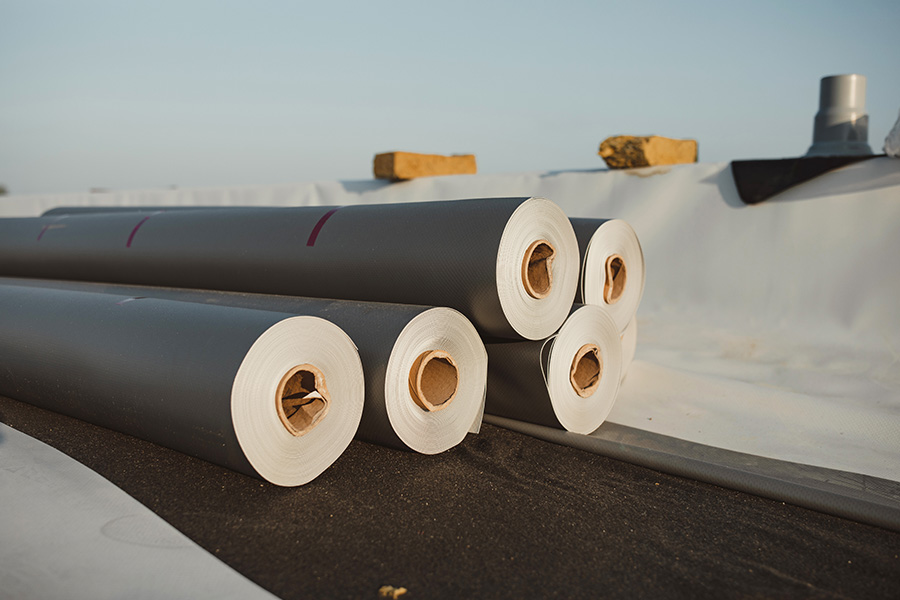
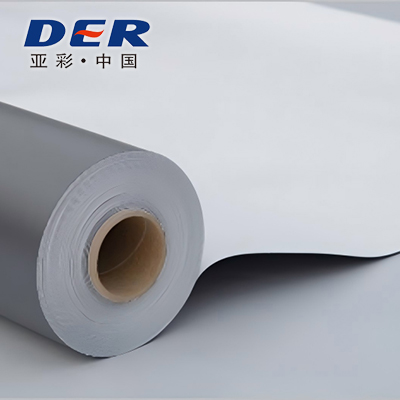
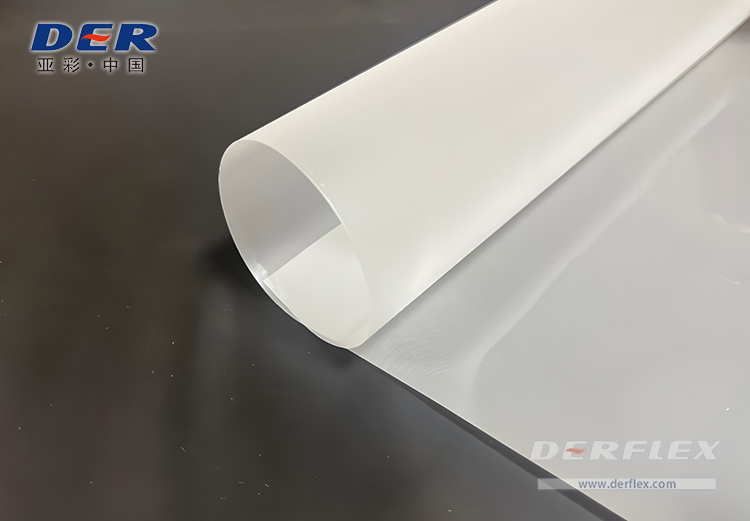
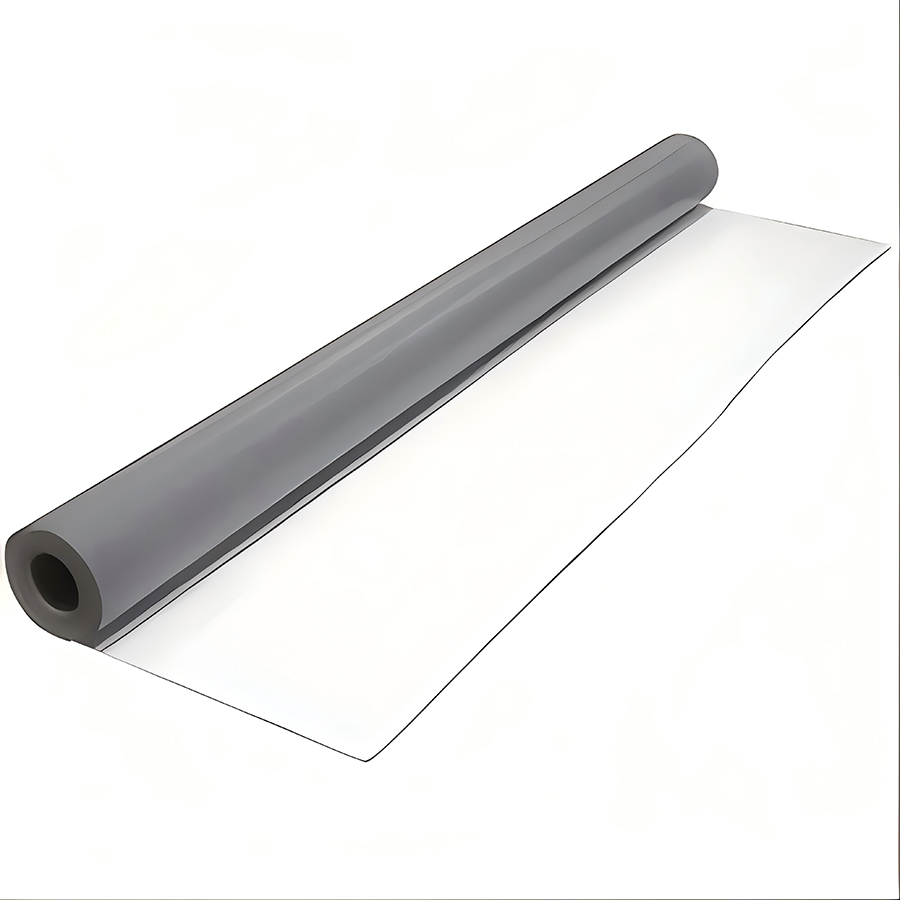
Thickness does not tell you reinforcement, thickness over scrim, backing, sheet construction, roll format, surface or test documentation. Require a complete product definition.
A sheet-level standard does not establish complete fire, wind, attachment or code approval for the installed roof assembly.
Wide rolls reduce seams but can increase lifting weight and rooftop movement difficulty. Installation logistics belong in the specification decision.
Do not copy a welding temperature from another job. Require trial welds and inspection under actual site conditions.
Define required test reports, declarations, batch records, labels and approval samples before the purchase order is released.
Compare construction, usable roll format, installation compatibility, logistics, QC, document package and repeat-order control—not material price alone.
A structured RFQ makes quotations easier to compare and reduces the risk that different suppliers price different membrane constructions under the same product name.
PRODUCT: TPO roofing membrane
APPLICATION: [new roof / replacement / recover / waterproofing]
MEMBRANE CONSTRUCTION: [reinforced / fleece-backed / self-adhered / homogeneous]
NOMINAL THICKNESS: [mm or mil]
THICKNESS OVER REINFORCEMENT: [required / not specified]
ROLL WIDTH × LENGTH: [required dimensions]
COLOR: [white / gray / tan / project requirement]
ATTACHMENT CONCEPT: [mechanically attached / fully adhered / self-adhered / other]
SEAM METHOD: hot-air weldable TPO
REQUIRED STANDARD: [exact standard + edition]
REQUIRED TEST DATA: [list methods / properties]
ROOF DECK / INSULATION: [details if project-specific]
WIND / FIRE / CODE PATHWAY: [project requirement]
LABEL / PRIVATE LABEL: [requirements]
PACKING / PALLET: [requirements]
QUANTITY: [m² / rolls]
DESTINATION: [country / port]
APPROVAL PROCESS: [sample / golden sample / PSI]
REQUIRED DOCUMENTS: [TDS / test report / batch record / declaration / other]
For broader product structures and OEM direction, review DERFLEX’s TPO film & roofing membrane page.
These six verified DERFLEX pages support different parts of the buying journey without forcing all TPO search intents onto one URL.
Provide the membrane construction, thickness, roll size, attachment method, quantity, destination and required standards/documents. DERFLEX can then review the request against the correct production and supply direction instead of quoting a generic TPO roll.
Final roof-system design, local approvals and installation should be reviewed by qualified roofing professionals and project authorities.