News
Company News

What Is Tarpaulin Used For? Uses, Materials & Custom Tarp Guide | DERFLEX

Update:2026/7/19 17:21:24 Views:
Tarpaulin Use & Selection Guide

What Is Tarpaulin Used For?

Tarpaulin is used to cover, shelter, contain, separate and protect people, cargo, materials, machinery and working areas from weather, dust, dirt, handling damage and temporary exposure.

The same basic idea serves truck transport, construction sites, farms, warehouses, equipment yards, outdoor events and emergency shelters. The important purchasing question is not only what a tarp can cover, but which material, weight, reinforcement and fixing method fit the actual job.

Quick Answer

What does a tarp do?

A tarp creates a flexible protective barrier. It may keep rain off a truck load, shield stored materials from sunlight, form a temporary roof, cover machinery, separate a dusty work zone, collect debris, reduce wind exposure or protect the ground during maintenance. Its usefulness comes from the combination of sheet size, material performance and fastening design.

Practical Definition

A Tarpaulin Is More Than a Sheet of Plastic

A tarpaulin, commonly shortened to tarp, is a large flexible sheet designed for temporary or repeated protection. Depending on the construction, it may be made from woven polyethylene, PVC-coated polyester, treated canvas, mesh or clear flexible material.

Most tarps include a way to secure the sheet: reinforced hems, grommets, webbing, rope edges, D-rings, straps, buckles or welded attachment points. These details determine how the load is transferred into the fabric and often matter as much as the tarp weight itself.

The five basic functions of tarpaulin

  • Cover: place a weather barrier over goods, equipment or structures.
  • Shelter: create temporary overhead or side protection.
  • Contain: keep debris, bulk material, dust or loose cargo within a defined area.
  • Separate: divide working zones, storage areas or production spaces.
  • Protect: reduce exposure to rain, sunlight, dirt, abrasion and handling contact.
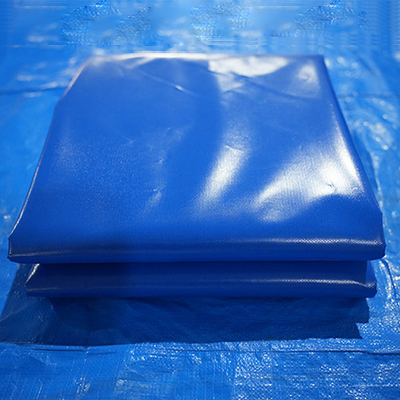
Blue heavy duty PVC tarpaulin folded for protective cover applications
Protective sheet, engineered system Material, seams, edge reinforcement and fixing points should work together for the intended application.
Major Applications

What Are the Main Uses of Tarpaulin?

Tarpaulin uses range from short-term household protection to repeated industrial service. The following categories cover the most common commercial and project requirements.

01

Transport and Cargo Protection

Tarps cover loads on flatbed trucks, trailers, dump bodies and open transport platforms. They help reduce exposure to rain, road spray, dust and loose debris while allowing flexible loading and unloading.

  • Truck and trailer covers
  • Side curtain systems
  • Container top covers
  • Lumber, steel and bulk cargo protection
02

Construction and Site Control

Contractors use tarpaulins as temporary roofing, scaffold screening, material covers, weather barriers, ground protection and debris containment during building, repair and demolition work.

  • Temporary roof protection
  • Scaffold and enclosure covers
  • Concrete, sand and material storage
  • Painting and maintenance protection
03

Agriculture and Farm Storage

Farms use tarps for hay, animal feed, machinery, crop handling and seasonal storage. Large covers can reduce direct weather exposure while custom fastening helps manage wind at open sites.

  • Hay and feed covers
  • Farm equipment protection
  • Crop and fertilizer storage
  • Temporary field shelters
04

Machinery and Equipment Covers

Custom-shaped tarpaulin covers protect generators, CNC equipment, construction machinery, pumps, vehicles and other assets during outdoor storage, transport or site downtime.

  • Industrial machine covers
  • Generator and pump covers
  • Construction equipment covers
  • Reusable maintenance covers
05

Warehouse and Outdoor Storage

Tarpaulins are used to cover pallets, raw materials, finished goods and temporary stock where a permanent building is unavailable or where goods need flexible access.

  • Pallet and stockpile covers
  • Port and yard storage
  • Warehouse partitions
  • Dust and splash barriers
06

Shelters, Tents and Outdoor Events

A tarpaulin can form a temporary roof, wall, floor or windbreak for campsites, event areas, work shelters and emergency response. Structural support and drainage should be planned for the expected conditions.

  • Temporary rain shelters
  • Camping ground sheets
  • Event sidewalls and covers
  • Emergency roof and wall panels
07

Specialized and Custom Tarpaulin Applications

The same flexible-sheet principle can be adapted to marine covers, sports field covers, pool covers, portable partitions, industrial curtains, reusable collection sheets, advertising surfaces and made-to-measure protective products. For these projects, shape, seam layout, surface finish and attachment points are normally specified around the end product rather than selected from a standard retail size.

Product Image Display

From Coated Fabric Production to Finished Use

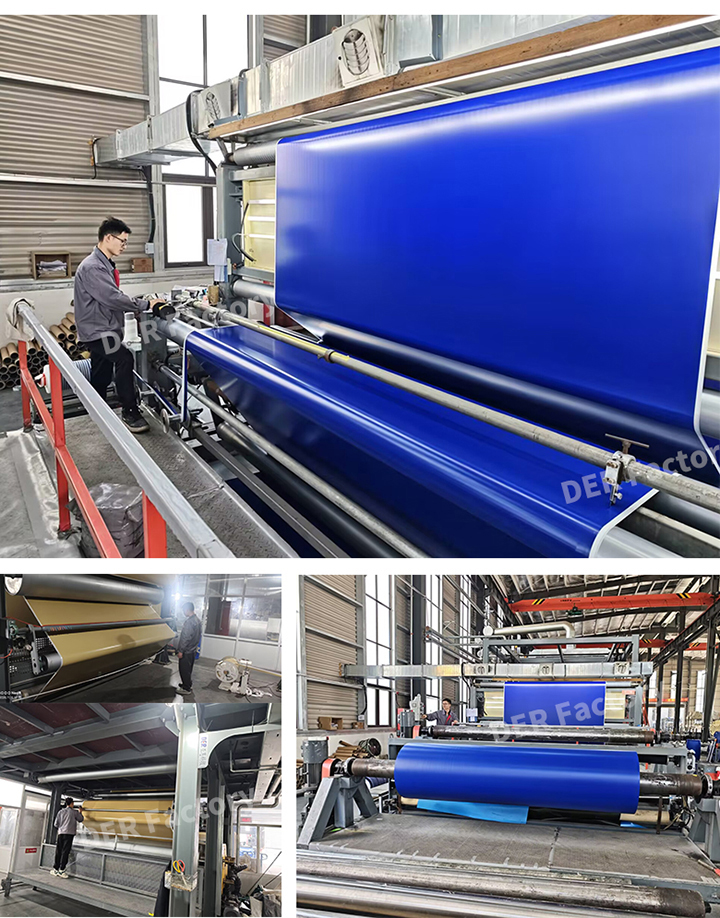
A commercial tarp program can begin with coated fabric rolls and continue through cutting, welding, edge reinforcement, hardware installation and final packaging.

DERFLEX PVC coated fabric production for tarpaulin material
PVC-coated polyester production for waterproof, weldable and custom-finished tarpaulin applications.
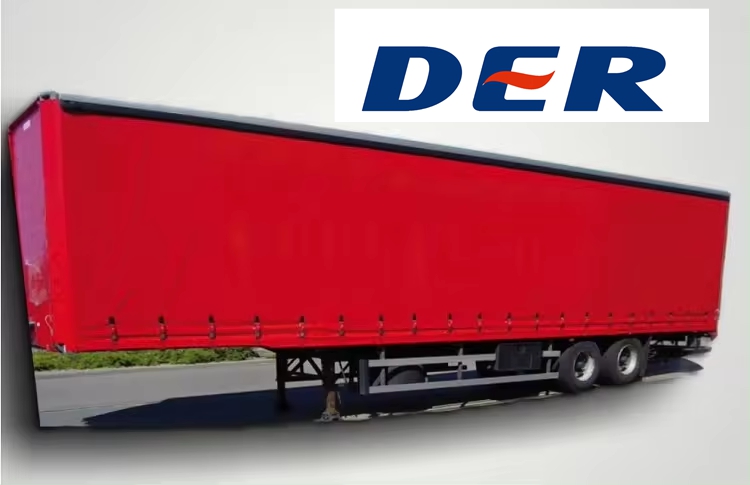
PVC tarpaulin used as a red truck side curtain cover
Truck curtain and transport-cover applications require material stability, weldability and reinforced fixing zones.
Material Guide

Which Tarpaulin Material Is Used for Each Job?

No single tarp material is ideal for every application. Selection should reflect service duration, water exposure, handling frequency, wind, abrasion, flexibility, breathability and fabrication method.

Material Typical Uses Useful Characteristics Selection Notes
PVC-Coated Polyester Truck covers, industrial covers, machinery covers, tents, construction and repeated outdoor service Can provide waterproofing, weldability, tensile stability, abrasion resistance and custom surface treatments Often selected for heavy-duty or made-to-measure products. Confirm weight, base fabric, coating, cold flexibility and required test standards.
PE Tarpaulin General covers, temporary rain protection, light storage, agriculture and short-term construction tasks Lightweight, economical and easy to handle Suitable for many temporary jobs, but the grade, weave and UV treatment affect durability. Avoid assuming all PE tarps perform the same.
Canvas Breathable equipment covers, drop cloths, firewood covers and traditional outdoor applications Breathability, textile feel and good handling Canvas is commonly water-resistant rather than fully waterproof. It may be preferred where moisture ventilation matters more than sealed protection.
Mesh Tarp Dump-truck loads, shade, scaffold screening, wind reduction and debris control Allows airflow and reduces wind pressure compared with a solid sheet Mesh is not chosen for complete rain exclusion. Open-area percentage and edge reinforcement should match the use.
Clear PVC Weather curtains, inspection windows, outdoor enclosures and areas requiring visibility Transparency, flexible separation and splash protection Clarity, thickness, cold-temperature behavior and edge reinforcement should be confirmed for outdoor use.

Material names alone do not define performance. Two tarps made from the same polymer can behave differently because of yarn density, coating thickness, additives, seam design, edge construction and fixing-point spacing.

Buyer Decision Guide

How to Choose a Tarpaulin for Its Intended Use

Start with the operating condition rather than choosing by color or weight alone. A tarp that is moved every day has different requirements from a roof cover that remains fixed for a season.

Ask these six questions before ordering

  • What is being protected? Cargo, machinery, people, bulk material or a structure?
  • How long will it remain in service? Hours, weeks, a season or repeated multi-year use?
  • What exposure is expected? Rain, UV, wind, abrasion, chemicals, cold or frequent folding?
  • How will it be handled? Manual removal, sliding system, rolling, fixed installation or automated tarp system?
  • How will it be secured? Grommets, D-rings, webbing, straps, rope hems, pockets, tracks or welded tabs?
  • What documentation is required? Color standard, test report, flame-retardant target, packaging or private-label details?
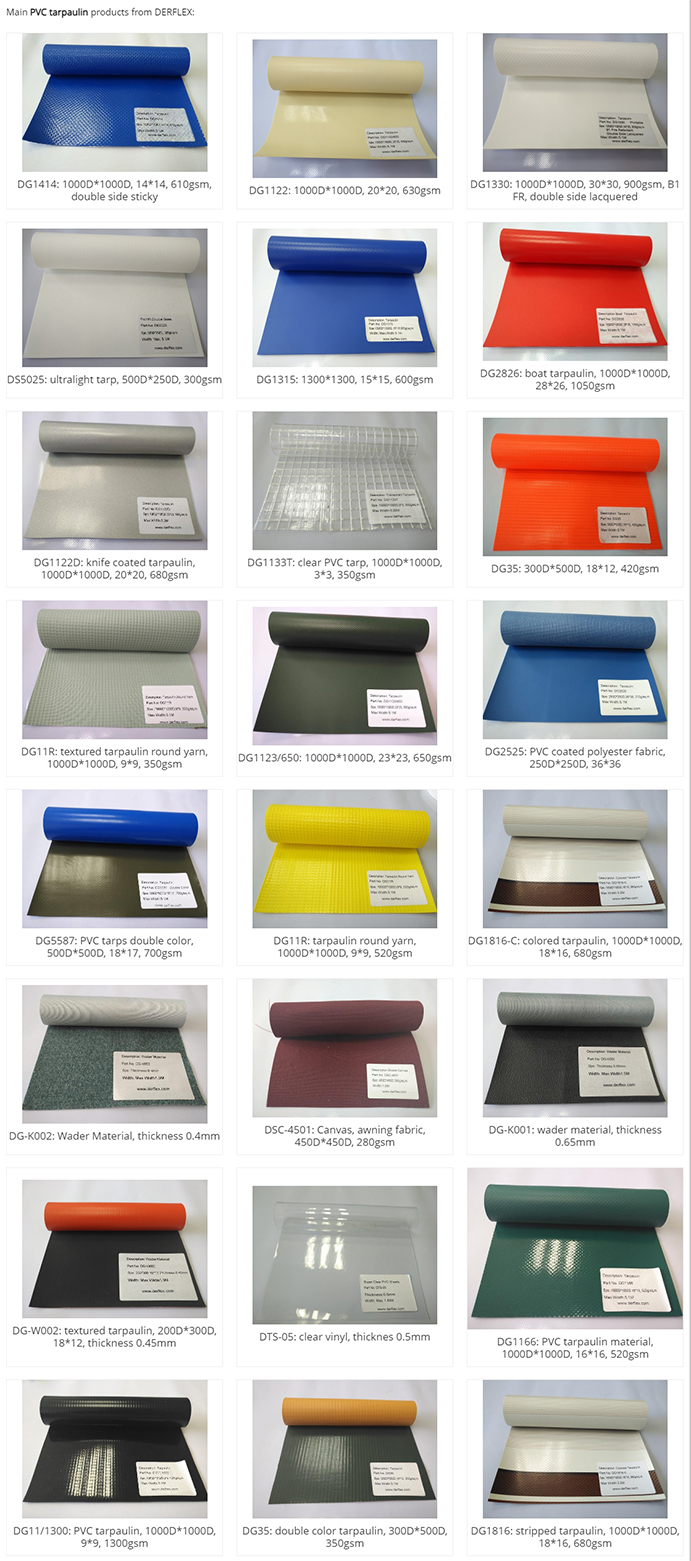
DERFLEX PVC tarpaulin material samples in different colors and structures
Example PVC tarpaulin structures, surfaces and colors for different cover and fabrication requirements.
DERFLEX Custom Supply

Turn a Tarpaulin Use Case into a Repeatable Product Specification

DERFLEX supplies PVC-coated polyester tarp materials, cut panels and finished tarp solutions for distributors, fabricators, contractors, transport projects, agricultural suppliers and OEM brands. The current DERFLEX tarp category presents typical material options from approximately 350 to 1200 gsm, with final construction confirmed according to the project.

Customization may include roll width, color, surface finish, welded seams, sewn or welded hems, rope edges, webbing reinforcement, corner patches, grommets, D-rings, straps, printing compatibility, labels and export packaging.

Functional options such as UV resistance, flame-retardant performance, anti-mildew treatment, cold flexibility, anti-static behavior or abrasion-focused surfaces should be discussed against the destination market and intended use. Testing requirements need to be confirmed before production.

Custom Development

From Use Requirement to Bulk Tarpaulin Supply

A structured process reduces ambiguity in material selection and helps make repeat orders more consistent.

Define the Job

Confirm the object being covered, climate, movement, installation method, expected service cycle and main risks.

Match the Structure

Select the material family, weight, yarn base, coating or lamination, finish and performance options.

Confirm Fabrication

Review dimensions, seam layout, hems, reinforcement, hardware placement, printing and packaging.

Sample and Produce

Evaluate relevant samples or test targets, confirm the order specification, then arrange inspection and delivery.

Use and Procurement Risks

Common Tarpaulin Mistakes to Avoid

Many failures begin with an installation or specification mismatch rather than the sheet material alone.

!

Choosing only by GSM or thickness

Higher weight may add durability, but base fabric, coating quality, flexibility and reinforcement also influence performance.

!

Allowing water to pool

Even a waterproof sheet needs slope and support. Ponding creates concentrated load and can stress seams, edges and structures.

!

Pulling from too few fixing points

Wide spacing can concentrate force around individual grommets. Fixing layout should reflect wind, tarp size and edge design.

!

Ignoring sharp corners and abrasion zones

Protect contact points with pads, corner patches or extra layers when a tarp rubs against metal edges or moving equipment.

!

Ordering the nominal object size

A cover normally needs allowance for height, overlap, hems, fastening and handling. Provide a drawing for shaped equipment covers.

!

Assuming every tarp is suitable for safety-critical use

Flame, chemical, food-contact or regulated applications require a confirmed specification and relevant testing, not a generic claim.

Tarpaulin FAQ

Questions About What Tarpaulin Is Used For

Practical answers for distributors, contractors, equipment owners, fleets and OEM buyers.

What is tarpaulin most commonly used for?

Tarpaulin is most commonly used as a flexible protective cover for cargo, construction materials, farm goods, machinery, outdoor storage and temporary shelters. It can also serve as a ground sheet, divider, debris collector, sidewall or weather curtain.

Is a tarp the same as a tarpaulin?

Yes. “Tarp” is the common shortened form of “tarpaulin.” In purchasing, the more important distinction is the material and grade, such as PVC tarp, PE tarp, canvas tarp, mesh tarp or clear PVC tarp.

Which tarpaulin is suitable for long-term outdoor use?

PVC-coated polyester is often selected for repeated heavy-duty outdoor use because it can combine waterproofing, strength, weldability and custom reinforcement. The correct grade still depends on UV exposure, wind, abrasion, climate, movement and expected service life.

Can tarpaulin be used as a temporary roof?

A suitable tarp can be used for temporary roof protection when properly supported, sloped and secured. It should not be treated as a permanent engineered roof unless the complete system has been designed for that purpose. Avoid water pooling and account for wind load.

What information is needed for a custom tarpaulin quotation?

Provide the application, finished dimensions or roll size, material direction, weight or performance target, color, quantity, seam and hem requirements, fixing hardware, printing, packaging, destination and any test or compliance requirement.

Does DERFLEX supply fabric rolls and finished tarp covers?

DERFLEX can support coated fabric rolls, cut panels and finished tarp directions depending on the project. Finished options may include welded seams, reinforced hems, grommets, D-rings, straps, labels and custom packaging.

Application-Based Quotation

Build a Tarpaulin Around the Actual Use

Share the object being covered, size, weather exposure, handling method, reinforcement needs and order quantity. DERFLEX can review the requirement and recommend a practical PVC tarpaulin material or custom cover direction for your project.

Useful details to send Application · Dimensions · Material or GSM · Color · Edge design · Hardware · Quantity · Destination Request A Quote
Consulting Services
+86-021-54361792 / 54361798
Email
sales@derflex.com