


What Makes a Good Tarp? Key Features Buyers Should Know
A good tarp is not defined by color or a simple “heavy duty” label. For industrial buyers, distributors, fabricators and OEM projects, a good tarp must combine the right base fabric, coating system, weight, tear strength, waterproofing, UV resistance, edge finishing and supplier consistency.
DERFLEX helps buyers evaluate tarp quality from the material structure upward: PVC coated polyester fabric, reinforced tarpaulin rolls, custom panels and finished tarp support for truck covers, construction covers, outdoor storage, agriculture and industrial protection.
- MaterialPVC coated polyester, vinyl, poly, canvas or mesh according to use.
- WeightGSM / oz selection matched with load, handling and service life.
- StrengthTear strength, tensile strength, weave density and coating adhesion.
- WeatherWaterproofing, UV resistance, mildew resistance and cold flexibility.
- FabricationHeat welding, hems, reinforced corners, grommets, webbing and pockets.
- SupplierBatch consistency, OEM support, testing, export packaging and documentation.
Good Tarp Quality Starts with Material Structure
For a home-use cover, a light tarp may be enough. For trucks, construction materials, machinery, agriculture storage and export OEM programs, the tarp should be engineered as a working textile. The base cloth provides dimensional stability and tear resistance, while the coating provides waterproofing, abrasion protection, UV resistance and weldability.
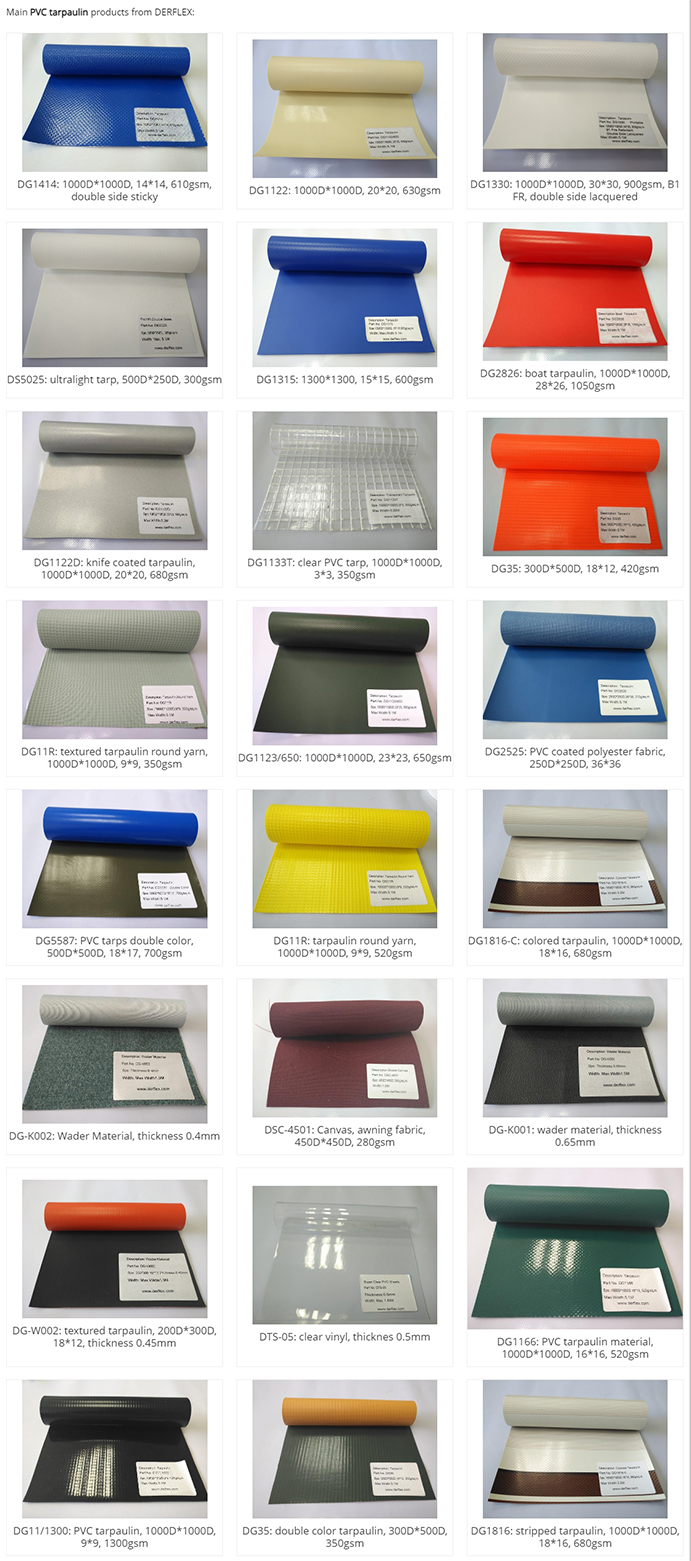
DERFLEX focuses on PVC coated polyester tarp materials and related finished tarp programs because this structure offers practical strength for many heavy-duty outdoor and industrial applications. Buyers can specify weight, width, color, surface finish, flame-retardant options, UV protection, anti-mildew treatment, roll length and fabrication details.
How to Judge Whether a Tarp Is Good Enough for Your Application
The most useful tarp evaluation is not “thick or thin” alone. A buyer should review the full structure: application, material, reinforcement, fabrication method and supplier repeatability.
Correct Material for the Job
PVC vinyl tarps, poly tarps, canvas tarps and mesh tarps serve different purposes. PVC coated polyester is often selected for heavy-duty waterproof covers, truck tarps, outdoor storage and fabricated industrial covers.
Balanced GSM and Thickness
A good tarp should have enough material weight for the job without becoming difficult to handle. For B2B use, GSM, thickness and fabric denier should be matched with wind load, abrasion risk and folding frequency.
Strong Fabric Core
The internal scrim or woven polyester base affects tensile strength, tear resistance and dimensional stability. This is why two tarps with similar thickness can perform differently in real use.
Waterproof and Weather-Resistant Surface
For rain, snow, dust and outdoor exposure, the coating must resist water penetration and maintain flexibility. UV, anti-mildew and cold-resistant options help extend usability in demanding environments.
Reliable Edge Reinforcement
Many tarp failures start at corners, hems and tie-down points. Reinforced edges, welded seams, webbing, D-rings or grommets should be selected according to installation tension and usage frequency.
Consistent Manufacturing and OEM Support
For importers and project buyers, repeatable color, coating adhesion, roll length, packing, labeling and documentation matter as much as the first sample. A good tarp program should be scalable.
Good Tarp vs. Ordinary Tarp: What Buyers Should Check
This comparison helps purchasing teams avoid choosing only by price or color.
| Evaluation Point | Ordinary Tarp Risk | Good Industrial Tarp Standard | DERFLEX Support |
|---|---|---|---|
| Material structure | Unknown base cloth or inconsistent coating. | Clear substrate, coating type and application suitability. | PVC coated polyester fabric rolls and finished tarp support. |
| Waterproofing | May resist light rain but fail at seams or damaged points. | Waterproof coating with proper seam welding and edge design. | Hot-air welding, high-frequency welding, sewing and reinforced fabrication options. |
| Outdoor durability | Shorter life under sun, wind, folding or abrasion. | UV-resistant, abrasion-resistant and tear-resistant construction matched to use. | Custom UV, anti-mildew, flame-retardant and lacquered finishes. |
| Dimensional fit | Generic size may not cover equipment or cargo correctly. | Correct finished size, shrinkage awareness, hems and tie-down layout. | Custom roll width, panel size, color, logo and packaging programs. |
| Procurement stability | Sample and bulk order may vary. | Repeatable production, roll inspection and export-ready communication. | Batch control, OEM labeling, project coordination and long-term supply support. |
Why DERFLEX for Tarp Material and Custom Tarp Programs?
DERFLEX is positioned for distributors, fabricators, contractors, OEM brands and industrial buyers that need more than a one-time purchase. The team supports material recommendation, performance matching, roll supply, panel supply and finished tarp development according to real application requirements.
What Buyers Can Specify
- Custom GSM, width, color and roll length
- Glossy, matte, lacquered, acrylic or PVDF surface options
- Waterproof, UV-resistant, anti-mildew and flame-retardant options
- Heat-weldable materials for tarp fabricators
- Finished covers with hems, eyelets, webbing and reinforced corners
- OEM packing, labeling, logo printing and repeat specification control
Which Tarp Features Matter Most in Different Use Cases?
A good tarp for one application may not be the right choice for another. These examples help buyers define the correct specification before requesting a quotation.
Cargo Protection
Focus on waterproofing, tear strength, abrasion resistance, edge reinforcement, tie-down layout, cold flexibility and custom finished size.
Site Covering
Look for puncture resistance, UV resistance, high-visibility color options, easy cleaning and strong hems for repeated deployment.
Outdoor Storage
Anti-mildew treatment, sunlight resistance, waterproof surface and manageable weight help protect hay, feed, equipment and temporary shelters.
Repeat Programs
Roll consistency, welding behavior, batch color stability, branding options and export packaging are essential for long-term orders.
Practical Tarp Specification Checklist
Use this before sending an inquiry. Clear requirements help DERFLEX recommend a more accurate structure and quotation.
| Checklist Item | Questions to Confirm | Common Options |
|---|---|---|
| Application | What will the tarp cover, where will it be used, and how often will it be handled? | Truck, trailer, construction, agriculture, machinery, warehouse, shelter, OEM cover. |
| Material | Do you need waterproof strength, breathability, shade, ventilation or printed branding? | PVC coated polyester, vinyl, mesh, canvas, PE/poly tarp. |
| Weight | Do you need light handling, medium-duty protection or heavy-duty industrial use? | Custom GSM / oz according to application and budget. |
| Finish | Will the surface face sun, rain, dirt, friction, welding or branding requirements? | Glossy, matte, lacquered, UV, anti-mildew, flame-retardant, anti-static options. |
| Fabrication | How will the tarp be fixed, folded, tensioned or removed? | Hems, welded seams, grommets, D-rings, webbing, pockets, reinforced corners. |
| Supply Form | Do you buy roll material for conversion or ready-to-use tarps? | Roll goods, cut panels, semi-finished panels, finished tarps, OEM packed products. |
Continue Comparing Tarp Materials and Applications
These related pages help buyers move from general tarp selection to specific materials, product types and procurement decisions.
Need Help Choosing a Good Tarp Specification?
Send DERFLEX your application, size, expected outdoor exposure, fastening method, weight target and order quantity. Our team will help recommend material structure, finishing options and supply form for your project.
Avoid overbuying or under-specifying. A clear tarp specification can reduce replacement cost, fabrication problems and project delays.
Frequently Asked Questions About Good Tarps
What makes a good tarp?
A good tarp has the right material for the application, suitable GSM and thickness, strong base fabric, waterproof or weather-resistant coating, reliable edge reinforcement and consistent manufacturing quality. For industrial use, supplier support and repeat specification control are also important.
Is a thicker tarp always better?
No. Thickness helps, but it is not the only factor. Tear strength, weave density, coating adhesion, UV resistance, seam construction and reinforcement design can make two tarps with similar thickness perform very differently.
Which tarp material is suitable for heavy-duty outdoor use?
PVC coated polyester or vinyl tarp material is often selected for heavy-duty outdoor uses because it can combine waterproofing, tear resistance, abrasion resistance, weldability and customization. PE tarps may be suitable for lighter or short-term use, while mesh is better when ventilation is required.
What is the difference between waterproof and water-resistant tarps?
Waterproof tarps are designed to block water penetration under normal use conditions, while water-resistant tarps can shed light moisture but may not protect against sustained rain or pooling water. Seam design and fabrication method also affect real waterproof performance.
What features should truck tarp buyers check?
Truck tarp buyers should check tear strength, abrasion resistance, finished size, edge reinforcement, grommet or D-ring spacing, cold flexibility, UV resistance, welding quality and how the tarp will be tensioned on the vehicle.
Can DERFLEX supply custom tarp material?
Yes. DERFLEX can support custom GSM, width, color, surface finish, UV treatment, flame-retardant options, roll length, OEM packaging and finished tarp fabrication requirements according to project needs.
Should I buy tarp roll material or finished tarps?
Choose tarp roll material if you are a fabricator, converter or distributor with your own cutting and welding process. Choose finished tarps when you need ready-to-use covers with hems, grommets, webbing, reinforcement and packaging already completed.
How can I request a tarp recommendation from DERFLEX?
Share your application, target size, outdoor exposure, fastening method, required color, expected quantity and whether you need roll goods or finished tarps through the DERFLEX Request A Quote page.