PVC / Vinyl-Coated Polyester
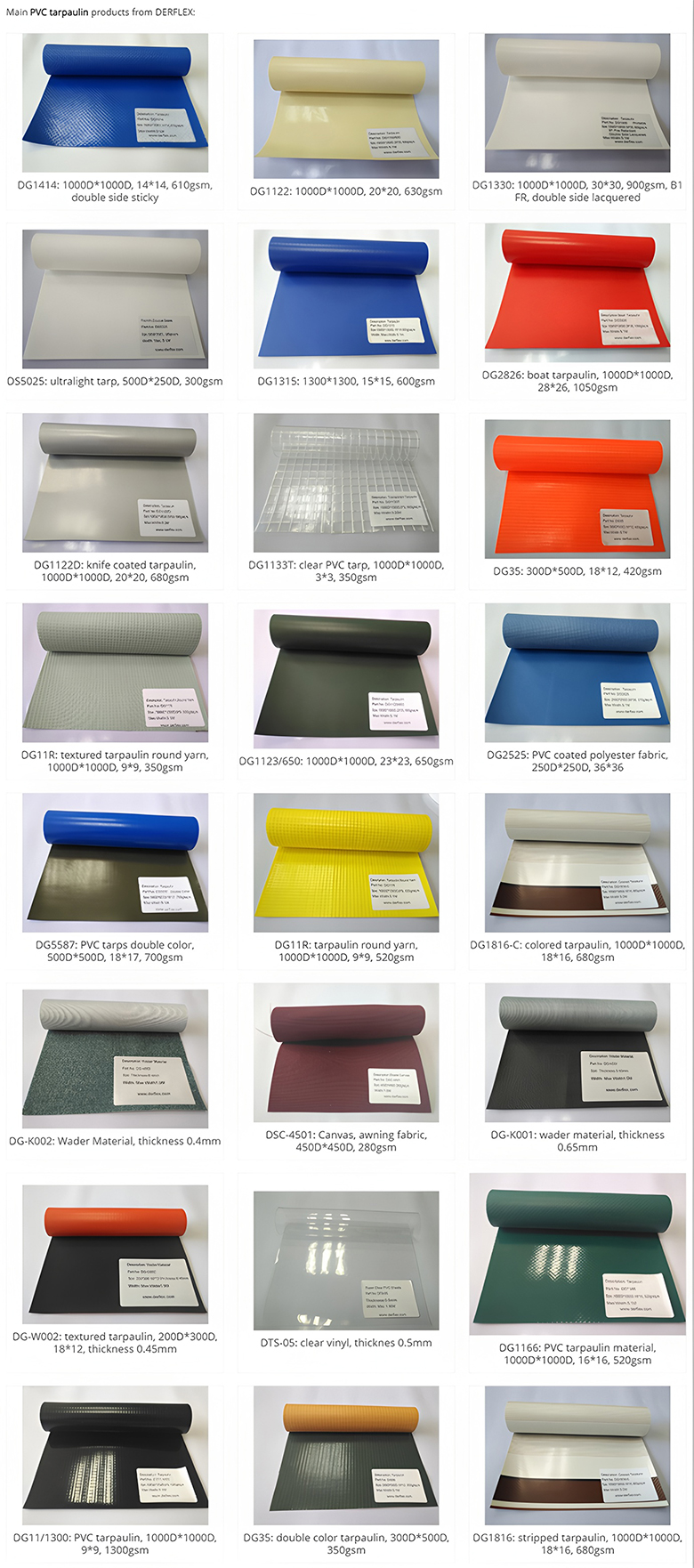
Polyester reinforcement coated or laminated with PVC. Common where strength, cleanability, welding and custom finishing are important.



 Tarp Material Selection Guide
Tarps are made from coated plastics, woven textiles and open-mesh fabrics. The most common choices are PVC vinyl-coated polyester, woven polyethylene, canvas, mesh and lightweight PU-coated textiles. Each material solves a different problem: waterproofing, breathability, handling weight, abrasion resistance, shade or compact packing.
Choose PE for temporary, lightweight coverage; canvas where airflow matters; mesh for shade and lower wind load; lightweight coated polyester for portable shelters; and PVC-coated polyester for many demanding waterproof, weldable and custom industrial covers.
“Tarp” describes a protective sheet, not one universal fabric. The right choice depends on the environment, expected service period, handling frequency, tie-down design, ventilation needs and fabrication method.
Polyester reinforcement coated or laminated with PVC. Common where strength, cleanability, welding and custom finishing are important.
Woven polyethylene strips laminated with PE film. Lightweight, economical and widely used for short-term protection.
Cotton or blended woven cloth with a traditional hand feel. Useful where moisture vapor needs a path to escape.
Open-weave polyester, polyethylene or vinyl-coated yarns. Reduces wind pressure while providing shade or debris control.
Light woven fabric with polyurethane treatment. Often used for camping shelters, flysheets and packable covers.
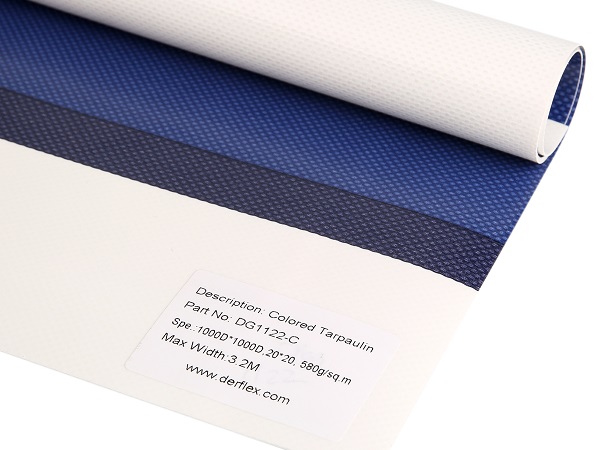
Two tarps both described as “PVC” or “poly” can perform differently because their reinforcement, coating, surface treatment and fabrication details are not the same. A useful specification separates these layers.
Polyester yarn, polyethylene tape, cotton or nylon provides tensile stability and influences tear behavior.
PVC, PE or PU creates the protective surface and influences water resistance, flexibility and welding compatibility.
UV packages, lacquer, anti-mildew treatment, cold-flex additives, flame-retardant options and embossing can be selected for a defined application.
Welded or sewn seams, webbing, hems, grommets, corner patches and load paths often determine real-world reliability.
Ratings below are directional buying guidance. Final performance depends on thickness, yarn construction, additives, workmanship, test method and operating conditions.
| Material | Water Protection | Breathability | Handling Weight | Abrasion / Repeated Use | Fabrication | Typical Fit |
|---|---|---|---|---|---|---|
| PVC / Vinyl-Coated Polyester | Coated surface; welded seams can support water-tight fabrication. |
Solid grades do not provide natural airflow. |
Medium to heavy, depending on GSM and construction. | Commonly specified for frequent handling and industrial exposure. |
Hot-air or high-frequency welding, sewing, webbing and hardware. | Truck tarps, equipment covers, industrial curtains, tents and custom OEM products. |
| Polyethylene (PE) | Film-laminated surface is commonly water-resistant or waterproof as a sheet. |
Condensation may accumulate beneath a solid cover. |
Light and easy to move. | Suitable for temporary or moderate-duty use; quality varies widely. |
Heat-sealed seams, sewn hems and grommets. | Temporary roofing, garden covers, short-term storage and general protection. |
| Canvas | Usually water-resistant rather than fully waterproof. |
Allows moisture vapor and heat to escape. |
Medium to heavy, especially when wet. | Strong woven textile; must be dried and stored correctly. |
Primarily sewing, hems, patches and grommets. | Breathable equipment covers, drop cloths and moisture-sensitive storage. |
| Mesh | Open structure does not provide full rain protection. |
Excellent airflow and lower wind resistance. |
Light to medium. | Depends on yarn, coating and edge reinforcement. |
Sewing, welding on coated grades, reinforced perimeter and hardware. | Shade, debris containment, dump-truck covers, privacy and wind screens. |
| PU-Coated Polyester / Nylon | Useful for rain flys and light shelters when seams are treated. |
Depends on coating and panel design. |
Very light and packable. | Better suited to portable use than repeated industrial dragging. |
Sewing, seam tape and lightweight reinforcement. | Camping shelters, flysheets, temporary lightweight covers and outdoor gear. |
Selecting a tarp is a trade-off. A material that is ideal for one environment can create unnecessary weight, condensation, wear or cost in another.
PVC-coated polyester combines a woven polyester reinforcement with a protective vinyl surface. It is often selected for demanding outdoor and industrial applications because the construction can be adjusted by weight, yarn, coating method, surface finish and functional package.
Poly tarps are usually made from woven PE tape laminated with polyethylene film. Their low weight and accessible cost make them practical for broad general-purpose use, especially when the cover is moved frequently or needed for a limited period.
Canvas is a tightly woven cotton or blended fabric. Its key advantage is breathability: it can reduce trapped moisture around equipment, firewood and goods that should not be sealed beneath a non-breathable plastic sheet.
Mesh tarps use an open weave so air and part of the light can pass through. Instead of trying to create a waterproof barrier, mesh controls shade, visibility, loose debris or cargo while reducing the pressure that wind applies to a solid sheet.
Thin polyester or nylon fabric can be treated with polyurethane for rain protection while remaining compact. This family belongs more naturally to outdoor gear and portable shelter systems than to dragging, cargo tension or heavy industrial handling.
Some projects need more than a standard material family. Clear PVC, flame-retardant coated fabric, anti-static covers, cold-flexible grades, abrasion-focused surfaces and printable tarps are examples of specifications developed around a defined risk or process.
The following starting points help narrow the choice. Final specification should reflect wind, rain, UV exposure, temperature, handling frequency, installation geometry and any applicable project standard.
PE is often practical when light weight, broad coverage and controlled cost matter more than long-term abrasion or repeated tension.
PVC-coated polyester is commonly considered for waterproofing, reinforced edges, welded panels and repeated road use.
Canvas can help when trapped condensation is a greater concern than complete rain sealing.
Mesh provides airflow, partial visibility control and reduced wind pressure compared with a solid tarp.
PU-coated polyester or nylon can provide a useful balance of packability and weather protection for lightweight outdoor systems.
Specify a coated fabric by weight, reinforcement, surface, functional requirements and finishing details rather than selecting only by color or thickness.
Buyers often compare material names while overlooking the technical details that determine handling, durability and finished-cover behavior.
These values describe different properties. Weight and thickness help comparison, but neither alone proves strength.
Base-fabric construction affects tensile stability, puncture behavior and the way a tear propagates.
The process influences adhesion, flexibility, surface consistency and fabrication suitability.
Outdoor exposure requires a suitable formulation; duration depends on climate, color, maintenance and installation.
Cold-flexibility and heat exposure should match the actual operating region and storage conditions.
Name the required test standard and market rather than relying on a generic “FR” description.
Welding, sewing, webbing, rope hems, patches and grommet spacing determine load distribution.
Chemicals, pressure washing, folding while wet and sharp contact points can shorten useful service.
A temporary PE cover may be appropriate for a short project, while a heavier PVC-coated structure may be more practical for repeated handling. The decision should reflect replacement frequency, labor, downtime, damage risk and storage.
A tarp that must be replaced frequently can add labor, waste and interruption costs. On the other hand, specifying an unnecessarily heavy material can increase shipping weight and make installation difficult. The efficient choice is the lightest construction that meets the expected load, exposure and service period with an appropriate safety margin.
For repeat B2B programs, batch consistency also matters. Color, hand feel, coating adhesion, roll width and fabrication behavior should remain controlled across reorder cycles.
A sample approval process should confirm the complete construction, not only a small color chip.
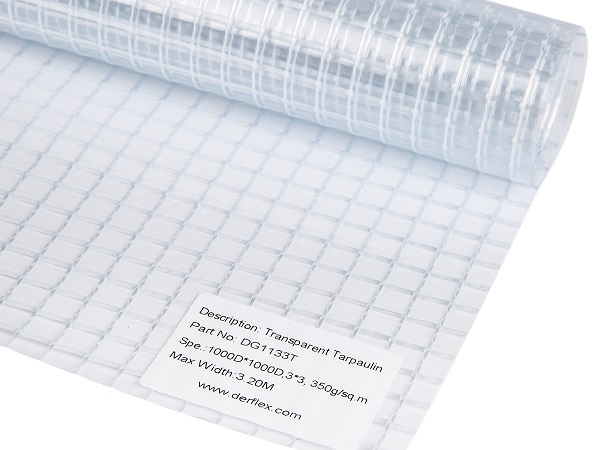
DERFLEX focuses on PVC-coated and laminated flexible materials for industrial, transport, outdoor and OEM applications. Buyers can discuss roll goods, cut panels or finished tarp fabrication according to their supply model.
A clear inquiry lets the supplier compare practical constructions instead of quoting a generic tarp that may not fit the application.
These six pages provide deeper information on tarp categories, coated fabrics, waterproof PVC materials, wholesale supply, transport use and UV exposure.
Concise answers for buyers comparing material type, waterproofing, breathability and industrial use.
Most tarps are made from PVC or vinyl-coated polyester, woven polyethylene, canvas, mesh, or lightweight PU-coated polyester and nylon. The right material depends on waterproofing, airflow, weight, durability, fabrication and budget requirements.
In tarp sourcing, “vinyl tarp” commonly refers to polyester fabric coated or laminated with PVC, which is polyvinyl chloride. Buyers should still confirm the base fabric, coating weight, total GSM, surface treatment and fabrication method.
PVC-coated polyester and laminated polyethylene can provide waterproof sheet surfaces. The finished tarp also depends on seams, stitching holes, welded joints, hardware and installation. Canvas is generally water-resistant and mesh is not intended for full rain protection.
PVC-coated polyester is commonly considered for heavy-duty outdoor covers because it can combine a waterproof surface, strong reinforcement, weldability, abrasion-focused finishes and custom edge construction. The final grade should match UV exposure, temperature, wind load and handling frequency.
Canvas is breathable and can reduce condensation beneath the cover. It is useful for moisture-sensitive storage and applications that benefit from a quieter textile surface, but it is usually heavier and not fully waterproof under prolonged rain.
Send the application, dimensions or roll format, expected service period, exposure conditions, target weight or thickness, color, performance requirements, seam and edge details, quantity, packaging and destination market.
Share the application, size, exposure, finishing details and order quantity. DERFLEX can review practical PVC-coated tarp material and fabrication options for your inquiry.
Material descriptions and comparison ratings are general selection guidance. Final performance, compliance and service life depend on the confirmed construction, test method, fabrication, installation, maintenance and actual use environment.