Warp Denier
The first 1000D refers to the nominal linear mass of the yarn running lengthwise through the base fabric.



1000D × 1000D / 18×18 describes the woven reinforcement inside a tarp—not the complete tarp grade. “1000D × 1000D” refers to the nominal denier of the warp and weft yarns, while “18×18” describes how densely those yarns are woven in the two directions. For an industrial PVC tarp, buyers should still specify finished GSM or thickness, coating, tensile and tear performance, adhesion, UV/cold requirements, seam design and reinforcement.
Read it as yarn size first, yarn density second. Denier is a yarn linear-mass unit: 1 denier equals 1 gram per 9,000 meters of yarn, so a nominal 1000D yarn has a mass of 1,000 grams per 9,000 meters. When the specification says 1000D × 1000D, both principal fabric directions use nominal 1000-denier yarn.
The 18×18 weave then describes how many reinforcement yarns are arranged in the warp and weft directions within the supplier’s specified count window—commonly per inch in tarp trade usage. Because counting conventions can vary, an industrial purchase specification should state the unit instead of assuming it.
The notation becomes much easier to use when each number is treated as a separate design variable instead of a single “strength grade.”
The first 1000D refers to the nominal linear mass of the yarn running lengthwise through the base fabric.
The second 1000D refers to the nominal linear mass of the crossing yarn. Equal numbers indicate a balanced denier direction, not necessarily equal final strength.
The first 18 describes yarn density in one principal direction. Industrial buyers should require the counting unit on the technical sheet.
The second 18 describes density in the perpendicular direction. A square 18×18 construction is different from asymmetric constructions such as 28×26.
This schematic is only a reading aid. Real yarn diameter, weave geometry, coating coverage and shrinkage change the visual appearance of the scrim.
If the supplier uses 18 yarns per inch in each direction, a plain square grid conceptually creates 324 crossings in a square inch. That number is geometry—not a mechanical-strength rating.
Heavy duty tarp listings often place several numbers side by side. They are easy to confuse, but each one answers a different engineering question.
| Specification | What It Measures | Example | What It Does Not Tell You |
|---|---|---|---|
| Denier (D) | Yarn linear mass | 1000D × 1000D | Finished GSM, coating thickness, waterproofing or tested strength |
| Weave / thread density | How densely yarns are arranged | 18×18, 20×20, 30×30 | Yarn size, PVC add-on, fabric thickness or seam strength |
| GSM | Finished material mass per square meter | 610 gsm | How much of that mass is yarn vs coating, or actual tensile/tear performance |
| oz/yd² | Finished material mass per square yard | Often used in North American tarp purchasing | Weave density or exact coating structure |
| mil | Thickness; one mil = 0.001 inch | Used on many vinyl tarp listings | Yarn density, tensile strength or coating adhesion |
DERFLEX publishes the DG1188 coated tarpaulin as one practical reference showing how denier, weave density, finished GSM and width appear together on a sourcing sheet.
| DERFLEX Reference | Base Yarn | Published Weave | Published Finished Weight | Published Max Width | Buyer Interpretation |
|---|---|---|---|---|---|
| DG1188 | 1000D × 1000D | 18×18 | 610 gsm | 5.1 m | Direct example of the exact notation discussed on this page. |
| DG1122 | 1000D × 1000D | 20×20 | 650 gsm | 5.1 m | Shows that the same denier family can use a denser weave and a different finished weight. |
| DG1330 | 1000D × 1000D | 30×30 | 900 gsm | 5.1 m | Shows how a much denser base construction can be combined with a heavier finished build. |
Published DERFLEX product references are useful sourcing directions, not substitutes for the current quotation, technical data sheet and approved production sample. Confirm final construction and tolerances before ordering.
No. A denser weave can place more reinforcement yarns into the fabric when the yarn and counting method are comparable, but finished tarp performance depends on the whole textile-and-coating system.
Can provide a robust heavy-duty reinforcement using 1000D yarn while keeping the base cloth comparatively open and practical for coating, welding and handling.
Uses a denser yarn grid when the yarn and counting method are the same. It may support different dimensional stability and strength targets, but must be verified by test data.
Represents a substantially denser reinforcement architecture in DERFLEX published examples. It is not automatically the best choice if extra body, stiffness or cost adds no project value.
A heavy duty tarp is a system: base fabric, PVC coating, surface finish, fabrication and load distribution work together.
Shows how the finished fabric resists pulling force in warp and weft. Ask for the test method, units and direction.
Important where cuts, edge damage, corners or hardware can start a tear. Denier alone cannot predict tear propagation.
For PVC coated polyester, bond quality between coating and scrim affects delamination resistance and long-term fabrication reliability.
Contact points often wear through the PVC surface before the yarn breaks. Coating build, lacquer and wear patches can matter more than denier.
Heat-welded, HF-welded or sewn seams should be matched to coating chemistry, panel layout and the direction of expected loads.
Webbing, reinforced hems, grommet spacing, D-rings and corner patches determine how concentrated tie-down loads enter the fabric.
Outdoor life depends on the PVC formulation, UV package, color, exposure and maintenance—not on 1000D or 18×18 alone.
For winter transport or repeated folding, specify required low-temperature performance instead of assuming a yarn number guarantees flexibility.
The construction is useful as a starting platform for multiple heavy-duty PVC tarp applications, but the coating, GSM and fabrication should change with the load case.
Prioritize tensile and tear values, wind-flap abrasion, edge webbing, D-ring or grommet load paths, cold flexibility and weld quality. Wide roll options can help reduce panel seams on large covers.
Prioritize abrasion zones, geometry, access openings, corners, vents, handling cycles and whether the cover will be repeatedly folded or dragged.
Prioritize dimensional stability, repeated flexing, attachment spacing, surface cleanability and optional flame-retardant requirements where the project demands them.
Prioritize waterproof welding, UV exposure, fabric body, fold behavior, required FR standard, color/opacity and structural load assumptions from the shelter design.
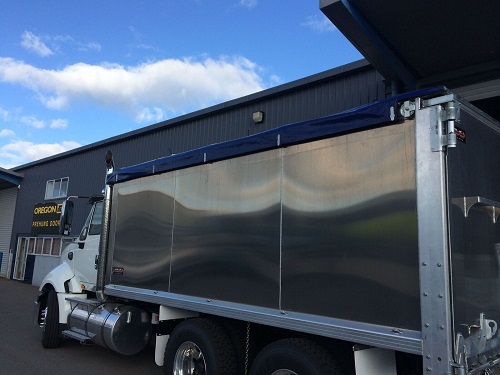
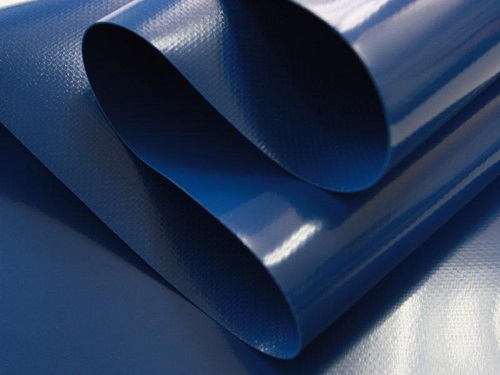
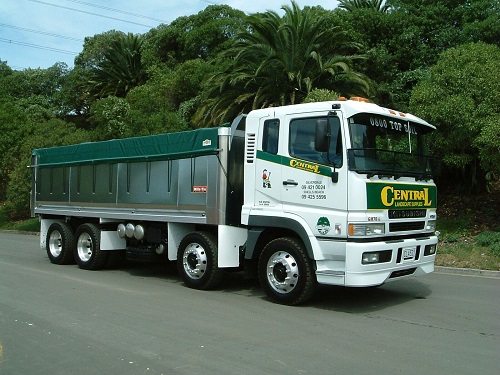
These DERFLEX site images are used to connect the textile specification with the coated material and the type of finished product a buyer is actually approving.
A precise RFQ reduces back-and-forth, prevents accidental grade substitution and makes repeat-order approval much easier.
These six pages form the most relevant next-step path for buyers comparing denier, weave density and heavy duty PVC tarp materials.
It normally means the base fabric uses nominal 1000-denier yarn in both the warp and weft directions. Denier is yarn linear mass: a nominal 1000D yarn corresponds to 1,000 grams per 9,000 meters. It does not state the finished tarp’s GSM, thickness or tested strength.
18×18 usually describes reinforcement density in the two principal fabric directions—commonly 18 yarns in warp and 18 in weft within the supplier’s stated count window. For procurement, require the unit and counting method on the technical specification.
No. 18×18 is a weave-density notation. Ounces per square yard describe finished fabric weight, while mil describes thickness in thousandths of an inch. A tarp listing may contain all three values, but they are not interchangeable.
It is a strong industrial reinforcement direction, but it is not a complete heavy-duty grade by itself. The finished PVC coating, total GSM, tensile strength, tear strength, coating adhesion, UV formulation, seams, hems and attachment reinforcement determine whether the finished tarp is suitable for the load.
If the fiber, yarn denier, yarn quality, weave type and counting method are the same, 20×20 is a denser grid than 18×18. That can change strength and dimensional behavior, but the finished tarp still needs mechanical test data before one construction can be called stronger.
DERFLEX publishes DG1188 as one example using 1000D × 1000D / 18×18 construction at 610 gsm with a published maximum width of 5.1 m. Treat this as a specific product reference, not a rule that every 18×18 tarp must be 610 gsm.
Specify the material family, finished GSM or thickness, coating route, width, surface finish, tensile and tear requirements, adhesion, UV and temperature conditions, any flame-retardant requirement, fabrication method, edge reinforcement, hardware, dimensions and acceptance tolerances.
Send DERFLEX your application, target 1000D × 1000D / 18×18 or alternative construction, finished weight, width, environment, fabrication details and required test values. The useful question is not only “Is it 1000D?”—it is whether the complete tarp system is matched to your service conditions.