



Boat Covers Manufacturer for OEM Marine Brands & Distributors
DERFLEX supports made-to-order boat cover programs for marine product brands, importers, cover makers and wholesale distributors. Develop waterproof PVC-coated marine covers around the vessel profile, storage or trailering environment, reinforcement layout, seam construction and private-label requirements. Source roll goods, cut panels or project-defined fabricated cover solutions—with the exact finished-cover scope agreed before sampling and bulk quotation.
A boat cover manufacturer develops or supplies protective boat-cover components or finished covers to an approved vessel pattern. The procurement scope may include coated fabric, cut sections, seams, hems, attachment points, identification labels and packing. Always distinguish material supply from a complete fitted cover and its installation hardware.
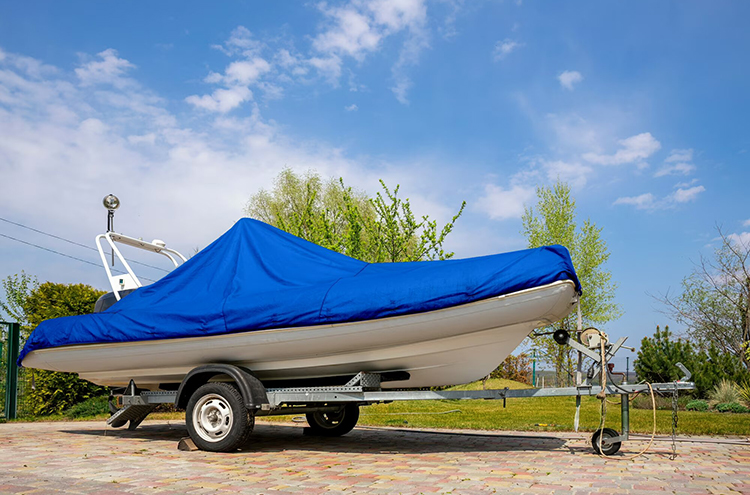
Choose the Supply Format Before Discussing Price
Two quotations both labeled “custom boat cover” may include very different deliverables. Clarifying the format early prevents missing labor, fittings, packaging and approval work.
| Supply format | What the buyer receives | Key approval point |
|---|---|---|
| Marine fabric rolls | Specified PVC-coated polyester fabric in agreed width, color, finish and roll packing. | Fabric construction, roll tolerance, usable width and fabrication compatibility. |
| Pre-cut cover panels | Panels cut to a buyer-approved cutting layout; finishing is defined by the order. | Pattern files, dimensions, orientation, edge allowance and identification. |
| Project-defined fabricated cover | Agreed cover assembly with specified joins, reinforced zones and selected attachment details. | Physical first article, seam design, straps/hardware, geometry and inspection criteria. |
| Private-label cover program | One of the above formats plus approved labels, packing artwork and assortment structure. | Which items are supplied, pack-out accuracy and repeat-order consistency. |
Product availability is reviewed by project. A general waterproof fabric capability does not establish that an exact fitted cover, installation service or trailer-rated system is included.
Boat Cover Programs for Real Marine Use Conditions
Material and pattern decisions change substantially between a boat that stays in a yard and one that travels at road speed.
Boat Storage Covers
Full or partial covers for powerboats and fishing boats. Prioritize reliable runoff, cover drop, accessible fixing points and abrasion protection around rails.
Mooring & Marina Covers
Plan for UV, humidity, salt-air exposure, wind movement and practical access. Ventilation and secure perimeter restraint matter as much as the coated surface.
Trailerable Boat Covers
Use a tight, model-appropriate pattern, controlled airflow and protected contact zones. Trailering approval is a separate design and testing consideration.
Yacht & Pontoon Covers
Complex windshields, consoles, arches, rigging and railings require measured openings, more precise panel layout and reinforcement at concentrated stress points.
For broader marine cover formats and protection uses, see DERFLEX boating tarps. If you are sourcing fabric rather than a fabricated cover program, review our boat cover fabric manufacturer page.
What Makes a Custom Marine Cover Fit and Last?
The key design variables are pattern geometry, drain slope, seam direction, abrasion areas, vents and fastening load paths. A strong fabric alone cannot compensate for a poorly planned cover.
Dashed curves: panel/seam layout
Gold points: reinforced perimeter fittings
Small rectangles: possible vents
Outer edge: pattern fit and cover drop
Define stress before selecting hardware
- Hull and deck profile: measure around consoles, windshields, rails, bows and motor protrusions.
- Seam position: avoid placing joins where water can pond or where repeated flexing is highest.
- Reinforcement: add pads and doubled material where rails, cleats, arches or straps rub the cover.
- Fastening: choose grommets, webbing, straps or rope hems to match the support and restraint design.
- Ventilation: balance waterproof protection with condensation control in closed storage conditions.
- Drainage: maintain adequate slope and support; do not let rainwater accumulate in unsupported pockets.
For larger vessels and unusual deck profiles, see the related custom boat cover tarp solutions for cover components and fabricated options.
Write a Boat Cover Specification That Can Be Sampled
Use the variables below to compare offers on the same basis. The exact fabric grade, dimensions and components must be established in the approved specification; generic “marine grade” is not a substitute.
| Buyer variable | Specification decision |
|---|---|
| Base fabric | PVC-coated polyester reinforcement; confirm yarn construction and required handling. |
| Weight / thickness | Select for boat size, handling frequency, climate and cover structure. Record units and the approved grade. |
| Surface / color | Matte, lacquered or project-defined finish; approve a physical color sample and repeat-order tolerance. |
| Exposure | State UV intensity, humidity, salt-air exposure, winter temperature and expected service cycle. |
| Edges and seams | Agree sewn or compatible welded joins, hem widths, chafe patches and reinforcement zones. |
| Fittings | Define webbing, straps, grommets, rope hems or access openings from the final cover drawing. |
| Supply / packing | Confirm fabric rolls, cut panels or assembled covers; packing, labels and destination terms separately. |
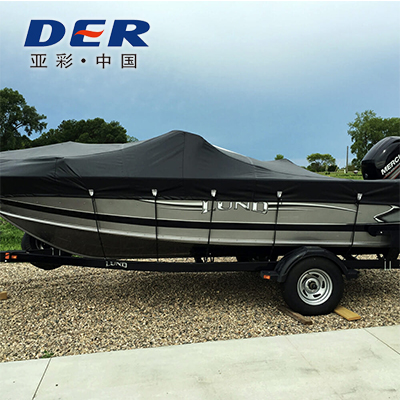
Fabric quality vs. assembled-cover quality
A coated fabric may resist water, while stitched penetrations, vents and joins still determine whether the finished cover leaks. Weight does not prove abrasion resistance or highway suitability. Sample the complete system, not just a fabric swatch, for critical finished-cover programs.
For roll-specific properties and coating choices, see marine tarpaulin wholesale specifications and PVC tarpaulin materials.
PVC Coated Polyester vs. Marine Canvas vs. PE Covers
The best material depends on whether you prioritize waterproofing, soft textile handling, vapor management or short-term economy.
| Material family | Strongest use case | What to verify |
|---|---|---|
| PVC-coated polyester | Waterproof storage covers, marine tarp programs and suitably designed fabricated OEM covers. | Seam method, coating adhesion, UV options, chafe, mass, ventilation and temperature behavior. |
| Marine canvas / treated textiles | Fitted sewn covers where textile hand, appearance and moisture management matter. | Actual water resistance, treatment life, sewing performance, cleaning and periodic maintenance. |
| PE tarpaulin | Economical temporary storage protection and short-duration cover programs. | Reinforcement, tie-down load, weather exposure, material degradation and expected replacement cycle. |
No option is universally superior. Compare the specific grade and finished construction; do not generalize from the fiber name alone. For practical selection by marine storage condition, read the DERFLEX marine tarp buying guide.
A Practical Boat Cover OEM Approval Workflow
Standardize the brief, first-article review and reorder criteria before buying at scale. The actual manufacturing and inspection stages are confirmed for each accepted program.
Define the market
Provide boat family, stationary or road use, climate, target fit and expected buyer segment.
Supply a pattern
Send model data, drawings, fit photos, critical obstructions and desired cover drop.
Agree the scope
Confirm whether the order is material, cut panels or a fabricated cover including accessories.
Approve samples
Review color, material, cut dimensions, contact-point protection, seams and fitting layout.
Set inspection rules
Agree measurable checkpoints for dimensions, appearance, reinforcement, labels and packing.
Control repeat orders
Reference the approved revision, sample, material specification and packaging artwork.
A sample boat cover reveals fit errors, insufficient drain slope, missing hardware access and chafe before those issues affect an entire batch. Neither a generic material sheet nor a flat 2D cut drawing alone proves the on-boat fit.
From Coated Materials to Order-Specific Marine Cover Programs
DERFLEX’s documented coated-fabric and tarpaulin range provides a practical starting point for OEM procurement. The value of a manufacturer conversation is an agreed construction and accountable supply scope—not an unsupported promise that one cover fits every boat.
Choose from relevant coated structures
Discuss water barrier, reinforcement, finish and outdoor-use variables at material level before committing to a cover design.
Align fabric with fabrication
Review stitching or welding compatibility, seam positions, panel layout and the finishing work included in the proposal.
Build repeatable OEM orders
Define sample revisions, finish/color standards, packing, labeling and a quotation basis that can be reused for future batches.
See tarpaulin for boat cover and marine applications for additional material-use background.
Four Application Notes That Protect Your Order
Drainage is a cover-design task
Standing water can load seams and unsupported fabric. Provide a supported ridge or slope where appropriate and confirm where runoff exits rather than relying only on the material’s water barrier.
Moisture needs an escape route
A sealed PVC cover can trap moisture from the vessel and surroundings. Plan vents, spacing, drying procedures and appropriate storage hygiene for humid climates.
Trailering requires specific validation
Moving air can generate flutter, abrasion and high restraint loads. Approve the fitted shape and attachment details for planned road use; do not treat a storage-only sample as transport approved.
Define what is not in the quotation
Clarify patterns, sample freight, buckles, straps, support poles, hardware, installation, retail cartons and spare parts. A finished cover quotation may not include the full attachment system.
What to Send for a Custom Boat Cover Quotation
You do not need a perfect engineering drawing to begin. A boat photo, rough dimensions and supply format are sufficient for an initial scope discussion; a complete approved pattern is needed before precise fitted-cover production.
- Boat type, model family, overall length, beam and height
- Storage, marina, winter lay-up or trailering use
- Photos, drawing or existing sample with marked contact points
- Preferred fabric, color and coating/finish direction
- Cover drop, vents, openings, seams and attachment method
- Roll goods, cut panels or finished cover requested
- Quantity, assortment, packing, labeling and destination
- Sample and inspection documents required for approval
Quotation variables: chosen fabric, pattern utilization, cutting/seaming work, hardware, sample revisions, volume, packing and shipping terms. Exact MOQ, price, lead time and testing scope should be confirmed in writing.
Marine Cover Materials, Applications & Buying Guides
Use these DERFLEX resources when you need a more specific material or application answer.
Boat Covers Manufacturer FAQ
Answers to practical procurement questions about material, fit, completed covers and private-label sourcing.
Does DERFLEX supply finished boat covers or only fabric rolls?
DERFLEX presents marine cover roll goods, cut panels and custom fabricated cover options. For a model-specific finished cover, confirm pattern ownership, fabrication steps, fastening hardware, sample approval and the exact items included in the quotation.
Can the same cover be used for boat storage and highway trailering?
Not automatically. A road-use cover needs an approved close-fitting pattern, controlled flutter, reinforced edges, suitable restraints and verification for the planned trailering conditions. A stationary storage cover should not be assumed road-ready.
Is waterproof PVC boat-cover fabric breathable?
PVC coating forms a strong water barrier, but that does not make a closed cover breathable. A marine cover needs an appropriate ventilation and drainage strategy to reduce trapped humidity and condensation.
What dimensions are needed for a custom boat cover?
Supply the boat type, overall length, beam, maximum height, windscreen and console positions, outboard or sterndrive details, rails, cleats and the desired cover drop. Mark photos or provide a boat-specific pattern where possible.
Are private-label colors, logos and packaging available?
DERFLEX lists OEM colors, surface finishes, branding and private-label packing among its marine cover options. The final combination, labeling method and order conditions should be confirmed against the approved sample and quotation.
Which technical documents can I request before a bulk order?
Ask for the selected material specification, an identifiable approved sample, the applicable test methods and any available reports for that exact grade. Also agree on visual, dimensional and fabrication inspection criteria before production.
Move from a Boat Photo to a Production-Ready Cover Brief
Tell DERFLEX the vessel type, intended environment, cover geometry and supply format. We can review suitable marine material options and the project-specific fabrication scope for sampling and quotation.