


What Is Keder Used For?
Keder is used to fasten fabric continuously into a compatible rail or frame. A flexible bead wrapped in coated textile slides inside a retaining channel while its flap joins a tent roof, awning, banner, curtain or cover. This connection is useful wherever a panel must be aligned, tensioned, removed or replaced without fixing the entire edge with individual eyelets. The final performance depends on the rail, bead, seam, fabric and installation—not on keder alone.

What does keder actually do?
The essential job of keder is to turn the edge of a flexible textile panel into an attachment that can be retained by a specially shaped channel.
Short answer: keder connects a fabric membrane to a rigid rail, distributing attachment along the length of the edge. It is commonly used in tents, awnings, marine covers, tensioned banners and specialized industrial enclosures.
Hold the edge
The rounded cord or core is enclosed in a fabric wrap. The completed bead is captured by the rail opening so the panel can be supported along its edge.
Connect the panel
One or two flexible textile flaps allow the keder assembly to be welded or sewn to the main fabric. This joint must be compatible with the panel material.
Guide and align
An aluminum or other engineered profile positions the bead, guides insertion and helps maintain the intended panel geometry. It is a separately specified hardware component.
Terminology varies by industry: keder is also called keder beading, keder welt, awning rope or keder cord. The bare cord is not the same as the textile-wrapped finished edge.
Where is keder used?
Keder is selected for applications where a continuous, neat and potentially removable fabric-to-frame connection is valuable. These are common uses, not a claim that a single keder construction suits every industry.
Tents, marquees & shelters
Commercial tent roof bays, gables and sidewalls can use keder edges to enter extruded structural channels. Replacement panels may be installed section by section, provided the original rail, panel dimensions and engineered tensioning are matched. Explore keder tent panel specifications.
Awnings, canopies & pergolas
Awning cloth can attach to an awning roller or a fixed channel using suitable keder. For retractable systems, examine rolling clearance, flex fatigue and the full operating cycle rather than checking static fit alone. See keder fabric for tents and awnings.
Banners & tensioned graphics
Fabric display systems can use beaded or welt-style edges to hold a graphic flat inside a frame. The relevant frame and edging system must be matched; silicone-edge graphics (SEG) are not automatically interchangeable with PVC keder.
Boat covers & cockpit curtains
Marine canvas fabricators may attach a cover, enclosure or sprayhood edge to a boat-mounted rail. Check saltwater exposure, fabric compatibility, curved feed paths and removal frequency. Keder fit alone does not make the completed enclosure watertight.
Partitions & protective covers
Fixed industrial panels, containment covers and specialized enclosures can benefit from a continuous retained textile edge. A keder rail should not be confused with a trolley curtain track used to gather moving curtain panels. Review industrial curtain track interfaces.
Truck covers & specialized tarps
Certain truck cover and body systems use rail-captured bead edges to position a panel. Hardware and load paths differ across vehicles; a keder strip is not a universal substitute for curtain-side rollers, straps or tensioning systems. Read the keder tarpaulin overview.
Also used in: temporary roofing, agricultural covers, membrane enclosures and selected textile facades. In every case, installation and structural approval belong to the complete system. A coated fabric specification by itself does not certify a tent or canopy against wind load.
Why use keder instead of eyelets, ropes or zippers?
Choose the attachment method for the operation and panel geometry, not because one method sounds stronger in isolation.
| Method | Where it works well | Main limitation to evaluate | Typical buyer question |
|---|---|---|---|
| Keder + rail | Continuous frame-edge capture, replaceable panel systems and repeated guided installation. | Requires correctly matched track profile, bead, seam and compatible rail-entry path. | Will the finished edge feed, remain retained and perform in service? |
| Eyelets + bungees | Flexible tie-down positions on temporary covers or tarps. | Loads concentrate around individual fixing points; tension must be managed. | Are reinforcement, hole spacing and tie-down forces appropriate? |
| Rope pockets / lacing | Adjustable cover edges and certain tensioned fabric systems. | Requires room to lace, adjust and inspect; alignment may vary by installer. | Where are adjustment and access required? |
| Zippers / hook-and-loop | Panel-to-panel closures, access openings and removable partitions. | Not a direct substitute for structural frame-edge retention. | Is the joint primarily a closure or a frame attachment? |
A keder profile can help distribute the connection along the edge, but it does not eliminate the need for suitable seam strength, end restraints and design checks.
How does keder fit into an aluminum track?
The wrapped bead must pass through the rail, remain captured behind the retaining lips and leave enough room for the intended panel attachment. Rail dimensions should be treated as a group, not as one diameter.
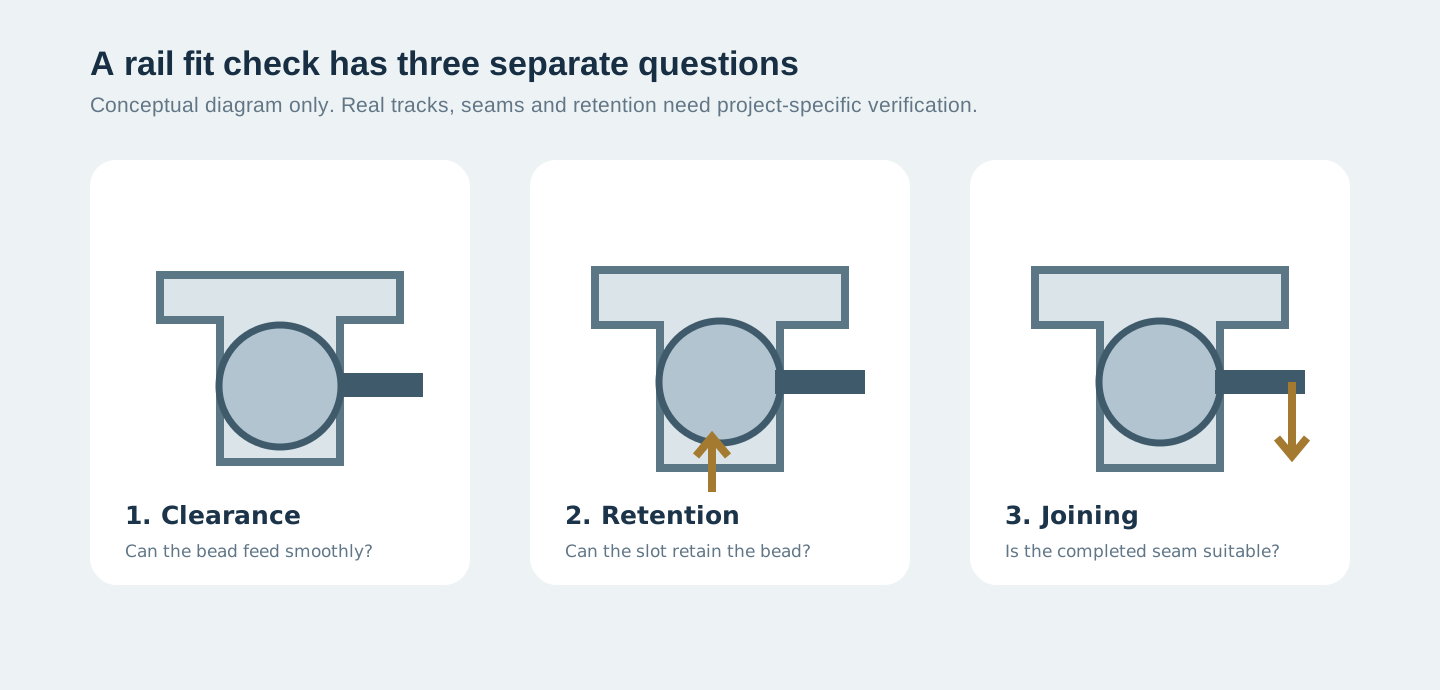
What to measure
- Finished bead outside dimension: clarify whether a supplier's quoted size is the bare cord or the textile-wrapped bead.
- Rail cavity and slot: record channel shape, lip geometry, retaining opening and the entry section.
- Flap and seam thickness: include textile layers and seam position near the opening.
- Feed path: examine bends, joints, end caps and installation direction.
What the sample must prove
- The edge feeds without excessive force or coating damage.
- It cannot slip unintentionally through the retaining slot under the defined service condition.
- The actual welded or sewn panel joint fits the chosen profile.
- Inspection covers the intended movement, weather exposure and maintenance schedule.
Important: a nominal 6 mm or 8 mm keder label cannot, by itself, establish compatibility with a rail bearing the same nominal number. Submit a physical rail section or a dimensioned profile drawing and approve the completed edge in that actual rail before a production order.
Which keder construction should you choose?
Select the combination of core, wrap, flap and joining method around the main panel fabric, exposure and assembly process. A material listing does not automatically establish a finished keder specification.
PVC-coated textile
A coated polyester wrap is commonly used for industrial keder where welding compatibility, tear behavior and flexible handling matter. Match the coating to the main panel and the actual joining equipment. Review PVC-coated fabric options.
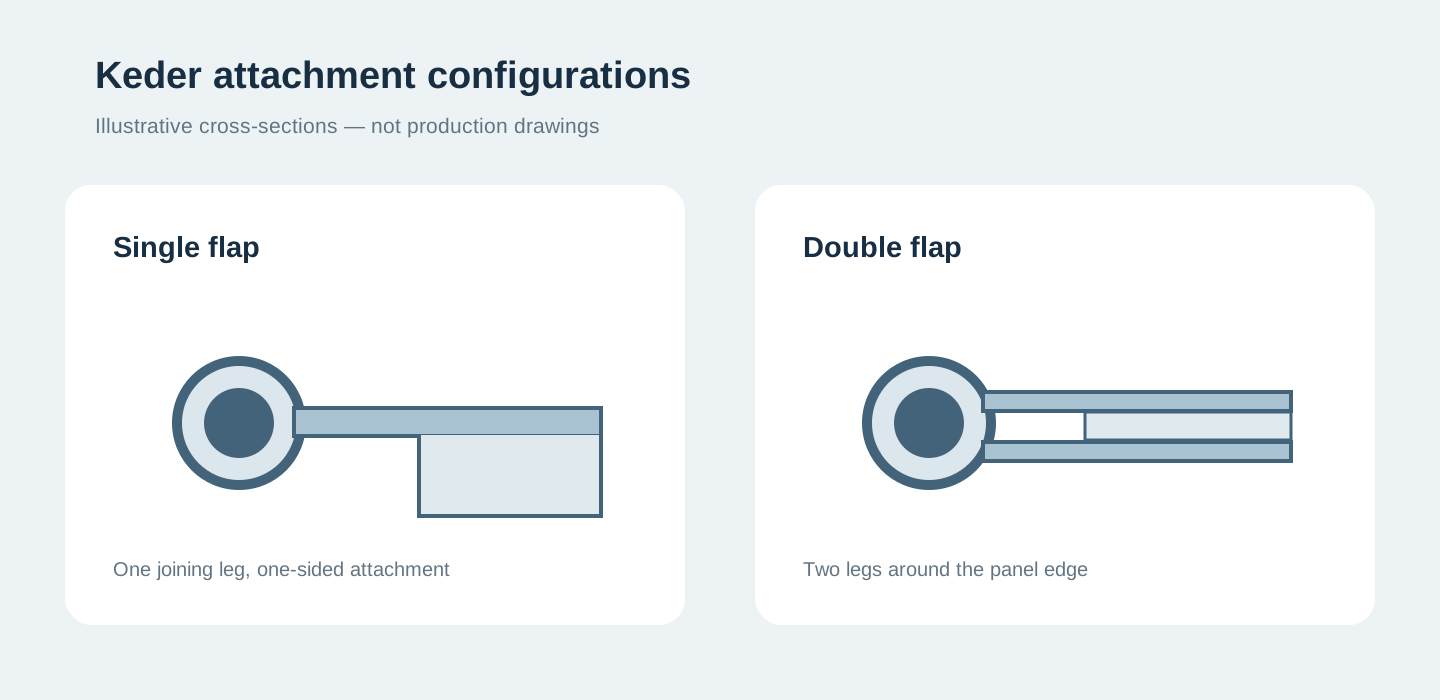
Single or double flap
Single-flap designs provide one joining leg. A double flap can sandwich the panel edge, but the extra layer changes the welding or sewing stack and available track clearance. Neither is automatically the right choice without a joint review.
Weld or sew
PVC-compatible layers may suit hot-air, wedge or high-frequency welding; other textiles, such as acrylic awning cloth, may require a sewing construction. Confirm method and performance on representative samples.
For roll-material sourcing, compare the coating, backing, width and edge process with the requirements of your own fabricator. DERFLEX's keder fabric supply page explains textile-focused options, while the tent fabric range covers the main shelter panels that may be joined to those edges.
How does a real keder edge look?
These reference images are from DERFLEX product pages. They illustrate a wrapped bead and its fabric attachment area; their appearance does not define a universal stock size or tested load capacity.
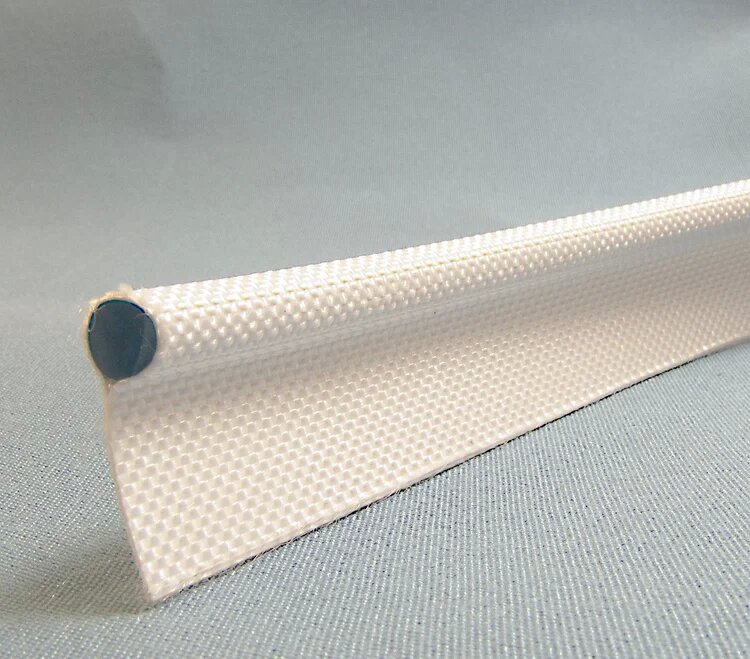
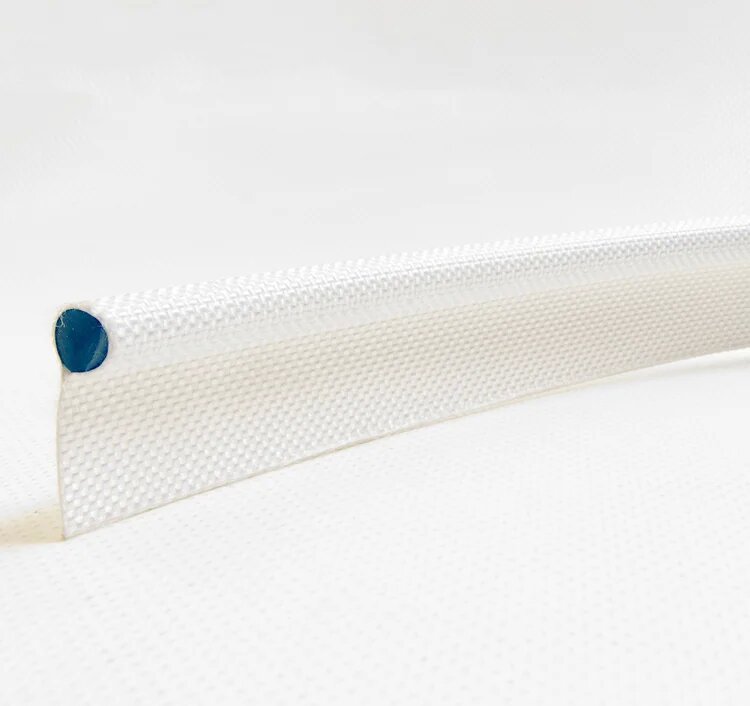
Photo source: DERFLEX keder tarpaulin product page. The photos are already hosted at these exact up/pro/ paths on the live DERFLEX website.
Before you order keder: define the complete interface
A useful enquiry includes the material and the hardware context. Ask for a clear written supply scope: fabric rolls, finished keder, pre-cut panels and complete structures are different deliverables.
Send with your RFQ
- Application: tent roof, awning, banner, industrial screen or marine cover.
- A rail section, cross-section drawing or detailed installation photographs.
- Existing bead and flap sample, if replacing an installed system.
- Main panel fabric, thickness and proposed weld or stitch method.
- Required length, roll presentation, quantity and shipping destination.
- Exposure, movement, named test requirements and needed documentation.
Confirm what is included
Pricing variables: the selected textile, core and profile, flap construction, welding or sewing scope, approval samples, order volume, rolls, labeling, packaging and shipping terms all affect a quote. Avoid comparing prices for different deliverables under the same name.
A practical sample-to-production sequence
Record the rail profile, panel fabric, service conditions and quote boundary.
Make the completed edge with the intended materials and joining process.
Check feed, retention, seam and use-specific evidence in the real system.
Keep the reference sample, drawing revision and incoming checks.
For relevant inspection topics, see DERFLEX Quality Control. Ask which checks and documents apply to the selected product and order.
Frequently asked questions about keder
Concise answers to common terminology, compatibility and buying questions.
What is the main purpose of keder?
The main purpose is to connect a flexible fabric panel to a compatible rigid rail or track through a captured bead edge. It helps position and tension the panel continuously, but the rail and complete fabric joint still require suitable design and testing.
Is keder used for tents and awnings?
Yes. Keder is widely used on marquee roof panels, sidewalls, fixed awnings and some retractable awning systems. The correct edge, core, flap and rail vary by application, particularly where repeated installation or rolling movement occurs.
What is the difference between keder cord and keder fabric?
Keder cord is the internal core that shapes the bead. Keder fabric is the textile wrap and joining flap around that core. A finished keder combines the parts; it may then be attached to a separate main panel.
Can any keder fit any aluminum rail?
No. Check the finished bead against the rail cavity, retaining slot, feed path and seam thickness. The stated cord diameter alone is not enough to confirm fit; use the real rail and a completed assembly sample.
Is keder waterproof?
Keder can contribute to a continuous weather-resistant edge, but a waterproof fabric or a closely fitted rail does not automatically make the completed system watertight. Seams, ends, openings, drainage and installed geometry all matter.
Can keder be sewn or welded to a panel?
Both methods are used, depending on the materials and configuration. PVC-coated textile may allow a suitable welding process, while some non-PVC awning fabrics require sewing. Validate the proposed full seam stack with representative material.
What should I send for a custom keder quotation?
Provide the application, rail drawing or sample, finished edge requirements, fabric construction, joining method, quantity, packaging and destination. If measurements are not available, begin with clear photos and an existing reference sample.
Match the keder to the real rail, not just a product name.
Send us your application, the existing track or dimensioned drawing, panel fabric and expected order quantity. We can discuss the relevant PVC-coated textile and project-specific keder supply options.
Helpful starting information
- Photo or cross-section of the rail
- Finished bead and flap reference
- Panel material and joining process
- Supply format, quantity and destination